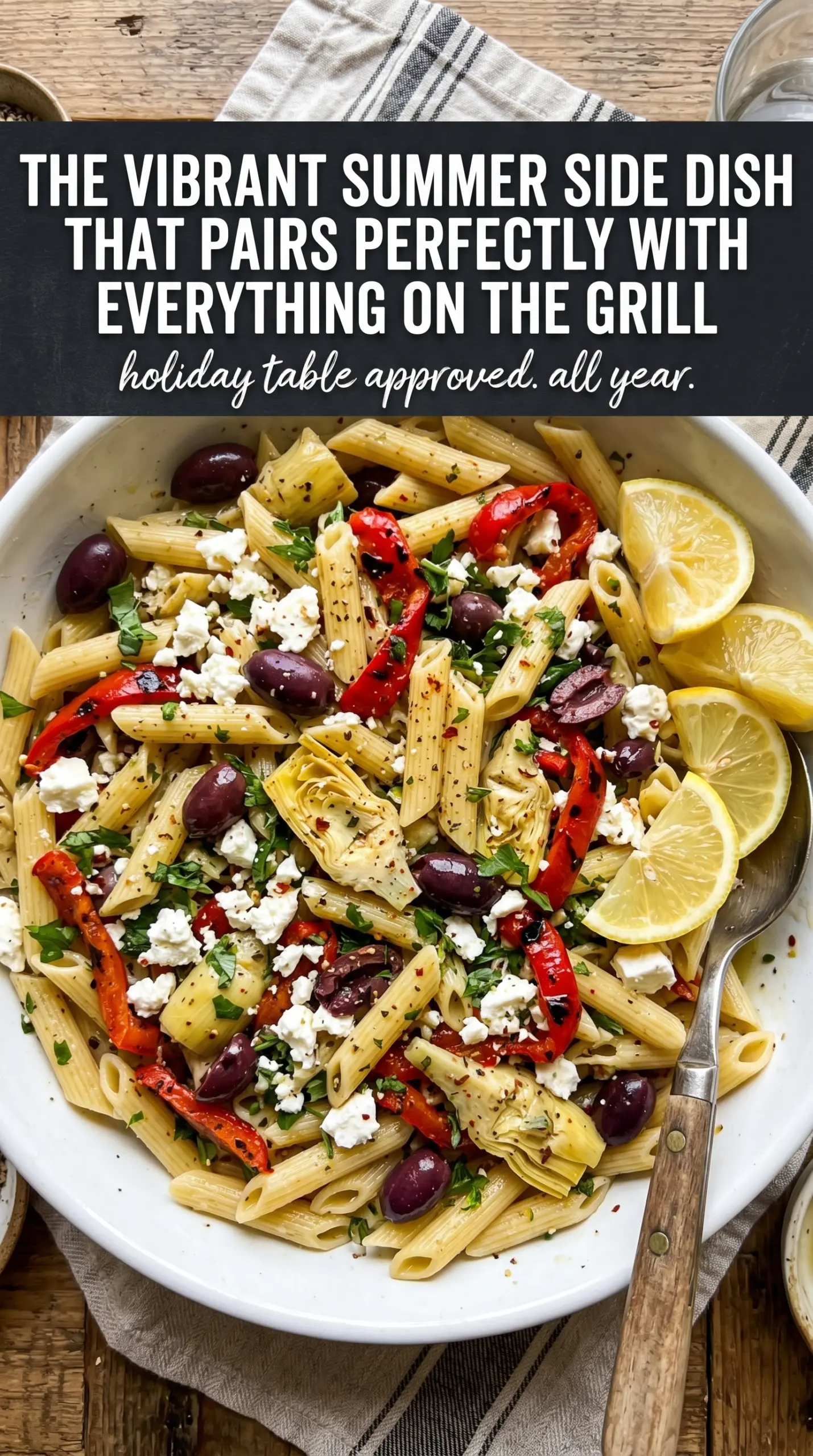
Pasta salad lives or dies by what happens after the noodles are drained, and this Mediterranean version gets that part right. The pasta stays springy, the olives bring briny bite, the feta softens into little salty pockets, and the lemon-herb dressing soaks into every ridge of the penne without turning heavy. It tastes bright straight from the bowl, but it gets even better after a couple of hours in the fridge, when the vegetables and dressing settle in together.
The trick is cooling the pasta before it ever meets the cheese and vegetables. Warm pasta will melt feta, soften the tomatoes too much, and make the dressing taste flat. Rinsing the pasta is the right move here because this is a cold salad, and you want to stop the cooking fast and keep the texture clean. The other thing that matters is seasoning the dressing on its own first; lemon juice, garlic, oregano, and olive oil need a minute to come together before they’re tossed through the bowl.
Below, I’ve included the small details that keep this salad fresh instead of soggy, plus a few easy swaps if you need to adjust what’s in your pantry.
The dressing soaked into the pasta after chilling, and the feta stayed in little creamy crumbles instead of disappearing. I made it the night before and it held up beautifully for lunch the next day.
Save this Mediterranean Pasta Salad for the kind of side dish that tastes brighter after chilling and brings olives, feta, and lemon-herb dressing together in one bowl.
The Part Most Pasta Salads Get Wrong: Warm Noodles
The biggest mistake in a cold pasta salad is throwing everything together before the pasta has cooled enough. Hot pasta keeps softening the vegetables, and it also drinks up the dressing too fast, which leaves the salad dull and dry by the time you serve it. Rinsing the pasta under cold water stops the cooking and washes off excess starch, which helps the dressing cling without turning gummy.
This salad also needs contrast. Kalamata olives, sun-dried tomatoes, and feta each bring their own salt and tang, so the dressing doesn’t have to do all the work. If the pasta is overcooked, that balance falls apart because the salad starts eating like a soft mash instead of a proper side dish with bite.
- Penne pasta — Penne holds the dressing in its ridges and gives the salad enough structure to stay tossable after chilling. Any short pasta with grooves works, but long noodles will clump.
- Kalamata olives — These add the deep briny note that makes the bowl taste Mediterranean instead of just “pasta with vegetables.” Black olives won’t give you the same punch.
- Feta cheese — Use a block if you can and crumble it yourself. Pre-crumbled feta is drier and tends to disappear into the salad instead of staying in distinct salty bites.
- Sun-dried tomatoes — These concentrate the tomato flavor and add chew. If yours are oil-packed, drain them well before chopping so the dressing doesn’t get greasy.
- Lemon juice and olive oil — This is the dressing’s backbone. Fresh lemon gives the salad its lift, and a good olive oil smooths out the sharp edges of the garlic and oregano.
What Each Ingredient Is Actually Doing When Pasta Is Perfectly Cooled
- Pasta cooked al dente — Cook the pasta just until tender with a slight bite left. As it cools and sits in the dressing, it will continue to soften slightly.
- Cold water rinse — This stops the cooking immediately and washes away surface starch that can make the salad gluey. Don’t skip this step or the pasta will keep cooking.
- Ice or refrigeration time — Cooling the pasta completely before adding dressing prevents it from absorbing liquid too fast and becoming mushy. Cold pasta holds its shape better.
- Oil in the dressing — This coats the cooled pasta and prevents clumping. It also slows how quickly the pasta absorbs the dressing, protecting the texture.
- Acid (vinegar or lemon juice) — The acid helps season the pasta as it sits. Added to cooled pasta, it penetrates evenly instead of creating concentrated spots.
- Fresh vegetables with texture — These should be added to cooled pasta so they don’t release moisture from the heat. They stay firmer and crunchier longer.
- Cheese (hard varieties) — Parmesan or similar hard cheese won’t melt into the pasta. It stays distinct and adds saltiness and umami.
- Fresh herbs — Added after cooling, herbs stay bright and fresh instead of wilting or turning dark from the residual heat.
Building the Bowl So Every Bite Tastes Balanced
Cook the Pasta to the Right Bite
Boil the penne until it’s just tender with a little resistance in the center. You want it fully cooked, but not soft, because it’s going to sit in dressing and continue to relax as it chills. Drain it well, then rinse it under cold water until it’s no longer steaming. If you skip the rinse, the residual heat will keep cooking it and the finished salad will go mushy.
Whisk the Dressing First
Put the lemon juice, garlic, oregano, salt, pepper, and olive oil in a bowl and whisk until the garlic is evenly dispersed. The garlic should look suspended in the dressing, not clumped in one corner. This step matters because raw garlic can taste harsh if it lands unevenly on the pasta. Mixing it first gives the whole salad a cleaner, more even flavor.
Toss Gently and Chill
Add the pasta, olives, tomatoes, artichokes, sun-dried tomatoes, red onion, and feta to a large bowl, then pour the dressing over the top. Toss with a light hand so the feta stays crumbled instead of smashed into the pasta. Chill for at least two hours. That resting time is when the pasta takes on the dressing and the sharpness of the onion softens into the rest of the salad.
Three Smart Ways to Change the Bowl Without Losing What Makes It Good
Gluten-Free Pasta Salad
Use a sturdy gluten-free penne or rotini and cook it just until tender. Gluten-free pasta softens fast once dressed, so rinse it thoroughly and chill it promptly. The flavor stays the same, but the texture is best on the day it’s made.
Dairy-Free Version That Still Tastes Full
Leave out the feta and add extra olives plus a handful of chopped roasted red peppers for more salt and sweetness. The salad loses some creaminess, but the dressing and vegetables still carry the same bright, briny profile.
Make It Heartier for Dinner
Stir in chickpeas or diced grilled chicken to turn the salad into a full meal. Chickpeas keep the Mediterranean feel and soak up the dressing well, while chicken makes the bowl more filling without changing the texture much.
Storage and Reheating
- Refrigerator: Keeps well for 3 to 4 days. The pasta will absorb more dressing as it sits, so the salad gets a little less glossy by day two.
- Freezer: Don’t freeze it. The vegetables lose their texture and the feta turns crumbly in the wrong way once thawed.
- Reheating: This salad is meant to be served cold. If it seems dry after chilling, stir in a splash of olive oil and a squeeze of lemon instead of warming it up.
Questions I Get Asked About This Recipe
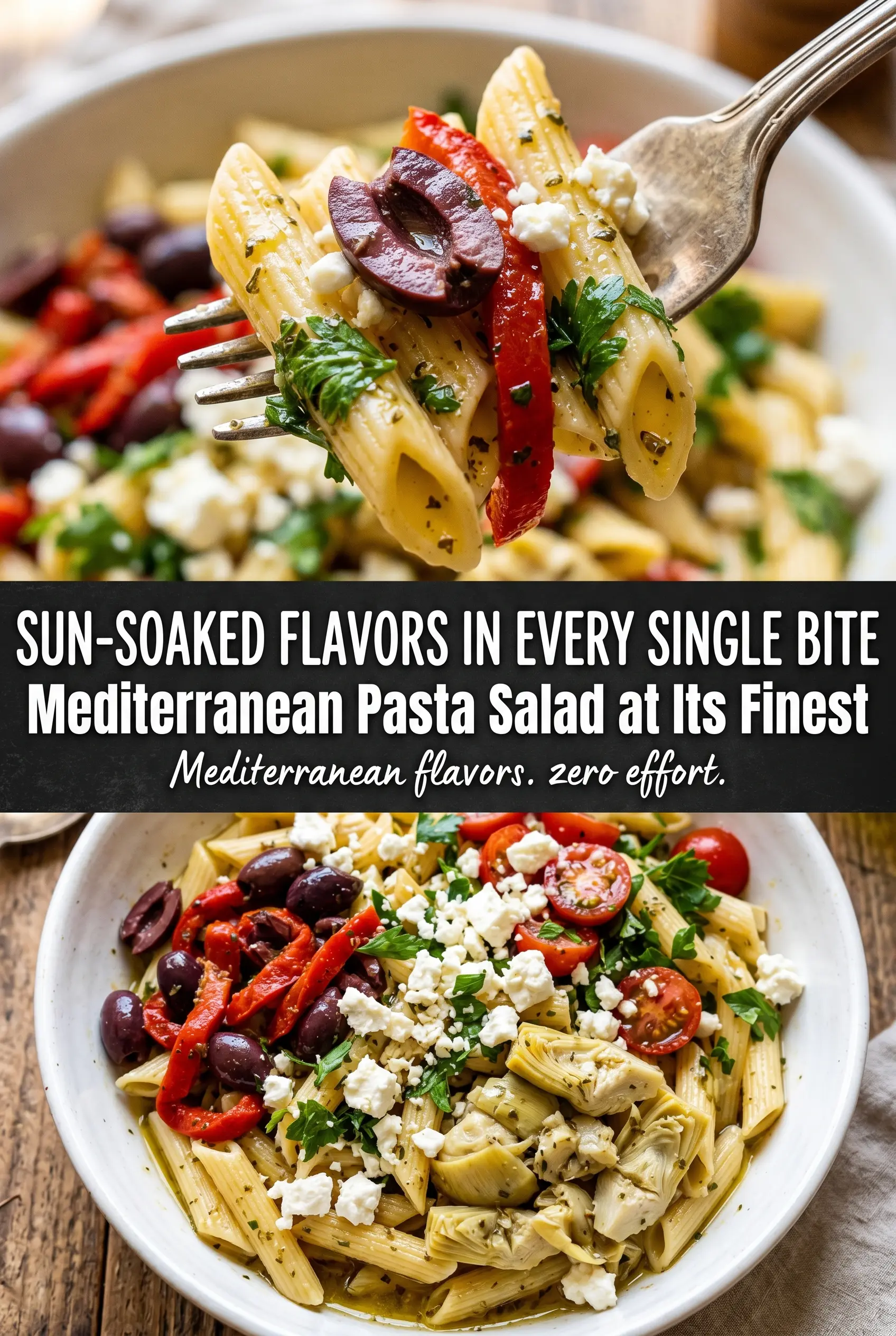
Mediterranean Pasta Salad
Ingredients
Equipment
Method
- Bring a large pot of salted water to a boil and cook the penne pasta according to package directions. Drain and rinse under cold water until chilled, then spread on a sheet pan to help cool quickly.
- Whisk olive oil, lemon juice, minced garlic, dried oregano, salt, and pepper until evenly combined and fragrant.
- In a large bowl, combine the cooled pasta, Kalamata olives, cherry tomatoes, artichoke hearts, sun-dried tomatoes, red onion, and crumbled feta.
- Pour the lemon-herb dressing over the salad and toss gently until the pasta is evenly coated.
- Refrigerate the pasta salad for at least 2 hours so flavors meld and the dressing thickens slightly.
- Before serving, garnish with the chopped fresh parsley for a fresh top note and bright green color.