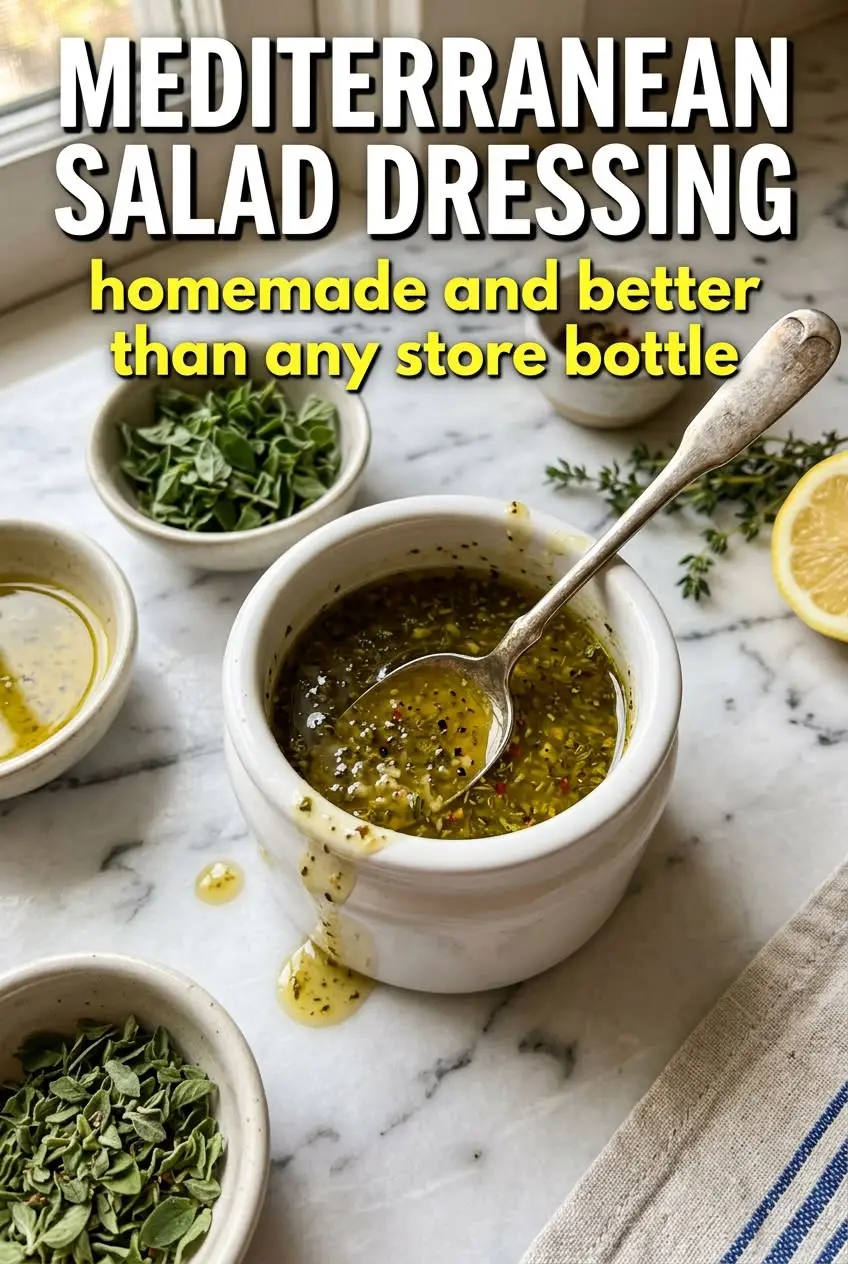
Golden, herb-flecked Mediterranean salad dressing turns even a simple bowl of greens into something worth sitting down for. It’s bright from the vinegar, rounded out by olive oil, and sharp in the best way from garlic, capers, and chopped olives. The texture lands somewhere between a classic vinaigrette and a loose herb paste, which means every spoonful clings to lettuce instead of sliding off the bowl.
What makes this version work is the balance. Dijon mustard helps the oil and vinegar stay together long enough to coat the salad, while the minced olives and capers bring salt and depth without making the dressing taste heavy. Fresh basil, parsley, and oregano keep it lively, but they need to be chopped small enough to disperse evenly so you get flavor in every bite, not just a pile of herbs at the bottom.
Below, I’ve included the one trick that keeps the emulsion from breaking, plus a few smart swaps if you want to adjust the dressing for different salads or ingredients you already have on hand.
The dressing turned out thick and glossy, and the herbs stayed suspended instead of sinking to the bottom. I tossed it with cucumbers, tomatoes, and feta, and it coated everything without pooling in the bowl.
Save this Mediterranean salad dressing for crisp cucumber salads, grain bowls, and anything that needs a bright, herby vinaigrette with real depth.
The Emulsion Is the Difference Between a Dressing and a Pool of Oil
Most vinaigrettes taste fine right after whisking, then break apart the minute they sit. That isn’t a flaw in the ingredients. It’s a technique problem. Dijon mustard helps hold the oil and vinegar together, but the real key is adding the olive oil slowly enough that the mixture thickens as you go. If you dump it in all at once, the dressing tastes sharper and looks greasy instead of glossy.
The garlic, capers, and olives also matter more than they might seem at first glance. They add salt and body, which keeps the dressing from tasting thin even though it’s built from pantry basics. This is why the finished dressing feels layered instead of one-note: bright acid, grassy oil, and little bursts of briny flavor in every spoonful.
What Each Ingredient Is Actually Doing in This Dressing
- Red wine vinegar — This gives the dressing its clean, sharp backbone. It’s the acid that wakes up the herbs and cuts through the richness of the oil, so swapping in balsamic will make the dressing sweeter and heavier.
- Dijon mustard — Dijon is doing two jobs here: it adds a little tang and helps emulsify the dressing. Yellow mustard won’t taste the same and tends to read more aggressively sharp, but it can work in a pinch if that’s what you have.
- Extra virgin olive oil — Use a good one here because it’s a major flavor, not just a base. A peppery, fresh oil gives the dressing its roundness, while a flat or stale oil makes the whole thing taste dull.
- Fresh basil, parsley, and oregano — These herbs bring the Mediterranean note that dried herbs can’t fully replace. If you need a backup, use half the amount of dried oregano and keep the parsley and basil fresh if possible; dried basil can go dusty fast.
- Kalamata olives and capers — Together, they add the salty, briny edge that makes this dressing taste complete. Mince them finely so their flavor disperses through the dressing instead of leaving little pockets of salt.
Building the Dressing So It Stays Glossy
Start With the Acid and Mustard
Whisk the red wine vinegar, Dijon mustard, and minced garlic until the mixture looks slightly thickened and the mustard is fully dissolved into the vinegar. That first whisk matters because it gives the dressing a stable base before any oil goes in. If the garlic clumps, it usually means it wasn’t minced finely enough, and those raw bits will stand out once the dressing sits.
Add the Olive Oil in a Thin Stream
Pour the olive oil in slowly while whisking constantly. You’re looking for a dressing that turns glossy and lightly thickened instead of separated and streaky. If it looks broken, stop pouring the oil for a moment and whisk harder before continuing; rushing this stage is the main reason vinaigrettes split.
Fold in the Herbs and Briny Bits
Stir in the basil, parsley, oregano, olives, and capers after the emulsion forms. Adding them too early can make whisking awkward and prevent the dressing from coming together cleanly. Once they’re mixed in, the dressing should look speckled and cohesive, with the herbs suspended through the oil instead of sinking immediately to the bottom.
Season and Taste Like You Mean It
Add the salt and black pepper at the end, then taste again. The capers and olives already bring salt, so it’s easy to overdo it if you season too early. If the dressing tastes flat, it usually needs either a little more vinegar or another pinch of salt, not more oil.
How to Adapt This for Different Salads and Diets
Dairy-Free and Naturally Vegetarian
This dressing is already dairy-free and vegetarian, which makes it an easy fit for grain bowls, chopped salads, and roasted vegetables. The briny olives and capers give it enough savory depth that you won’t miss cheese unless you want to add it later at the serving stage.
Make It Creamier for Heartier Salads
Blend in another teaspoon of Dijon or a spoonful of Greek yogurt if you want a dressing that clings more heavily to romaine, chickpeas, or pasta salad. The yogurt softens the sharp edges and makes the dressing thicker, but it also shortens the fridge life, so use it within a few days.
Swap the Herbs Based on What’s in the Fridge
If you’re out of basil or oregano, lean on parsley and add a small pinch of dried oregano instead. Fresh herbs give the dressing its bright finish, but the vinaigrette still works if one herb has to carry more of the load. Don’t replace all the herbs with dried versions unless you want a flatter, more pantry-style result.
Storage and Reheating
- Refrigerator: Store in a glass jar for up to 1 week. The oil may thicken and separate when cold, which is normal.
- Freezer: I don’t recommend freezing this dressing. The emulsion and fresh herbs don’t thaw with the same texture, and the herbs can turn watery.
- Reheating: No reheating needed. Let the jar sit at room temperature for 10 to 15 minutes, then shake hard before using so the oil loosens and the dressing turns glossy again.
Questions I Get Asked About This Recipe
Mediterranean Salad Dressing (Golden Herb Vinaigrette)
Ingredients
Method
- Combine red wine vinegar, Dijon mustard, and minced garlic in a bowl. Whisk together well until smooth and slightly thickened, with no mustard streaks.
- Slowly add extra virgin olive oil while whisking continuously to create a golden emulsion. Continue whisking until the dressing looks creamy and cohesive rather than separated, with visible flecks.
- Stir in basil, parsley, oregano, kalamata olives, and capers. Mix until the herbs and flecks are evenly distributed throughout.
- Season with salt and black pepper, then taste and adjust flavors as needed. Add more salt for punch or more pepper for heat, if desired.
- Transfer the dressing to a glass jar and refrigerate for up to one week. Shake well before serving so the emulsion stays blended.