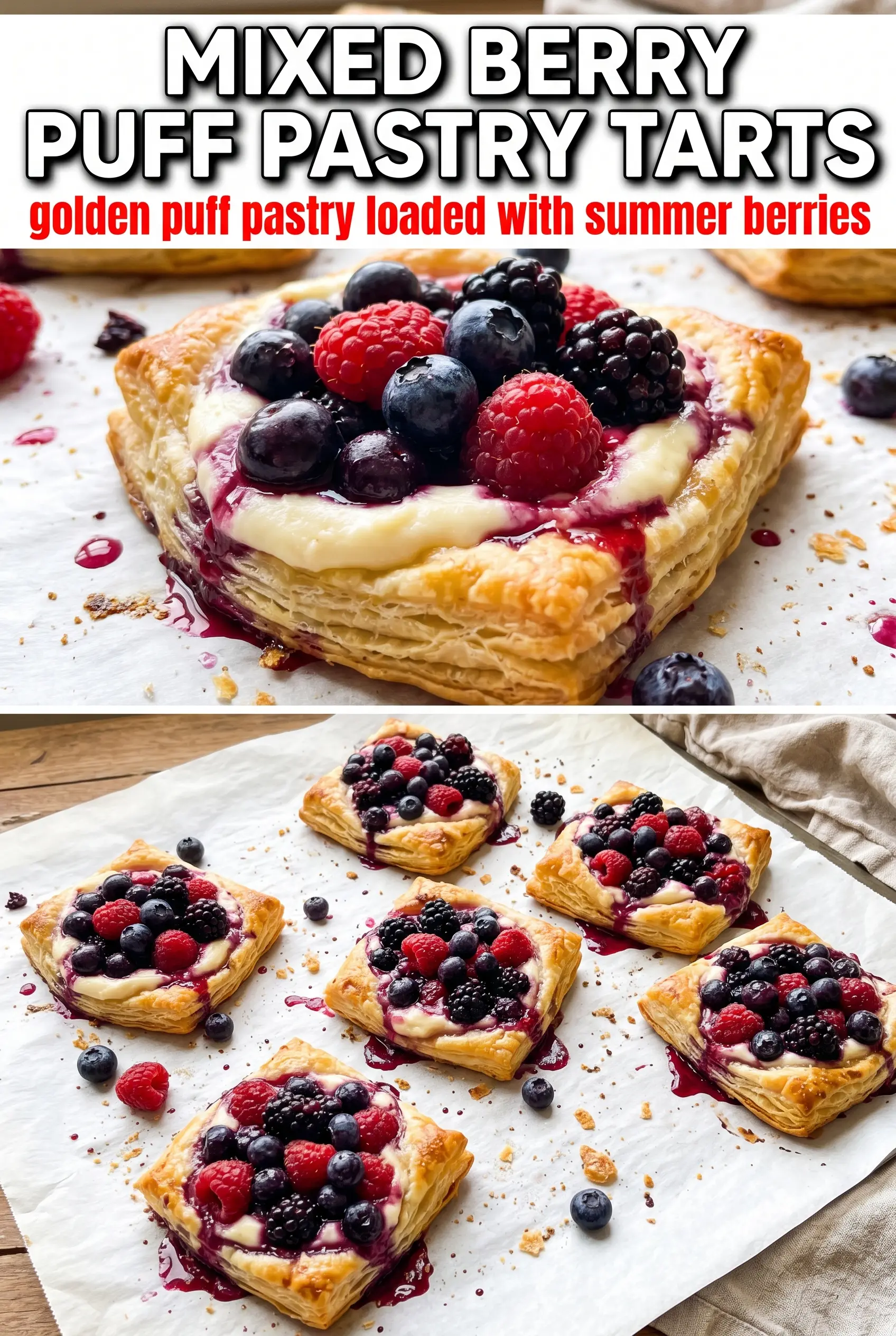
Golden, flaky puff pastry with a cool cream cheese center and a glossy pile of berries is the kind of dessert that disappears fast because it tastes like more work than it is. The edges puff up into crisp layers, the filling stays creamy, and the fruit bakes just long enough to soften without collapsing into jam. That contrast is what makes these tarts feel bakery-worthy with very little fuss.
The trick is keeping the pastry cold until it hits the oven and scoring a border so the edges can rise around the filling. The cream cheese layer also does real work here: it cushions the berries, keeps the bottom from getting soggy, and adds just enough tang to keep the tart from tasting one-note sweet. A little lemon zest lifts the whole thing and makes the berries taste brighter.
Below, you’ll find the small details that matter most, from how to keep the pastry from baking flat to the best way to glaze the berries for that polished finish. If you’ve ever wanted a dessert that looks elegant on a tray but comes together in minutes, this one earns a spot in the rotation.
The pastry puffed up beautifully and the cream cheese layer kept the bottoms from getting soggy. I was worried the berries would burst everywhere, but they stayed on top and the apricot glaze gave them that bakery shine.
These mixed berry puff pastry tarts are the kind of dessert that looks fancy, bakes fast, and vanishes even faster.
The One Thing That Keeps Puff Pastry Tarts Tall Instead of Flat
Puff pastry only gives you those dramatic, flaky edges if the butter stays cold long enough to steam in the oven. If the sheet warms up while you’re filling it, the layers start to blur together before baking and you lose lift. That’s why the order matters here: cut, score, fill, and get them into the oven without lingering.
The scored border is not decoration. It tells the pastry where to rise so the center stays lower and holds the cream cheese and berries. Skip that step and the filling has nowhere to sit; the tart bakes up less defined and the fruit can slide around. A fork prick in the middle is useful only if you want an even flatter base, but for these tarts the border score is the move that matters.
What the Cream Cheese Layer Is Doing Under the Berries

- Puff pastry — A good frozen sheet is the backbone of the whole dessert. Thaw it in the fridge, not on the counter, so the butter stays cold and the pastry bakes up in crisp layers instead of turning greasy. If your brand comes with two thinner sheets, use the heavier one for the best lift.
- Cream cheese — This gives the tarts a soft, tangy base that keeps the berries from making the pastry soggy. It needs to be fully softened so it beats smooth; cold cream cheese leaves little lumps that don’t spread evenly and can tear the pastry when you drag a spoon across it.
- Mixed berries — A mix of strawberries, blueberries, and raspberries gives you better texture than one berry alone. Cut strawberries into smaller pieces so they bake at the same pace as the others. If your berries are very juicy, pat them dry before topping the tarts so the filling doesn’t loosen too much.
- Apricot jam — The glaze is what gives the finished tarts that bakery shine. Warm it just enough to brush easily; if it’s boiling hot, it can smear the berries and soften the pastry surface. If you don’t have apricot, strained raspberry jam works too, but the flavor will read a little more tart.
- Lemon zest and vanilla — These don’t just add sweetness. The zest wakes up the berries, and vanilla rounds out the cream cheese so the filling tastes balanced instead of flat. Don’t skip the zest if you can help it; it’s one of the reasons the filling tastes fresh rather than heavy.
Getting the Fillings, Edges, and Glaze in the Right Order
Building the Cream Cheese Base
Beat the cream cheese, powdered sugar, vanilla, and lemon zest until the mixture is smooth and spreadable. If it looks grainy, the cream cheese was still too cold, and the filling will fight you when you try to spread it. A small offset spatula or the back of a spoon works best for keeping the layer inside the scored border.
Shaping the Pastry So It Rises Cleanly
After you cut the pastry into rectangles, score a border about half an inch from the edge, pressing lightly so you don’t cut through. That shallow line is what lets the edges puff up around the filling while the center stays flatter. Brush only the border with egg wash; if it runs into the center, it can seal the layers where you want them to rise.
Baking Until the Edges Are Deeply Golden
Put the tarts into a fully preheated 400°F oven and bake until the edges are deeply golden and puffed. Pale pastry is underbaked pastry, and underbaked puff pastry tends to collapse once it cools. The berries should look softened and glossy, not dried out, and the cream cheese should be set but still tender beneath them.
Finishing With Shine and Powdered Sugar
Brush the warm berries with apricot jam right after they come out of the oven. That creates a thin glaze that catches the light and keeps the fruit from looking dry after cooling. Dust with powdered sugar just before serving so it stays visible; if you add it too early, the moisture from the berries will melt it into the surface.
How to Adapt These Tarts for Different Tables
Make Them Gluten-Free
Use a gluten-free puff pastry that bakes well from frozen or well-chilled. The texture will still be flaky, but it may not rise quite as high as standard pastry, so keep the rectangles neat and don’t overload the centers with fruit.
Make Them Dairy-Free
Swap in a dairy-free cream cheese that’s meant for baking or spreading. Some brands are softer than others, so chill the filling for a few minutes if it seems loose before spreading it onto the pastry.
Swap the Berry Mix by Season
Blackberries, sliced peaches, or cherries all work in place of part of the mixed berries. Keep the total amount about the same, and cut juicy fruit into smaller pieces so the pastry doesn’t get weighed down.
Storage and Reheating
- Refrigerator: Store leftovers in an airtight container for up to 2 days. The pastry will soften, especially under the fruit, but it still tastes good.
- Freezer: These don’t freeze well after baking because the berries and cream cheese turn watery when thawed. If you want to get ahead, freeze the unbaked, assembled tarts on a tray, then bake straight from frozen with a few extra minutes added.
- Reheating: Warm in a 325°F oven for 8 to 10 minutes until the pastry crispes back up. The mistake to avoid is the microwave, which turns the crust leathery and makes the berries leak into the base.