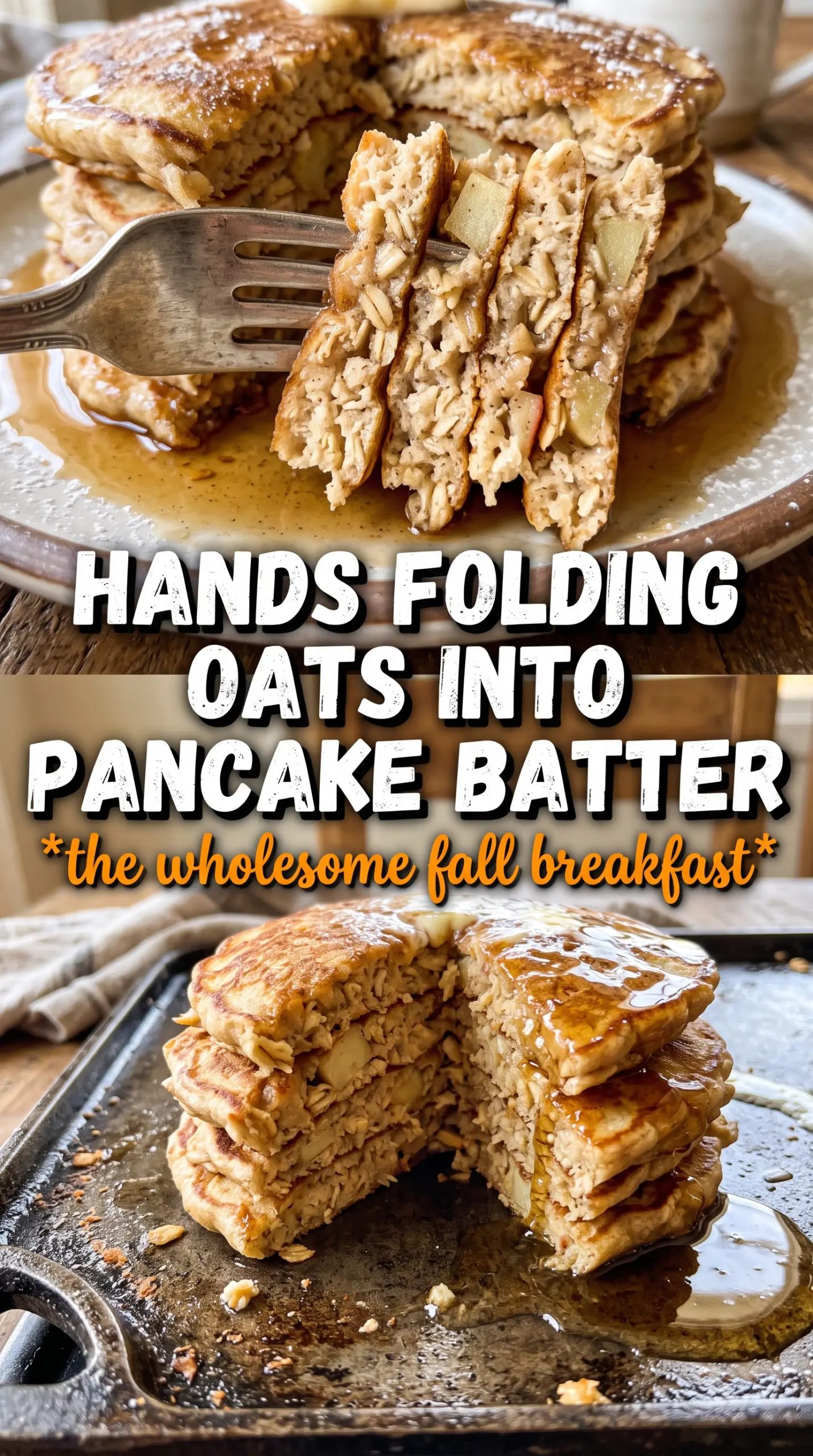
Oatmeal apple pancakes land on the plate with crisp-edged centers, a little chew from the oats, and soft pockets of apple that cook down just enough to taste sweet and warm without turning mushy. They’re the kind of breakfast that feels hearty without being heavy, and the batter has enough structure to flip cleanly while still staying tender inside.
The trick is keeping the oats coarse instead of grinding them into flour. That gives the pancakes a better bite and keeps them from tasting flat or bready. Buttermilk brings lift and tang, while the apples add moisture; together they keep the crumb soft even after the pancakes cool a little on the stack.
Below, I’ve included the one resting step that helps the batter thicken properly, plus a few smart swaps if you only have milk on hand or want to make these a little more wholesome without losing the texture that makes them good.
The batter thickened up after that short rest and the pancakes cooked up fluffy with little bits of apple in every bite. I loved that they flipped cleanly and didn’t fall apart like some oat pancakes do.
Save these oatmeal apple pancakes for a cozy breakfast with crisp edges, tender oats, and caramelized apple bits in every stack.
The Oats Need to Stay Coarse or the Pancakes Turn Heavy
These pancakes work because the oats keep their texture. When you pulse them just a few times, they break down enough to blend into the batter but still give the finished pancakes a rustic, hearty crumb. If you grind them into a fine powder, they act more like flour and the pancakes lose that soft chew that makes this recipe worth repeating.
The other thing that matters is the balance between batter thickness and apple moisture. The grated or finely diced apple releases enough juice to help the pancakes stay tender, but it can also make the batter slack if you let it sit too long. That short five-minute rest is enough for the oats to hydrate without letting the batter turn loose and flat.
What Each Ingredient Is Actually Doing in These Pancakes
- Rolled oats — These give the pancakes their texture and keep them from tasting like plain flour pancakes. Quick oats can work in a pinch, but they soften faster and give a less distinct bite.
- Buttermilk — This is what gives the batter lift and a little tang. If you need a substitute, use milk with a teaspoon of lemon juice or vinegar, but expect a slightly thinner batter and a milder flavor.
- Apples — Grated apple blends into the batter for a softer, more even bite. Finely diced apple gives you more visible pieces and a little more texture; both work, but don’t use large chunks or they’ll cook unevenly.
- Cinnamon and nutmeg — These warm the pancakes without overpowering the apple. The nutmeg should stay in the background; if it tastes sharp, you’ve used too much.
- Melted butter — Butter keeps the crumb tender and adds flavor that oil doesn’t quite match. Let it cool slightly before whisking it in so it doesn’t start cooking the eggs.
Getting the Batter Thick Enough to Flip Cleanly
Coarsely Grind the Oats
Pulse the oats just until they look broken down and sandy, with a few larger flakes still visible. You’re not making oat flour here. If the oats are too fine, the pancakes get dense and pasty instead of light and textured.
Mix the Dry Ingredients First
Stir the ground oats with the flour, sugar, baking powder, baking soda, cinnamon, nutmeg, and salt before any liquid goes in. That keeps the leavening distributed evenly so the pancakes rise across the whole surface instead of puffing in patches. A quick whisk is enough; you don’t need to overwork it.
Fold, Don’t Beat
Once the wet ingredients hit the dry bowl, stir only until the flour disappears. A few streaks are fine. Overmixing develops the flour and makes the pancakes tough, especially once the oats start absorbing moisture.
Let the Batter Rest Before Cooking
That five-minute rest gives the oats time to soften and the batter time to thicken. You’ll notice it looking a little more spoonable and less runny. If it sits much longer than that, especially with grated apple, it can tighten up too much, so cook it soon after resting.
Cook Over Medium Heat
Medium heat gives the pancakes enough time to cook through before the outsides darken. When bubbles form and the edges look set, the first side is ready to flip. If the pan is too hot, the outside browns before the center firms up, and the apple bits can stay gummy.
Make Them Dairy-Free
Use an unsweetened dairy-free milk mixed with 1 teaspoon lemon juice or vinegar in place of the buttermilk, and swap the butter for melted coconut oil or a neutral oil. The pancakes will still brown well, but the flavor will be a little less rich and the crumb slightly softer.
Make Them Gluten-Free
Swap the all-purpose flour for a good 1:1 gluten-free baking blend and use certified gluten-free oats. The texture stays tender, though the pancakes may spread a touch less and need an extra minute on the first side.
Use Grated Apple for a Softer Stack
Grated apple disappears more into the batter and gives you a softer, more even pancake with little bursts of sweetness. Diced apple makes the fruit more noticeable, but it also adds more structure and a bit more chew.
Storing Leftover Pancakes
- Refrigerator: Store in an airtight container for up to 3 days. They soften a little as they sit, but the flavor stays good.
- Freezer: Freeze in a single layer, then stack with parchment between the pancakes. They thaw and reheat well.
- Reheating: Warm in a skillet over low heat or in a toaster for the best texture. The microwave works, but it softens the edges and makes the oats taste a little gummy.
Questions I Get Asked About This Recipe
Oatmeal Apple Pancakes
Ingredients
Equipment
Method
- Pulse the rolled oats in a food processor 5-6 times until coarsely ground, not fine flour, using a visible oat texture cue.
- Combine the ground oats with the all-purpose flour, brown sugar, baking powder, baking soda, cinnamon, nutmeg, and salt until evenly dispersed.
- Whisk the buttermilk, eggs, melted butter, and vanilla until smooth.
- Fold the wet mixture into the dry ingredients until just combined, stopping when no dry streaks remain.
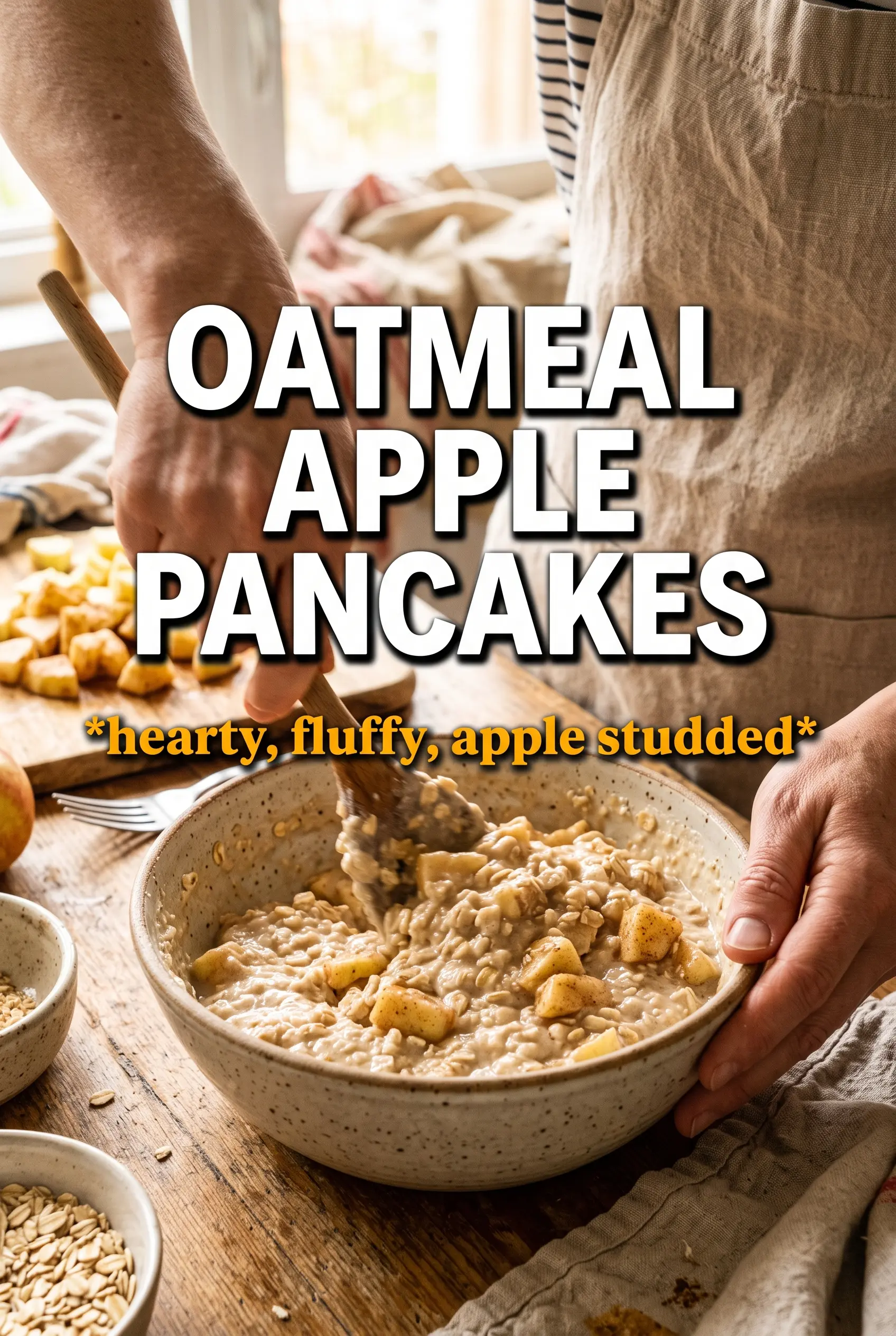
- Fold in the diced or grated apple, then let the batter rest 5 minutes to hydrate.
- Heat a griddle or cast iron skillet over medium heat and grease lightly, watching for a subtle shimmer.
- Pour about 1/3 cup batter per pancake and cook until bubbles form and the edges look set, about 3 minutes.
- Flip and cook until golden on the second side, about 2 minutes, using color as the cue.
- Serve pancakes with maple syrup and extra apple slices.
- Dust with powdered sugar right before serving.