Thick oatmeal cookies turn into a frozen dessert that feels old-fashioned in the best way: chewy at the edges, soft through the middle, and sturdy enough to hold a cold scoop of ice cream without cracking apart in your hand. The cinnamon in the cookies makes the whole sandwich taste warmer than a standard ice cream treat, and that little bit of spice gives the vanilla filling something to lean against.
The key is baking the cookies just until the edges turn golden while the centers still look slightly underdone. That keeps them soft after cooling, which matters because firm cookies go hard in the freezer and the sandwich loses its appeal fast. Using rolled oats instead of quick oats gives you that rustic texture and helps the cookies stay chewy instead of sandy.
Below you’ll find the exact point where the cookies should come out of the oven, the best way to assemble them without melting ice cream all over the counter, and a few smart swaps if you want to change the flavor or make them ahead for a crowd.
The cookies stayed chewy after freezing, and the cinnamon ice cream between them tasted like a bakery version of the ice cream truck sandwich I remember.
Save these oatmeal cookie ice cream sandwiches for the day you want chewy cinnamon cookies wrapped around cold vanilla or cinnamon ice cream.
The Trick to Keeping the Cookies Chewy After Freezing
The failure point here is the cookie texture, not the ice cream. If the cookies bake too long, they dry out in the freezer and turn hard instead of pleasantly chewy. Pull them when the edges are set and lightly golden, but the centers still look soft; they finish setting as they cool on the pan. That gives you a cookie with enough structure to build a sandwich, but enough tenderness to bite cleanly once frozen.
The other detail that matters is size. These need to be large enough to hold a full layer of ice cream, and pressing the dough flat before baking helps them spread into even rounds instead of domes. Uneven cookies make lopsided sandwiches, which are harder to stack, wrap, and freeze.
What the Oats, Brown Sugar, and Ice Cream Each Bring to the Table
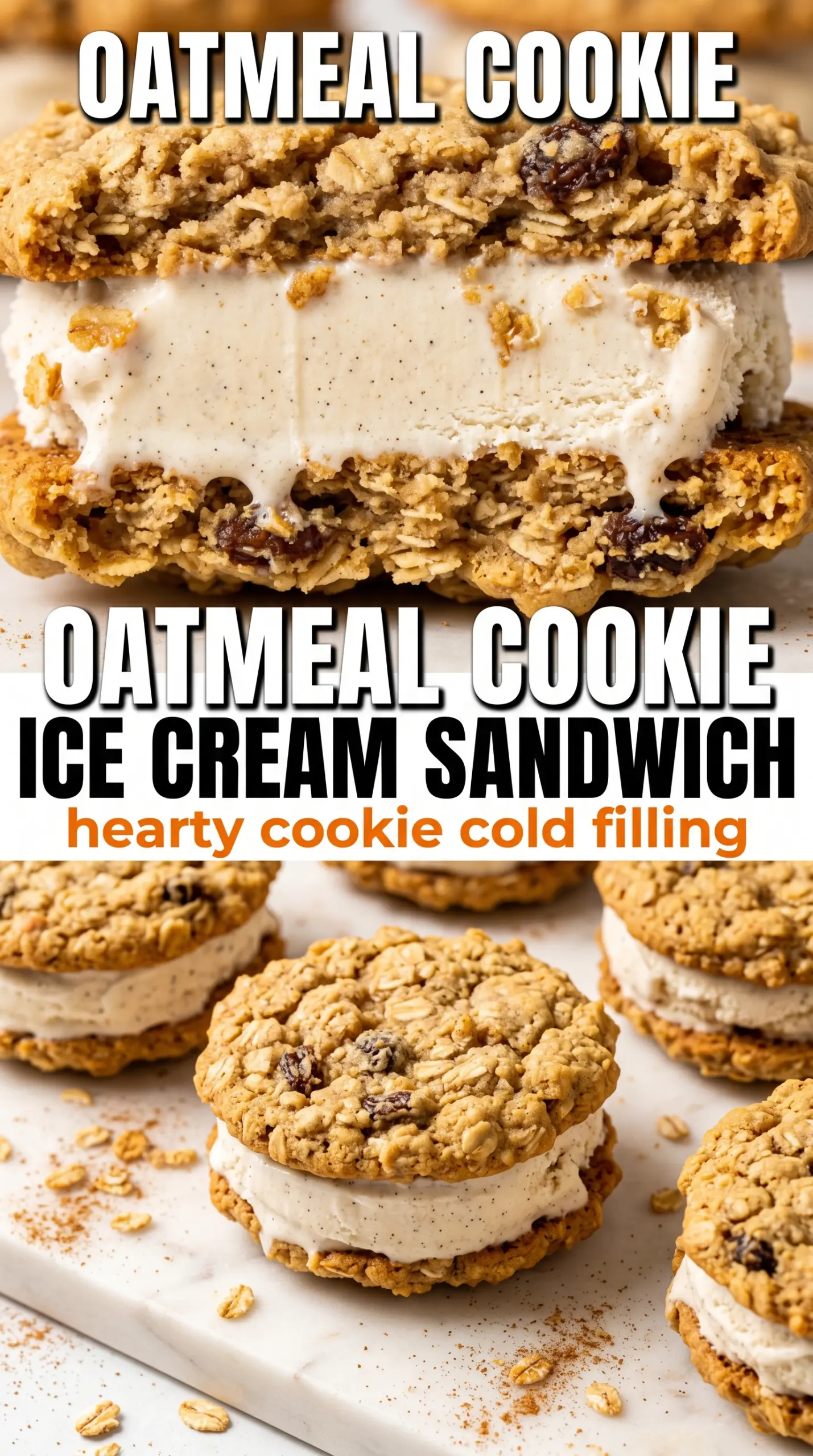
- Rolled oats — These give the cookies their chew and that rough, rustic look. Quick oats can work in a pinch, but they make the cookies tighter and less hearty. Use old-fashioned rolled oats if you want the sandwich to hold its shape and still feel substantial after freezing.
- Brown sugar — This is what keeps the cookie soft and gives it a deeper caramel note. Granulated sugar alone will bake up drier and crisper. The mix of both sugars is what keeps the edges chewy while the centers stay tender.
- Cinnamon — The spice is subtle in the dough, but it changes the whole dessert by making the cookie taste warmer and more bakery-like. If you want a stronger spice note, add a pinch of nutmeg or cardamom, but don’t overpower the oats.
- Vanilla or cinnamon ice cream — Vanilla gives you a clean contrast, while cinnamon ice cream doubles down on the cookie’s warmth. The most useful trick is to let the ice cream soften just enough to scoop, not melt, so it spreads without squishing the cookies apart.
- Raisins — Optional, but they add little chewy bursts that fit the oatmeal cookie theme. If you skip them, nothing breaks; if you use them, soak and drain them first if they feel dry, so they don’t pull moisture from the dough.
Assembling Them Before the Ice Cream Wins
Mixing the Dough Base
Beat the butter with both sugars until the mixture looks pale and fluffy, not greasy and dense. That step traps air and helps the cookies bake up with a softer center. Once the eggs and vanilla go in, stop as soon as they’re combined. Overmixing here makes the cookies tougher than they need to be.
Adding the Oats Last
Stir the flour mixture in first, then fold in the oats and raisins if you’re using them. The dough will look thick and heavy, and that’s exactly what you want. If it seems loose, don’t add more flour immediately; oats continue to absorb moisture as the dough rests for a few minutes.
Baking for Soft Centers
Scoop large mounds, press them slightly flat, and bake just until the edges are golden. The tops may still look a little soft in the middle, and that’s the point. Let them cool completely on the pan before you move them, because warm cookies can tear when you try to sandwich them. Once cool, match them into pairs by size so the sandwiches stack neatly.
Filling and Freezing
Work quickly when the ice cream comes out. Spoon a thick layer onto the flat side of one cookie, top with the second cookie, and press just enough for the filling to reach the edges. Roll the sides in mini chocolate chips or cinnamon sugar right away before the ice cream firms up. Freeze the finished sandwiches for at least an hour so the center sets and the cookies and ice cream become one clean, firm bite.
How to Change the Flavor Without Losing the Chewy Texture
Dairy-Free Version
Swap in plant-based butter and use a dairy-free vanilla frozen dessert that scoops well. The cookies will still bake chewy because the texture comes from the oats, sugars, and egg structure, but the frozen center should be firm enough to sandwich cleanly before assembly.
Oatmeal Raisin Style
Add the raisins and use vanilla ice cream to keep the cookie flavor front and center. This version tastes more like a classic oatmeal cookie baked into a frozen treat, and the raisins add little pockets of chew that echo the oats.
Extra-Spiced Sandwiches
Add a pinch of nutmeg, ginger, or cardamom to the dough and use cinnamon ice cream. The result is warmer and a little more fragrant, but keep the spice hand light so the oats and butter still taste like themselves.
Storage and Reheating
- Refrigerator: Not the best option once assembled. The cookies soften too much and the ice cream starts to slump, so keep them frozen instead.
- Freezer: Freeze tightly wrapped sandwiches for up to 2 weeks. After that, the cookies can pick up freezer flavor and lose some of their chew.
- Reheating: Don’t reheat these. Let them sit at room temperature for 3 to 5 minutes before serving so the cookie softens just enough to bite without the ice cream melting out.
Questions I Get Asked About This Recipe
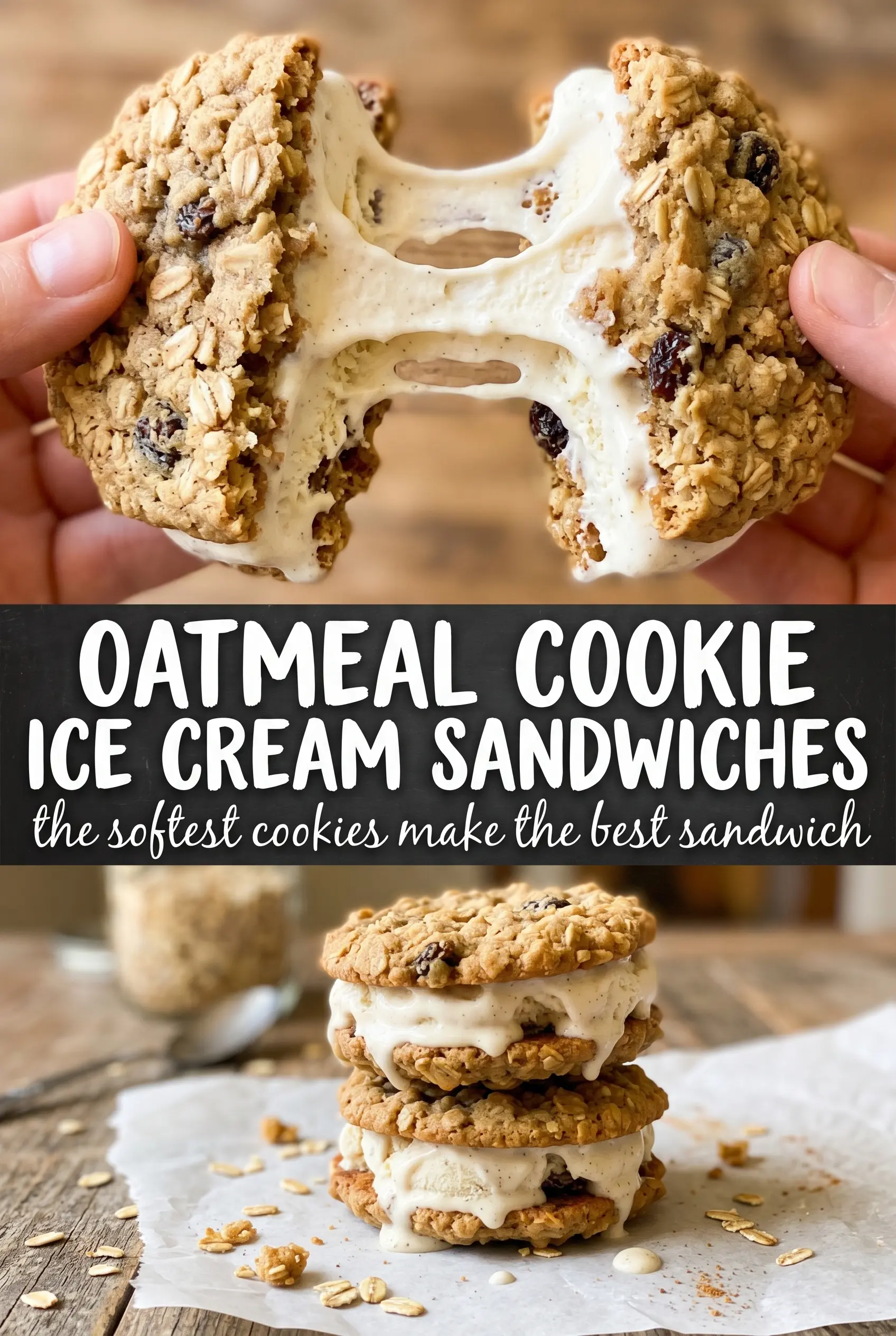
Oatmeal Cookie Ice Cream Sandwiches
Ingredients
Equipment
Method
- Preheat oven to 375F. Whisk all-purpose flour, baking soda, cinnamon, and salt in a bowl until evenly combined.
- Beat unsalted butter, brown sugar, and granulated sugar until fluffy. Add eggs and vanilla extract and mix until smooth.
- Stir in the flour mixture until just combined. Fold in rolled oats and raisins if using, then stop mixing as soon as no dry streaks remain.
- Scoop dough into large rounds using about 3 tablespoons per cookie, then press each round flat on a lined baking sheet. Bake 10-12 minutes until the edges turn golden while centers still look slightly soft.
- Cool cookies completely on the baking sheet or a rack. Wait until fully cool so the ice cream will not melt and slide.
- Place one cookie on a surface and sandwich a scoop of vanilla or cinnamon ice cream with a second cookie. Press gently so the filling reaches the edges without overflowing.
- Roll the edges in mini chocolate chips or cinnamon sugar. Chill briefly if needed so the coating sets.
- Arrange sandwiches on a tray in a single layer and freeze at least 1 hour before serving. Serve straight from the freezer for the best chewy-cookie contrast.