Oatmeal Cream Pie Cake brings that familiar cookie-shop flavor into a soft layer cake that slices cleanly and stays tender for days. The cake layers bake up with a gentle oatmeal chew, warm cinnamon, and just enough sour cream to keep the crumb moist without turning heavy. Then the marshmallow cream filling steps in with a fluffy, sweet center that tastes exactly like the middle of a classic oatmeal cream pie, only bigger and better for a crowd.
What makes this version work is the balance. The oats soften in the batter as the cake bakes, so you get texture without a dry, gritty bite. Brown sugar adds the deep molasses note these cakes need, and the sour cream keeps the layers from feeling dense. The filling is built with butter, cream cheese, and marshmallow creme, which gives it structure and that signature bakery-style sweetness without becoming runny.
Below, I’ll walk you through the part that matters most: keeping the layers tender and the filling stable enough to frost the outside without sliding around. I’ve also included a few smart swaps and storage notes so you can make it ahead without losing that fresh-baked texture.
The filling came out thick and fluffy, and the cake layers stayed soft even the next day. I was worried the oats would make it dry, but it sliced beautifully and tasted like the best part of an oatmeal cream pie in cake form.
Like this oatmeal cream pie cake? Save it to Pinterest for the next time you want soft spice cake, fluffy marshmallow filling, and a dessert that cuts like a bakery layer cake.
The Secret to Cake Layers That Stay Soft, Not Heavy
The mistake with oatmeal cakes is usually dryness or a gummy crumb. That happens when the oats stay too firm, the batter gets overmixed, or the cake bakes past the point where the center is just set. Here, the oats soften in the batter as they bake, and the sour cream gives you a moist, even crumb that holds up under the filling.
The other thing that matters is mixing. Once the dry ingredients go in, stop as soon as the flour disappears. If you keep beating, the cake turns tighter and loses that soft, old-fashioned texture that makes an oatmeal cream pie cake worth making in the first place.
- Rolled oats give the cake its signature chew. Quick oats can work in a pinch, but they make the texture finer and less distinct.
- Brown sugar adds moisture and that deep caramel note that makes the cake taste like the cookie filling’s best friend.
- Sour cream keeps the layers tender. Full-fat yogurt can stand in, but the cake will taste a little less rich.
- Cinnamon and nutmeg should be present, not loud. They round out the oatmeal flavor without turning the cake into a spice cake.
What the Filling Is Doing Besides Sweetening the Center
The filling needs to do three jobs at once: taste like marshmallow cream, hold its shape between layers, and spread smoothly enough to frost the outside. Cream cheese helps it set without making it tangy in a noticeable way, while the butter gives it a lighter, more spreadable finish. Marshmallow creme is nonnegotiable if you want that classic oatmeal cream pie flavor. There isn’t a substitute that gives the same texture and taste.
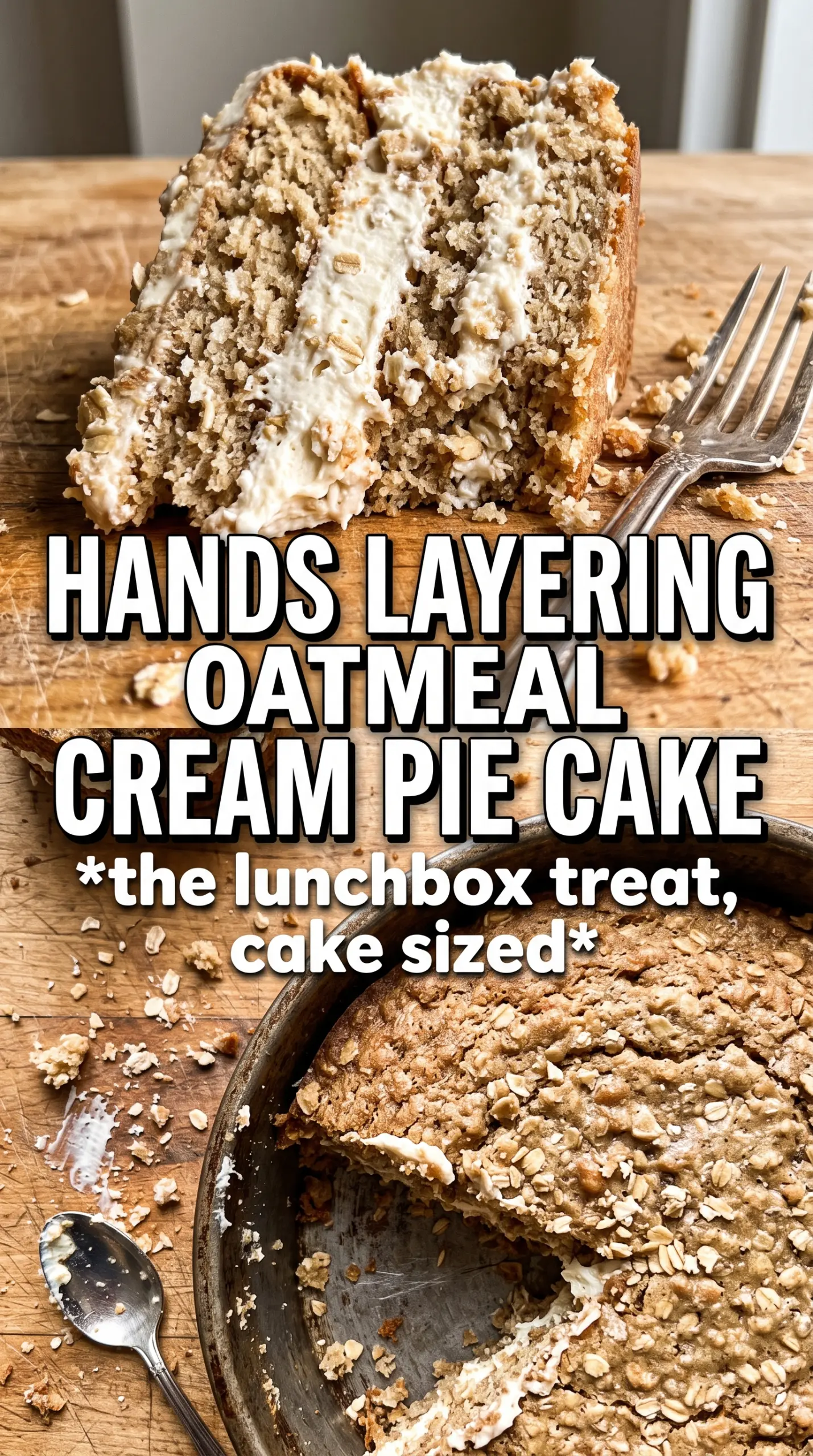
- Butter should be softened, not melted. Melted butter makes the filling loose and greasy.
- Cream cheese adds structure. If you leave it too cold, the filling turns lumpy and won’t whip smooth.
- Marshmallow creme gives the filling its stretch and sweetness. Marshmallow fluff is the closest swap.
- Powdered sugar thickens the mixture enough to hold between the layers and around the outside of the cake.
Building the Layers Without a Dry Cake or Sliding Filling
Mixing the Batter Just Until It Comes Together
Start by creaming the butter and brown sugar until the mixture looks lighter and a little fluffy. Add the eggs one at a time so the batter stays emulsified, then mix in the sour cream and vanilla. Once the dry ingredients go in, fold them in only until you stop seeing streaks of flour. If you overbeat at this point, the cake bakes up tighter and the oats lose that tender bite.
Baking to the Point of Just Set
Divide the batter evenly between the pans and bake until the tops spring back lightly and a toothpick comes out with a few moist crumbs, not wet batter. The center should be set, but not dry at the edges. If the cakes bake too long, the crumb firms up fast once they cool. Let them cool completely before filling them, or the marshmallow cream will soften and slide.
Whipping the Filling Until It Holds a Swirl
Beat the butter and cream cheese first until smooth, then add the marshmallow creme, powdered sugar, and vanilla. Keep going until the filling looks pale, fluffy, and thick enough to hold soft peaks. If it looks loose, the butter was too warm or the cream cheese was under-mixed. Chill it for a few minutes before assembling if your kitchen is warm.
Frosting for a Clean Finish
Spread a generous layer between the cooled cake rounds, then use the rest to cover the outside. A thin crumb coat helps if the cake is shedding crumbs, but this filling is sturdy enough to work as a full frosting if the layers are fully cool. Finish with a dusting of cinnamon sugar if you want that bakery-style oatmeal cream pie look.
How to Adapt This Cake for Different Needs
Gluten-Free Oatmeal Cream Pie Cake
Use a cup-for-cup gluten-free flour blend in place of the all-purpose flour, and check that your oats are certified gluten-free. The cake stays tender, but the crumb may be a touch more delicate, so let it cool fully before moving it.
Dairy-Free Version
Swap in plant-based butter and a thick dairy-free yogurt for the sour cream in the cake layers. For the filling, use a dairy-free cream cheese and a plant-based butter with a firm texture. The flavor stays close, but the frosting will be a little softer, so chill the cake before slicing.
More Like the Classic Cookie
For a stronger oatmeal cream pie vibe, add a pinch more cinnamon and finish the outside with a light dusting of powdered sugar. You can also toast the oats lightly before mixing them in, which adds a deeper, nuttier note.
Storage and Reheating
- Refrigerator: Store covered for up to 4 days. The filling firms up in the fridge, but the cake stays moist.
- Freezer: Freeze sliced cake layers or individual slices wrapped tightly for up to 2 months. The frosting freezes well, though the texture is best after thawing in the refrigerator.
- Reheating: Serve from the fridge after 20 to 30 minutes at room temperature. Don’t microwave the frosted cake; it softens the filling too much and makes the layers slide.
Answers to the Questions Worth Asking
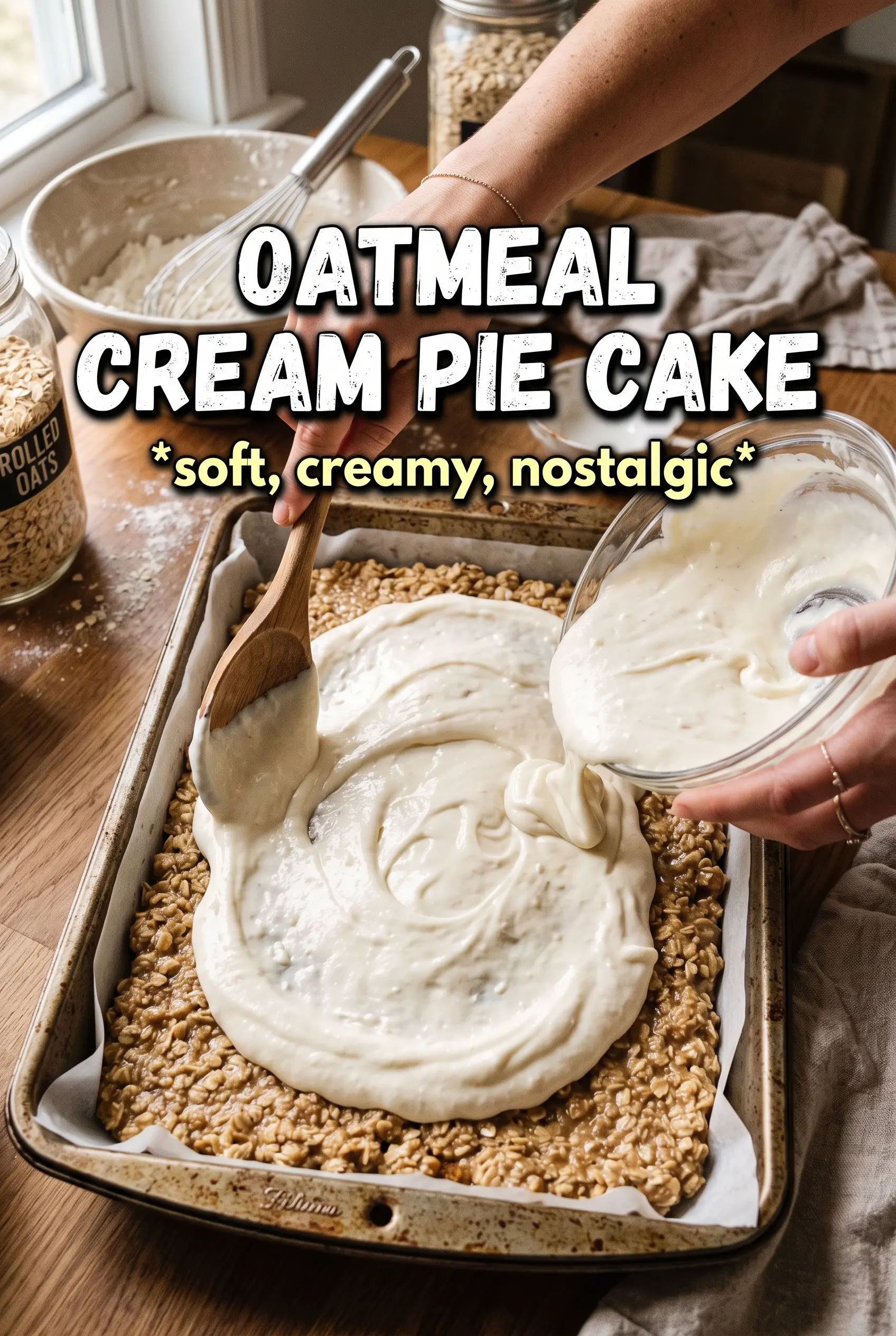
Oatmeal Cream Pie Cake
Ingredients
Equipment
Method
- Preheat oven to 350F, then grease two 9-inch round pans and set aside. Aim for fully coated pans so the layers release cleanly.
- Beat butter and brown sugar until smooth and lighter in color. Continue mixing as you prepare the next step so the batter stays cohesive.
- Add eggs one at a time, then beat until combined. The batter should look thick and glossy after this step.
- Mix in sour cream and vanilla until the batter is smooth. Scrape the sides to prevent dry pockets.
- Fold in flour, rolled oats, baking powder, baking soda, cinnamon, nutmeg, and salt. Stop mixing once no dry streaks remain and the batter holds together.
- Divide batter between the two prepared pans and tap once to level. Keep the layers even for consistent stacking.
- Bake at 350F for 30-35 minutes, until a toothpick in the center comes out clean. Watch for lightly browned edges and a set, springy top.
- Cool cakes completely in the pans before assembling. This prevents the filling from melting and keeps the crumb stable.
- Beat softened unsalted butter and cream cheese until smooth. Mix until there are no lumps, aiming for a velvety base.
- Beat in marshmallow creme until fully incorporated and fluffy. The mixture should look thick and pale with a smooth texture.
- Beat in powdered sugar and vanilla until very fluffy and spreadable. Pause to scrape the bowl so the filling stays uniform.
- Frost between the cake layers with the marshmallow cream filling. Spread to the edges for a thick, cream-pie feel.
- Frost the outside of the cake with any remaining filling. Smooth the top and sides, then let it hold its shape at room temperature.