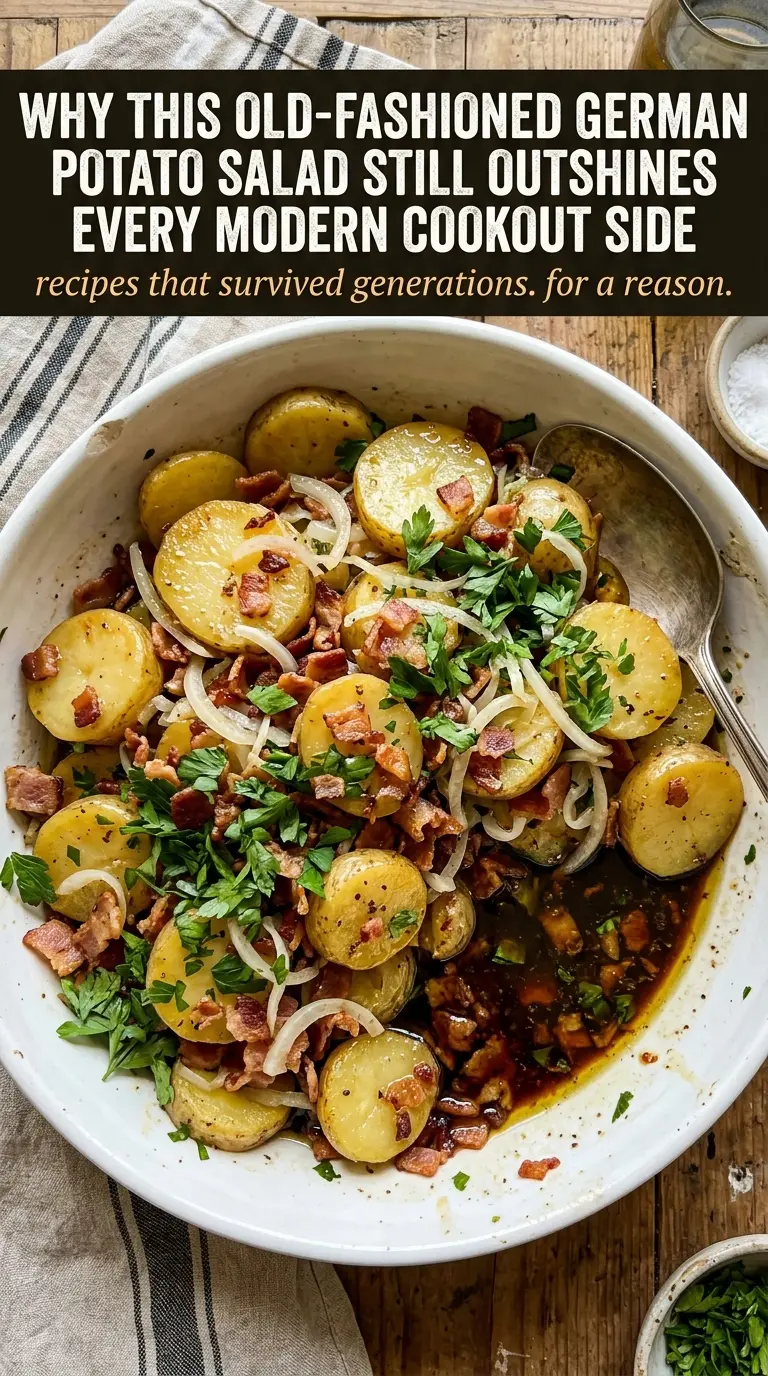
Warm German potato salad lands somewhere between comforting and sharp, with tender potatoes that soak up a tangy bacon dressing instead of sitting under a heavy mayonnaise coat. When it’s done right, the potatoes stay intact but soft enough to catch every bit of the oniony, vinegary sauce, and the bacon gives each bite a salty, smoky edge.
The trick is treating the dressing like a gravy, not a vinaigrette. A little flour cooks with the onions first, which gives the broth and vinegar enough body to cling to the potatoes instead of sliding straight to the bottom of the bowl. Russets are traditional here because they absorb flavor well, but they need gentle handling once they’re boiled so the slices don’t break down into mash.
Below, I’ll show you the exact point where the dressing should thicken, how warm the potatoes should be when the sauce goes on, and a few swaps that still keep the salad true to the dish.
The dressing thickened just enough to coat the potatoes, and the bacon-onion flavor came through in every bite. I served it warm with sausages, and there wasn’t a spoonful left.
Save this warm German potato salad for the nights when you want tangy bacon dressing and tender potatoes served straight from the bowl.
The Dressing Should Coat, Not Pool, at the Bottom
The biggest mistake with German potato salad is treating the dressing like something you pour over the top and walk away from. It needs enough body to cling to the potatoes while they’re still warm, which is why the flour goes into the onions before the liquid. That tiny step keeps the vinegar and broth from separating into a thin, watery puddle in the bowl.
The potatoes also matter here. Russets absorb flavor well, but they can fall apart fast if you overboil them or stir too hard after draining. Cook them just until tender, drain them well, and add the hot dressing while they’re still warm enough to soak it in.
- Russet potatoes — These break down a little at the edges, which helps them catch the dressing. Waxy potatoes will hold their shape more neatly, but they won’t drink in the sauce the same way.
- Bacon drippings — This is the base of the whole dish. If you swap in oil, the salad still works, but you lose the smoky depth that makes the dressing taste old-fashioned.
- Flour — Just a tablespoon gives the dressing enough thickness to cling. If you need to keep it gluten-free, use a cornstarch slurry at the end, but add it carefully so the sauce doesn’t turn gluey.
- Beef broth — It brings savory weight that water can’t match. Use a good boxed broth if that’s what you have; the dressing is simple enough that a bland broth will show.
What Each Ingredient Is Actually Doing in Proper Dressing Balance
- Oil at the right proportion — There should be just enough oil to coat everything without excess pooling at the bottom. Usually 3:1 oil to acid is a good starting point.
- Acid (vinegar, lemon, or mustard) balanced — The acid should be strong enough that you taste it equally with the oil. Too much acid makes the dressing thin; too little makes it oily.
- Emulsifier (Dijon mustard or honey) — A small amount helps the oil and acid combine and stay combined. This prevents pooling and keeps the dressing distributed.
- Pasta or vegetables that absorb dressing — The pasta or vegetables should soak up the dressing as the salad sits. If there’s pooling, you might have too much dressing.
- Tossing technique — Toss thoroughly but gently so the dressing coats everything. Quick, choppy tosses don’t distribute the dressing evenly.
- Herbs distributed throughout — Fresh herbs should be visible throughout the salad, not concentrated in one spot. This shows the dressing is evenly distributed.
- Cold temperature — Cold dressing is thicker than warm dressing. Let the dressing sit at room temperature while you assemble the salad, then chill before serving.
- Toss again right before serving — The salad might have absorbed some dressing as it chilled. A final toss redistributes any remaining dressing before serving.
How to Build the Warm Bacon Dressing Without Breaking It
Cooking the Potatoes to the Right Point
Boil the sliced potatoes until a knife slips in with almost no resistance, but stop before they start crumbling at the edges. If the slices look fluffy or ragged in the pot, they’re already too soft and will fall apart once the hot dressing hits them. Drain them well so the dressing isn’t diluted by extra water.
Rendering the Bacon and Softening the Onion
Cook the bacon until crisp, then remove it and leave the drippings in the pan. The onion goes into that fat and should turn soft and glossy, not browned hard at the edges, because you want sweetness without bitterness. If the pan looks dry, the bacon didn’t render enough fat and you’ll need just a spoonful more to keep the onions from scorching.
Thickening the Vinegar Dressing
Sprinkle the flour over the onions and stir it for a minute so it loses that raw taste. Then add the broth, vinegar, sugar, salt, and pepper, and simmer until the liquid turns slightly glossy and coats the back of a spoon. If it still looks thin, keep simmering; if it turns pasty, the heat was too high and the sauce cooked down too fast.
Finishing the Salad While Everything Is Hot
Crush the bacon, add it to the potatoes, and pour the hot dressing over the top while both are still warm. Gently fold instead of stirring hard, because this is the point where mashed-potato salad happens if you rush it. Finish with parsley once it’s in the bowl so the herb stays bright and fresh.
How to Adapt This Old-Fashioned German Potato Salad
Make It Gluten-Free Without Losing the Texture
Skip the flour and thicken the dressing with a small cornstarch slurry instead. Stir it into the simmering liquid at the end and cook just until it lightly coats a spoon. The texture will be a little cleaner and less gravy-like, but the salad still holds together well.
Use Waxy Potatoes for Cleaner Slices
Yukon Gold or red potatoes hold their shape better than russets if you want tidy slices in the bowl. They won’t soak up quite as much dressing, so the salad tastes a little lighter and less soft, but the texture is great for serving at a picnic or buffet.
Make a Pork-Free Version
Use butter and a little neutral oil in place of the bacon drippings, then add smoked paprika and a pinch of salt to bring back some of that savory depth. You’ll lose the classic bacon flavor, but you’ll still get a warm vinegar dressing that works well with sausages, roasted chicken, or grilled vegetables.
Storage and Reheating
- Refrigerator: Store leftovers in an airtight container for up to 3 days. The potatoes will absorb more dressing as they sit, so the salad tastes a little less sharp the next day.
- Freezer: I don’t recommend freezing this salad. The potatoes turn mealy and the dressing separates after thawing.
- Reheating: Warm it gently in a covered skillet over low heat with a splash of broth or water. High heat dries out the potatoes and makes the bacon turn tough.
Answers to the Questions Worth Asking
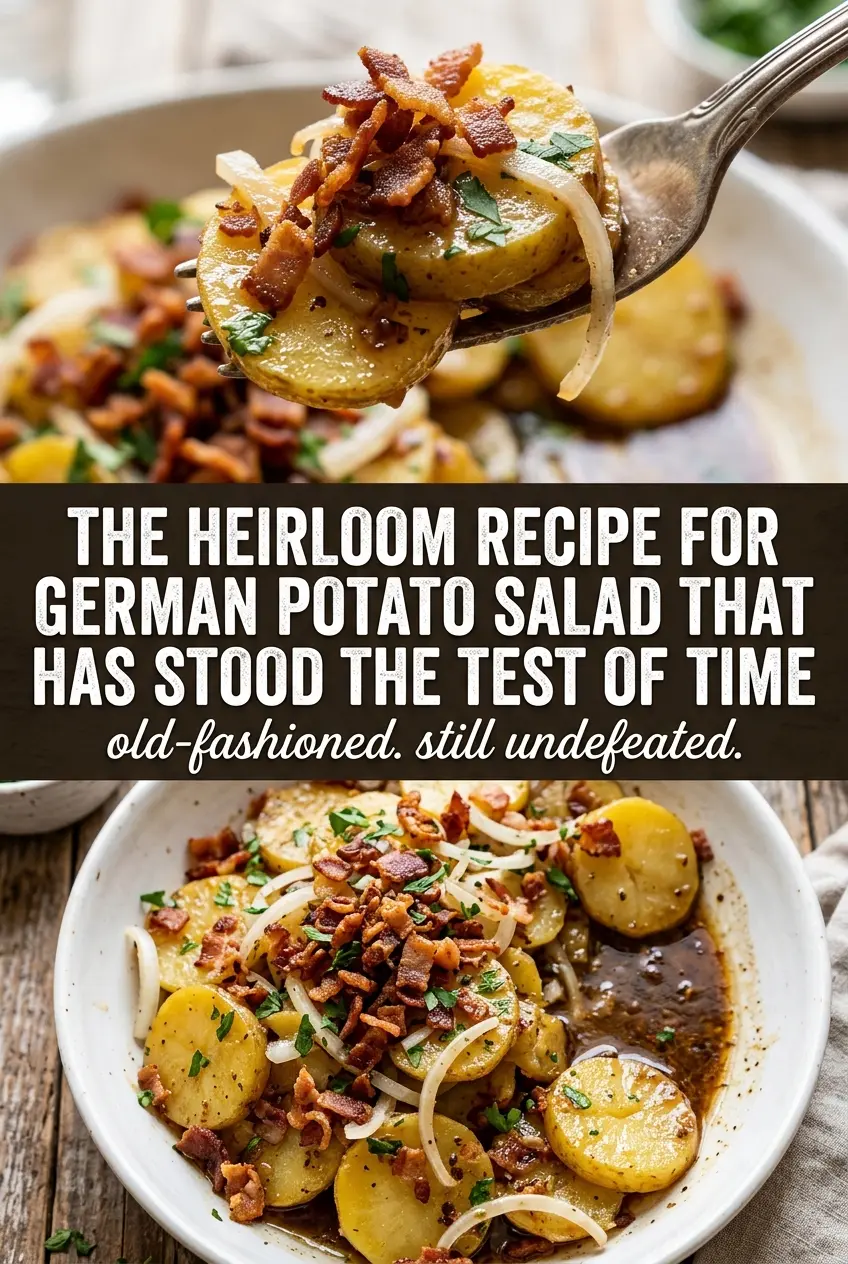
Old-Fashioned German Potato Salad
Ingredients
Equipment
Method
- Bring a Dutch oven of water to a boil, then cook the peeled sliced russet potatoes until tender, 10-15 minutes. Visual cue: pieces should yield easily when pierced with a fork.
- Drain the potatoes thoroughly and set aside while you cook the bacon and dressing. Visual cue: no standing water should remain.
- In a cast iron skillet, cook the bacon until crispy, 8-12 minutes. Visual cue: bacon turns deeply browned and releases fat, and drippings collect in the pan.
- Sauté the diced onion in the reserved bacon drippings until softened and lightly golden, 5-7 minutes. Visual cue: onion edges look translucent and smell sweet.
- Sprinkle the flour over the onions and stir until the mixture looks smooth, 1-2 minutes. Visual cue: flour disappears into the drippings instead of clumping.
- Add beef broth, white vinegar, sugar, salt, and pepper to the skillet and simmer until thickened, 3-5 minutes. Visual cue: the sauce coats the back of a spoon and holds a line when you draw a finger through it.
- Crumble the crispy bacon and add it to the hot potatoes. Visual cue: bacon pieces distribute through the potatoes.
- Pour the hot dressing over the potatoes and bacon, tossing gently until evenly coated. Visual cue: potatoes look glossy from the thickened vinegar dressing.
- Garnish with chopped fresh parsley and serve warm. Visual cue: parsley is bright green and scattered over the top.