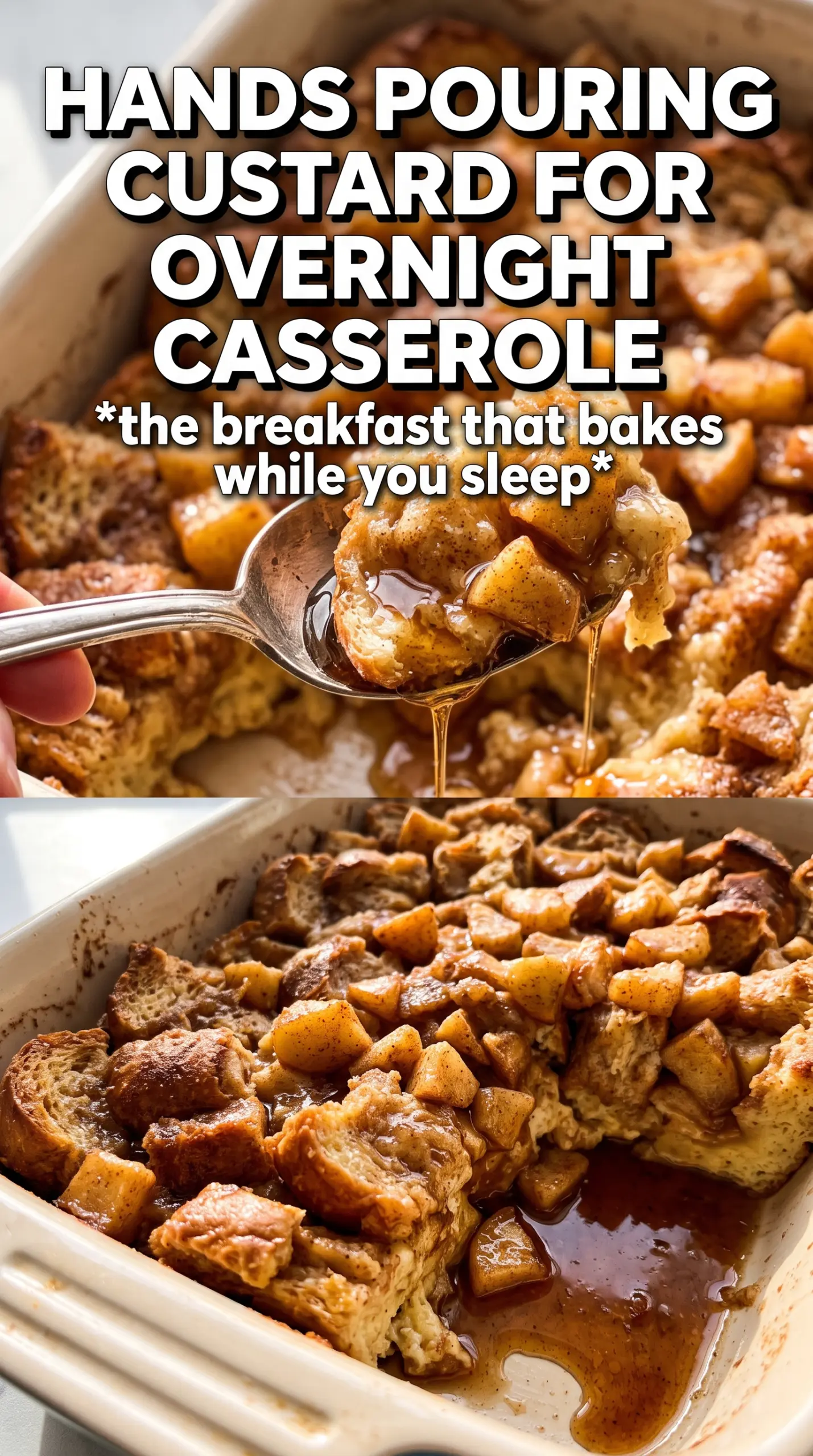
Cinnamon apple baked French toast casserole comes out with a soft, custardy middle, caramelized edges, and a crisp streusel lid that cracks under your spoon. The overnight rest does the heavy lifting here. The bread soaks up the egg mixture all the way through, while the apples soften just enough to turn sweet and jammy without disappearing into the custard.
Using brioche or challah matters because both breads stay tender after a long soak instead of collapsing into a soggy slab. The maple syrup in the custard gives the whole dish a deeper sweetness than plain sugar alone, and the little bit of cream keeps the texture rich without making it heavy. I also like pressing the bread down after pouring in the custard so every cube gets a chance to absorb it before baking.
Below, I’ve included the one timing detail that keeps the top from overbrowning before the center sets, plus a few smart variations if you need to work around what’s already in your kitchen.
The bread soaked overnight and baked up with a soft center and crisp streusel top. The apples stayed tender and the maple flavor came through without making it overly sweet.
Save this overnight cinnamon apple French toast casserole for the mornings when you want a puffed, custardy breakfast with a crackly streusel top.
The Overnight Soak Is What Keeps the Center Custardy
The biggest mistake with baked French toast casserole is rushing it into the oven as soon as the custard goes in. The bread on top looks saturated, but the middle layers are still dry. Overnight chilling fixes that. It gives the liquid time to move through every cube, which is how you get a slice that holds together without turning dense or eggy.
The other detail that matters is the 30-minute rest after the casserole comes out of the fridge. Cold glass or ceramic plus a cold center can leave you with a browned top and an underdone middle. Letting the dish take the chill off helps the custard bake more evenly, and the streusel still stays crisp instead of sinking into the filling.
- Press the bread down gently after pouring. You don’t want to mash it, just encourage the custard into the gaps.
- Use a loaf that has some structure. Brioche and challah stay tender, but they don’t dissolve the way soft sandwich bread can.
- Give the apples a chance to sit among the bread. Nestling them through the dish keeps the fruit from all ending up on top or all sinking to the bottom.
What Each Ingredient Is Actually Doing in This Casserole
- Brioche or challah — This is the backbone of the dish. Both breads have enough richness and structure to soak overnight without collapsing. If you need a substitute, use a sturdy bakery loaf cut into cubes and leave it out for a few hours so it dries a little first.
- Apples — They bring tartness, moisture, and little pockets of jammy fruit throughout the casserole. A firmer apple like Honeycrisp, Granny Smith, or Pink Lady holds its shape best. Softer apples can work, but they’ll melt more into the custard.
- Whole milk and heavy cream — The milk gives you volume; the cream gives you that lush, custardy finish. You can swap in half-and-half if that’s what you have, but the filling will be a touch lighter. Skim milk makes the texture thinner and less silky.
- Maple syrup and brown sugar — Maple syrup sweetens the custard with a deeper note than granulated sugar alone, and brown sugar adds a little molasses richness. That combination works with apples in a way plain sugar doesn’t quite match.
- Streusel topping — The cold butter is what keeps the topping crumbly. If the butter gets too warm, you’ll get a paste instead of crumbs, so cut it in until the pieces look like damp sand with a few larger clumps.
Building the Layers So the Top Stays Crisp
Assemble the Bread and Apples First
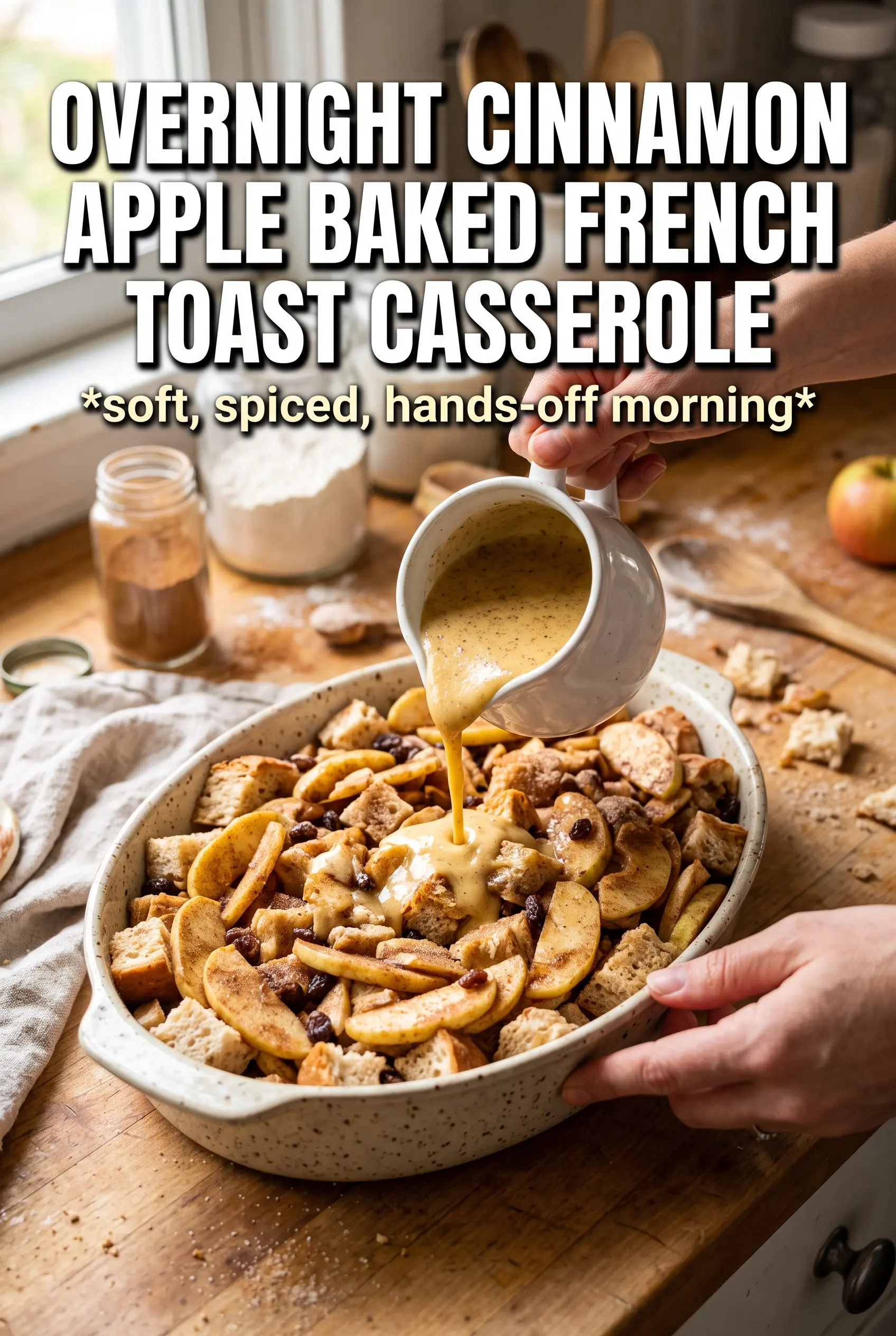
Grease the baking dish well, then spread the bread cubes and diced apples in an even layer. The goal is an airy pile, not a packed-down slab. If the cubes are jammed together before the custard goes in, the liquid can’t move through cleanly and you end up with dry pockets. Keep a little roughness in the surface so the streusel has places to cling later.
Whisk the Custard Until It Looks Uniform
Mix the eggs, milk, cream, maple syrup, brown sugar, cinnamon, nutmeg, vanilla, and salt until the eggs are fully broken up and the liquid looks smooth. You don’t need to beat in a lot of air. In fact, too much foaming can make the top puff unevenly and then collapse. Pour it slowly and work around the dish so every section gets soaked.
Let the Fridge Do the Hard Work
Cover the dish tightly and refrigerate it overnight. That rest is what turns a pan of bread and apples into a proper casserole. The custard needs time to settle into the center, and the spices need time to spread through the dish. If the top looks dry in the morning, that’s normal; the custard will finish its work in the oven.
Bake Until Puffed and Set
Scatter the streusel over the top, then bake at 350°F until the casserole is deeply golden, puffed around the edges, and no longer sloshy in the center. The middle should wobble just slightly when you nudge the pan, not ripple like liquid. If the top is browning too fast before the center is set, lay a sheet of foil loosely over the dish for the last 10 to 15 minutes.
How to Adapt It for Different Diets and Different Mornings
Dairy-Free Version
Use full-fat oat milk or almond milk in place of the whole milk and swap the heavy cream for canned coconut milk or a thick dairy-free creamer. The casserole will still set, but the flavor will be a little less rich and the texture a touch lighter. Keep the apples and streusel the same so the finished dish still feels complete.
Gluten-Free Swap
Use a sturdy gluten-free brioche-style loaf if you can find one, or another thick-cut gluten-free bread that can handle soaking. The casserole will bake up well, but gluten-free bread can soften faster, so don’t skip the overnight chill. For the streusel, replace the flour with a 1:1 gluten-free baking blend.
Extra Apple, Less Sweet
If you want the apple flavor to stand out more, add one extra apple and reduce the brown sugar in the custard by a tablespoon. That nudges the casserole toward a fruit-forward breakfast instead of a dessert-like one. The streusel still gives you enough sweetness on top.
Storage and Reheating
- Refrigerator: Store leftovers covered for up to 4 days. The streusel softens a little, but the casserole stays sliceable.
- Freezer: It freezes well in individual portions. Wrap tightly, freeze for up to 2 months, and thaw in the fridge before reheating.
- Reheating: Warm in a 325°F oven until heated through, or use short bursts in the microwave. The oven keeps the topping closer to crisp; the microwave is faster but softens the streusel more.
Answers to the Questions Worth Asking
Overnight Cinnamon Apple Baked French Toast Casserole
Ingredients
Equipment
Method
- Grease a 9x13 baking dish, then arrange the bread cubes and diced apples inside.
- Whisk eggs, whole milk, heavy cream, maple syrup, brown sugar, cinnamon, nutmeg, vanilla extract, and salt until smooth, then pour the custard over the bread and apples.
- Press the bread down gently so the cubes absorb the custard, then cover tightly.
- Refrigerate the covered casserole overnight to fully soak.
- Make the streusel by combining flour, brown sugar, and cinnamon, then cut in cold butter until crumbly.
- Remove the casserole from the fridge and let it stand 30 minutes before baking while you heat the oven.
- Preheat the oven to 350°F.
- Scatter the streusel evenly over the top of the casserole.
- Bake for 50-55 minutes at 350°F until the top is golden and puffed.
- Serve the casserole warm with warm maple syrup and a dusting of powdered sugar.