Parmesan herb roasted acorn squash turns tender in the center and crisp at the edges, with a salty, golden crust that clings to every ridge of the squash rings. The acorn squash softens into something almost buttery while the Parmesan bakes into a savory shell that makes each slice taste far more polished than the effort it takes to pull together.
The trick is cutting the squash into even rings so everything roasts at the same pace, then giving the first part of the bake enough time to soften the squash before the cheese goes on. Parmesan burns before the squash finishes if it’s added too early, so the two-stage roast matters here. Fresh thyme and rosemary keep the dish grounded and aromatic without burying the squash’s natural sweetness.
Below, you’ll find the small details that keep the cheese crisp instead of dusty, plus a few smart swaps if you need to work with what’s in the fridge.
The squash was tender all the way through and the Parmesan turned into a crisp little crust instead of melting away. I served it with roast chicken, and the pan was scraped clean.
Save this Parmesan herb roasted acorn squash for the nights when you want a crisp cheesy side with barely any prep.
The Reason the Parmesan Sticks Instead of Sliding Off
The cheese needs a dry, hot surface to latch onto. That’s why the squash roasts first until it starts to soften and release a little steam, then gets flipped and finished with Parmesan near the end. If you add the cheese too soon, it melts into the pan and turns greasy instead of forming that crisp, salty layer you want.
Spacing matters just as much. Crowded slices trap steam, which keeps the edges pale and the Parmesan soft. Lay the rings in a single layer with a little room around each one, and you’ll get caramelized edges instead of limp squash.
- Cut size — Half-inch rings cook evenly and hold their shape. Thicker slices need more time and can stay firm in the center before the crust is finished.
- Parmesan — Grated Parmesan works better than finely powdered shelf-stable cheese here because it melts and browns with more definition.
- Roasting temperature — 400F is hot enough to brown the edges without scorching the herbs before the squash softens.
- Parchment — It keeps the cheese from welding itself to the pan and makes cleanup easier, which matters once the Parmesan starts to crisp.
What Each Ingredient Is Doing in This Dish
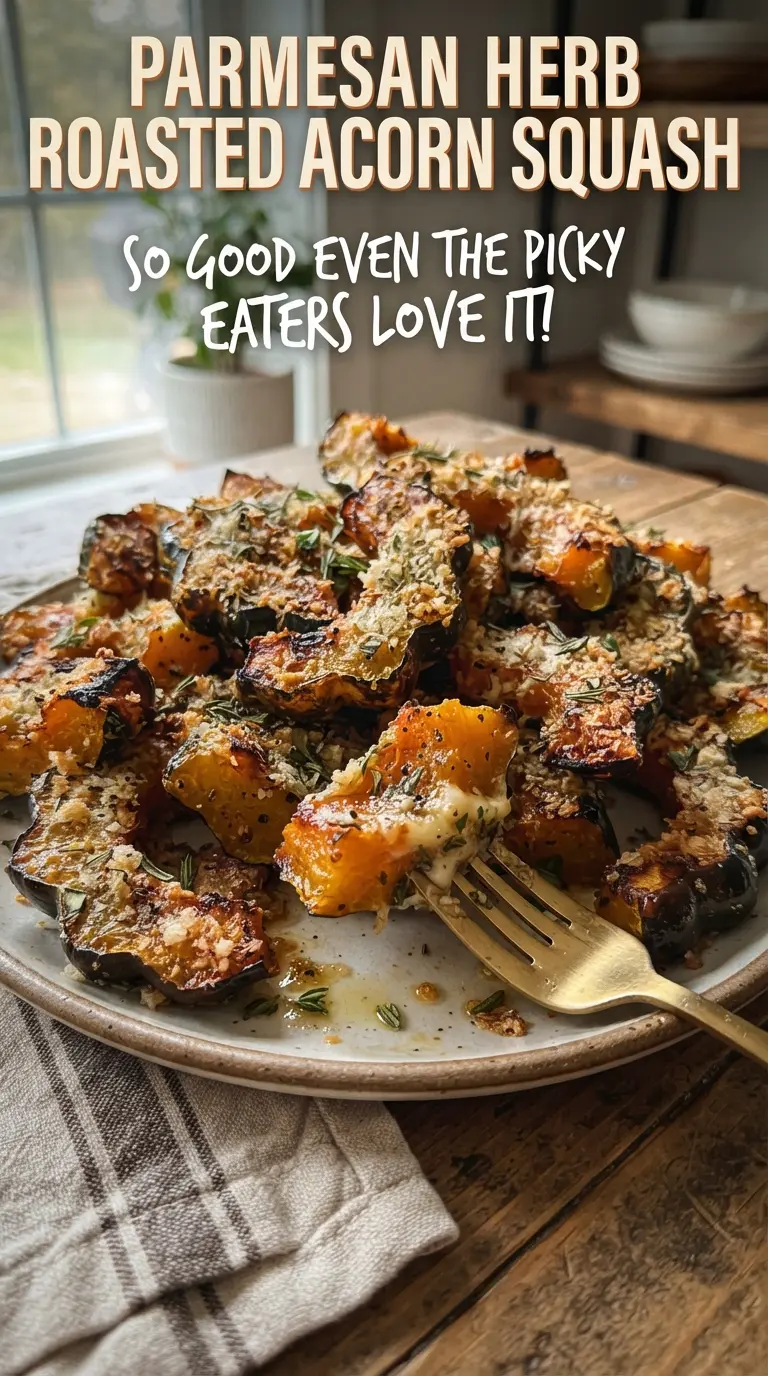
- Acorn squash — This is the backbone of the recipe. Its slightly sweet, dense flesh holds up to roasting and gives you those tender centers and caramelized edges. Slice it evenly so every piece finishes at the same time.
- Olive oil — It carries the herbs, encourages browning, and helps the Parmesan adhere later. Don’t skimp here; too little oil leads to dry spots and patchy color.
- Garlic, thyme, and rosemary — Fresh herbs make this taste savory instead of one-note sweet. Fresh is worth using here because dried rosemary can read woody, and the garlic perfumes the squash as it roasts.
- Parmesan — The cheese brings the crisp crust and the salty finish. Grate it yourself if you can; pre-grated cheese often contains anti-caking agents and doesn’t brown as evenly.
Getting the Squash Tender Before the Cheese Turns Too Dark
Season the rings evenly
Toss the squash slices with oil, garlic, thyme, rosemary, salt, and pepper until every cut surface looks lightly coated. That thin film of oil helps the herbs cling and keeps the squash from drying out at the edges. If the garlic seems to be gathering in one spot, keep tossing until it’s distributed; clumps can burn before the squash is done.
Roast until the squash just starts to yield
Spread the rings out in a single layer on a parchment-lined sheet pan and roast for 20 minutes. At this point, the squash should have started to soften and take on a little color underneath, but it won’t be fully tender yet. If the pieces are stacked or touching too much, they’ll steam instead of roast and you’ll lose that browned edge.
Flip, add the cheese, and finish hot
Turn each slice, then sprinkle Parmesan generously over the top. Return the pan to the oven for 12 to 15 minutes, just until the cheese turns golden and crisp and a knife slides easily into the squash. If the Parmesan is browning too fast before the squash is tender, move the pan up a rack or lower the oven temperature slightly for the last few minutes.
How to Adapt This for Different Tables and Different Diets
Dairy-Free Version
Skip the Parmesan and roast the squash with a little extra olive oil plus a tablespoon or two of nutritional yeast for a savory finish. You won’t get the same crisp cheese crust, but you’ll still get a well-seasoned, deeply roasted side with good browning.
No Fresh Herbs on Hand
Use 1/2 teaspoon dried thyme and 1/4 teaspoon dried rosemary instead of the fresh herbs. Dried herbs are stronger and less delicate, so a lighter hand keeps the squash from tasting dusty or overly piney.
Extra Crispy Parmesan Finish
For a more bronzed crust, let the Parmesan sit in a thicker layer over the squash and give the pan one minute under the broiler at the very end. Watch it closely; the jump from golden to burnt is fast, and the herbs can darken before you notice.
Storage and Reheating
- Refrigerator: Store leftovers in an airtight container for up to 4 days. The Parmesan will soften, but the squash stays flavorful.
- Freezer: Freezing isn’t ideal. The squash turns watery after thawing, and the cheese crust loses its texture.
- Reheating: Warm on a sheet pan in a 375F oven until heated through and the edges re-crisp. The microwave works in a pinch, but it softens the crust and makes the squash soggy.
Answers to the Questions Worth Asking
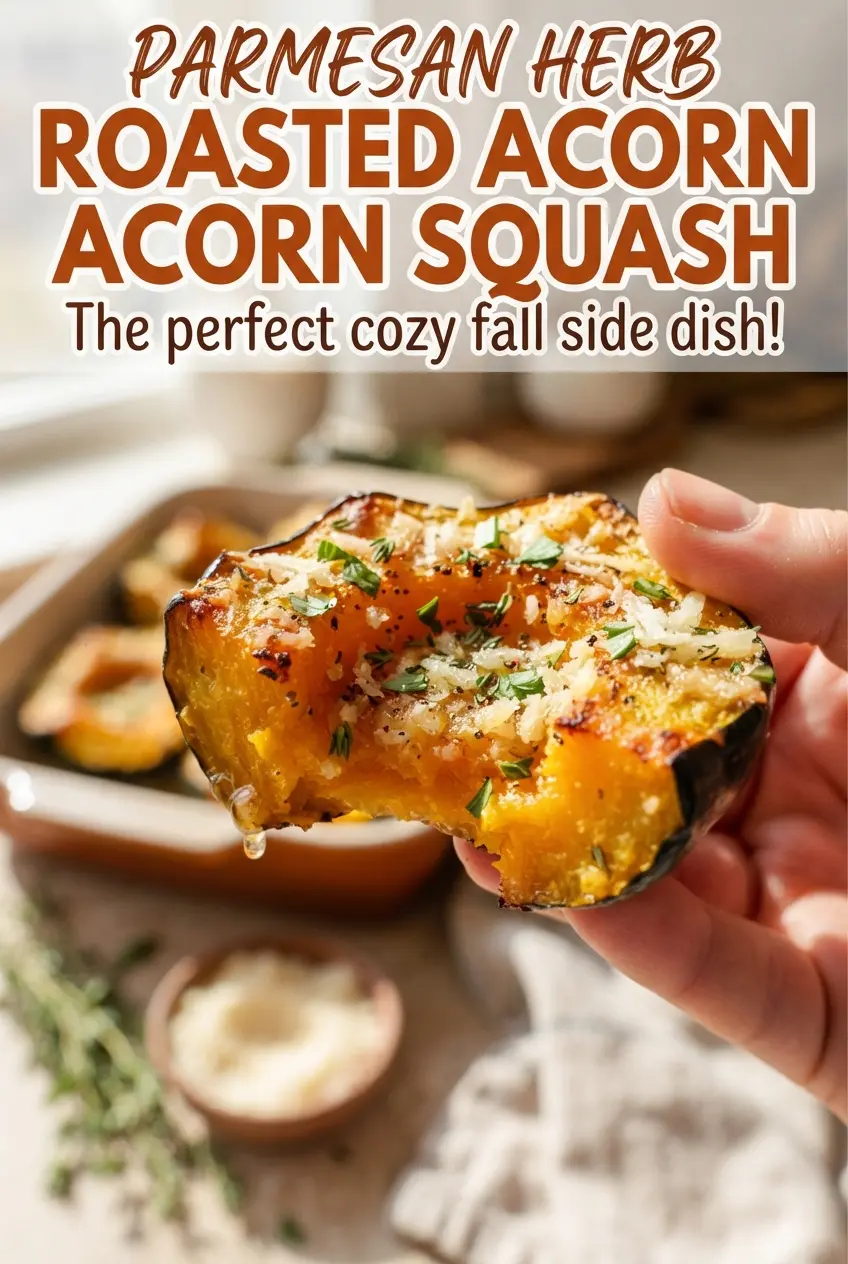
Parmesan Herb Roasted Acorn Squash
Ingredients
Equipment
Method
- Preheat the oven to 400F and line a sheet pan with parchment. Make sure the pan is ready to go so the squash starts roasting immediately after tossing.
- Toss the acorn squash rings with olive oil, garlic, fresh thyme leaves, fresh rosemary, salt, and black pepper. Coat every ring so the edges caramelize evenly.
- Arrange the squash in a single layer on the sheet pan and roast for 20 minutes. Look for edges starting to dry out and lightly brown.
- Flip the slices and sprinkle generously with grated Parmesan. Add enough cheese that it forms a visible crust on top.
- Roast for 12-15 minutes more at 400F until the squash is tender and the Parmesan is golden and crisp. The crust should look browned and set rather than pale.