Peach Cobbler Cinnamon Rolls bake up soft, gooey, and deeply fragrant, with a jammy peach filling tucked into every swirl and a thick vanilla cream cheese glaze melting into the cracks on top. The dough stays tender, the filling turns syrupy in the oven, and the finished rolls pull apart in the best way — sticky edges, pillowy centers, and those little pockets of peach that taste like cobbler folded into breakfast.
What makes this version work is the balance. The peaches need to be diced small so they soften fast and don’t tear the dough when you roll it up. Brown sugar and cinnamon give the filling the same warm backbone you’d want in a cobbler, while the cream cheese glaze adds enough tang to keep the whole pan from leaning too sweet. Warm milk helps the yeast wake up cleanly, and the dough bakes up rich without feeling heavy.
Below you’ll find the one part of the process that keeps the rolls from unwinding, plus a few swaps that help if your peaches are extra juicy or you want to make these ahead.
The peaches baked down into little jammy pockets and the glaze soaked into the swirls without making them soggy. I let the pan cool just 10 minutes and they came out perfect.
Save these Peach Cobbler Cinnamon Rolls for the mornings when you want soft rolls, jammy peaches, and a thick cream cheese glaze all in one pan.
The One Trick That Keeps the Peach Filling From Leaking Out
The filling in these rolls is juicy, and that’s exactly what makes them taste like peach cobbler instead of plain cinnamon rolls. The catch is that peaches release liquid as they bake, and if the fruit pieces are too large or the roll isn’t tight, the filling escapes before the dough has time to set. Dice the peaches small, spread the filling all the way to the edges, and roll from the long side with steady pressure so the spiral holds together.
The other thing that matters is the rest after shaping. Those 30 minutes in the pan give the rolls enough lift that they bake tall instead of dense, which helps keep the peach juices trapped inside the dough layers. If you rush that rise, the rolls spread more and the filling has a better chance of bubbling out into the pan.
What Each Ingredient Is Actually Doing in These Rolls

- Warm milk — This wakes up the yeast and helps the dough stay tender. If the milk is too hot, it can kill the yeast, so aim for warm, not steaming.
- Active dry yeast — It gives the rolls their lift and that soft, bready crumb. If your yeast doesn’t foam after a few minutes in the milk, start over; dead yeast means flat rolls.
- Butter in both the dough and filling — The dough butter makes the crumb rich, while the softened butter in the filling helps the sugar melt into a sticky layer. Melted butter is fine for the dough, but the filling needs softened butter so it spreads evenly without tearing the dough.
- Ripe peaches — Use peaches that smell fragrant and yield slightly to pressure. Under-ripe peaches stay firm and taste dull after baking, while overripe ones can turn watery and muddy the filling.
- Cream cheese — It gives the glaze body and a little tang so the rolls don’t taste like pure sugar. Full-fat cream cheese gives the smoothest glaze; lower-fat versions can be thinner and less creamy.
Rolling, Rising, and Baking the Swirls So They Stay Soft
Building the Dough
Mix the yeast with warm milk and a pinch of sugar first, then let it sit until foamy. That foam tells you the yeast is active and ready to raise the dough. Once the eggs, butter, and vanilla go in, add the flour gradually and knead until the dough feels smooth and elastic, not sticky and shaggy. If it still tears when you stretch it, knead another minute or two; under-kneaded dough bakes up tighter.
Layering the Filling
Roll the dough into a clean rectangle and spread the softened butter all the way to the corners. Sprinkle the brown sugar and cinnamon evenly, then scatter the diced peaches over the top. Don’t pile the peaches in one strip down the middle or the roll will bulge and split. A thin, even layer gives you the best spiral and keeps the fruit distributed from edge to edge.
Cutting and Proofing
Roll the dough up tightly from the long side so the log has enough structure to hold the filling inside. A sharp knife or unflavored dental floss gives cleaner cuts than a dull blade, which smashes the spiral and squeezes out the peaches. Set the rolls in the pan with a little space between them, then let them rise until puffy. They should look airy and slightly expanded, not doubled and collapsed.
Baking and Glazing
Bake until the tops are deeply golden and the centers no longer look wet in the middle. If the tops brown too fast, lay a loose piece of foil over the pan for the last few minutes. Let the rolls cool for about 10 minutes before glazing so the icing thickens slightly instead of disappearing straight into the pan. Warm rolls take glaze beautifully; hot rolls melt it into a puddle.
How to Adapt These Rolls When the Peaches Are Different
Use frozen peaches when fresh ones aren’t in season
Thaw the peaches first and drain off the excess liquid before dicing them smaller. Frozen fruit brings the peach flavor, but it adds moisture, so skipping the drain step can make the filling leak and the bottom of the rolls soggy.
Make them dairy-free
Use plant-based butter, unsweetened non-dairy milk, and a dairy-free cream cheese for the glaze. The rolls will still be soft and rich, but the glaze may be a little looser, so start with less cream and add only as needed.
Swap in a jam shortcut
If your peaches are bland or you want a stronger peach flavor, replace half the diced fruit with thick peach preserves. That gives you a more concentrated filling that behaves a little like cobbler syrup, but don’t use all jam or the rolls can turn overly sweet and sticky.
Make them ahead for brunch
Shape the rolls, cover the pan tightly, and refrigerate overnight after the second rise starts. In the morning, let them sit at room temperature while the oven preheats so they lose the chill before baking; cold dough in a hot oven tends to bake unevenly in the center.
Storage and Reheating
- Refrigerator: Store covered for 3 days. The rolls stay soft, though the peach filling softens the spiral a little more each day.
- Freezer: Freeze baked rolls without glaze for up to 2 months. Wrap them well and thaw overnight in the refrigerator before reheating.
- Reheating: Warm individual rolls in the microwave for 20 to 30 seconds or the whole pan covered in a 300°F oven until heated through. Don’t blast them on high heat or the dough turns dry before the center warms up.
Questions I Get Asked About This Recipe
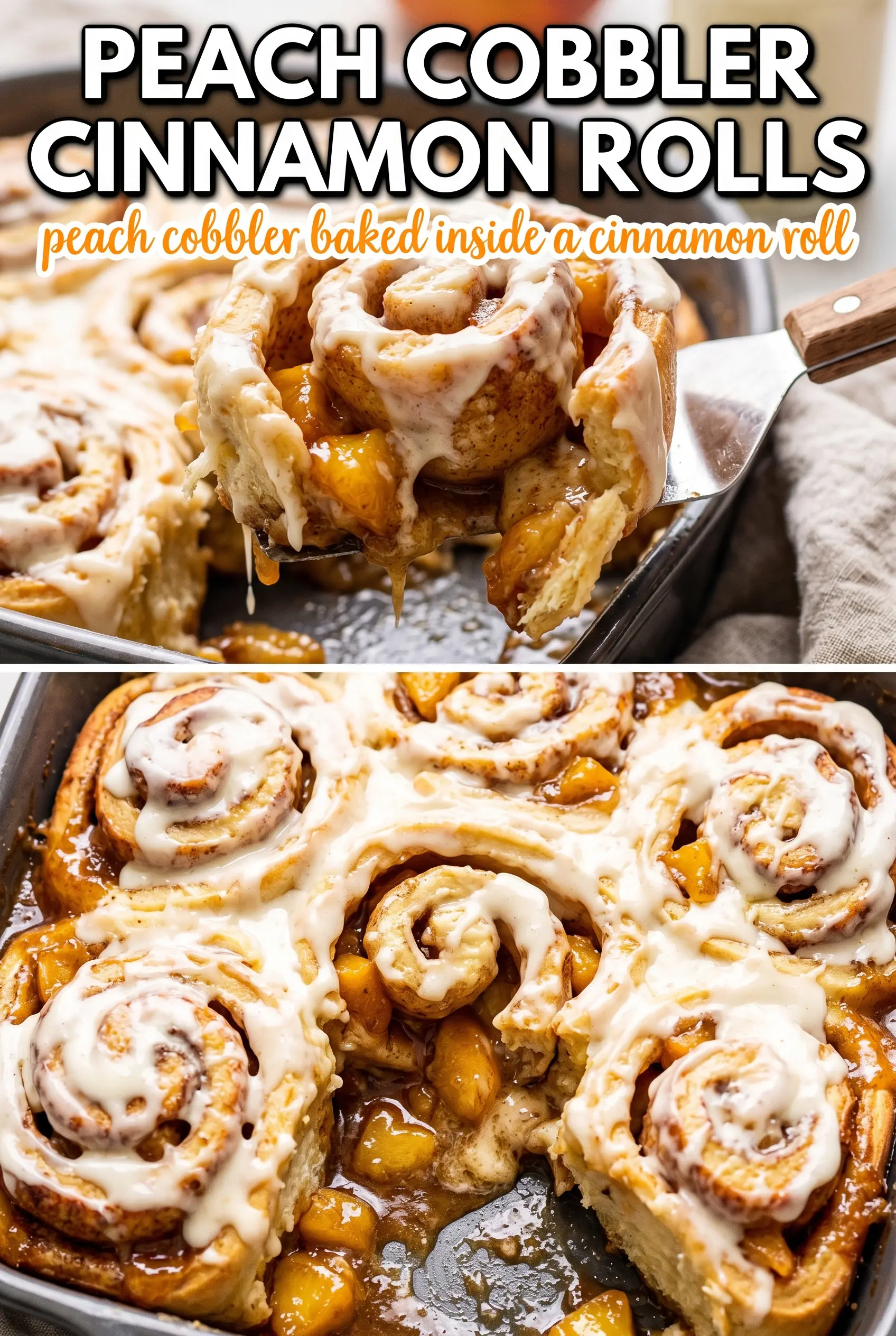
Peach Cobbler Cinnamon Rolls
Ingredients
Equipment
Method
- In a bowl, combine warm milk with active dry yeast and a pinch of granulated sugar, then let stand for 5 minutes until foamy (visual cue: bubbles/foam on top).
- Mix in the remaining granulated sugar, melted butter, eggs, and vanilla extract until smooth.
- Add all-purpose flour and salt, then stir until a shaggy dough forms.
- Knead the dough for 6-8 minutes until smooth and elastic (visual cue: it looks cohesive and springy).
- Place the dough in a lightly greased bowl, cover, and let rise for 1 hour until doubled in size (visual cue: it increases volume and springs back slowly).
- Roll the dough into a 12x18-inch rectangle.
- Spread softened butter over the entire surface.
- Sprinkle brown sugar and cinnamon evenly across the dough.
- Scatter diced peaches evenly over the sugar layer.
- Roll the dough tightly from the long side into a log.
- Cut the log into 12 rolls and place them in a greased 9x13 pan.
- Cover and let rise for 30 minutes until puffy (visual cue: rolls expand and touch each other).
- Bake at 375°F for 25-30 minutes until golden (visual cue: tops are browned and a toothpick comes out mostly clean).
- Cool the rolls for 10 minutes in the pan to set the structure.
- Beat cream cheese, powdered sugar, heavy cream, and vanilla extract until smooth.
- Drizzle the glaze over the warm rolls so it pools between every swirl.
- Serve warm.