Creamy vanilla custard and crackly praline pecans make this ice cream the kind of dessert people keep sneaking back to the freezer for. The contrast is the whole point: smooth, rich cream base first, then those candy-coated pecan chunks that snap as you bite into them and melt into buttery caramel. It tastes like a classic pralines-and-cream shop cone, but with a deeper brown sugar note and a fresher, cleaner finish.
The praline pecans matter more than a simple mix-in here. Cooking the sugar, cream, and butter to soft-ball stage gives you a coating that hardens into shards instead of staying sticky, which means the chunks stay distinct in the churn. The custard base is built with egg yolks and gently cooked to 175F, just enough to thicken without scrambling. That slow, careful heat gives the finished ice cream its dense, scoopable texture.
Below you’ll find the cue I use for a smooth custard, the best way to fold in the praline pieces so they don’t disappear, and a few ways to adapt this if you want it a little more Southern, a little less sweet, or easier to make ahead.
The praline bits hardened up perfectly and stayed crunchy even after freezing overnight. I loved that the custard was silky without tasting eggy, and my husband asked for a second scoop before dinner was even over.
Save this pecan praline and cream ice cream for the nights when you want crunchy praline pieces in every spoonful.
The Part That Keeps the Praline Crunchy After Freezing
Most praline ice creams lose their best texture because the candy gets folded in too early or cooked into a soft, sticky mass. Here, the praline is cooked to soft-ball stage first, then spread out to cool hard before it ever meets the custard. That matters because you want hardened shards and clusters, not chewy caramel that sinks into the base and disappears.
The other thing that protects the texture is timing. The praline pieces go in during the last few minutes of churning, when the base is already thick enough to suspend them. If you add them sooner, the machine breaks them down too much and you end up with brown streaks instead of distinct nuggets of crunch.
What the Brown Sugar Is Really Doing in Both Parts of the Recipe
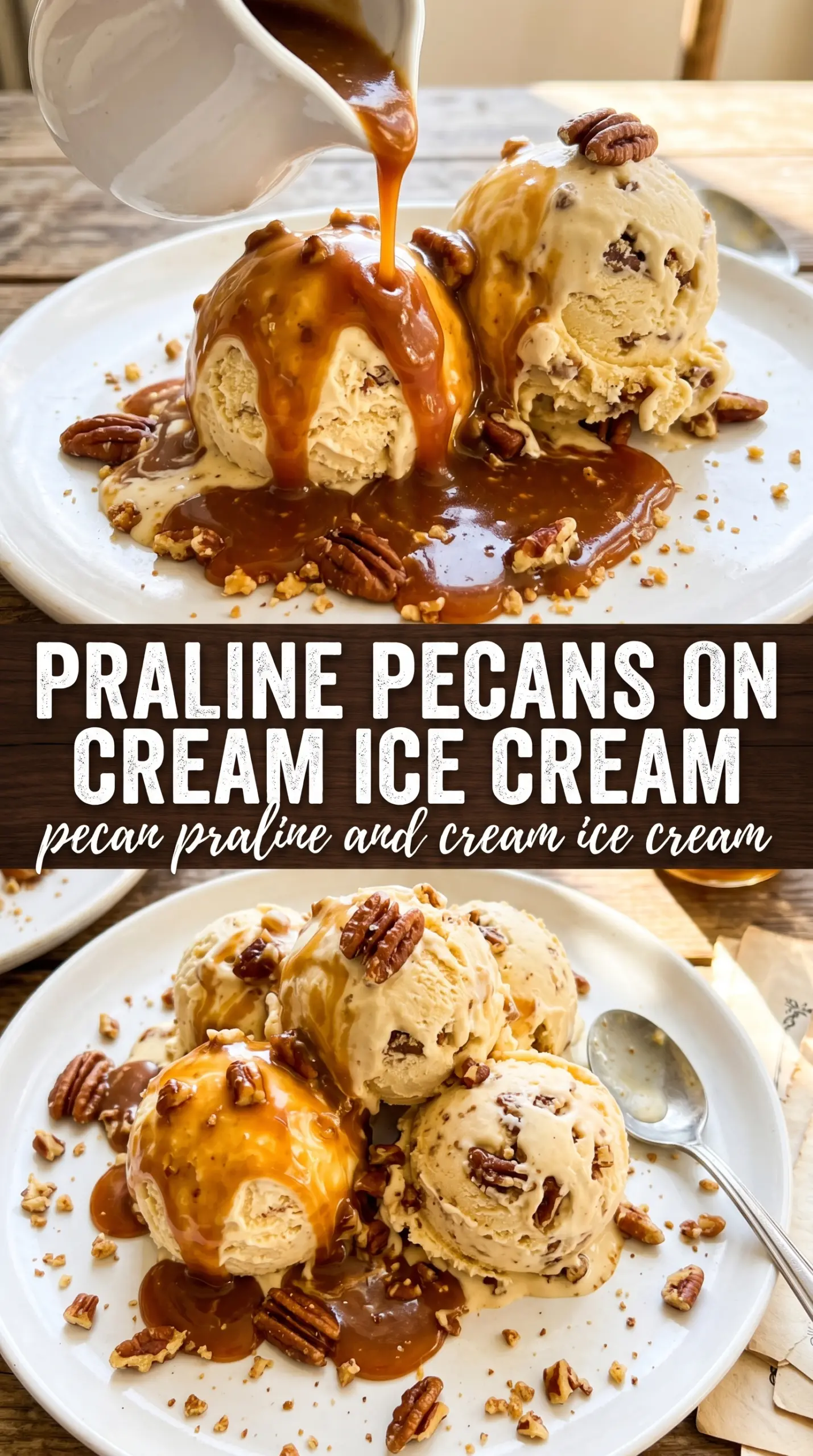
Brown sugar pulls double duty here. In the praline, it brings the molasses note that makes the candy taste like actual praline instead of plain caramelized nuts. In the custard, it sweetens the base with a deeper, rounder flavor than white sugar would give you, which keeps the ice cream from tasting flat next to the candy pieces.
- Pecans — Pecan halves give the best shape for chunky praline bits. Pieces or chopped pecans work in a pinch, but they burn faster and you lose that satisfying bite. Use fresh pecans if you can; stale nuts taste dusty once frozen.
- Brown sugar — Packed brown sugar is what gives both the praline and custard their warm caramel note. You can swap in dark brown sugar for a stronger molasses flavor, but the ice cream will taste a little heavier and less vanilla-forward.
- Heavy cream — The cream in both components matters. In the praline, it helps dissolve the sugar into a proper candy coating; in the custard, it gives the base its lush texture. Half-and-half will make the custard thinner and less scoopable.
- Egg yolks — These are what turn the base into a proper custard. Whole eggs won’t give the same silky body, and skipping the yolks leaves you with a softer, icier result.
Cooking the Custard Without Scrambling the Yolks
Building the Ice Cream Base
Heat the cream, milk, and brown sugar until the sugar dissolves and the mixture is hot but not boiling. Whisk a little of that hot liquid into the yolks first, then slowly stream in the rest. That step keeps the yolks from seizing, which is the easiest way to end up with sweet scrambled eggs instead of custard.
Thickening to the Right Point
Return the mixture to the pan and cook it gently, stirring constantly, until it reaches 175F and lightly coats the back of a spoon. Don’t chase a hard boil; that’s how the eggs overcook and the base turns grainy. If you don’t have a thermometer, stop when the custard leaves a clean line when you drag a finger through the spoon coating.
Cooling Before the Churn
Strain the custard, stir in the vanilla and salt, then cool it all the way down before it goes into the machine. Warm custard churns badly and can make the ice cream base greasy instead of airy. The long chill also gives the milk and cream time to fully set up, which helps the finished texture freeze smoother.
Three Ways to Tweak This Without Losing the Praline Character
Toast the pecans first for a deeper nutty edge
A quick toast in a dry skillet before making the praline brings out a fuller pecan flavor and makes the finished chunks taste more layered. Watch them closely; once they turn fragrant, they’re done. Too much color here will read bitter once frozen.
Make it dairy-free with full-fat coconut milk
Use canned coconut milk in place of the dairy base and skip the custard-style yolk method if you want a vegan version, then churn with a coconut-milk ice cream base. The result will be a little softer and carry a light coconut note, but the praline clusters still bring the crunch and caramel flavor.
Cut the sweetness with a pinch more salt
If you like pralines but don’t want the dessert to lean sugary, bump the salt in both the praline and the custard by a small pinch. Salt doesn’t make this taste salty; it keeps the brown sugar from taking over and makes the vanilla taste cleaner.
Storage and Reheating
- Refrigerator: Store the churned ice cream in a sealed container in the freezer, not the fridge, for up to 2 weeks. The praline pieces stay crisp best in the first few days, then soften a little as they sit.
- Freezer: It freezes well. Press parchment or plastic wrap directly on the surface before sealing the container to reduce ice crystals and protect the candy pieces from freezer air.
- Reheating: Let it sit at room temperature for 5 to 10 minutes before scooping. The most common mistake is trying to serve it straight from the deep freeze, which makes the praline shards hard on your spoon and the custard taste bland.
Answers to the Questions Worth Asking
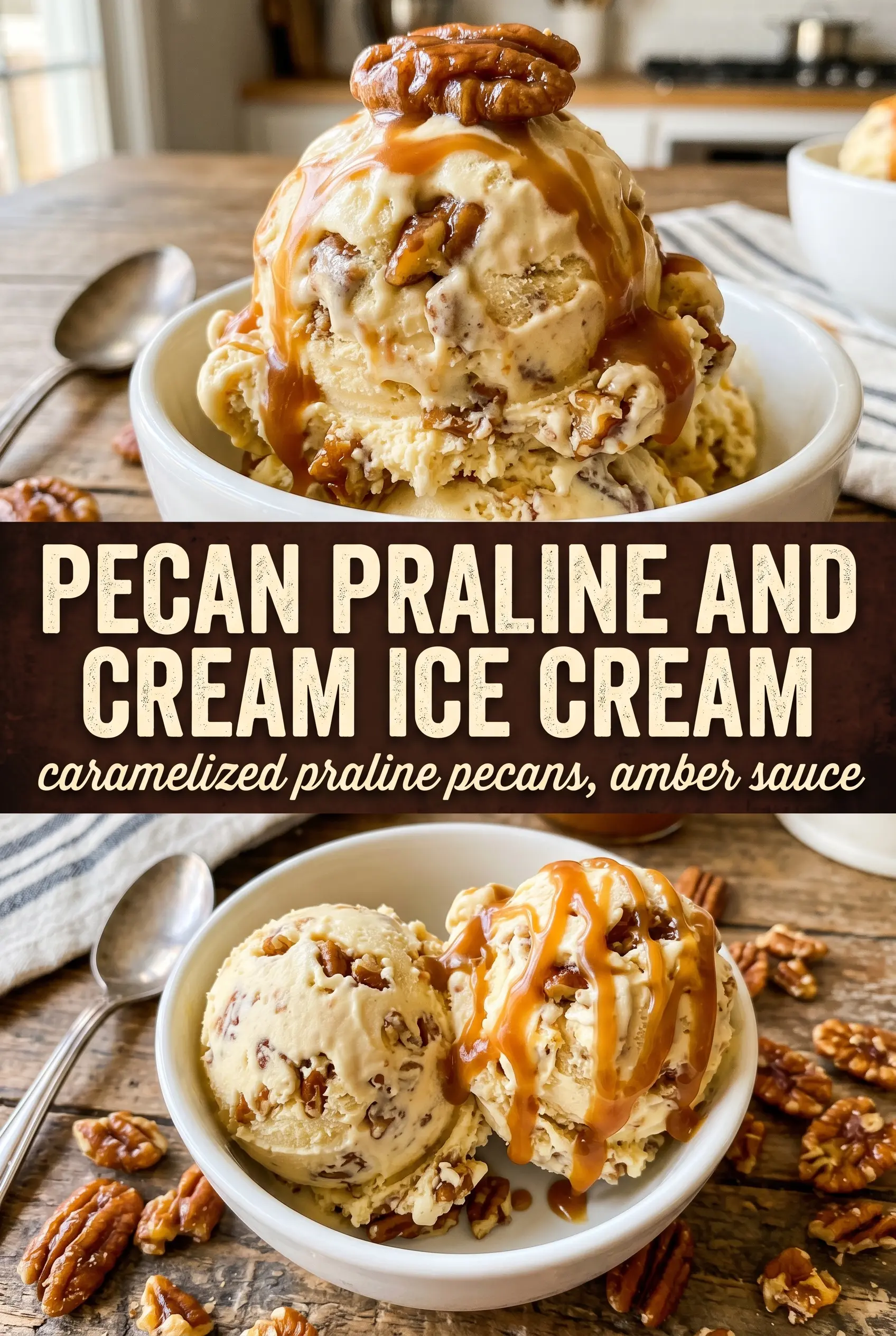
Pecan Praline and Cream Ice Cream
Ingredients
Equipment
Method
- Combine brown sugar, heavy cream, and butter in a saucepan over medium heat, stirring until smooth. Cook to 235F (soft ball stage), then stir in pecan halves, vanilla extract, and salt.
- Spread the hot praline mixture on parchment to cool and harden. Once firm, break into chunky praline pecan pieces.
- Heat heavy cream, whole milk, and brown sugar in a saucepan until the brown sugar dissolves. Slowly whisk this mixture into the egg yolks to temper.
- Cook the custard to 175F, stirring constantly for thickening. Strain it, then whisk in vanilla extract and salt, cool completely, and refrigerate 4 hours.
- Churn the chilled custard in an ice cream maker according to the manufacturer’s instructions. Fold in the praline pecan chunks in the last 5 minutes so they stay crunchy.
- Transfer to a freezer-safe container and freeze until firm. Let it sit for a few minutes before serving for easier scooping.