Silky turkey gravy turns roast drippings into the part of dinner everyone reaches for first. The texture should be glossy and spoon-coating, with enough body to settle over mashed potatoes instead of disappearing into them. When it’s made well, it tastes rich and clean, not floury or flat, and it brings the whole plate together in a way that plain pan juices never can.
The trick is giving the roux a minute to cook before the stock goes in, then whisking in warm liquid gradually so the gravy stays smooth. Using the deglazed pan juices adds the roasted flavor that makes this taste like Thanksgiving, while a little soy sauce fills in the savory depth if the drippings are on the lighter side. Fresh thyme gives it that familiar herb finish without making it taste like soup.
Below, I’ll walk through the step that keeps the gravy from turning pasty, the ingredient swap that helps when your drippings are short, and the best way to strain it if you want that extra-smooth finish.
I followed the timing exactly, and the gravy thickened into that smooth, pourable texture after about 9 minutes. No lumps, no flour taste, and it clung to the turkey just right.
Save this turkey gravy for the next roast dinner when you want silky pan drippings gravy that thickens fast and pours like velvet.
The Part That Keeps Gravy Smooth Instead of Gluey
The most common gravy mistake is adding cool liquid too fast to a hot roux. That shocks the flour and gives you lumps or a paste that never fully loosens. Warm stock changes the whole result because it blends into the roux instead of seizing on contact, which is what keeps the texture smooth from the start.
Cooking the roux for 3 to 4 minutes matters too. If you stop too soon, the gravy can taste like raw flour; if you take it too far, it gets darker and loses some thickening power. You want it just past blonde, with a light nutty smell and a golden color that tells you the flour is cooked but not scorched.
- Turkey fat or butter — Turkey drippings give you the best roast flavor, but butter works well when the pan is lean. If you use butter, add a pinch more salt at the end because it won’t bring the same savory depth.
- Warm stock — Warmed stock blends in cleanly and keeps the gravy from clumping. Cold stock is the fastest way to get a lumpy pan.
- De-glazed pan juices — These carry the browned bits that make the gravy taste roasted instead of generic. If you’re short, top off with extra stock, but don’t skip them if you’ve got them.
- Soy sauce — This doesn’t make the gravy taste like soy sauce; it deepens the color and rounds out the savoriness. A little goes a long way.
What Each Ingredient Is Actually Doing in the Pan
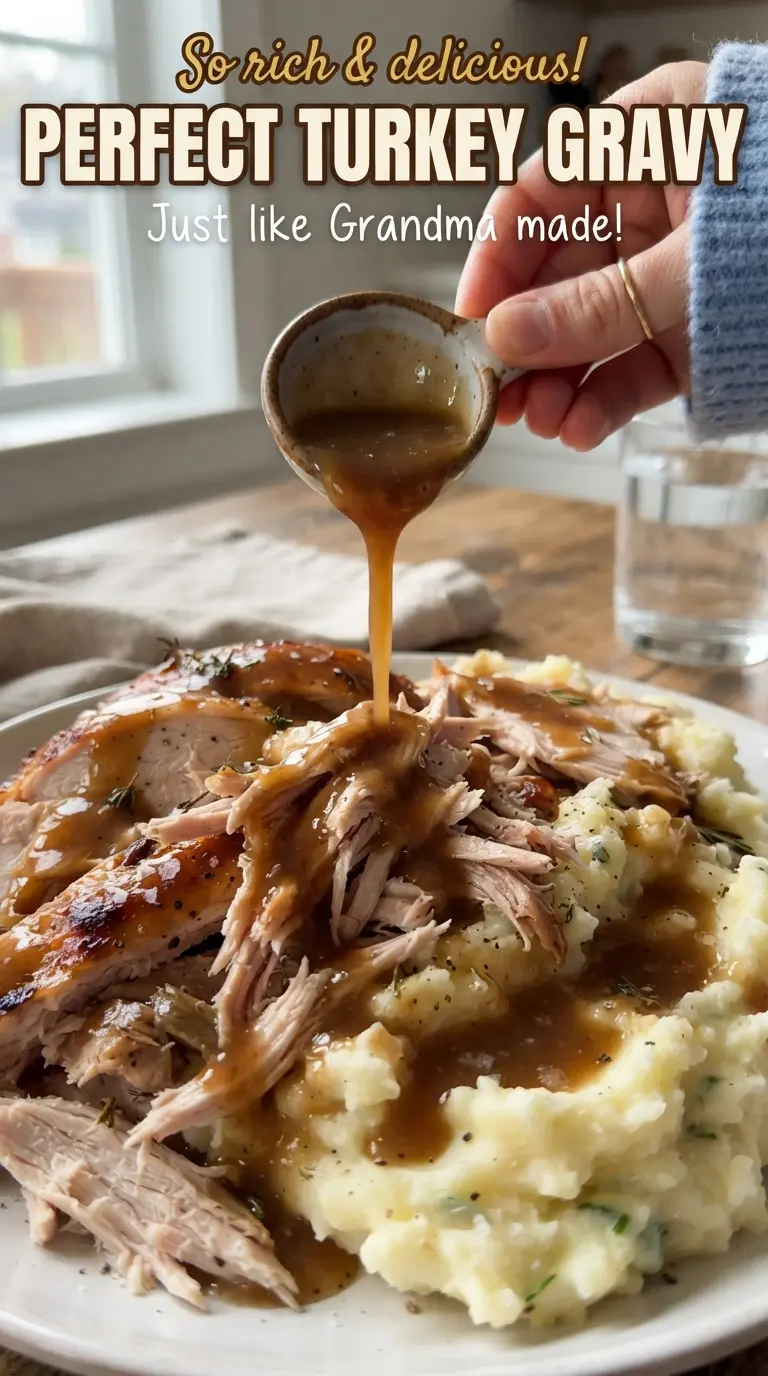
Turkey pan drippings bring the roasted flavor that makes this gravy taste like the meal it came from. Use the fat from the top of the drippings for the roux, and save the juices below for extra depth in the finished gravy.
Flour is the thickener, and it needs that minute or two of cooking time to lose its raw edge. All-purpose flour is the right tool here; gluten-free blends can work, but they usually make a softer, slightly less silky gravy.
Fresh thyme gives a light herbal note that works especially well with turkey. Dried thyme can step in at half the amount, but it lands a little sharper, so use less and taste before adding more.
Butter is the backup plan when your drippings don’t yield enough fat. It won’t bring the same savory complexity, but it still makes a smooth, dependable gravy when the pan is lean.
Building the Gravy So It Stays Silky
Pulling the Fat from the Drippings
Pour the roasting pan drippings into a measuring cup and let them sit for a few minutes so the fat rises to the top. Spoon off 1/4 cup of that fat into a saucepan. If you scoop in too much of the watery juices here, the roux won’t brown properly and the texture will be looser than it should be.
Cooking the Roux Until It Smells Nutty
Whisk the flour into the fat over medium heat and keep it moving for 3 to 4 minutes. The mixture should look like a smooth, thick paste and turn a pale golden brown. If it turns dark fast or smells sharp, the heat is too high; pull it off the burner for a moment and keep whisking so it doesn’t burn.
Whisking in the Stock Without Lumps
Add the warm stock and defatted pan juices gradually, whisking constantly. The first splash will tighten up the roux into a clump, and that’s normal; keep whisking and it will loosen into a smooth gravy. A steady stream works better than dumping everything in at once, which is how lumps form.
Finishing the Flavor and Thickness
Stir in the thyme and soy sauce, then simmer 8 to 10 minutes until the gravy coats the back of a spoon. If it’s too thin, give it a few more minutes uncovered; if it gets too thick, whisk in a splash of warm stock. Taste at the end and season with salt and pepper only after the gravy has reduced, since the drippings and soy sauce both bring salt of their own.
Ways to Adjust This Gravy Without Losing the Good Part
When You Don’t Have Enough Turkey Drippings
Use butter for the full 1/4 cup of fat and rely on the pan juices and stock for the turkey flavor. The gravy will still thicken the same way, but it’ll taste a little cleaner and less roasted, so keep the soy sauce and thyme in play.
Gluten-Free Gravy
Swap the all-purpose flour for a gluten-free all-purpose blend that contains a binder like xanthan gum. The gravy may need a little extra whisking and can finish slightly less glossy, but it still works well if you keep the stock warm and add it slowly.
Lighter Herb Gravy
Swap thyme for chopped sage or a small pinch of rosemary if that’s what you’ve got on hand. Sage gives a more classic holiday flavor, while rosemary reads louder and a little woodier, so use it sparingly.
Storage and Reheating
- Refrigerator: Store in an airtight container for up to 4 days. It will thicken as it chills.
- Freezer: Yes, it freezes well for up to 2 months. Freeze in a flat, sealed container and leave a little headspace for expansion.
- Reheating: Warm it slowly in a saucepan over low heat with a splash of stock or water. High heat can make it break or turn grainy, especially after chilling.
Answers to the Questions Worth Asking

Perfect Turkey Gravy
Ingredients
Equipment
Method
- Pour the roasting pan drippings into a measuring cup and let the fat rise to the top.
- Spoon 1/4 cup of the fat into a saucepan over medium heat.
- Whisk in the all-purpose flour and cook the roux for 3-4 minutes over medium heat, whisking, until golden brown with a nutty aroma.
- Gradually whisk in the warm turkey or chicken stock and the defatted pan juices until smooth, with no lumps visible.
- Stir in the fresh thyme leaves and the soy sauce, then simmer for 8-10 minutes until the gravy thickens enough to coat a spoon and leaves a trail when you run a finger across the back of the spoon.
- Season with salt and pepper to taste, then strain if desired for a silky finish before serving hot.