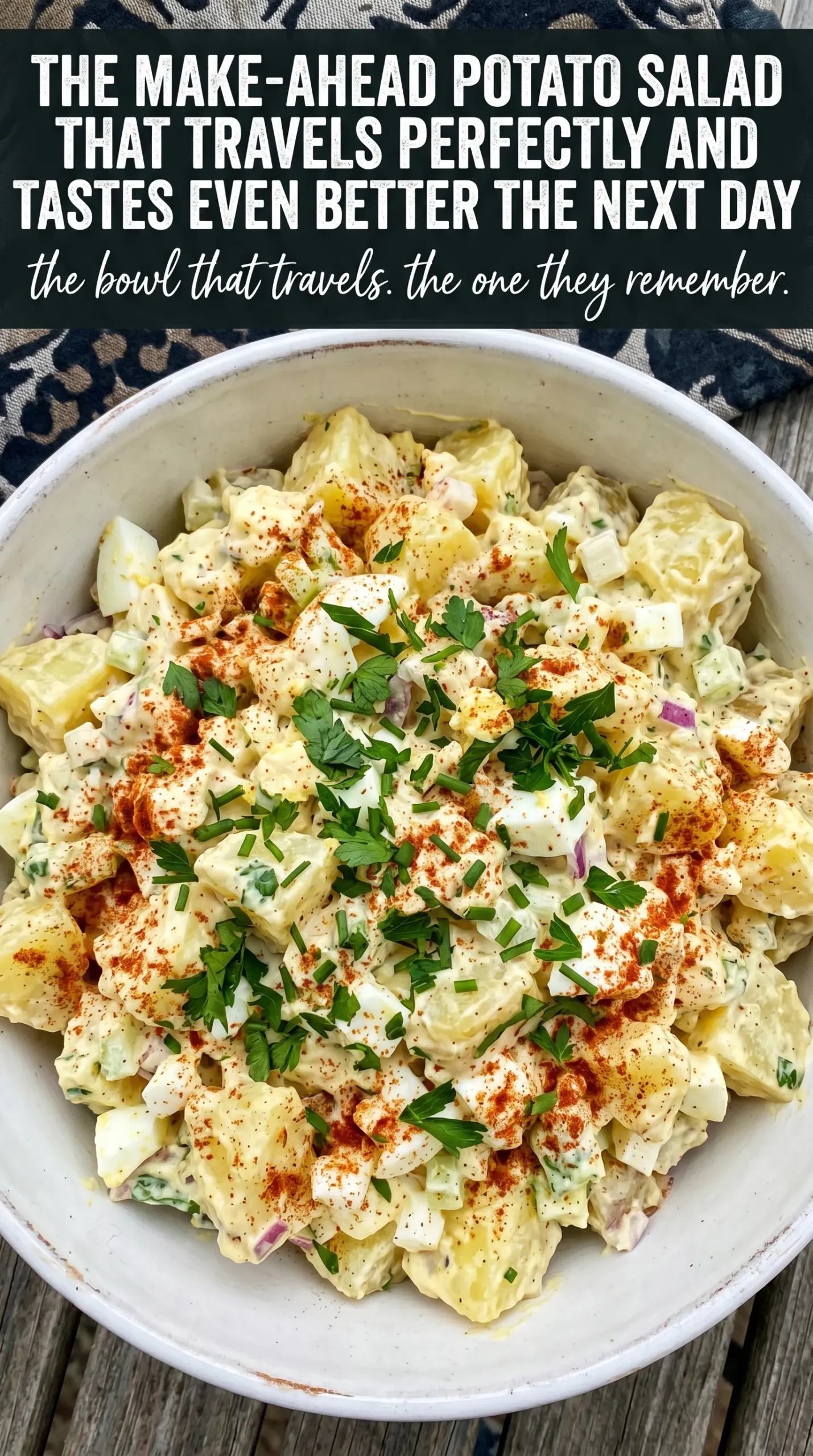
Cold, creamy potato salad lives or dies by how the potatoes are cooked and cooled. When the cubes are tender all the way through but still hold their shape, they catch the dressing instead of dissolving into it, and the finished bowl gets that classic spoonable texture with little pops of celery, egg, and pickle relish in every bite. This version leans into the traditional picnic style: tangy, lightly sweet, and sturdy enough to sit on a table without turning watery.
The key is using russet potatoes, cooking them until just tender, then letting them cool completely before the dressing goes on. Warm potatoes soak up flavor, but if you rush the chilling, the mayonnaise loosens and the salad can turn heavy or slick. The mustard and vinegar keep the dressing from tasting flat, while the relish adds both sweetness and a little briny crunch.
Below, I’ve included the texture cues that matter most, plus a few ways to adjust the salad if you want it a little sharper, a little lighter, or better suited to making ahead for a crowd.
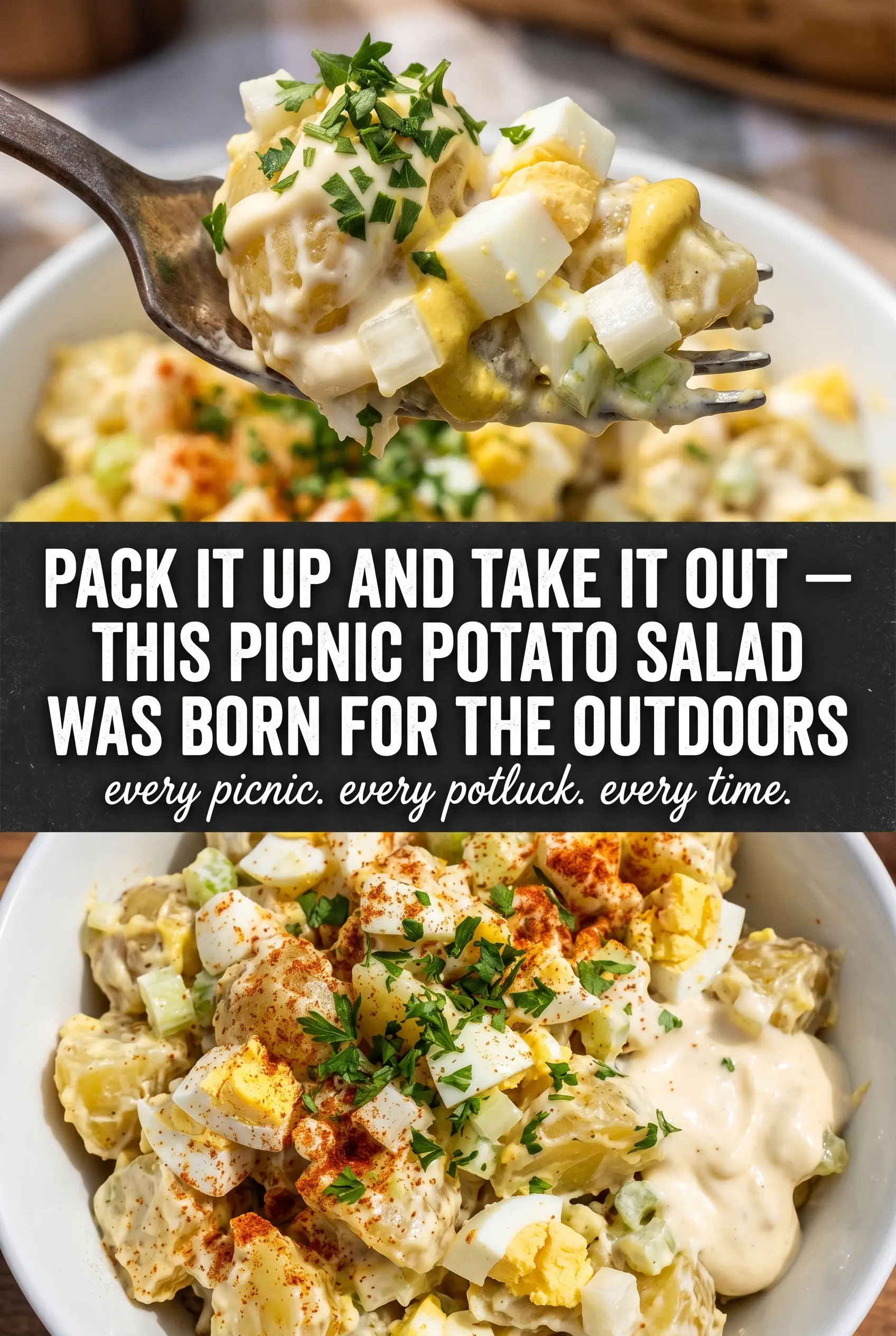
The potatoes held their shape after chilling, and the dressing coated everything instead of pooling at the bottom. I added the paprika right before serving and it looked just like the potato salad my mom used to bring to cookouts.
Save this creamy picnic potato salad for cookouts, potlucks, and any table that needs a classic make-ahead side.
The Chill Is What Keeps This Potato Salad Creamy, Not Watery
Potato salad gets mushy when the potatoes are overcooked or dressed while still hot. Russets are the right call here because they break down just enough to feel soft and comforting, but they still give you a fluffy bite instead of a waxy, dense one. The trick is stopping at tender, not falling apart, then letting them cool completely before mixing in the dressing.
That resting time matters more than people think. Warm potatoes keep releasing steam, and that steam thins the mayonnaise and washes the seasoning around. When the potatoes are fully cool, they absorb the dressing more evenly and the salad holds its shape after chilling.
- Russet potatoes — These give you the classic soft, creamy texture. Waxy potatoes stay firmer and make the salad feel more like chunks in dressing than a true picnic potato salad.
- Mayonnaise — This is the body of the dressing. Use a good full-fat mayo here, because low-fat versions can turn loose after chilling.
- Yellow mustard — It adds the sharp, familiar tang that keeps the salad from tasting flat. Dijon works in a pinch, but the result is a little more grown-up and less traditional.
- Sweet pickle relish — This brings sweetness, acid, and texture in one ingredient. If you use chopped pickles instead, add a pinch more sugar to keep the balance right.
What Each Ingredient Is Really Doing in the Bowl
- Hard-boiled eggs — They make the salad richer and more substantial. Chop them fairly small so they blend into the dressing instead of turning the texture chunky in a distracting way.
- Celery and onion — These are there for crunch and bite. Dice them finely so you get a little snap in every forkful without overpowering the potatoes.
- White vinegar — A small amount wakes up the mayonnaise and keeps the salad from tasting heavy. This is one of the few places where a plain, sharp vinegar works better than something more flavorful.
- Sugar — It rounds out the tang from the mustard and vinegar. Don’t skip it unless you want the salad to lean sharper and less like the classic deli-style version.
- Paprika — It’s mostly for the finish, but it also gives the top layer a little smoky color. Sprinkle it right before serving so it stays bright.
How to Build the Salad So It Stays Fluffy After Chilling
Cooking the Potatoes Without Breaking Them Down
Start the potatoes in cold salted water and bring them up together so the cubes cook evenly from edge to center. Once a knife slides in with only a little resistance, drain them right away. If you keep simmering after that point, the outsides go soft before the centers are ready, and the salad turns patchy instead of creamy.
Cooling Before the Dressing Goes In
Spread the drained potatoes out in a wide bowl or on a tray so the steam can escape. If you dump them into the dressing while they’re still warm, the mayo loosens and the salad won’t set up properly in the fridge. Give them enough time that the potatoes feel room temperature all the way through.
Folding Instead of Stirring Hard
Mix the potatoes, eggs, celery, onion, and relish first, then pour the dressing over the top and fold gently. A heavy hand will smash the potatoes and make the bowl look like mashed salad. Use a spatula and turn the mixture from the bottom up until everything is coated but still distinct.
Chilling for the Right Texture
Three hours is the minimum because the flavors need time to settle and the dressing needs time to cling. After chilling, taste again before serving; cold potato salad always needs a final pinch of salt and sometimes another small spoonful of mustard. Add the paprika at the end so the surface stays clean and the color looks fresh.
How to Adapt This for a Bigger Crowd or a Different Table
Dairy-Free Without Losing the Creamy Finish
This recipe is already dairy-free as written, which is one reason it travels so well to cookouts and potlucks. Just use a mayonnaise you like on its own, because the dressing flavor comes from the mayo, mustard, and vinegar working together.
A Sharper, More Tangy Version
Add another teaspoon of vinegar and swap half the sweet pickle relish for chopped dill pickles. That change gives you more bite and less sweetness, which works well if you’re serving it alongside rich grilled food.
Lighter Dressing, Same Picnic Feel
Replace up to half the mayonnaise with plain Greek yogurt for a brighter, less rich salad. The texture gets a little tangier and slightly looser, so chill it well before serving and expect a fresher finish rather than the classic deli-style creaminess.
Making It Ahead for a Crowd
You can make the whole salad a day ahead, but hold back a little paprika until serving so the top looks fresh. If the salad seems a touch stiff after overnight chilling, fold in a spoonful of mayonnaise before serving to bring the texture back.
Storage and Reheating
- Refrigerator: Keep covered for up to 4 days. The potatoes soften a bit more as it sits, but the flavor gets better by day two.
- Freezer: Don’t freeze this salad. Mayonnaise separates after thawing, and the potatoes turn grainy.
- Reheating: This dish is meant to be served cold. If it has been in the fridge for a while, let it sit at room temperature for 10 to 15 minutes before serving so the dressing loosens slightly and the flavors wake up.
Questions I Get Asked About This Recipe
Picnic Potato Salad
Ingredients
Equipment
Method
- Bring a large pot of water to a boil and add the russet potatoes. Boil at a rolling boil for 15–20 minutes, until a fork slides in easily.
- Drain the russet potatoes and spread them out to cool completely. Let them come to room temperature before mixing to keep the salad from turning watery.
- Add the cooled russet potatoes to a mixing bowl and top with the chopped hard-boiled eggs. Stir until evenly combined (spotted eggs should be distributed throughout).
- Add the diced celery, finely diced onion, and sweet pickle relish to the potato-and-egg mixture. Toss until the mix-ins are evenly spread.
- In a separate bowl, whisk together mayonnaise, yellow mustard, white vinegar, sugar, salt, and pepper. Whisk until smooth and thick, with no mustard streaks.
- Pour the dressing over the potato mixture and fold gently until everything is coated. Stop when the salad looks glossy and evenly dressed.
- Cover the bowl and refrigerate the picnic potato salad for at least 3 hours. Chill until cold and set, with flavors fully melded.
- Before serving, garnish with paprika. Sprinkle lightly over the top for a bright, classic finish.