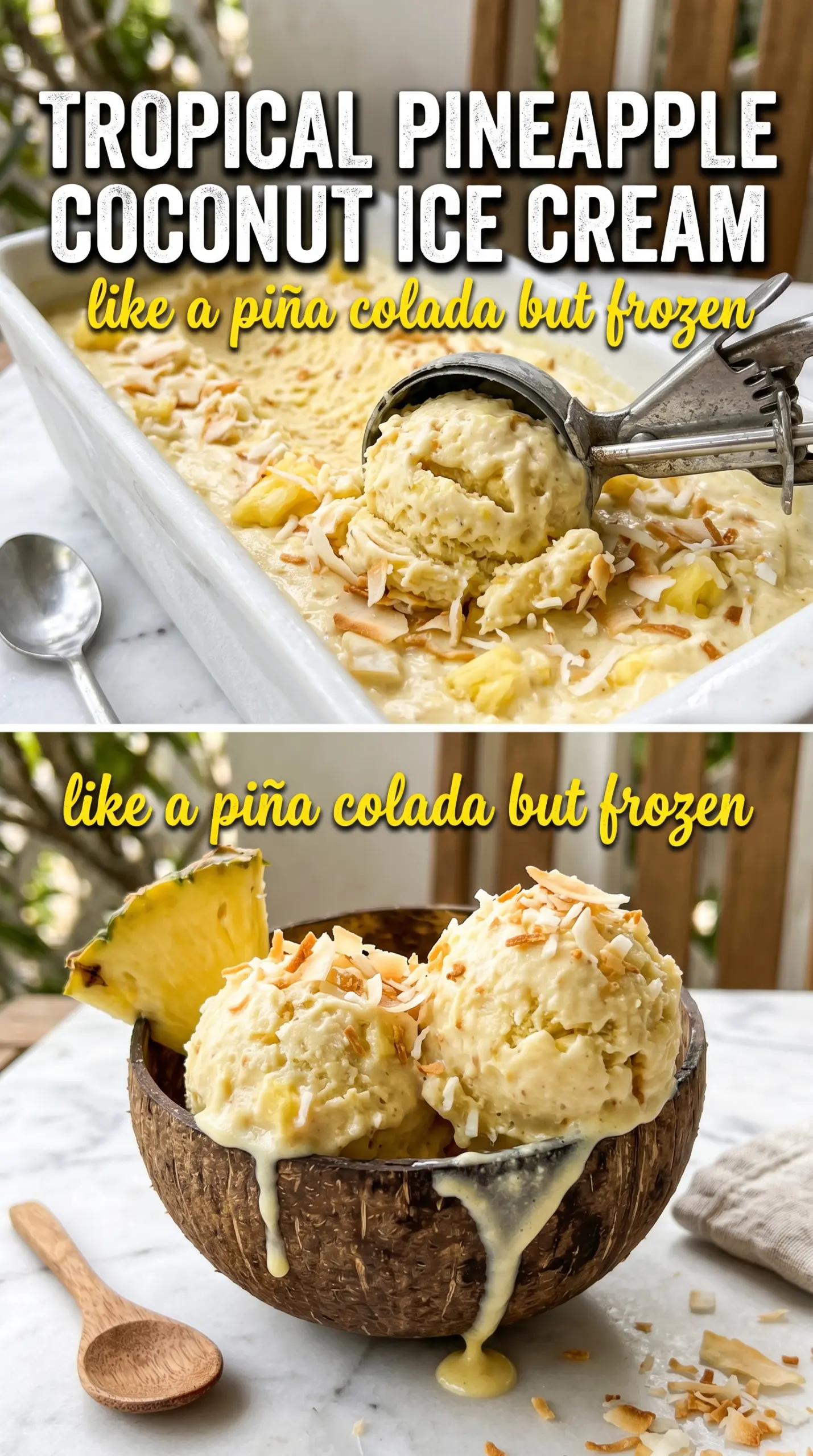
Tropical pineapple coconut ice cream lands with that soft, scoopable richness that makes a frozen dessert worth the churn. The coconut base stays silky and custard-like, while the pineapple gives you bright little bursts that keep each bite from tasting flat or one-note. Toasted coconut folds in a gentle chew and a deeper, nuttier finish that makes the whole bowl taste more considered than your average homemade ice cream.
The trick here is treating the base like a custard, even though the ingredient list looks simple. Egg yolks give the ice cream body and help it freeze with a smoother texture, and the coconut milk brings enough fat to keep the finished scoop from turning icy. Pineapple needs a little planning too: if it goes in too early, it can water down the churn. Adding it near the end keeps the fruit distinct and the texture clean.
Below, I’ve included the part that matters most if you’ve ever had homemade ice cream freeze too hard or turn grainy. The chilling time isn’t busywork here. It’s what gives the base the right structure before it hits the machine.
The custard base churned up smooth and the pineapple stayed in little juicy pieces instead of turning icy. I let it freeze overnight and it scooped like a dream the next day.
Save this pineapple coconut ice cream for the days when you want a creamy churned dessert with real pineapple pieces and toasted coconut on top.
The Custard Step That Keeps This Ice Cream Creamy
Homemade ice cream turns grainy when the base gets rushed. With pineapple coconut ice cream, that risk shows up even faster because coconut milk can separate and fruit brings extra moisture into the mix. Cooking the custard to 175F gives the egg yolks enough heat to thicken the base without curdling it, which is what gives you that dense, smooth scoop instead of a frozen puddle with ice crystals around the edges.
The other detail that matters is cooling. If the base goes into the churn even a little warm, the machine has to work harder and the ice cream freezes unevenly. That’s when you get a loose center and overly hard edges. Letting it chill fully gives the fat time to settle and the flavors time to round out, which makes the pineapple taste cleaner and the coconut taste richer.
- Egg yolks — These are the reason the texture stays custardy. There isn’t a true substitute here if you want the same body and scoopability.
- Full-fat coconut milk — Light coconut milk won’t give you the same richness. The full-fat version is what keeps the base from tasting thin after freezing.
- Heavy cream — This softens the coconut flavor and keeps the finished ice cream smoother straight from the freezer.
- Fresh pineapple — Fresh works best because it gives a bright, clean tartness. If you use canned pineapple, drain it very well and pat it dry so extra syrup doesn’t weaken the churn.
- Toasted shredded coconut — Toasting matters. It adds a nuttier, deeper coconut note that plain coconut flakes just don’t have.
What Each Ingredient Is Actually Doing in This Ice Cream
- Base ingredient (cream, milk, or custard) — This provides the foundation and richness. Quality matters.
- Sweetener (sugar, honey, or condensed milk) — This sweetens and prevents ice crystals. The ratio is critical.
- Flavor element (vanilla, fruit, chocolate, coffee, or other) — This defines the ice cream personality. Use quality ingredients.
- Egg yolks (if making custard base) — These create richness and silky texture. Optional but elevates ice cream.
- Churning (if using ice cream maker) — This incorporates air and prevents ice crystals. Critical for smooth texture.
- Freezing temperature and time — Proper freezing prevents rock-hard texture. Store at 0°F or below.
- Mix-ins (chocolate, cookies, fruit, or swirls) — These add texture and prevent one-dimensional flavor. Add near end of churning.
- Serving temperature (slightly soft, not rock hard) — This provides creamy mouthfeel. Remove from freezer 5 minutes before serving.
How to Build the Base Without Scrambling the Yolks
Warming the Dairy
Start by heating the coconut milk, cream, and sugar together until the sugar dissolves and the mixture is steaming but not boiling. You want it hot enough to temper the yolks, not hot enough to shock them. If the dairy boils, it can make the egg mixture seize at the edges and leave you with little cooked bits instead of a smooth custard.
Tempering the Yolks
Whisk the hot dairy into the yolks in a slow stream, a little at a time. That gradual addition is what raises the yolk temperature without turning them into scrambled eggs. Once the yolks are warmed through, pour everything back into the saucepan and keep stirring so the bottom doesn’t catch.
Cooking to the Right Thickness
Cook the custard until it reaches 175F and lightly coats the back of a spoon. The texture should look slightly thicker than heavy cream, not pudding-thick. If you overcook it, the yolks can curdle and the base will taste eggy instead of clean and creamy, so pull it as soon as it reaches temperature and strain it right away.
Adding the Fruit at the End
Stir in the coconut extract, vanilla, and salt after the custard comes off the heat, then chill it completely before churning. Add the diced pineapple and toasted coconut during the last few minutes of churning so they stay visible and distinct. If you add them too soon, the pineapple can break down too much and the coconut can sink instead of distributing through the ice cream.
What to Change When You Want a Different Kind of Tropical Scoop
Dairy-Free Coconut Pineapple Ice Cream
Replace the heavy cream with another full-fat can of coconut milk. The ice cream will taste more coconut-forward and slightly less rich, but it still churns into a creamy scoop if you keep the custard technique and chill it well. Use a non-dairy base that can handle heat; thin milks won’t give the same body.
No-Churn Version
Fold whipped cream into sweetened condensed coconut milk or regular sweetened condensed milk, then add the pineapple and toasted coconut at the end. You’ll lose the custard depth, but you gain a shortcut that freezes with a softer, fluffier texture.
Pina Colada Style
Add a tablespoon or two of rum extract, or a splash of dark rum if you’re serving adults only. It leans the flavor toward a pina colada without changing the texture much, and the rum keeps the ice cream a little softer in the freezer.
Storage and Reheating
- Refrigerator: Not applicable once churned; store in the freezer instead. The base can be refrigerated for up to 2 days before churning if needed.
- Freezer: Freeze in an airtight container for up to 2 weeks for the best texture. After that, it can pick up freezer flavor and get a little harder.
- Reheating: Let it sit at room temperature for 5 to 10 minutes before scooping. If it’s rock hard, don’t microwave the whole container; that melts the edges and leaves the center icy.
Questions I Get Asked About This Recipe
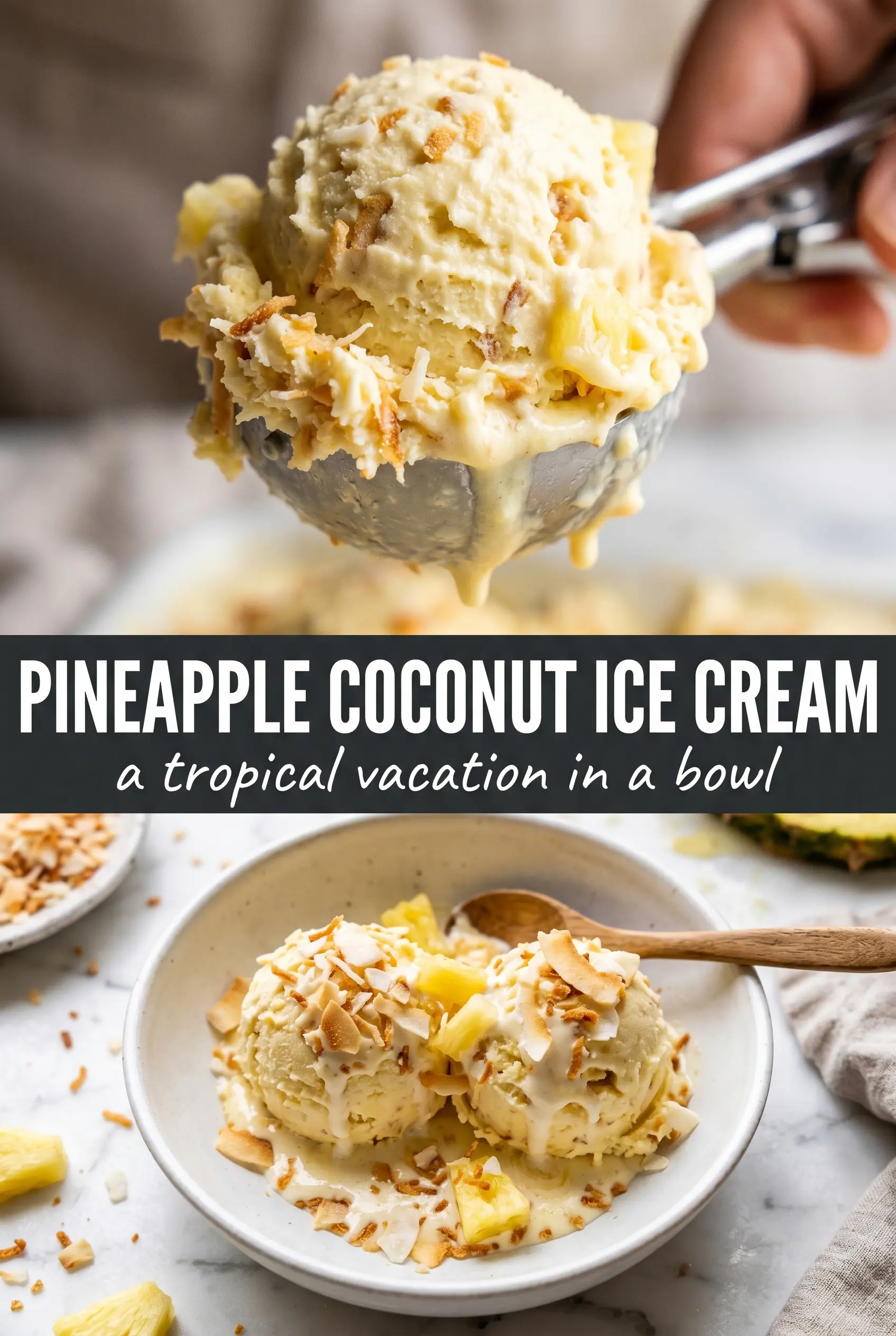
Pineapple Coconut Ice Cream
Ingredients
Equipment
Method
- In a saucepan, heat full-fat coconut milk and heavy cream over medium heat until steaming, then whisk in granulated sugar until fully dissolved. You should see no sugar grains remaining on the whisk.
- In a bowl, whisk egg yolks, then slowly whisk the hot coconut mixture into the yolks in a thin stream to temper. Stop adding if the yolks look like they’re scrambling, then whisk slower.
- Return the mixture to the saucepan and cook at 175F, stirring constantly, until it thickens enough to coat the back of a spoon. The custard should look glossy and leave a clear line when you swipe a finger through it.
- Strain the custard, then whisk in coconut extract, vanilla extract, and salt. The mixture should turn fragrant and smooth with no lumps.
- Cool the custard completely, then refrigerate at least 4 hours until very cold. The surface should be fully chilled and the mixture will thicken slightly.
- Churn the chilled custard in an ice cream maker until it reaches soft-serve consistency, then add finely diced fresh pineapple and toasted shredded coconut during the last 5 minutes. You should see pineapple pieces suspended throughout as the churn finishes.
- Transfer to a container and freeze until scoopable, then serve. The ice cream should hold its shape and scoop cleanly.