Pizza pasta salad brings all the best parts of a pepperoni pizza into a cold, crunchy, make-ahead side dish that disappears fast at potlucks and cookouts. The pasta soaks up the Italian dressing just enough to turn every bite savory and herby, while the mozzarella stays pleasantly chewy and the pepperoni gives you that familiar salty, smoky hit. It eats like a proper pasta salad, but it still tastes like something people reached for first on the pizza tray.
The trick is balancing the mix so it stays bright instead of heavy. Rinsing the pasta after cooking keeps the salad from clumping while it chills, and the two-hour rest gives the dressing time to sink into the rotini instead of sitting on the surface. Halving the pepperoni helps it scatter through the bowl, and the Parmesan adds a little extra salt and depth without making the whole thing taste cheesy in the wrong way.
Below you’ll find the small details that keep this salad from turning soggy, plus a few easy ways to adjust it for different crowds. It’s the kind of side that works just as well next to grilled chicken as it does alongside sandwiches, and the leftovers hold up better than you’d expect.
The pasta held the dressing after chilling, and the pepperoni kept its little bite instead of getting soft. I brought it to a block party and the bowl was scraped clean before the burgers were done.
Save this pizza pasta salad for potlucks, easy lunches, and any table that needs a cold side with real pizza flavor.
The Reason Pizza Pasta Salad Stays Good After Chilling
The biggest mistake with pizza pasta salad is treating it like a regular pasta dish and serving it right after tossing. The flavors are there, but they haven’t settled. This salad needs time in the fridge so the dressing can coat the rotini and the seasoning can move from the surface into the pasta itself. That rest is what makes it taste cohesive instead of like a pile of cold ingredients.
Rinsing the pasta is part of that same logic. Warm pasta keeps cooking and releases steam, which can make the cheese sweat and the dressing loosen up too much. Cold pasta gives you a cleaner texture and keeps the pepperoni and vegetables from softening before they ever hit the bowl. If the salad tastes flat after chilling, it’s usually because it needed salt from the Parmesan or a second toss before serving.
What Each Ingredient Is Actually Doing In This Salad
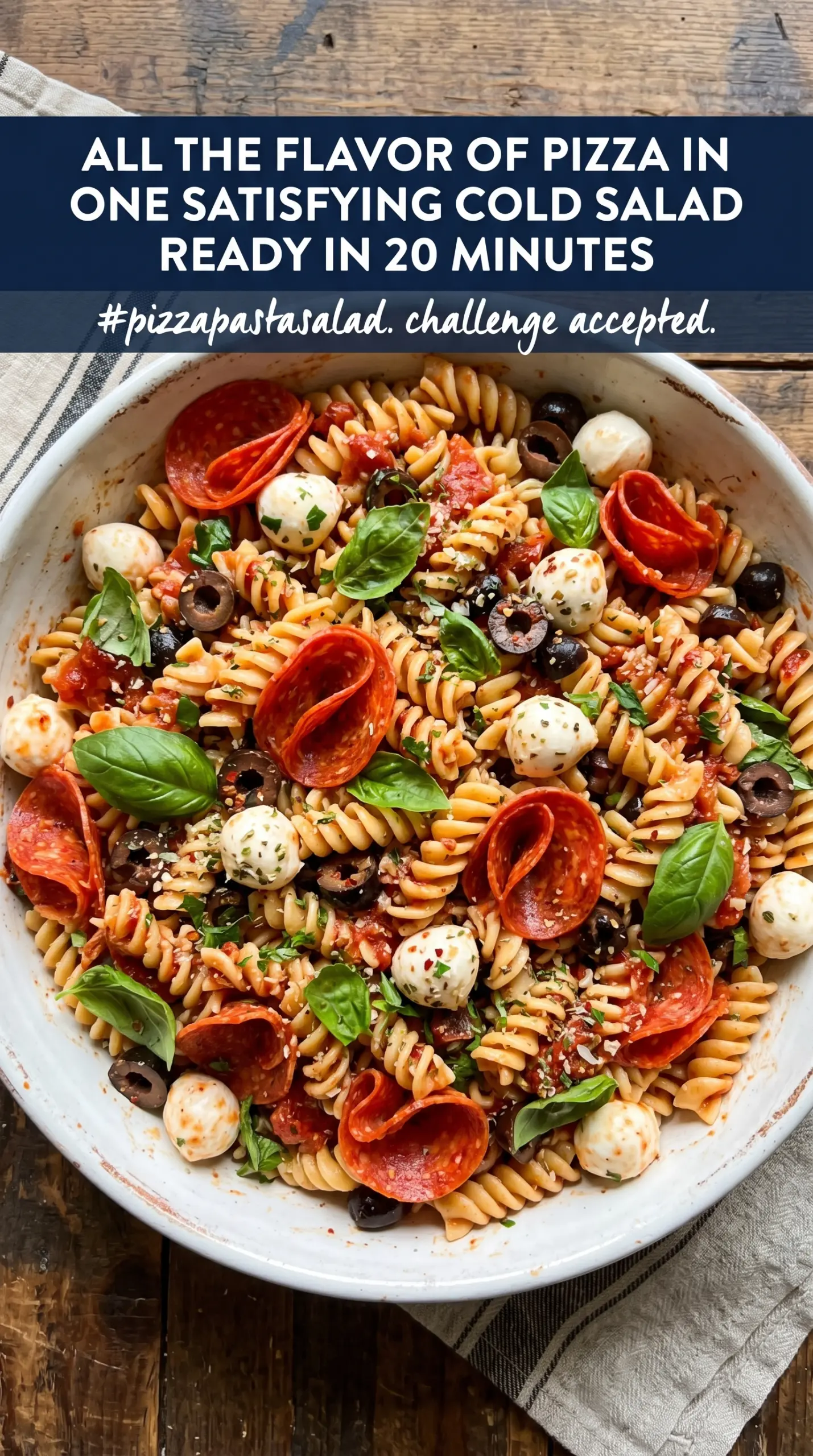
- Rotini pasta — The spirals catch dressing in every groove, which is why this shape works better than straight pasta here. Fusilli or penne can step in, but avoid delicate shapes that won’t hold the toppings.
- Pepperoni — Halving the slices helps them distribute through the salad instead of clumping. Stick with the regular sliced pepperoni for the best pizza-shop flavor; mini pepperoni works too, but it changes the bite a little.
- Mozzarella — Cubed mozzarella gives you those soft, milky bites that keep the salad from tasting all dressing and meat. Fresh mozzarella is too wet for this version; low-moisture mozzarella holds up much better after chilling.
- Italian dressing — This does the heavy lifting, so use one you actually like. A bright, tangy bottled dressing works fine, and if yours is thick, give the salad an extra toss after 30 minutes so the pasta doesn’t absorb all the oil in one spot.
- Parmesan, Italian seasoning, and garlic powder — These are the “pizza crust” notes in the bowl. Parmesan adds salt and depth, Italian seasoning brings the herbs, and garlic powder rounds everything out without leaving raw garlic bite behind.
Building the Salad So It Doesn’t Go Watery
Cooking and Cooling the Pasta
Cook the rotini until it’s just tender, then drain it and rinse it under cold water until it feels completely cool. That stops the cooking and washes off excess starch, which is what keeps the salad from turning gummy later. If the pasta is even a little warm when you combine it with the cheese, the mozzarella can start to soften in a greasy way instead of staying pleasantly firm.
Mixing the Pizza Toppings
Use a bowl bigger than you think you need. The pepperoni, mozzarella, tomatoes, peppers, olives, and onion all need room so they can get coated evenly without crushing the pasta. Add the dressing and seasonings after the toppings are in the bowl, then toss until every spiral has a glossy coating. If the salad looks dry right away, don’t panic; the pasta keeps drinking in the dressing as it chills.
The Chill That Pulls It Together
Cover the bowl and refrigerate it for at least 2 hours. That resting time is when the salad changes from separate ingredients into one dish. Right before serving, toss it again and taste it. If needed, add a splash more dressing or a pinch of Parmesan. The salad should look lightly coated and lively, not slick or soupy.
How to Adapt This Pizza Pasta Salad for Different Tables
Make It Meatless Without Losing the Pizza Feel
Skip the pepperoni and add extra olives, more mozzarella, or roasted mushrooms if you want more body. You lose the smoky, salty bite from the meat, so the salad benefits from an extra spoonful of Parmesan or a little more Italian seasoning to keep the flavor bold.
Use Gluten-Free Pasta
A sturdy gluten-free rotini works here, but stop cooking it when it’s just tender because it softens as it chills. Rinse it well and toss gently so the pasta doesn’t break down. The texture won’t be identical, but the pizza salad flavor still comes through clearly.
Swap in a Creamier Dressing
If you want a richer version, use a creamy Italian dressing or stir a little mayo into the bottled dressing before tossing. That makes the salad cling a little more and softens the sharp edges of the vinegar, but it also makes the finished dish feel heavier, so it’s best for smaller gatherings rather than a giant buffet.
Storage and Reheating
- Refrigerator: Store covered for up to 4 days. The pasta softens a bit as it sits, but the flavor stays strong.
- Freezer: Don’t freeze this salad. The vegetables and mozzarella lose their texture once thawed, and the dressing separates.
- Reheating: Serve it cold or let it sit at room temperature for 15 to 20 minutes. Reheating changes the texture in the wrong way and makes the cheese oily.
Questions I Get Asked About This Recipe
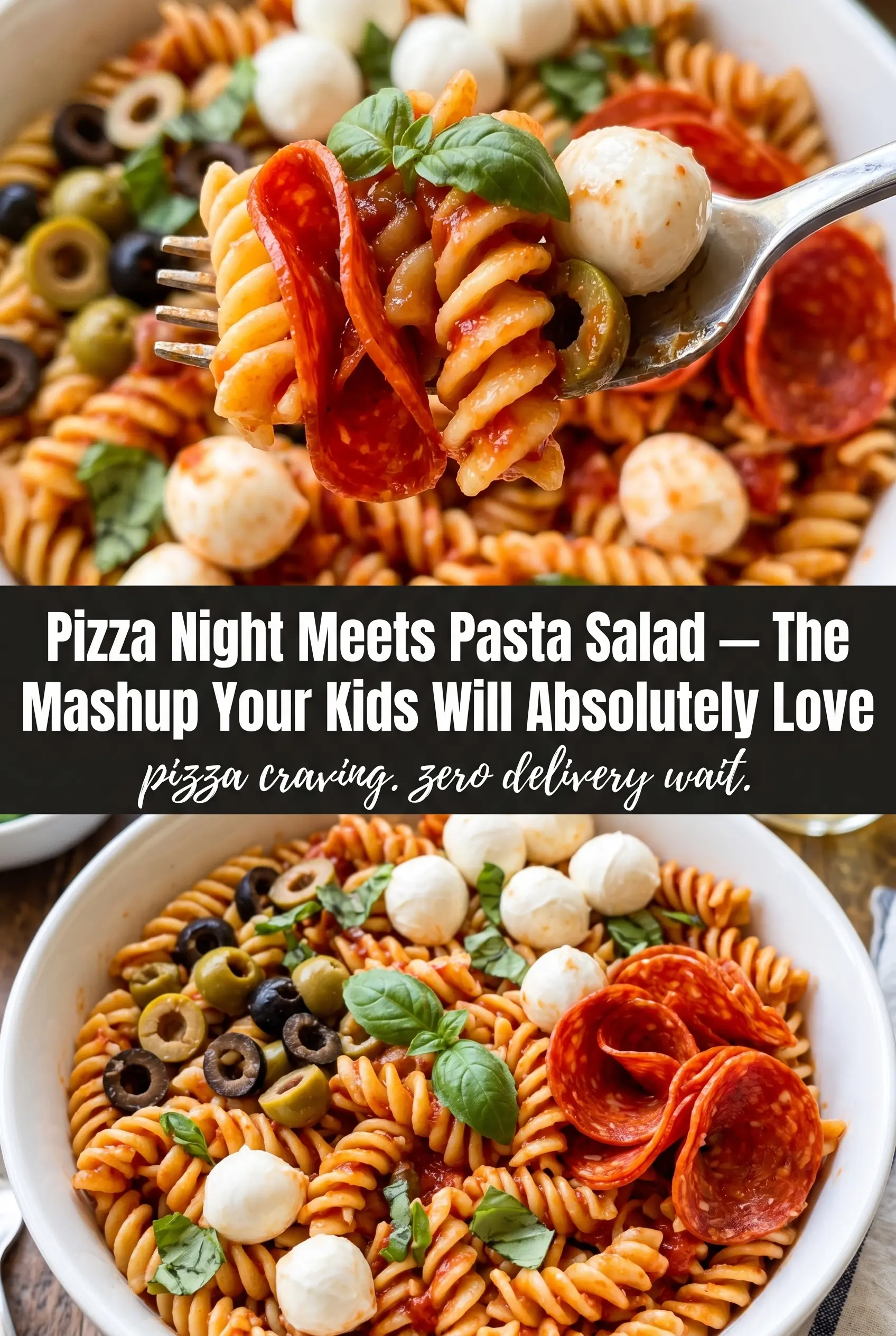
Pizza Pasta Salad
Ingredients
Equipment
Method
- Cook the rotini pasta according to package directions until al dente, then drain and rinse with cold water to stop cooking and cool it quickly.
- In a large bowl, combine the pasta with pepperoni slices, mozzarella cheese, cherry tomatoes, green bell pepper, black olives, and red onion.
- Add Italian dressing, Parmesan cheese, Italian seasoning, and garlic powder, then toss until everything is evenly coated and glossy.
- Refrigerate the pizza pasta salad for at least 2 hours so the pasta absorbs the dressing and the toppings firm up.
- Toss again right before serving, then serve chilled for the best pizza-inspired flavor and texture.