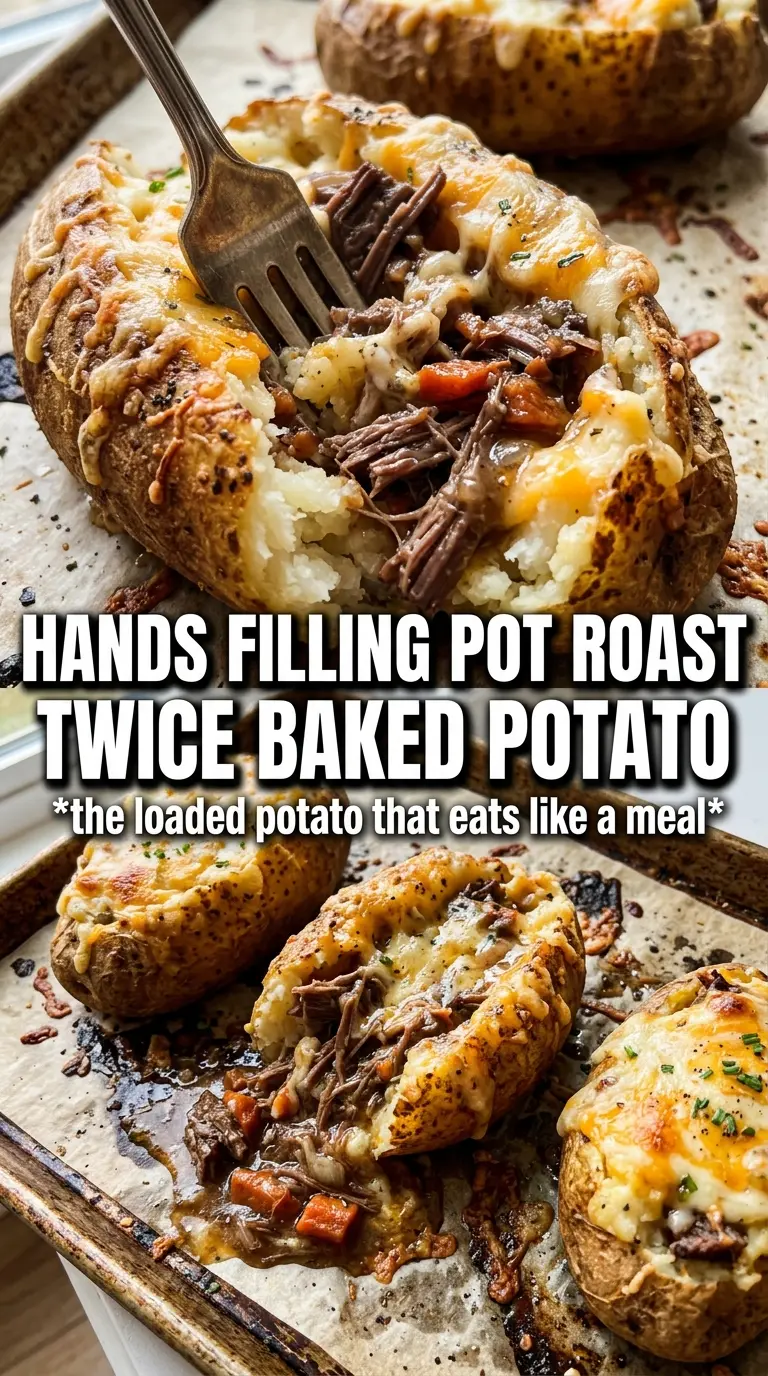
Pot roast twice baked potatoes hit that sweet spot between comfort food and a full dinner. The shells stay sturdy, the filling turns creamy without getting gluey, and the shredded beef folds through every bite so you don’t end up with a plain baked potato wearing a little meat on top. When the cheese bubbles under the broiler and the gravy gets drizzled over at the end, the whole dish tastes like the best parts of Sunday dinner packed into one crisp-edged potato.
The trick is treating the potato flesh like mashed potatoes first, before the beef goes in. That means enough butter, sour cream, and milk to make it smooth, but not so much that the filling turns loose and slides out of the shells. Warming the pot roast in its gravy before folding it through keeps the meat moist and helps the whole filling stay rich instead of dry and crumbly.
Below you’ll find the timing that keeps the skins intact, the one step that prevents a heavy filling, and a few smart swaps for using what you’ve got on hand.
The filling stayed fluffy and the roast warmed through without drying out. I used extra gravy on top and the potatoes held up perfectly under the broiler.
Save these pot roast twice baked potatoes for the night you want leftover roast to feel like a brand-new meal.
The Filling Stays Creamy Only If You Keep the Potatoes Dry Enough
The biggest mistake with twice baked potatoes is overworking the filling or adding too much liquid while the potato flesh is still steaming. If that happens, the mixture turns loose and the shells soften before they ever hit the oven. Scoop the flesh into a bowl and let it sit for a minute if needed so the steam can escape, then mash it while it’s still warm enough to absorb the butter and dairy.
Russets are the right choice here because the insides fluff up and the skins bake up sturdy. Waxy potatoes won’t give you that same fluffy middle, and they tend to make a denser, heavier filling. The goal is a mash that holds its shape when spooned back into the shells, not a loose potato salad texture.
- Baked russet potatoes — These give you the classic fluffy center and sturdy shell that twice baked potatoes need. Bake them until the skins feel crisp and the centers are fully tender; underbaked potatoes are harder to scoop cleanly and don’t mash as smoothly.
- Leftover pot roast and gravy — The gravy is what keeps the shredded beef moist as it bakes again. If you only have beef broth, simmer it down for a few minutes first so it tastes concentrated enough to carry the filling.
- Sharp cheddar — Sharp cheddar cuts through the richness of the potatoes and beef. Pre-shredded cheese works, but freshly shredded melts smoother and gives you a cleaner topping.
- Sour cream and butter — These build the creamy base and keep the filling from tasting like plain mashed potatoes. You can swap in cream cheese for part of the sour cream if you want a thicker, tangier filling.
- Green onions — Add these at the end so they stay bright and fresh. They’re not just garnish; they cut through the richness and keep each bite from feeling heavy.
What Each Ingredient Is Actually Doing in This Recipe
- Primary ingredient (the star) — Quality matters most. Choose the best you can find.
- Cooking medium (oil, butter, or broth) — This carries flavors and prevents dryness.
- Seasonings (salt, pepper, spices, herbs) — Layer flavors so nothing overpowers. Build depth gradually.
- Aromatics (garlic, onion, herbs) — Cook with fat to bloom flavors. Become the foundation.
- Supporting ingredients — Complement the main ingredient without overpowering it.
- Sauce or liquid (if applicable) — Brings flavors together. Balance richness with acid.
- Acid (lemon, vinegar, wine, or other) — Brightens and prevents flat-tasting results.
- Final finish (garnish, glaze, or sauce) — Prevents one-dimensional taste and adds visual appeal.
Building the Potatoes So They Hold Their Shape Under All That Filling
Getting the Shells Ready
Slice the baked potatoes in half lengthwise and scoop out the flesh, leaving about a 1/4-inch wall around the edge. That thin layer is enough to keep the shell sturdy without making it too thick to eat comfortably. If you scoop too aggressively, the skins collapse once the beef and cheese go back in.
Mashing the Base
Mash the hot potato flesh with butter, sour cream, milk, and one cup of cheddar until the mixture looks smooth and fluffy. Stop as soon as it comes together; if you beat it too long, it can turn pasty. Season it now, before the beef goes in, so the filling tastes balanced all the way through.
Warming the Beef Into the Filling
Warm the shredded pot roast in its gravy before folding it into the potatoes. Cold beef drags the filling temperature down and can make the cheese seize a little when it hits the oven. You want the meat hot enough to blend in easily but not so wet that it thins the potatoes out.
Broiling for the Finish
Spoon the filling back into the shells and top with the remaining cheddar. Bake just until the centers are hot and the cheese melts, then move the pan under the broiler for a short burst to get those browned spots on top. Watch it closely; the line between golden and scorched is only a minute or two.
How to Change These Up Without Losing the Comfort Food Payoff
Use braised beef instead of pot roast
Any slow-cooked beef that shreds well will work here. If the meat isn’t already seasoned with gravy, toss it with a few spoonfuls of broth and pan juices so it stays moist in the oven instead of drying out.
Make it gluten-free without changing the texture
The potatoes themselves are naturally gluten-free, so the only thing to check is the gravy. Use a gluten-free gravy or a reduced beef broth thickened with cornstarch, and the filling will still bake up creamy and rich.
Swap in brisket for a smokier result
Brisket brings a deeper, slightly smoky beef flavor, especially if it was cooked with onions or paprika. Because brisket can be a little leaner on the edges, keep a bit more gravy in the mix so the filling doesn’t eat dry.
Make the filling lighter with Greek yogurt
Replace part of the sour cream with plain Greek yogurt for more tang and a little less richness. Use full-fat yogurt so the filling stays creamy; low-fat versions can loosen too much once the potatoes go back into the oven.
Storage and Reheating
- Refrigerator: Store leftovers for up to 3 days. The skins soften a little, but the flavor holds up well.
- Freezer: Freeze fully baked potatoes wrapped individually, then move them to a freezer bag. They keep for about 2 months, though the texture of the potato filling gets a little softer after thawing.
- Reheating: Reheat in a 350F oven, covered at first so the beef heats through without drying out, then uncover for the last few minutes to re-crisp the tops. Microwaving works in a pinch, but it softens the skins and can make the cheese rubbery.
Answers to the Questions Worth Asking

Pot Roast Twice Baked Potatoes
Ingredients
Equipment
Method
- Preheat the oven to 400F, then halve the baked potatoes lengthwise and scoop out the flesh, leaving about a 1/4-inch shell.
- Mash the potato flesh with the butter, sour cream, milk, 1 cup cheddar, salt, and pepper until smooth.
- Warm the pot roast in the gravy, then fold it into the mashed potato mixture.
- Fill the potato shells with the pot roast mixture, then top each with the remaining cheddar.
- Bake for 15-18 minutes until the potatoes are heated through and the cheese is bubbly.
- Broil for 2 minutes until golden, then top with green onions and extra gravy.