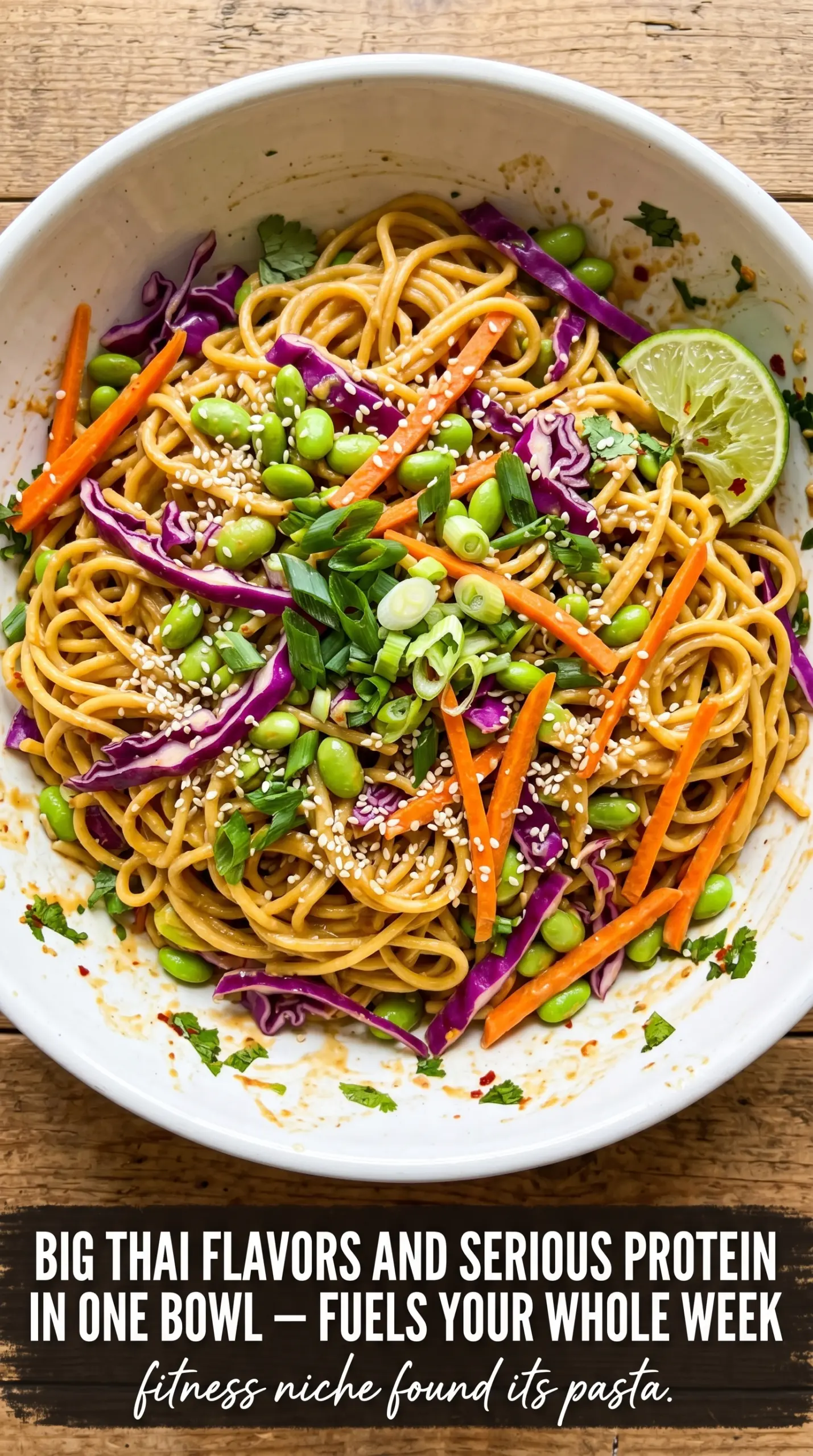
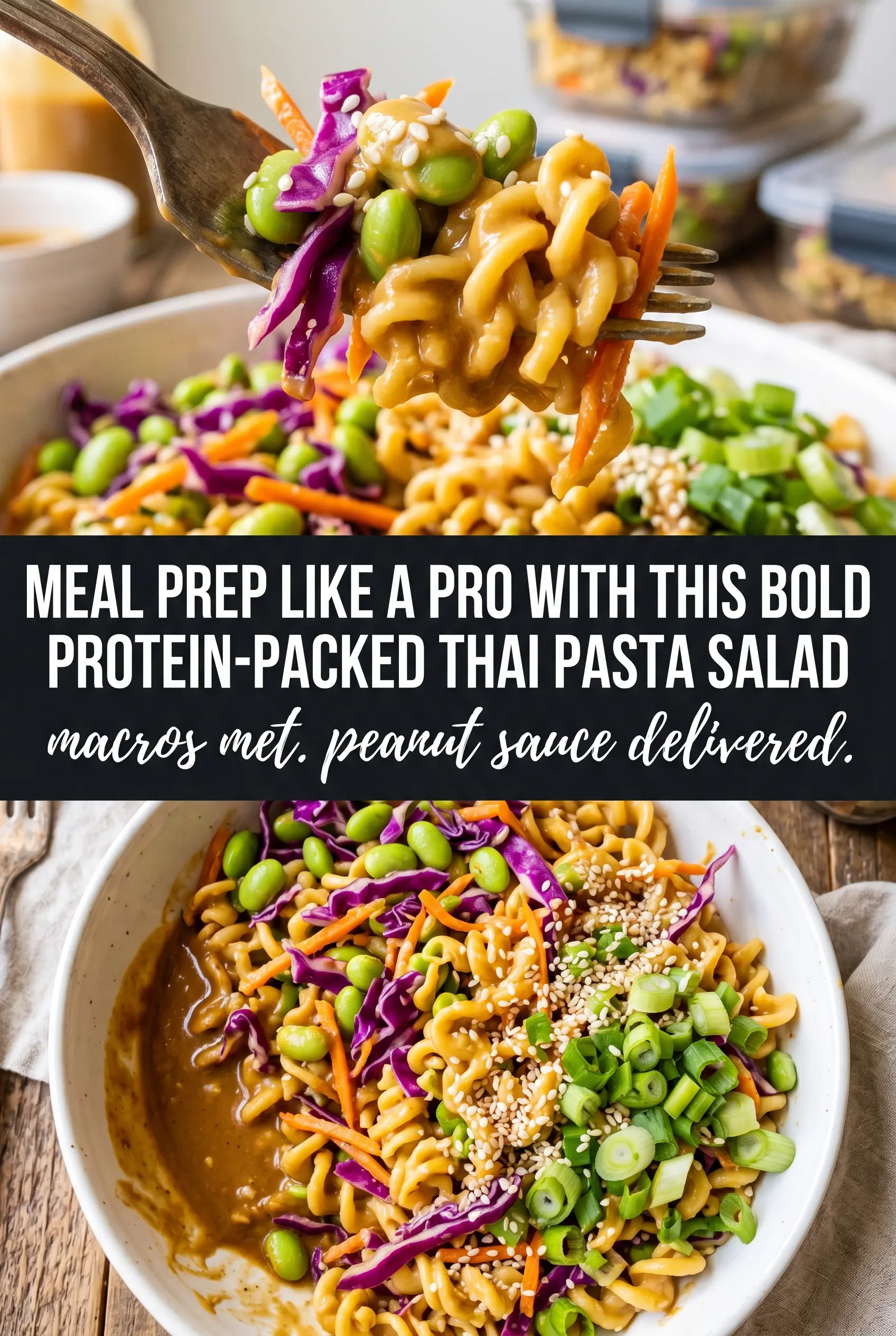
Protein-packed Thai pasta salad hits that sweet spot between hearty and fresh. The pasta stays chewy, the chicken turns it into a real meal, and the peanut-ginger dressing clings to every ridge and curl instead of pooling at the bottom of the bowl. It eats like lunch you actually look forward to, with enough crunch from cabbage, carrots, and bell pepper to keep every bite lively.
The key is building the dressing with enough body to coat the pasta after chilling, not just when it first goes on. Protein pasta can go a little firm in the fridge, so rinsing it cold and tossing it with the sauce while it’s still slightly pliable helps everything settle into the right texture. A splash of water loosens the peanut butter, but the goal is a glossy dressing that feels thick enough to cling.
Below you’ll find the trick for keeping the salad from drying out in the fridge, plus a few smart swaps if you want to make it dairy-free, vegetarian, or even more meal-prep friendly.
The peanut dressing coated the pasta beautifully after chilling, and the cabbage stayed crisp even the next day. I added extra lime at the table and it tasted like a takeout bowl, but lighter.
Save this protein-packed Thai pasta salad for meal prep days when you want creamy peanut dressing, crunchy vegetables, and a lunch that holds up in the fridge.
The Dressing Needs Body, Not Just Flavor
The biggest mistake with a salad like this is treating the dressing like a pour-over sauce. Peanut butter thickens as it sits, and protein pasta drinks up a little moisture while it chills. If the dressing starts too thin, the salad can end up dry and a little chalky by the next day.
That’s why the dressing should look loose and glossy in the bowl before it goes onto the pasta. It should coat a spoon in a smooth layer, then slide off in a ribbon when you lift it. The first toss should feel almost too generous; after an hour in the fridge, the noodles and vegetables pull that sauce right where it needs to be.
- Protein pasta — Chickpea or edamame pasta gives this salad its sturdy, high-protein backbone. It holds up better than regular pasta during chilling, but it can tighten up fast if you overcook it, so stop at just tender and rinse it cold right away.
- Peanut butter — Use a creamy peanut butter that stirs smooth. Natural peanut butter works, but it needs a hard stir first; if it’s separated, the dressing can turn grainy instead of silky.
- Rice vinegar — This keeps the dressing bright enough to cut through the richness of the peanut butter. Lime juice can stand in for part of it if needed, but rice vinegar gives the cleanest, softest tang.
- Fresh ginger and garlic — Don’t swap these for powders unless you have to. Fresh ginger gives the dressing that sharp, warm edge that makes the whole bowl taste alive, and the garlic keeps it from leaning too sweet.
What Each Ingredient Is Actually Doing in This Rich Dressing
- Mayonnaise — This is the base that gives the dressing body and richness. Use a good quality, full-fat version for the smoothest texture and best flavor.
- Sour cream or Greek yogurt — These add tang and help the dressing firm up slightly as it chills. They prevent the mayo from feeling heavy or one-dimensional.
- Dijon mustard — This adds savory depth and helps the dressing emulsify, making it cling to vegetables and pasta better. A little goes a long way.
- Lemon juice or vinegar — The acid brightens the dressing and prevents it from tasting flat. It also helps preserve the vegetables and keeps flavors from going dull after sitting.
- Fresh herbs (dill, parsley, basil) — These add freshness and complexity. They should be finely chopped so they distribute evenly throughout the dressing instead of lingering as bits.
- Garlic and shallot — These add savory complexity and depth. Raw garlic becomes mellow as it sits in the acid, creating a more integrated flavor.
- Salt and pepper — These bring out all the flavors and help the dressing taste balanced instead of flat. Season boldly; the acid will soften the salt edge.
- Optional: a touch of honey or sugar — Just a tiny pinch rounds out the acidic notes and makes the dressing taste more balanced without becoming sweet.
Building the Salad So It Stays Crisp After Chilling
Cooking the Pasta the Right Way
Cook the protein pasta just to al dente, then drain it and rinse under cold water until it stops steaming. That rinse matters here because it halts the cooking and keeps the noodles from clumping while they chill. If you skip it, the pasta can keep softening and the salad turns gummy instead of springy.
Whisking the Dressing Until It Clings
Whisk the peanut butter, soy sauce, rice vinegar, honey, ginger, and garlic until the mixture looks smooth and unified before adding water. Then add water a tablespoon at a time until it pours easily but still looks thick and glossy. If it gets too thin, the dressing slips off the pasta instead of coating it, and the salad loses its creamy texture after chilling.
Combining and Chilling
Toss the pasta, chicken, cabbage, carrots, and bell pepper with the dressing in a large bowl so everything gets covered evenly. The vegetables should still look bright and separate, not wet and weighed down. Let the salad rest in the fridge for at least an hour so the flavors settle and the pasta absorbs the dressing; that’s when the bowl starts tasting finished instead of assembled.
Finishing With Crunch and Acid
Top the salad with crushed peanuts and cilantro right before serving so the garnish stays crisp and fresh. Lime wedges on the side matter more than they look like they do; a squeeze wakes up the peanut dressing and sharpens the whole bowl. If the salad tastes flat after chilling, it usually just needs that last hit of acid, not more salt.
Three Smart Ways to Adapt This Thai Pasta Salad
Make it vegetarian without losing the protein
Swap the chicken for extra edamame, cubed baked tofu, or shelled chickpeas. Tofu gives you a softer bite and soaks up the peanut dressing well, while edamame keeps the salad firmer and a little cleaner tasting. If you use chickpeas, rinse and dry them well so they don’t muddy the dressing.
Make it gluten-free with the right soy sauce
Use tamari or a certified gluten-free soy sauce and check that your protein pasta is also gluten-free. The flavor stays close to the original, but tamari usually tastes a little rounder and less sharp than standard soy sauce. This is the easiest version to keep the same texture and same balance.
Turn it into a stronger meal-prep lunch
Keep the peanuts and cilantro separate until serving, then add an extra spoonful of dressing before packing the containers. Protein pasta thickens in the fridge, and that extra sauce keeps the salad from going dry by day two or three. A wedge of lime tucked in the container helps more than you’d think once the flavors settle down.
Storage and Reheating
- Refrigerator: Store for up to 4 days. The cabbage stays crunchy for the first couple of days, then softens a little as it absorbs the dressing.
- Freezer: This one doesn’t freeze well. The vegetables lose their crispness and the peanut dressing separates after thawing.
- Reheating: Serve it cold or let it sit at room temperature for 10 to 15 minutes. If it seems tight after chilling, loosen it with a splash of water or a little extra lime juice and toss again instead of microwaving it.
Questions I Get Asked About This Recipe
Protein Packed Thai Pasta Salad
Ingredients
Equipment
Method
- Cook the protein pasta according to package directions, then drain and rinse with cold water to stop cooking and cool it down.
- In a large bowl, combine the pasta, shredded chicken, red cabbage, carrots, and thinly sliced red bell pepper.
- Whisk peanut butter, soy sauce, rice vinegar, honey, grated ginger, and minced garlic together, adding water a little at a time until you reach your desired pourable consistency.
- Pour the peanut dressing over the salad and toss until everything is coated.
- Refrigerate the salad for at least 1 hour to let the flavors meld.
- Right before serving, top with crushed peanuts and chopped cilantro, then serve with lime wedges.