Soft pumpkin cookies topped with cream cheese frosting disappear fast because they land right in that sweet spot between tender cake and a true cookie. The edges set up just enough to hold their shape, the centers stay pillowy, and the cinnamon-scented frosting gives every bite that bakery-style finish people expect from a good pumpkin dessert.
What makes this version work is the balance. Pumpkin puree adds moisture, but the flour, baking soda, and baking powder keep the cookies from collapsing into little sponges. The dough is soft on purpose, almost like a thick batter, which is exactly why these bake up so light. The frosting stays classic and tangy with just enough cinnamon to echo the spices in the cookie without turning it into pumpkin bread on a plate.
Below, I’ve included the spots where people usually run into trouble, plus the little details that keep the cookies fluffy instead of dense. If you’ve ever had pumpkin cookies spread too much or frosting slide right off the top, this version fixes both problems.
The cookies came out soft and thick, and the frosting held its shape even after sitting on the counter for a few hours. I added the pecans on top and my kids kept grabbing them before dinner was even over.
Save these pumpkin cookies with cream cheese frosting for when you want soft, spiced cookies with a tangy finish.
The Trick to Keeping Pumpkin Cookies Soft Without Turning Them Cakey
Pumpkin cookies fail in one of two ways: they spread into flat little puddles, or they bake up thick and dry. The difference usually comes down to how much pumpkin moisture you leave in the dough and how long you bake them. This recipe keeps the crumb tender by using enough flour to set the cookie, but not so much that it turns heavy, and by pulling them from the oven when the centers are just set instead of waiting for a hard, browned edge.
The other thing that matters is the texture of the dough before it hits the pan. It should be soft and scoopable, not something you can roll with your hands. If your dough seems runny, the pumpkin puree may have been extra loose; a brief chill in the fridge helps the flour absorb some of that moisture and gives you a better dome on the finished cookie.
- Pumpkin puree — Use plain pumpkin puree, not pumpkin pie filling. Pie filling already contains sugar and spices, which throws off both the texture and the flavor balance.
- Brown sugar — This adds moisture and a deeper, molasses note that flat white sugar can’t give you. If you swap it out entirely, the cookies taste sharper and bake a little drier.
- Baking powder plus baking soda — The two leaveners work together here. Baking soda helps with browning and lift, while baking powder gives the cookies that soft, puffy rise.
- Room-temperature butter and cream cheese — Cold butter won’t cream properly, and cold cream cheese leaves lumps in the frosting. Softening them fully is the difference between smooth and grainy.
Building the Cookie Dough and Frosting So Each Layer Stays Light
- Flour — All-purpose flour gives the right structure without making the cookies tough. Spoon and level it if you can; packing the cup adds too much flour and makes the cookies dense.
- Pumpkin pie spice and cinnamon — Pumpkin pie spice brings the warm background notes, while the extra cinnamon keeps the flavor from tasting flat. If you only have cinnamon, the cookies will still work, but they lose some depth.
- Vanilla — Vanilla helps round out both the cookie and the frosting. It doesn’t stand out on its own, but it keeps the pumpkin and cream cheese from tasting one-dimensional.
- Powdered sugar — This is what gives the frosting body without graininess. Start with the listed amount, then add a spoonful more only if you want a thicker finish for piping or a more stable swoop on top.
The Mixing and Baking Steps That Keep These Cookies Pillowy
Creaming the Butter and Sugars
Beat the butter with both sugars until the mixture looks pale and fluffy, not greasy. This step traps air, which helps the cookies rise instead of spreading too much. If you rush it and the butter stays dense, the cookies bake up flatter and heavier. Scrape the bowl once or twice so no streaks of butter hide at the bottom.
Bringing in the Pumpkin
Add the pumpkin puree, egg, and vanilla after the butter mixture is light. The dough will look loose at this point, and that’s normal. Don’t worry if it seems softer than a standard cookie dough, because the flour is what brings it together later. If the mixture breaks or looks slightly curdled, it will smooth out once the dry ingredients go in.
Folding in the Dry Ingredients
Mix the flour, leaveners, spices, and salt separately, then fold them into the wet ingredients just until no dry streaks remain. Overmixing builds too much gluten and tightens the crumb, which is how pumpkin cookies end up dry instead of tender. Stop as soon as the dough looks evenly combined and thick enough to mound on a spoon.
Baking to the Right Set
Drop the dough by tablespoon or two-tablespoon portions onto parchment-lined sheets, leaving space for a little spread. Bake until the tops look set and the centers no longer look wet, usually 10 to 12 minutes. The cookies should still feel soft when you lift the tray; they finish setting as they cool. If you wait for a deep golden color, they’ve gone too far.
Frosting and Finishing
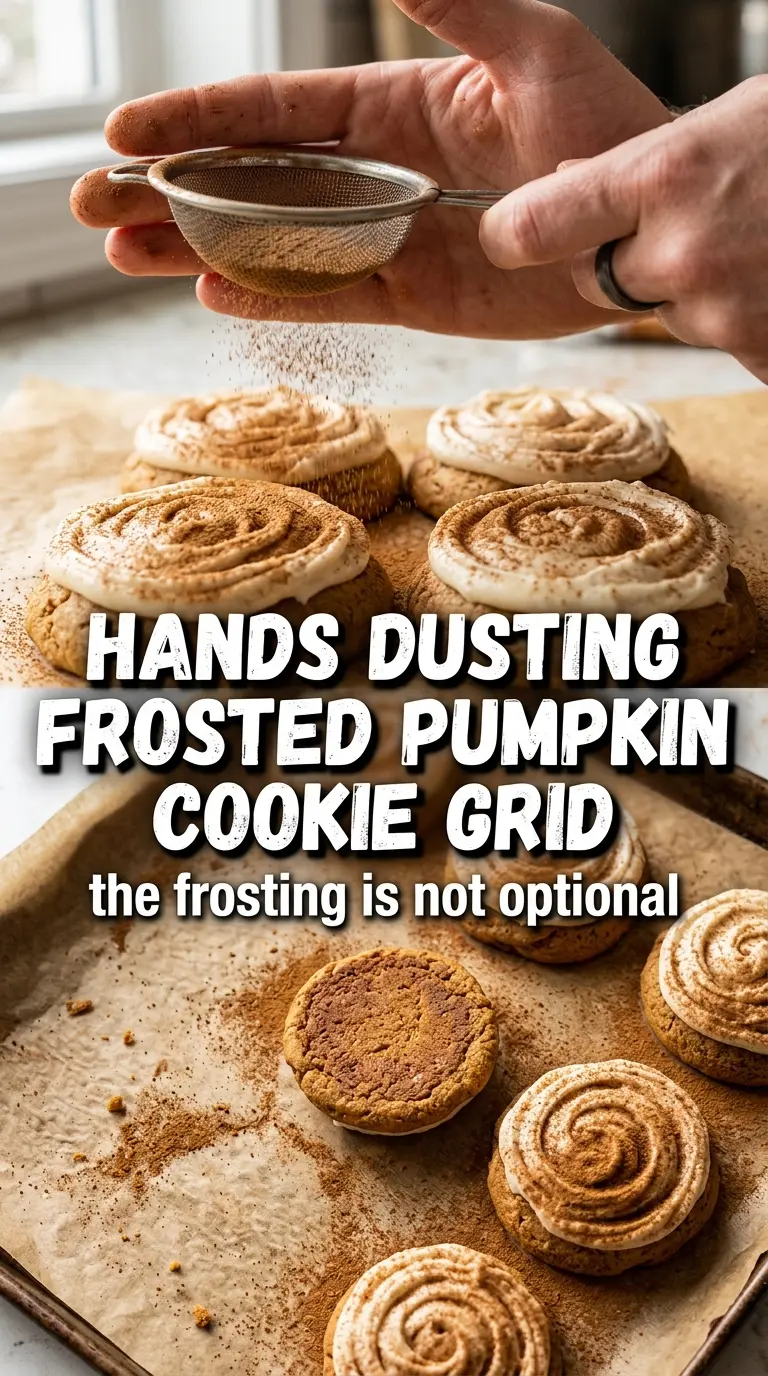
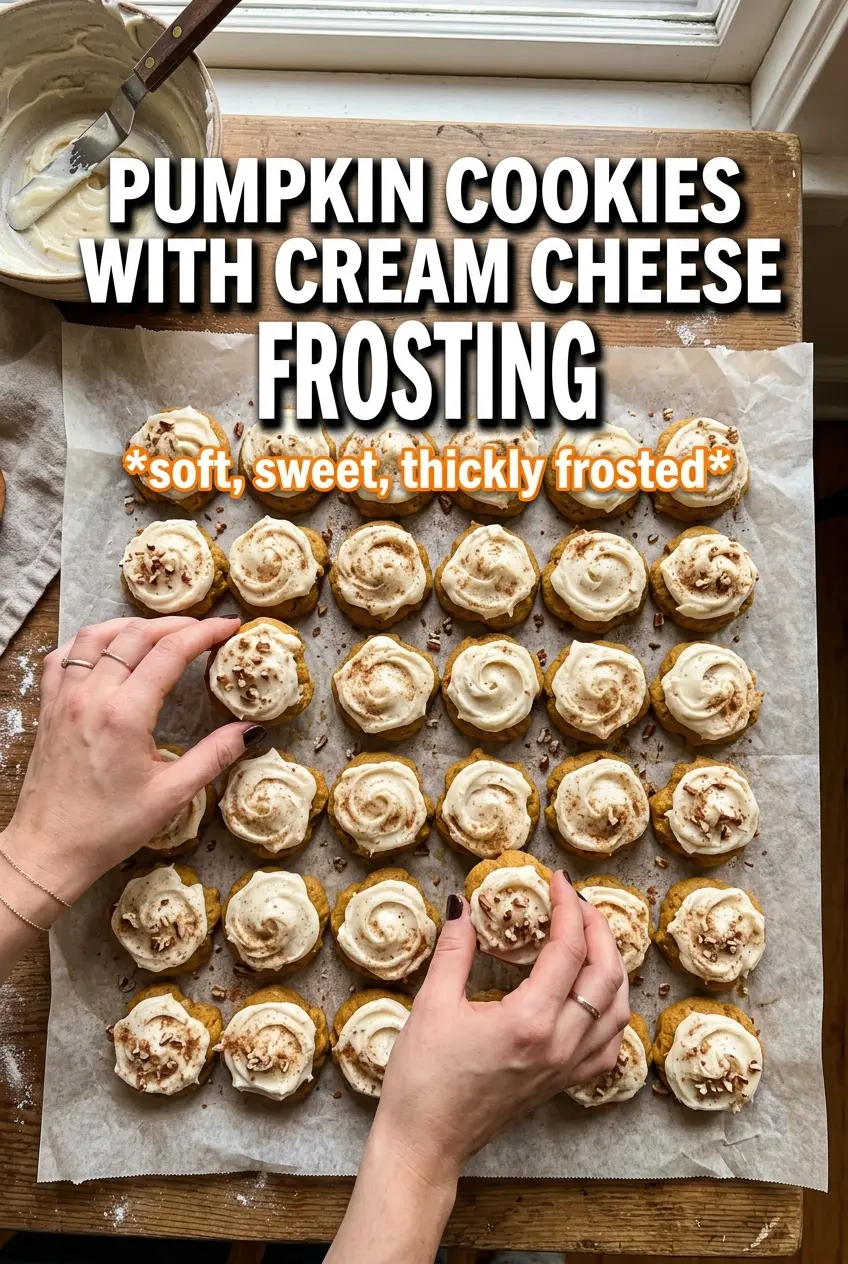
Beat the cream cheese and butter until completely smooth before adding the powdered sugar. If the frosting is lumpy, it was either too cold or not beaten long enough. Frost the cookies only after they’re fully cool, or the topping will slide and melt into the tops. A dusting of cinnamon and a pecan on each one gives them that finished look without making the cookies overly sweet.
How to Change These Cookies Without Losing the Soft, Spiced Texture
Gluten-Free Version
Use a good 1:1 gluten-free baking blend in place of the all-purpose flour. The cookies will still be soft, but they may be a touch more fragile, so let them cool fully before moving them. A blend that includes xanthan gum works best because it helps hold the pumpkin-heavy dough together.
Dairy-Free Version
Swap in plant-based butter and a dairy-free cream cheese that’s meant for frosting. The cookies will still bake up tender, though the frosting may be a little softer and less tangy depending on the brand. Chill the finished cookies if your kitchen is warm so the topping keeps its shape.
Maple Pecan Finish
Add a tablespoon of maple syrup to the frosting and keep the pecan on top. You’ll get a warmer, more autumn-forward finish, but the frosting softens a bit, so don’t overdo the syrup or it will lose its body.
Storage and Reheating
- Refrigerator: Store frosted cookies in an airtight container for up to 4 days. The frosting stays best chilled, and the cookies stay soft, though the tops may pick up a little moisture.
- Freezer: Freeze the unfrosted cookies for up to 2 months. Thaw at room temperature, then frost after they’ve fully defrosted so the topping stays smooth.
- Reheating: These are best served at room temperature, not warmed. If they’ve been refrigerated, let them sit out for 20 to 30 minutes so the frosting softens and the cookie texture turns plush again.
Answers to the Questions Worth Asking
Pumpkin Cookies With Cream Cheese Frosting
Ingredients
Equipment
Method
- Preheat the oven to 350F and line baking sheets with parchment.
- Whisk together flour, baking soda, baking powder, pumpkin pie spice, cinnamon, and salt.
- Beat the softened butter, granulated sugar, and brown sugar until fluffy.
- Add the pumpkin puree, egg, and vanilla extract, then beat until smooth.
- Fold in the flour mixture until the dough is soft and cake-like.
- Drop the dough by 2-tablespoon portions onto the prepared baking sheets.
- Bake for 10-12 minutes, until the cookies are set.
- Cool the cookies completely on a rack.
- Beat the cream cheese frosting ingredients until smooth.
- Frost each cookie generously with cream cheese frosting.
- Dust with cinnamon and press a pecan on top of each cookie.