Golden pumpkin cornbread lands somewhere between tender quick bread and the kind of skillet cornbread that begs for a swipe of butter. The crumb stays soft, the edges bake up lightly crisp, and the pumpkin gives it a deep orange color that looks as good as it tastes. A little maple syrup rounds out the flavor without turning it cakey, so every slice still tastes like cornbread first.
This version works because the wet ingredients are balanced to keep the batter moist without making it heavy. Pumpkin puree brings body and color, while buttermilk adds tang and helps the baking powder do its job. The trick is stopping as soon as the flour disappears; overmixing turns quick breads tight and gummy, and cornbread should stay tender.
Below, I’ve included the little details that matter most: which pan gives the best edges, how to tell when it’s done, and a few smart ways to change it up without losing that soft, golden finish.
The pumpkin flavor was subtle and the cornbread stayed moist for two days. I baked it in my cast iron skillet and the edges came out perfectly crisp without drying out the middle.
Save this pumpkin cornbread for the days when you want a tender crumb, crisp skillet edges, and a little maple sweetness.
The Reason Most Pumpkin Cornbread Turns Dense
Pumpkin cornbread usually goes wrong in one of two ways: it gets overmixed, or it gets too much pumpkin without enough structure to hold it up. Pumpkin puree adds moisture and softness, but it also weighs the batter down. That’s why the flour and cornmeal have to do their job, and why the batter should look a little rough when it goes into the pan.
The other thing to watch is the balance between sweet and savory. Brown sugar and maple syrup should support the corn flavor, not cover it. If you push the sugar much higher, the bread starts baking like cake instead of cornbread, and you lose the texture that makes it worth making in the first place.
What the Pumpkin, Cornmeal, and Buttermilk Are Each Doing
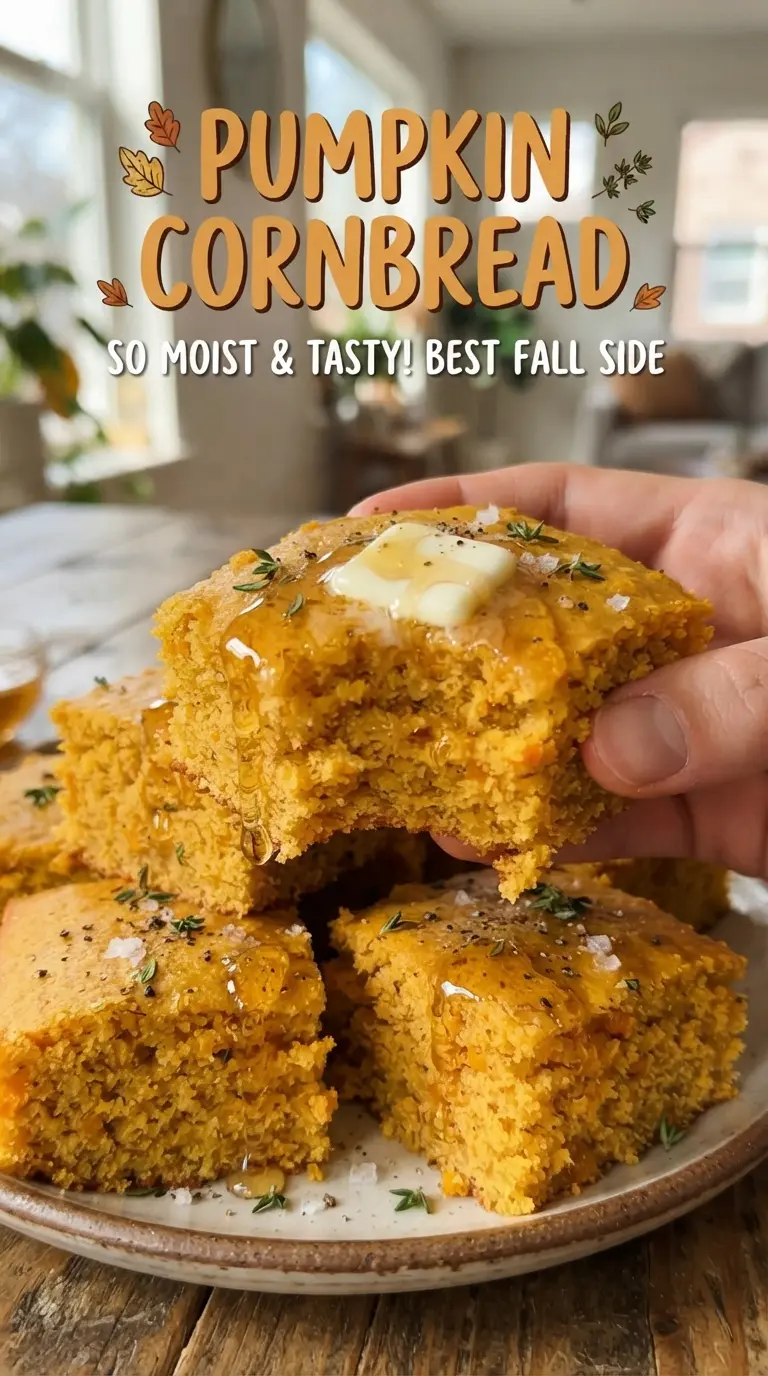
- Yellow cornmeal — This gives the cornbread its grain and that classic corny bite. Fine or medium grind both work, but coarse meal will make the crumb a little more rustic.
- All-purpose flour — Flour holds the loaf together and keeps it from crumbling apart the second you slice it. Don’t swap in cake flour here; it’s too delicate for the balance this batter needs.
- Pumpkin puree — Use plain pumpkin puree, not pumpkin pie filling. The filling already has sugar and spices mixed in, and that throws off both flavor and texture.
- Buttermilk — This adds tang and gives the baking powder a little extra lift. If you’re out of it, use milk plus a teaspoon of lemon juice or vinegar and let it sit for a few minutes.
- Melted butter and maple syrup — Butter adds richness and maple gives the bread a warm finish without making it overly sweet. Let the butter cool slightly before mixing so it doesn’t scramble the eggs.
Getting the Batter Into the Pan Before It Tightens Up
Mix the Dry Ingredients First
Whisk the cornmeal, flour, brown sugar, baking powder, salt, and pumpkin pie spice until the mixture looks evenly speckled. That step matters more than it sounds, because baking powder clumps can leave bitter pockets or uneven rise. A thorough whisk also spreads the spice around so every bite tastes balanced instead of spiced in patches.
Bring the Wet Ingredients Together
Whisk the pumpkin puree, eggs, buttermilk, melted butter, and maple syrup until the mixture is smooth and glossy. If the butter is too hot, it can start cooking the eggs on contact, so let it cool for a couple of minutes after melting. The finished mixture should look pourable and thick, not separated.
Stop Mixing the Moment the Flour Disappears
Stir the wet ingredients into the dry just until no dry streaks remain. The batter should look a little lumpy, and that’s exactly right. If you keep stirring to make it smooth, the gluten tightens and the cornbread bakes up dense instead of tender.
Watch the Edges, Not Just the Timer
Spread the batter into your greased pan and bake until the top is golden and a toothpick comes out clean, usually 22 to 25 minutes. In a cast iron skillet, the edges brown faster, which is a good sign, but the center should still spring back when lightly touched. Pull it as soon as the center is set; waiting for a deeply browned top is how you end up with dry cornbread.
How to Adapt It Without Losing the Tender Crumb
Cast Iron Skillet Edges
Bake it in a 10-inch cast iron skillet for the best crust and the deepest color around the rim. The skillet holds heat longer than an 8×8-inch pan, so the edges crisp faster and the center stays moist. Grease it well so the cornbread releases cleanly.
Dairy-Free Version
Swap the buttermilk for an unsweetened plant milk mixed with 1 teaspoon lemon juice, and use melted vegan butter or neutral oil in place of the butter. The texture stays tender, though you’ll lose a little of the rich dairy flavor that gives the original its round finish.
Less Sweet, More Cornbread
Cut the brown sugar to 2 tablespoons and leave the maple syrup in place. That keeps the bread lightly sweet without pushing it into cake territory. The pumpkin still reads clearly, but the cornmeal gets more of the spotlight.
Add-Ins That Work
Fold in a handful of chopped jalapeños, shredded cheddar, or toasted pepitas after the wet and dry ingredients are just combined. Keep the add-in light so the batter still bakes evenly. Heavy mix-ins can sink and leave the center gummy.
Storage and Reheating
- Refrigerator: Store tightly covered for up to 4 days. It stays moist, but the edges soften after the first day.
- Freezer: Wrap slices individually and freeze for up to 2 months. Thaw at room temperature before reheating so the crumb doesn’t dry out on the outside before the center warms.
- Reheating: Warm slices in a 300F oven for 8 to 10 minutes or toast them lightly in a skillet. The biggest mistake is blasting it in the microwave, which makes the crumb rubbery and dulls the edges.
Answers to the Questions Worth Asking
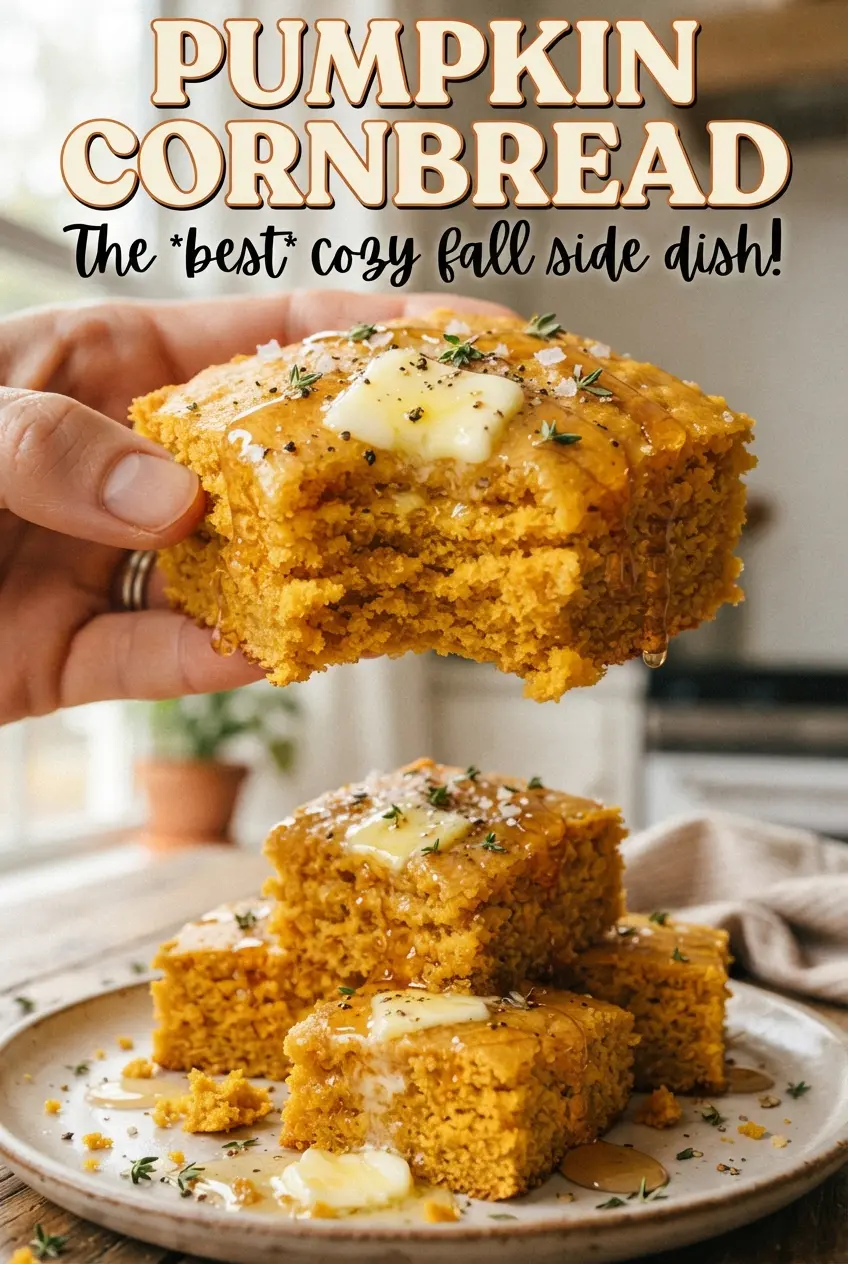
Pumpkin Cornbread
Ingredients
Equipment
Method
- Preheat the oven to 400F and grease an 8x8-inch pan or a 10-inch cast iron skillet, so the batter won’t stick.
- Whisk yellow cornmeal, all-purpose flour, brown sugar, baking powder, salt, and pumpkin pie spice in a bowl until evenly combined, with no dry streaks visible.
- Whisk pumpkin puree, large eggs, buttermilk, melted butter, and maple syrup in a separate bowl until smooth and uniform in color.
- Stir the wet mixture into the dry mixture just until combined, stopping when no dry pockets remain.
- Spread the batter into the greased pan in an even layer, smoothing the top for consistent browning.
- Bake at 400F for 22-25 minutes until golden and a toothpick comes out clean, then let the pan sit briefly before serving warm.
- Serve warm with butter, letting it melt slightly over the hot cornbread.