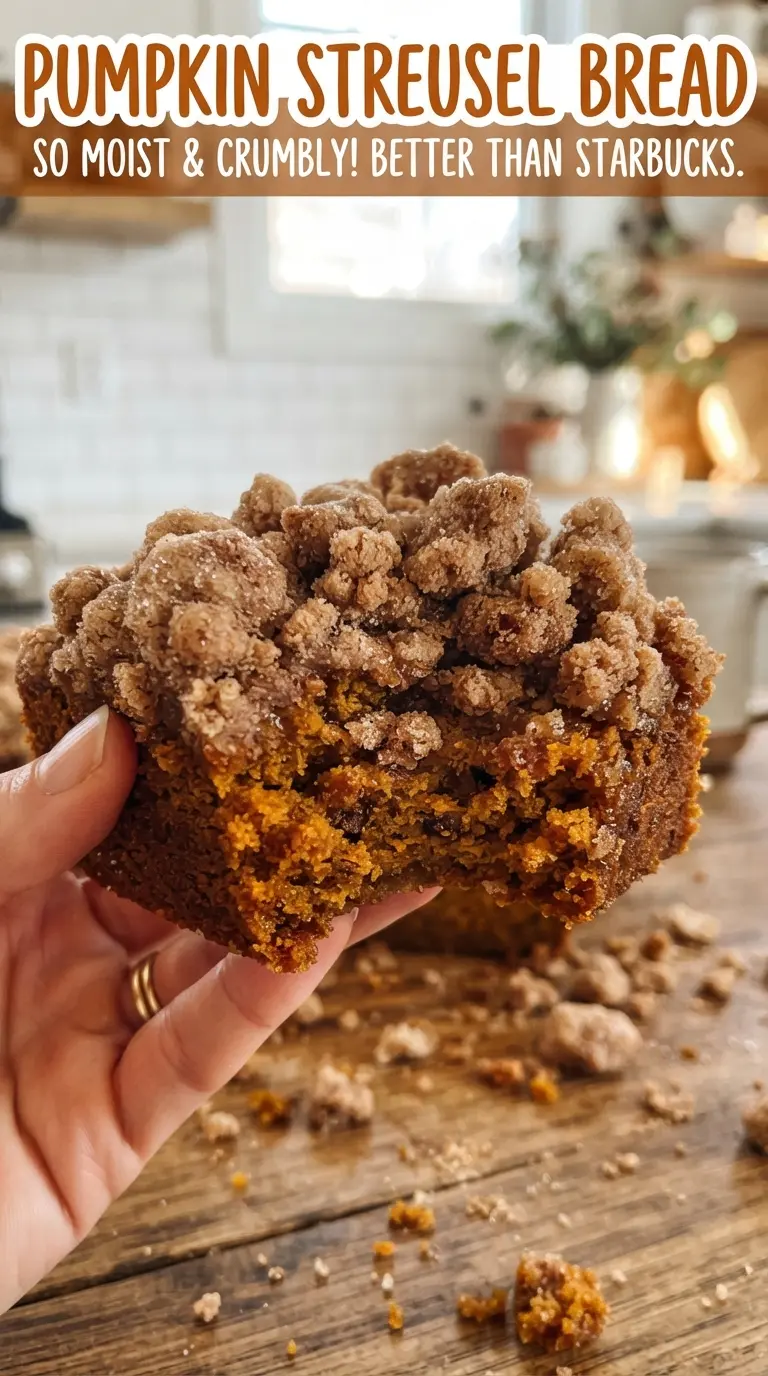
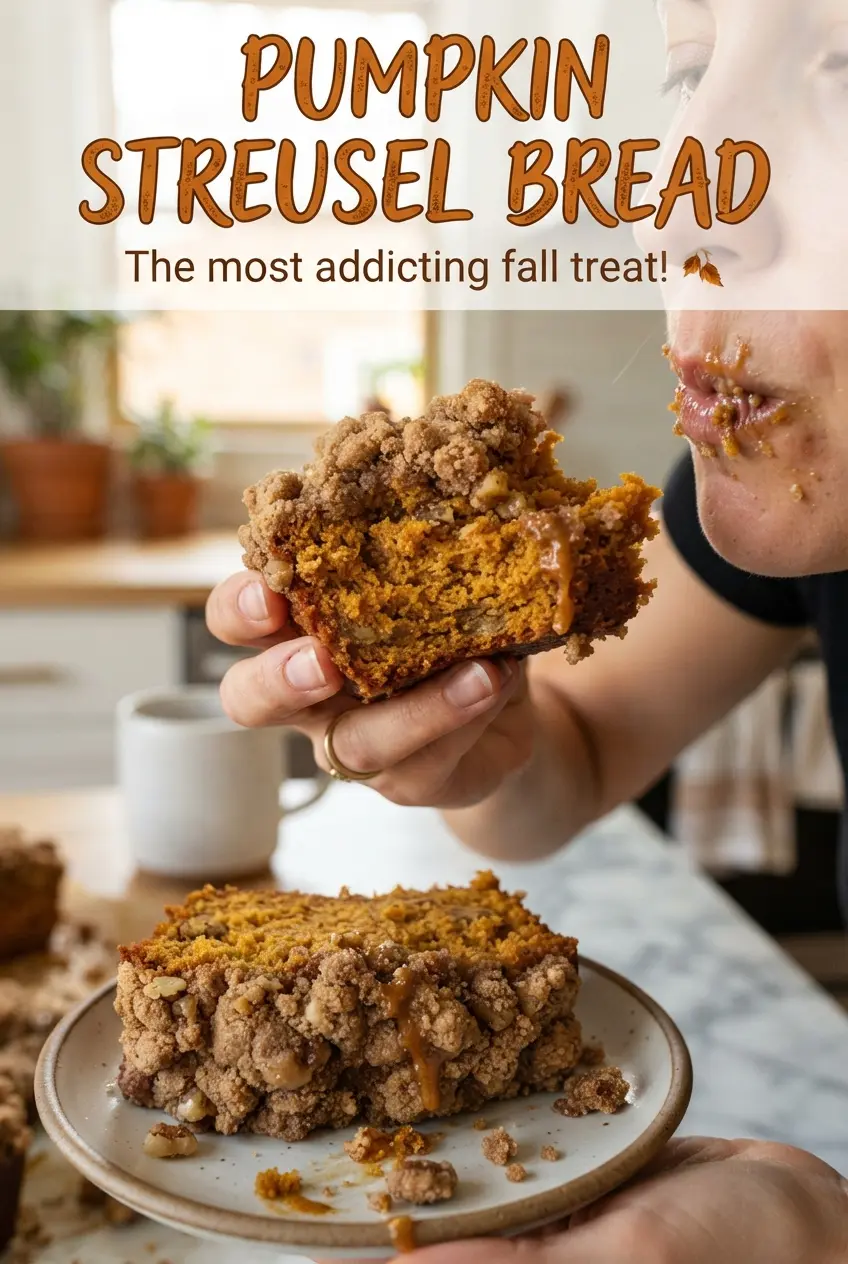
Pumpkin streusel bread bakes up with a tender, moist crumb and that thick, crumbly cinnamon topping that cracks just enough when you cut into it. The loaf stays soft for days, but the real draw is the contrast: a warmly spiced pumpkin base under a buttery streusel layer that turns golden and crisp in the oven.
What makes this version work is the balance of moisture and structure. Pumpkin puree brings body and softness, while the vegetable oil keeps the crumb plush instead of dry. The streusel stays distinct because the butter starts cold, which means it melts in the oven instead of disappearing into the flour. That gives you little crunchy pockets on top instead of a sandy lid.
Below, I’ve included the one timing detail that keeps the streusel from overbrowning and the sliceable bread from turning gummy in the center. I also added a few swaps that actually work if you need to adjust the pan, the spice level, or the flour.
The streusel stayed crisp on top instead of sinking, and the loaf was still moist on day three. I tented it with foil halfway through like you said, and the cinnamon layer came out perfect.
Save this pumpkin streusel bread for a loaf with a soft crumb and a thick cinnamon topping that stays crumbly, not soggy.
The Streusel Topping Needs a Cold Start, Not a Quick Stir
The most common mistake with pumpkin bread like this is treating the streusel like a dry sprinkle instead of a proper crumb topping. When the butter is cold and rubbed in by hand, it stays in little uneven pieces. Those pieces melt at different rates, which is what gives you a crunchy top with actual texture instead of a flat sugary crust.
The other place people go wrong is overmixing the batter once the dry ingredients go in. Pumpkin batter looks thick and a little rough when it’s right. Stir it until the flour disappears, then stop. If you beat it smooth, the loaf turns tight and bouncy instead of soft and plush.
- Cold butter for the streusel — This is what keeps the topping crumbly. If the butter softens too much before baking, the mixture melts into the loaf instead of sitting on top in crisp little clumps.
- Pumpkin puree — Use plain pumpkin puree, not pumpkin pie filling. Pie filling is already sweetened and spiced, which throws off both the texture and the balance of the loaf.
- Brown sugar — This does more than sweeten. It keeps the bread moist and deepens the flavor, especially with the cinnamon streusel on top.
- Vegetable oil — Oil gives this bread a softer, longer-lasting crumb than butter would. Melted butter can work, but the texture is a little denser and less tender.
What Each Ingredient Is Actually Doing in This Recipe
- Primary ingredient (the star) — Quality matters most. Choose the best you can find.
- Cooking medium (oil, butter, or broth) — This carries flavors and prevents dryness.
- Seasonings (salt, pepper, spices, herbs) — Layer flavors so nothing overpowers. Build depth gradually.
- Aromatics (garlic, onion, herbs) — Cook with fat to bloom flavors. Become the foundation.
- Supporting ingredients — Complement the main ingredient without overpowering it.
- Sauce or liquid (if applicable) — Brings flavors together. Balance richness with acid.
- Acid (lemon, vinegar, wine, or other) — Brightens and prevents flat-tasting results.
- Final finish (garnish, glaze, or sauce) — Prevents one-dimensional taste and adds visual appeal.
Building the Loaf So the Center Stays Soft and the Top Stays Crisp
Mix the Streusel First and Chill It
Start with the streusel so it has time to firm up while you mix the batter. Rub the flour, brown sugar, cinnamon, and cold butter together until the pieces look like coarse crumbs with a few larger bits mixed in. Those larger bits bake into the best crunchy pockets. If the mixture turns greasy or paste-like, the butter was too warm. Pop it in the fridge while you finish everything else.
Whisk the Wet Ingredients Until They Look Smooth
The pumpkin, oil, eggs, sugars, and vanilla should blend into a thick, glossy mixture with no streaks of egg showing. That even base helps the loaf bake uniformly, and it keeps pockets of unmixed egg from turning rubbery in the finished bread. The batter will look darker and looser than a standard quick bread batter, which is exactly what you want.
Fold Just Until the Flour Disappears
Add the dry ingredients and fold gently with a spatula. Stop the moment you no longer see dry flour at the bottom of the bowl. Overmixing builds too much structure in a loaf that should stay tender, and it can make the bread tunnel or turn tough around the edges. A few small streaks disappear as the batter sits.
Watch the Top, Not Just the Clock
Spread the streusel evenly over the batter, then bake until the center tests clean and a toothpick comes out without wet batter clinging to it. If the top is darkening before the middle is done, tent the loaf loosely with foil after about 40 minutes. That keeps the streusel from scorching while the center finishes baking through.
Add chopped pecans for a nuttier streusel
Stir 1/3 cup chopped pecans into the streusel mixture before topping the loaf. The nuts toast as the bread bakes and add a little crunch that plays well with the soft pumpkin crumb. This version tastes a touch less sweet and a little more bakery-style.
Swap in a 1:1 gluten-free flour blend
Use a cup-for-cup gluten-free flour blend in both the loaf and the streusel. The bread will be a little more delicate when warm, so let it cool completely before slicing. That rest gives the crumb time to set.
Use melted coconut oil for a dairy-free loaf
Melted coconut oil can replace the vegetable oil one-for-one if you want a dairy-free bread with a faint coconut note. The crumb stays moist, but the flavor shifts a little warmer and richer. Use cold coconut oil for the streusel only if it’s solid enough to rub into crumbs; otherwise, the topping won’t hold its texture.
Storage and Reheating
- Refrigerator: Store covered for up to 5 days. The streusel softens a little in the fridge, but the bread stays moist.
- Freezer: This loaf freezes well. Wrap slices tightly and freeze for up to 3 months, or freeze the whole cooled loaf wrapped in plastic and foil.
- Reheating: Warm slices in a toaster oven or low oven until just heated through. A microwave makes the crumb soft, but it also turns the streusel tacky, which takes away the best part.
Answers to the Questions Worth Asking
Pumpkin Streusel Bread
Ingredients
Equipment
Method
- Preheat oven to 350F, then grease and line a 9x5-inch loaf pan.
- Chill the loaf pan briefly while you make the streusel.
- Rub streusel flour, brown sugar for streusel, ground cinnamon, and cold butter together into coarse crumbs.
- Chill streusel until ready to use.
- Whisk all-purpose flour, baking soda, salt, and pumpkin pie spice until evenly combined.
- Whisk pumpkin puree, vegetable oil, large eggs, brown sugar, packed, granulated sugar, and vanilla extract until smooth.
- Fold the dry ingredients into the wet ingredients just until combined.
- Pour batter into the prepared loaf pan, then cover evenly with the chilled streusel.
- Bake for 60 to 65 minutes until a toothpick comes out clean.
- After 40 minutes, tent with foil if browning fast.
- Cool the bread completely in the pan before slicing.