Caramelized butternut squash and crisp-edged Brussels sprouts make an excellent side dish because they bring balance to the plate: sweet, savory, nutty, and just sharp enough from the balsamic to keep every bite awake. The squash softens into tender cubes with browned corners, while the sprouts pick up those dark, toasty edges that make roasted vegetables worth eating in the first place.
The trick is giving the vegetables enough room and enough heat. A crowded pan steams everything before it can brown, which is how roasted vegetables turn limp instead of deeply caramelized. Here, the maple balsamic gets added after roasting, so the vegetables keep their texture and the cranberries stay chewy instead of melting into the pan.
Below, I’ve included the roasting cues that matter most, plus a couple of smart swaps if you need to adjust for what’s in your kitchen. If you’ve ever ended up with pale squash or mushy sprouts, this version fixes both problems.
The squash got those caramelized edges and the Brussels sprouts stayed crisp instead of soggy. The maple balsamic soaked in just enough, and the pecans stayed crunchy even after tossing.
Save this roasted butternut squash and Brussels sprouts with pecans and cranberries for the side dish that brings crunch, caramelization, and a sweet-tart finish.
The Small Pan Mistake That Steals the Caramelization
The biggest reason roasted vegetables disappoint is crowding. When the squash and Brussels sprouts sit too close together, the steam has nowhere to go, and you end up with soft edges instead of browning. A large sheet pan gives the hot air space to move, which is what creates those darker, sweeter spots on the cut surfaces.
Roasting at 425°F matters here too. Lower heat tends to dry the vegetables before they brown, while higher heat can scorch the outside before the squash turns tender in the center. Tossing halfway through is enough to expose new surfaces without breaking the vegetables down into mush.
What Each Ingredient Is Actually Doing in This Dish
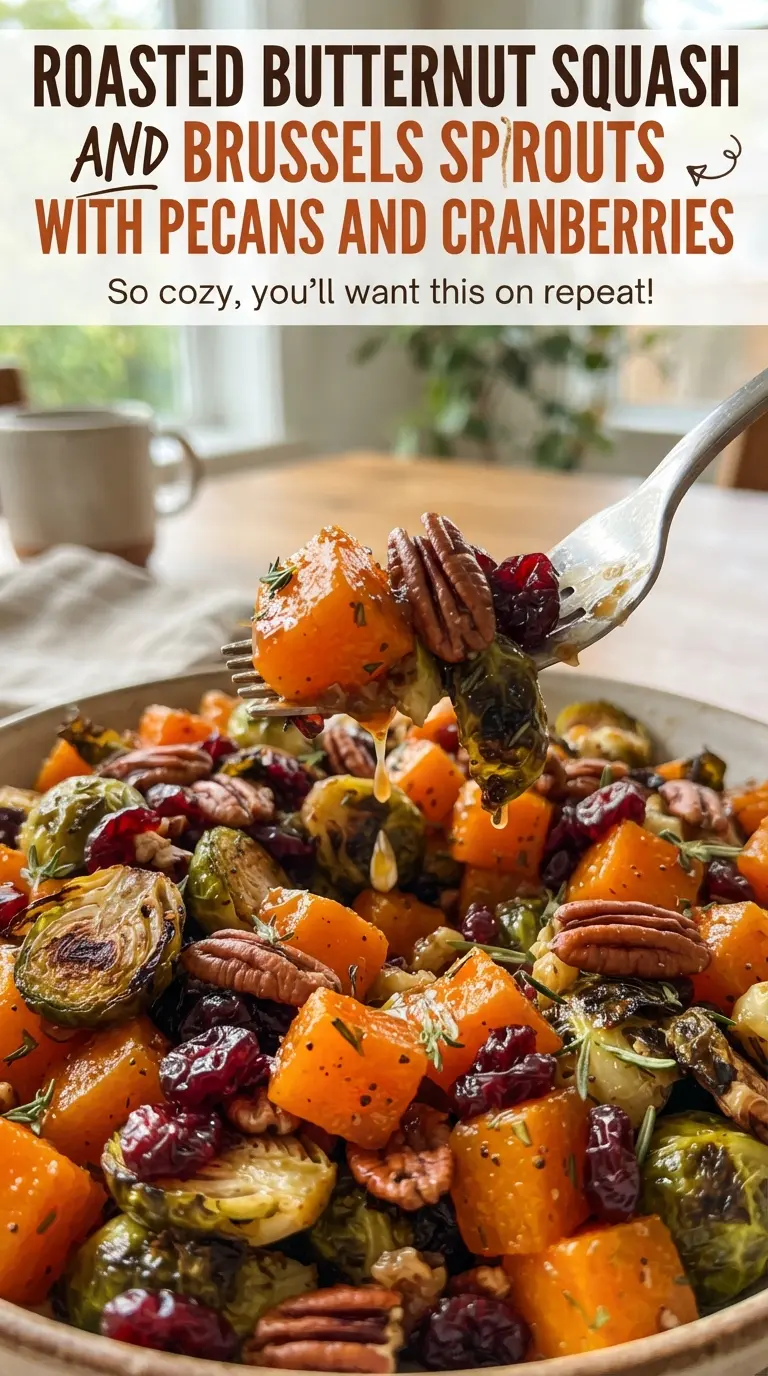
- Butternut squash — This gives the dish its soft sweetness and those golden edges that catch on the pan. Peel it well and cut it into even cubes so it finishes at the same time as the sprouts. Larger chunks stay underdone in the center while the smaller ones collapse before the pan is ready.
- Brussels sprouts — Halving them exposes more cut surface, which is where the best browning happens. Fresh sprouts roast up with crisp edges and a nutty flavor; older ones can taste strong and wilt faster, so use the freshest ones you can find.
- Maple syrup and balsamic vinegar — This is the sweet-tart finish that ties everything together. Whisk them after roasting so the sugar doesn’t burn in the oven. If you want a little more bite, add a few extra drops of balsamic right before serving.
- Pecans and cranberries — The pecans add crunch, and the dried cranberries bring a chewy pop that keeps the dish from feeling one-note. Toasted pecans matter here because raw nuts taste flat next to caramelized vegetables. If you only have raw pecans, toast them in a dry skillet for a few minutes until fragrant.
Roasting the Vegetables Until the Edges Turn Deep Gold
Coating Everything Evenly
Toss the squash and Brussels sprouts with olive oil, salt, and pepper until every cut side has a light sheen. The vegetables should look lightly coated, not wet or greasy. If the oil pools on the pan, there’s too much for the amount of vegetables, and the edges won’t crisp as well.
Roasting for Color, Not Just Tenderness
Spread the vegetables in a single layer and roast until the squash is tender and the sprouts have browned on the cut sides. You’re looking for dark caramelized spots, not an even pale tan. If the pan is overcrowded, the vegetables will soften before they color, so use two pans if yours feels packed.
Finishing Without Sogginess
Whisk the maple syrup and balsamic together, then toss it with the hot vegetables along with the cranberries and pecans. Adding the glaze after roasting keeps the nuts crunchy and the vegetables from getting sticky in the oven. Serve it warm while the outside texture is still at its best.
How to Adapt This for a Bigger Crowd or a Different Diet
Dairy-Free and Naturally Vegetarian
This recipe already fits both diets without any changes, which is part of why it works so well as a side dish for mixed menus. The olive oil and maple-balsamic finish give it plenty of richness without leaning on butter or cheese.
Nut-Free Version
Leave out the pecans and add toasted pumpkin seeds or sunflower seeds at the end for crunch. You’ll lose the buttery flavor of pecans, but you’ll still get that toasted bite that makes the dish feel finished.
Using Sweet Potato Instead of Butternut Squash
Sweet potato can stand in for the squash with nearly the same roast time, though it tends to soften a little more around the edges. Cut it into similar-sized cubes so it browns before it turns mushy, and watch closely near the end of cooking.
Storage and Reheating
- Refrigerator: Store leftovers in an airtight container for up to 4 days. The sprouts soften a little, but the flavor stays good.
- Freezer: You can freeze it, but the texture of the roasted vegetables will be softer after thawing. If you do freeze it, skip the cranberries and pecans and add them fresh after reheating.
- Reheating: Warm it on a sheet pan in a 400°F oven until hot, about 10 minutes. The oven brings back some of the roasted texture; the microwave makes the sprouts limp and dulls the pecans.
Questions I Get Asked About This Recipe
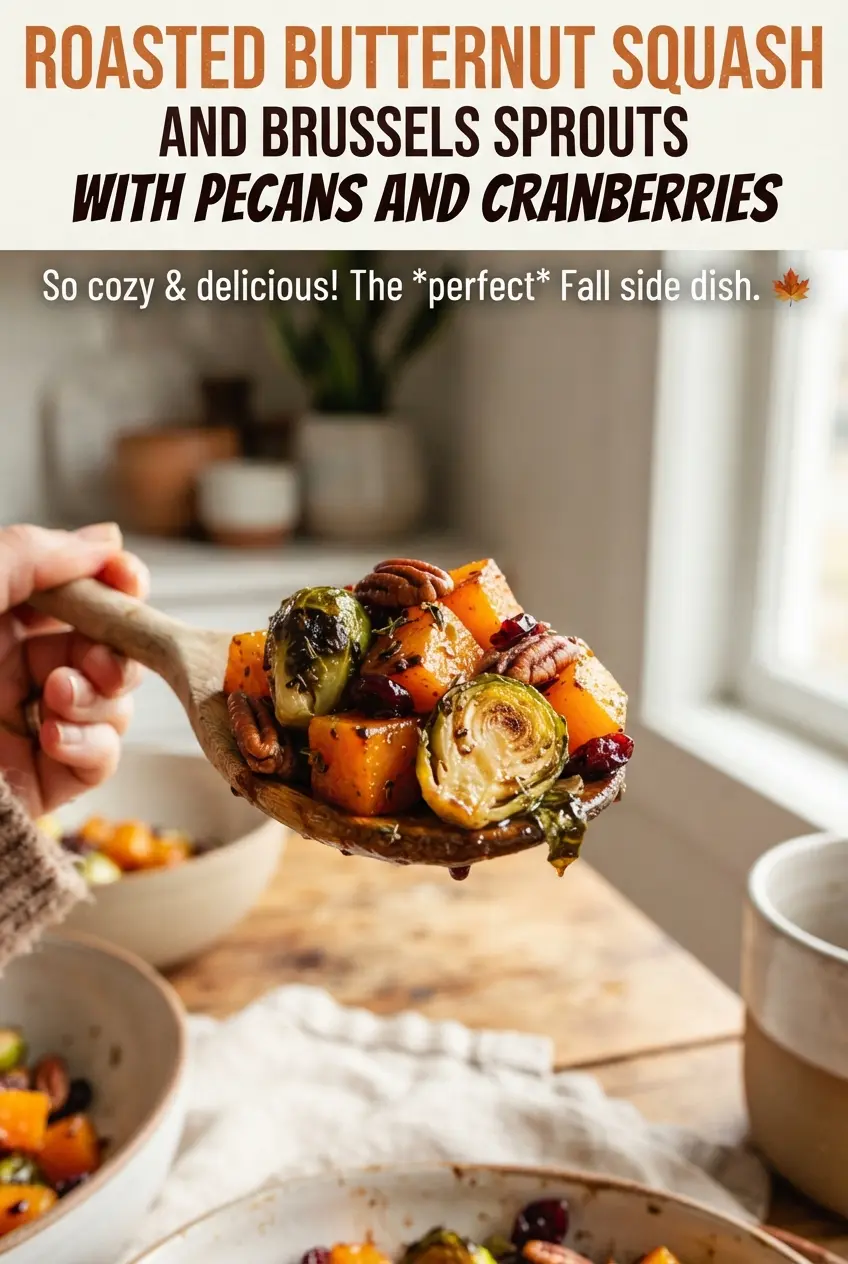
Roasted Butternut Squash and Brussels Sprouts with Pecans and Cranberries
Ingredients
Equipment
Method
- Preheat the oven to 425F. Set a large sheet pan in the oven while it heats so the vegetables start caramelizing right away.
- Toss butternut squash and Brussels sprouts with olive oil, salt, and black pepper on the sheet pan. Spread into a single layer for even browning.
- Roast for 25-30 minutes, tossing halfway, until tender and caramelized. Look for deep golden edges on the squash and crisped, browned spots on the Brussels sprouts.
- Whisk maple syrup and balsamic vinegar together until smooth and pourable. The mixture should look glossy and evenly combined.
- Toss the roasted vegetables with the maple balsamic, dried cranberries, and pecans, then serve warm. Use a quick toss so everything is coated and the pecans stay crunchy.