Roasted tomato basil soup turns thick, velvety, and deeply savory when the tomatoes spend enough time in a hot oven to concentrate instead of just soften. The edges brown, the garlic turns sweet, and the onions melt into the broth, giving you a bowl that tastes layered and homemade instead of flat or canned.
The trick is roasting everything hard enough to draw out the tomato sweetness and the onion richness before anything hits the pot. A little balsamic sharpens the flavor, cream smooths the blend without muting it, and fresh basil goes in at the end so it stays bright. If your tomato soup has ever tasted thin or one-note, this version fixes both problems.
Below, I’ll walk you through the part that matters most: how to get real caramelization from the vegetables, not just soft roasted produce. I’ve also included the swaps I trust when I’m short on basil, out of cream, or need to make it vegetarian without losing body.
I roasted the tomatoes until the edges were browned like you said, and the soup came out thick and rich instead of watery. My husband kept dipping the grilled cheese croutons in it and said it tasted like a restaurant bowl.
Love this roasted tomato basil soup? Save it to Pinterest for the nights when you want a silky blended soup with grilled cheese croutons.
The Difference Between Roasting Tomatoes and Just Softening Them
The biggest mistake with tomato soup is treating the oven like a warm-up step instead of the place where flavor gets built. Tomatoes need high heat and enough space on the pan so moisture can evaporate; if they’re crowded, they steam and taste flat. You want browned edges, collapsed skins, and a little char on the onions and garlic because that’s where the soup gets its depth.
The balsamic vinegar matters here because it bridges the gap between sweet roasted vegetables and the cream you stir in later. Add it after roasting, not before, so the acid stays bright. If the soup tastes thin at the end, the problem usually isn’t salt — it’s that the vegetables didn’t roast long enough to concentrate.
What Each Ingredient Is Actually Doing in This Bowl
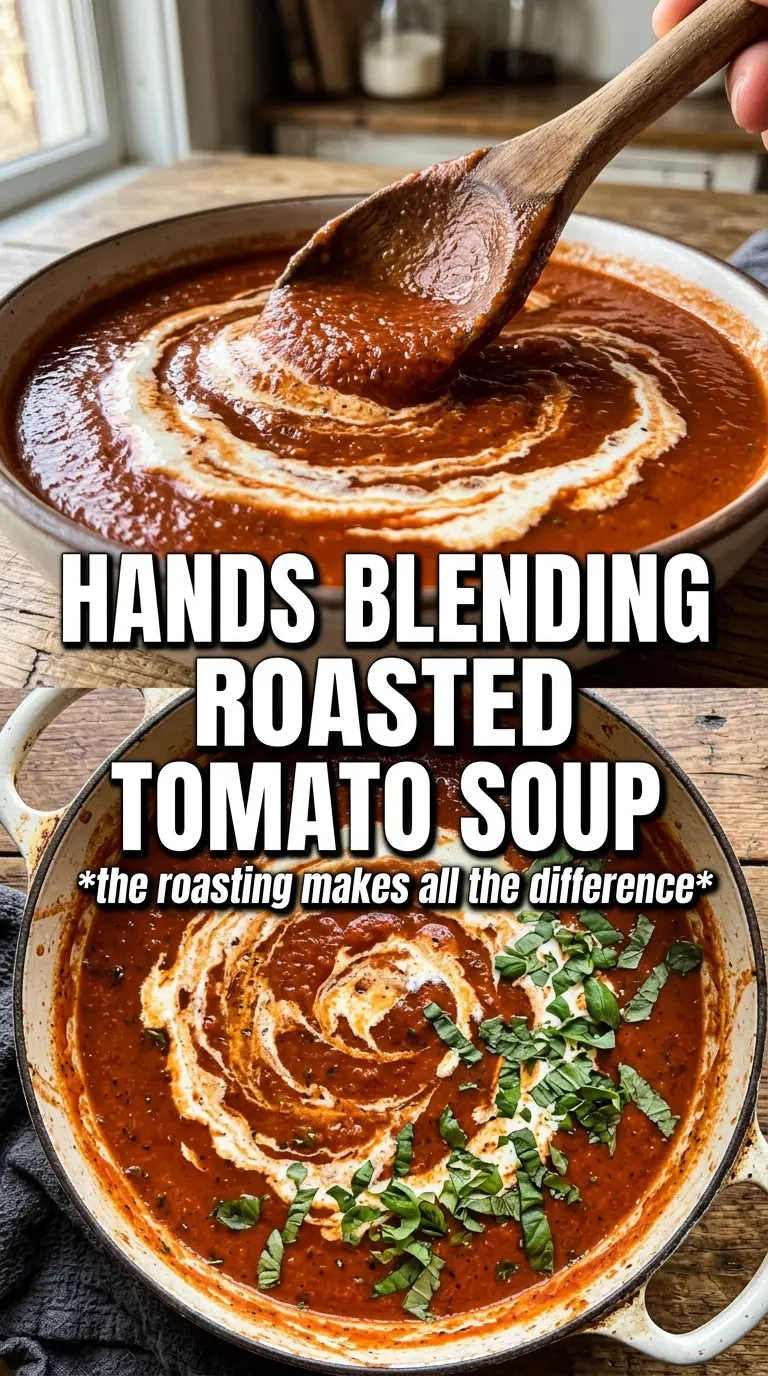
- Roma or vine tomatoes — Roma tomatoes give you a thicker, less watery soup, but vine tomatoes work well if they’re ripe and heavy for their size. If the tomatoes taste bland raw, the soup will taste bland too, even after roasting.
- Garlic and onion — Roasting them with the tomatoes turns them sweet and mellow. Don’t skip halving the garlic head crosswise; that exposes the cloves so they soften and squeeze out cleanly into the pot.
- Olive oil — This helps the vegetables caramelize and carries the flavor through the soup. A good extra-virgin olive oil is worth using here because you taste it in the finished bowl.
- Chicken or vegetable broth — Use broth, not water. Water dilutes the roasted flavor, while broth gives the soup enough body to taste finished before the cream goes in.
- Heavy cream — This gives the soup its silky finish and rounds out the tomato acidity. Half-and-half will work in a pinch, but the soup will be lighter and a little less luxurious.
- Fresh basil — Add it after blending so it stays green and fragrant instead of tasting dull. Dried basil won’t give you the same fresh finish, so use it only if you have to.
Building the Soup So It Stays Silky, Not Grainy
Roast Until the Pan Has Real Color
Spread the tomatoes, onion, and garlic out in a single layer and roast them at 425°F until the tomatoes slump and the edges darken. You’re not just waiting for tenderness; you’re waiting for color on the pan and a few browned spots on the vegetables. If they still look pale and wet, keep going. That extra few minutes is what keeps the finished soup from tasting like warmed tomato juice.
Blend Before the Cream Goes In
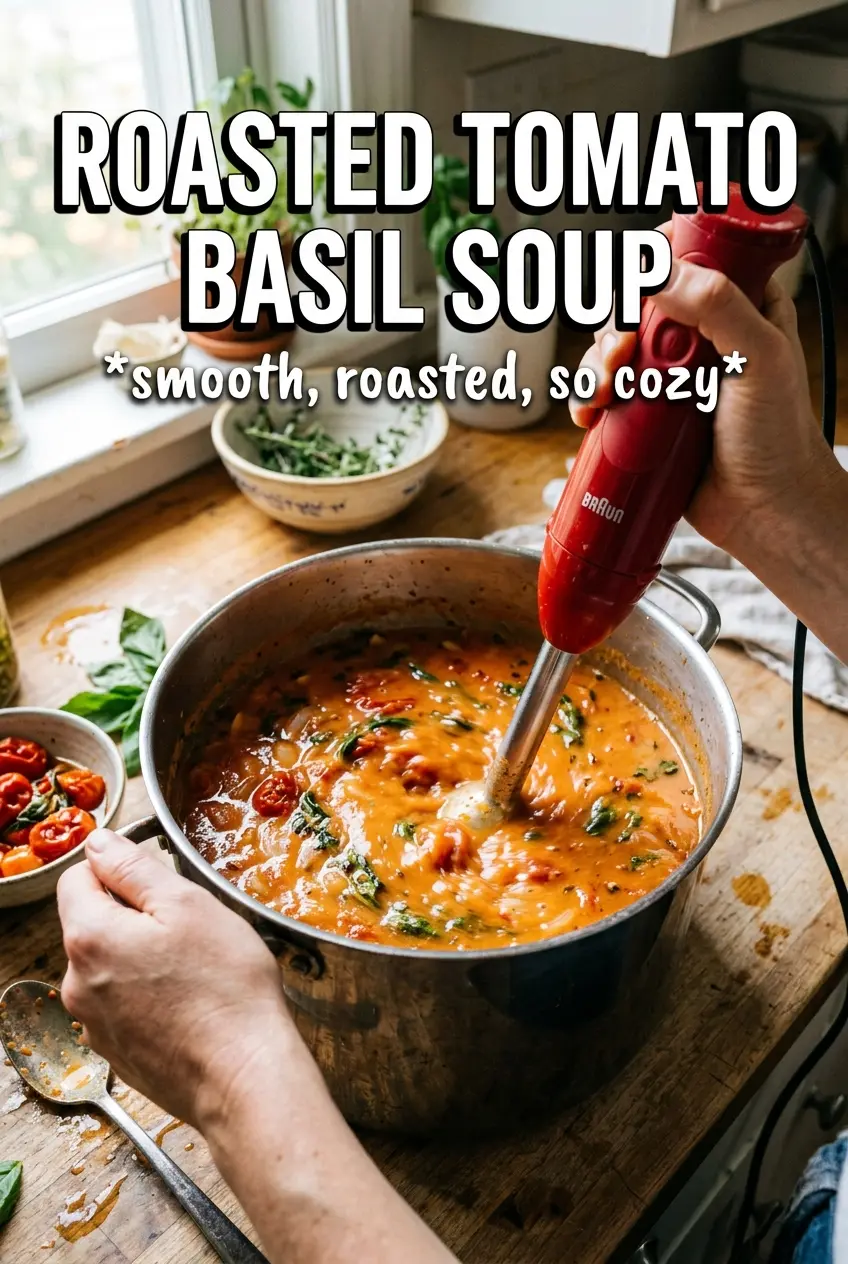
Transfer the roasted vegetables to the pot with broth and balsamic vinegar, then blend until completely smooth before adding the cream. If you blend cream into a hot pot too early, it can turn the texture a little foamy and make it harder to judge the final thickness. An immersion blender works best here because you can control the texture and stop as soon as the soup looks velvety.
Finish on Low Heat
Once the cream and basil go in, keep the soup at a gentle simmer. Don’t boil it after adding cream; high heat can make it taste muted and slightly split at the edges. The basil should smell fresh as soon as it hits the pot, and the soup should look glossy, not heavy. Taste at the end and add sugar only if the tomatoes lean sharp or acidic.
Three Ways to Adjust It Without Losing the Good Part
Dairy-Free and Still Creamy
Swap the heavy cream for full-fat coconut milk or an unsweetened cashew cream. Coconut milk adds a faint sweetness that works well with roasted tomatoes, while cashew cream keeps the flavor more neutral. Either way, add it at the end over low heat so it stays smooth.
Vegetarian Without Losing Depth
Use vegetable broth and keep the balsamic vinegar in the mix. The roasting does most of the heavy lifting, so you won’t miss the chicken broth as long as the tomatoes get enough color in the oven. If the finished soup tastes a touch shy, add another pinch of salt before reaching for more cream.
Thicker Soup for Dunking Bread
Cut the broth back by 1/2 cup if you want a thicker bowl that clings to grilled cheese croutons. The soup will still blend smoothly, but it will eat more like a restaurant-style puree. If you go too far and it turns too thick, loosen it with a splash of broth before serving.
Make-Ahead Storage and Reheating
- Refrigerator: Store in an airtight container for up to 4 days. The soup thickens as it chills, so expect to loosen it a little when reheating.
- Freezer: It freezes well, but the texture is best if you freeze it before adding the cream. Thaw overnight, reheat gently, then stir in the cream and basil at the end.
- Reheating: Warm it over low heat and stir often. Don’t let it boil hard, especially if the cream is already in the soup, or the texture can turn slightly grainy.
Questions I Get Asked About This Recipe
Roasted Tomato Basil Soup
Ingredients
Equipment
Method
- Preheat oven to 425°F, then arrange tomatoes, garlic, and onion on a rimmed baking sheet in a single layer.
- Drizzle with 1/4 cup olive oil, then season with salt, pepper, and oregano to coat evenly.
- Roast 35-40 minutes until caramelized and slightly charred at the edges, keeping vegetables undisturbed so they brown.
- Squeeze roasted garlic from skins, then transfer all roasted vegetables to a large pot.
- Add broth and balsamic vinegar, then blend smooth with an immersion blender.
- Stir in heavy cream and fresh basil, then simmer 10 minutes until hot and cohesive.
- Add sugar and season with salt and pepper, then stir until fully dissolved and adjust seasoning to taste.
- Ladle into bowls and serve with grilled cheese croutons or crusty bread.