Root Beer Float Cookie Ice Cream Sandwiches hit that old-school soda fountain note in the best way: chewy molasses cookies, cold vanilla bean ice cream, and a root beer caramel drizzle that tastes like the float you remember from childhood. The cookies stay soft enough to bite cleanly straight from the freezer, which matters more than it sounds, because a dry cookie turns a frozen sandwich into a mess.
The trick is leaning on molasses and root beer extract together. Molasses gives the cookies depth and keeps them tender, while the extract carries that unmistakable root beer aroma without watering down the dough. Pressing the cookies flat before baking helps them cool into sandwich-ready rounds instead of domed little cakes, and freezing the assembled sandwiches after drizzling lets everything set up without cracking apart when you unwrap one.
Below you’ll find the small details that make these work: how to keep the cookies soft, how to handle the ice cream layer without a fight, and a few smart swaps if you want to adjust the flavor or make them ahead for a crowd.
The cookies stayed soft even after freezing, and the root beer caramel made the whole thing taste like a real float instead of just vanilla ice cream between cookies. My kids asked for a second batch the same weekend.
Like this retro frozen treat? Save these root beer float cookie ice cream sandwiches for the next time you want a hand-held dessert with a real soda fountain vibe.
The Reason These Cookies Stay Soft After Freezing
The biggest mistake with ice cream sandwiches is baking cookies that are too crisp or too thick. Once those hit the freezer, they turn hard fast and the sandwich eats like a brick. These cookies are built with molasses and a modest amount of flour, so they bake up tender and bendy instead of snappy. That softness is what keeps the sandwich pleasant straight from the freezer.
Pressing the dough before baking matters here. A rounded cookie puffs more, which leaves you with a thick edge and a thin center that cracks when you bite into it. Flattening the dough rounds gives you even cookies that match the ice cream layer cleanly. Cooling them completely is non-negotiable too; even a little warmth will melt the ice cream and slide the filling right out.
What Each Ingredient Is Actually Doing in These Sandwiches
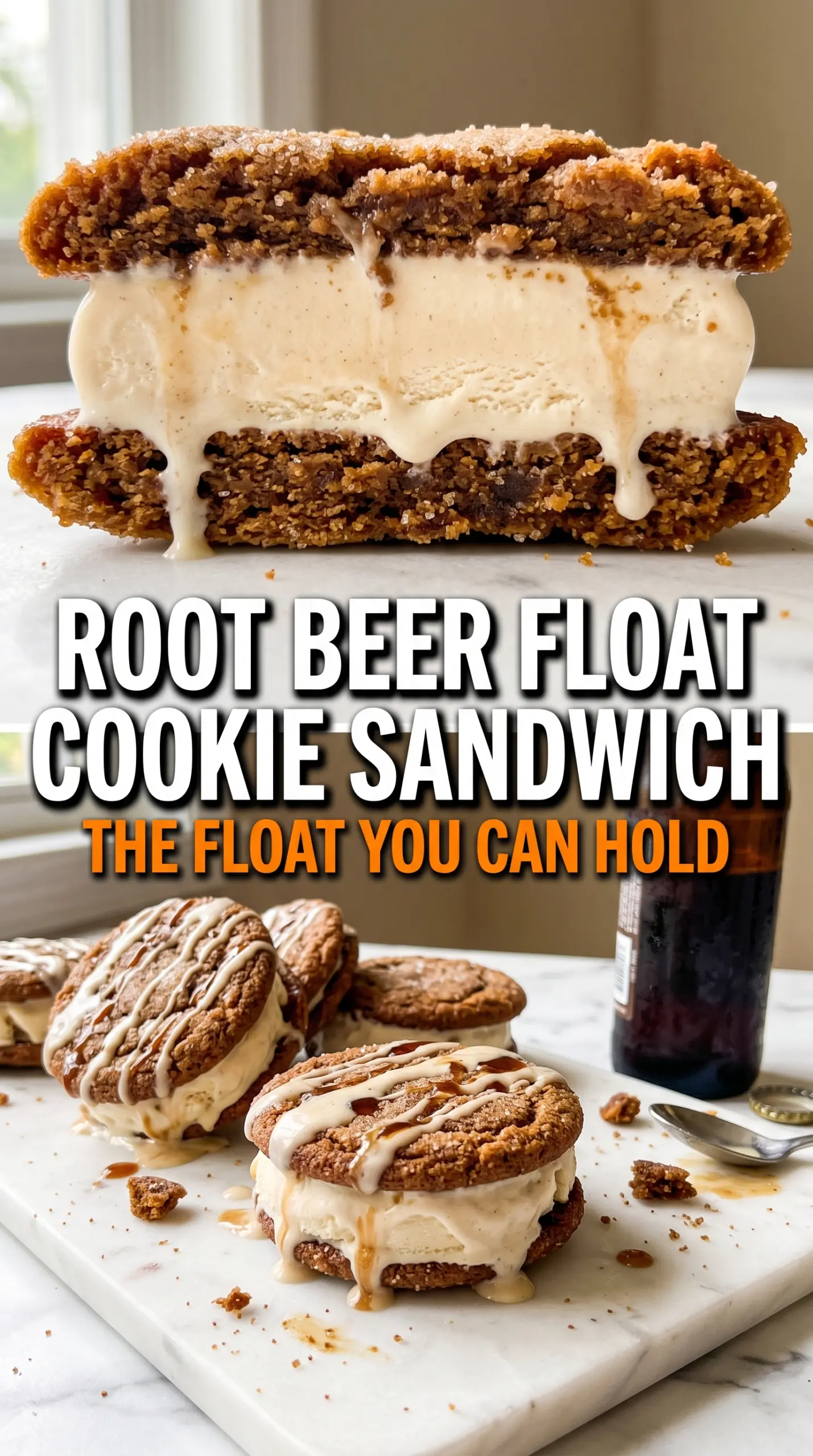
- Molasses — This gives the cookies their deep brown color and that old-fashioned chew. There isn’t a substitute that brings the same flavor, though dark corn syrup will soften the texture in a pinch; the taste will be flatter.
- Root beer extract — This is what makes the cookies and drizzle taste like a float instead of just vanilla cookies with caramel. If you use a stronger extract, stay with the amount listed; too much turns medicinal fast.
- Butter and sugar — Creaming them properly traps air so the cookies bake up soft instead of dense. The mixture should look lighter and a little fluffy before the molasses goes in.
- Vanilla bean ice cream — Use a firm, good-quality ice cream here. A soft, airy tub melts faster and squishes out the sides before the sandwich has a chance to set.
- Caramel sauce — Store-bought caramel is fine for this recipe because the root beer extract is the star. Stir it in after the caramel is warm, not boiling, or the flavor gets muddled and the sauce can loosen too much.
Building the Frozen Sandwich So It Holds Together
Mixing the Cookie Dough
Start by whisking the dry ingredients together so the baking soda and cinnamon are evenly distributed. Beat the butter and sugar until the mixture turns pale and fluffy, then add the molasses, egg, root beer extract, and vanilla. The dough will look glossy and a little sticky before the flour goes in. If you rush this stage and skip the proper creaming, the cookies bake up heavier and lose that soft bite you need for freezing.
Shaping and Baking for the Right Texture
Scoop the dough into even rounds and press them flat with your palm or the bottom of a glass. Bake just until the edges look set and the centers no longer look wet; they should still be soft when they come out. Overbaking is the fastest way to ruin the texture here, because the cookies firm up as they cool and need to stay tender enough to thaw on the tongue. Let them cool all the way on a rack before you even think about adding ice cream.
Assembling Without a Meltdown
Work with the ice cream straight from the freezer, but let it soften only enough to scoop cleanly. Place a generous scoop on the flat side of one cookie, press gently with a second cookie, and stop before the filling bulges too far out the edges. If the ice cream gets too soft, the sandwich slips apart before it freezes; if it’s too hard, the cookies crack from pressure. Drizzle with the root beer caramel, then freeze the sandwiches until firm so the filling sets around the cookies instead of oozing out.
How to Adapt These Without Losing the Float Effect
Dairy-Free Version
Use a plant-based butter for the cookies and a dairy-free vanilla ice cream for the filling. The texture will still work, but the flavor will lean a little more toward molasses and root beer because you lose the richness of the cream. Choose a coconut-free frozen dessert if you want the float flavor to stay front and center.
Gluten-Free Swap
A good 1:1 gluten-free flour blend can replace the all-purpose flour here. The cookies may spread a little less and bake up slightly more delicate, so chill the dough for 15 to 20 minutes if it feels soft. The flavor stays intact, but the sandwich is easiest to handle when the cookies are on the smaller side.
Cream Soda Version
Swap the root beer extract for cream soda flavoring if you want a lighter, vanilla-forward sandwich. The cookies will taste less spiced and more mellow, which pairs nicely with a very rich vanilla ice cream. Keep the caramel drizzle, because it gives the whole dessert the same nostalgic shop-counter finish.
Make-Ahead for a Crowd
Bake the cookies a day ahead and freeze them in a single layer before assembling. You can also assemble the sandwiches, wrap each one tightly, and keep them frozen until serving time. The key is giving them that final hour in the freezer after drizzling so the center firms up and the cookies stay neat when served.
Storage and Reheating
- Refrigerator: Not recommended. These belong in the freezer, and the ice cream will melt and refreeze unevenly in the fridge.
- Freezer: Wrap each sandwich tightly and freeze for up to 2 weeks for the best texture. After that, the cookies can pick up freezer flavor and the ice cream starts to get icy.
- Reheating: No reheating needed. Let a sandwich sit at room temperature for 2 to 4 minutes before eating so the cookies soften just enough; waiting too long is what causes the filling to slump out.
Answers to the Questions Worth Asking
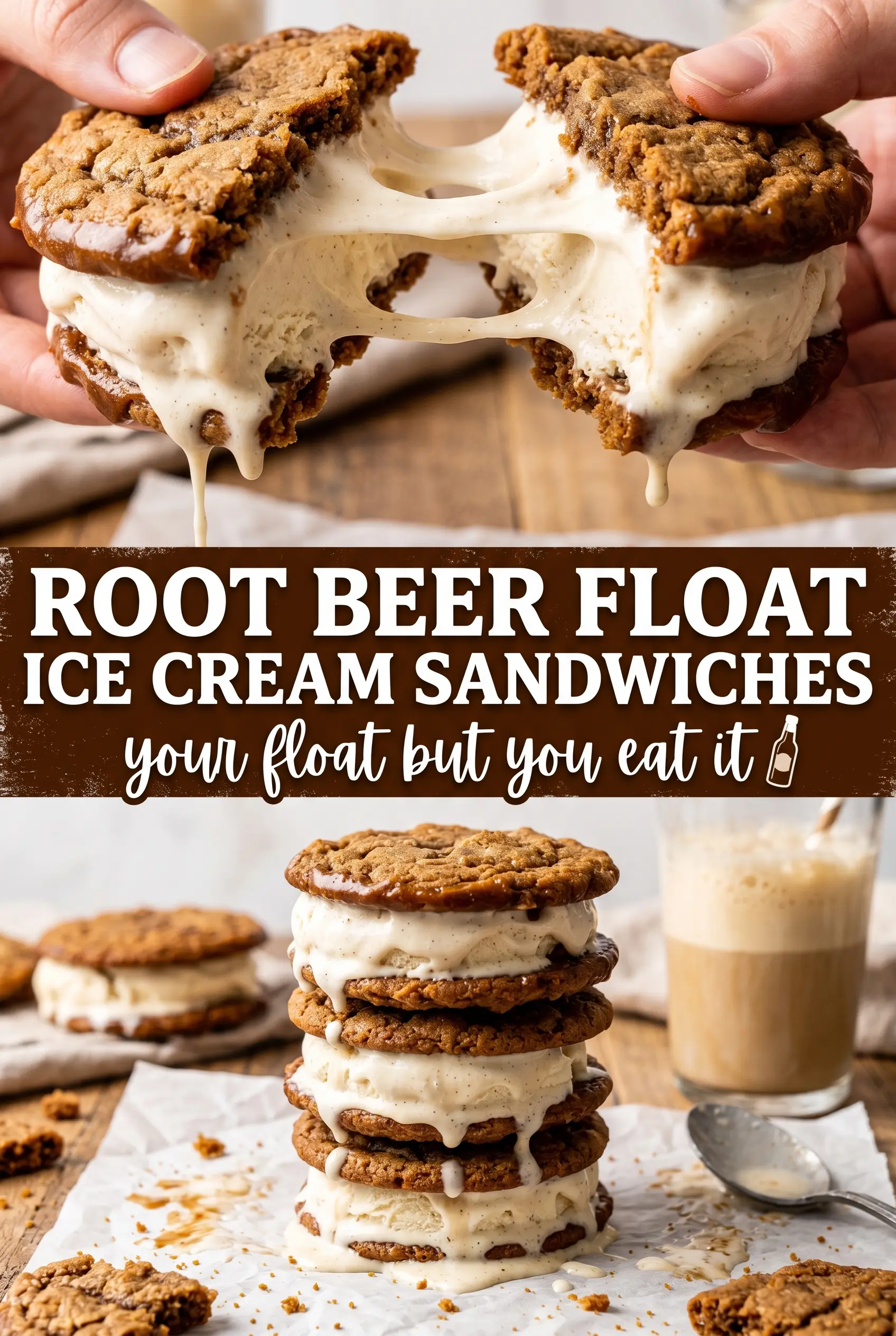
Root Beer Float Cookie Ice Cream Sandwiches
Ingredients
Equipment
Method
- Preheat the oven to 350F, then whisk all-purpose flour, baking soda, cinnamon, and salt in a bowl until evenly combined.
- Beat unsalted butter, softened and granulated sugar until fluffy, about 2-3 minutes, then mix in molasses, egg, root beer extract or flavoring, and vanilla extract.
- Stir the flour mixture into the wet ingredients just until no dry streaks remain.
- Scoop the dough into rounds and press flat, then bake on a sheet pan for 10-12 minutes until the cookies look set at the edges.
- Cool the cookies completely so they firm up before assembling the sandwiches.
- Stir root beer extract into caramel until smooth and pourable.
- Sandwich vanilla bean ice cream between two root beer cookies to form hand-held cookie ice cream sandwiches.
- Drizzle root beer caramel over the tops, then freeze at least 1 hour until firm enough to hold.