Salted caramel chocolate chip cookies hit that sweet spot between crisp-edged and gooey-centered, with little pockets of melted caramel tucked into a buttery dough. The chocolate stays bold, the caramel turns soft and sticky, and the flaky sea salt on top keeps every bite from tasting flat or one-note.
The trick is keeping the dough balanced so the cookies spread just enough without turning greasy or dense. Brown sugar brings chew and depth, while a little cornstarch gives the centers a softer bite that holds up even after the cookies cool. The caramel bits need to be folded in gently so they stay distributed instead of sinking into the dough.
Below, you’ll find the small details that matter most here: how to keep the caramel from disappearing into the cookie, what the dough should look like before it goes into the oven, and a couple of smart swaps if you need them.
The caramel stayed soft and chewy instead of hardening, and the cookies came out with those wrinkly edges and gooey centers I was hoping for. I baked them exactly 11 minutes and they were perfect after cooling on the pan.
Save these salted caramel chocolate chip cookies for the nights when you want gooey caramel pockets, melty chocolate, and a proper flaky salt finish.
The Difference Between Gooey Caramel and a Puddle in the Pan
Caramel is the part that can make or break these cookies. If it’s too firm, it stays separate and turns chewy in a good way. If it’s too soft, it melts out and leaves little burned patches around the edges of the cookies. Soft caramel bits or chopped soft caramels are the safest choice because they warm through without disappearing completely.
The other thing worth paying attention to is the bake time. These cookies should come out when the edges are set and lightly golden but the centers still look a little underdone. That’s not a mistake. They finish on the hot pan, and that carryover heat is what keeps the middle soft instead of dry.
- Cornstarch — This is what keeps the crumb tender without making the cookies cakey. It’s a small amount, but it changes the texture enough that the centers stay soft for days.
- Brown sugar — Use packed brown sugar here. It adds moisture and gives the cookies that slightly chewy middle that works with the caramel.
- Soft caramel bits — These melt into little pockets instead of running across the pan. If you only have wrapped caramels, chop them finely so they distribute evenly.
- Flaky sea salt — Don’t skip it. Regular table salt won’t give you the same clean finish or the little bursts of salt that make the caramel taste deeper.
What Each Ingredient Is Actually Doing in These Cookies
- Butter — Softened butter creams with the sugars to trap air, which gives the cookies a lighter texture. If it’s melted, the dough spreads too fast and the cookies bake up greasy.
- Vanilla extract — Vanilla rounds out the caramel and chocolate. Use the real stuff if you can; it gives the dough a warmer base note.
- Semi-sweet chocolate chips — Semi-sweet is the right balance here because the caramel already brings plenty of sweetness. Darker chips work if you want a less sweet cookie, but milk chocolate can push the whole thing into cloying territory.
- All-purpose flour — Standard all-purpose flour works best. There’s no special flour trick here; the important part is measuring it lightly so the dough doesn’t turn dry and thick.
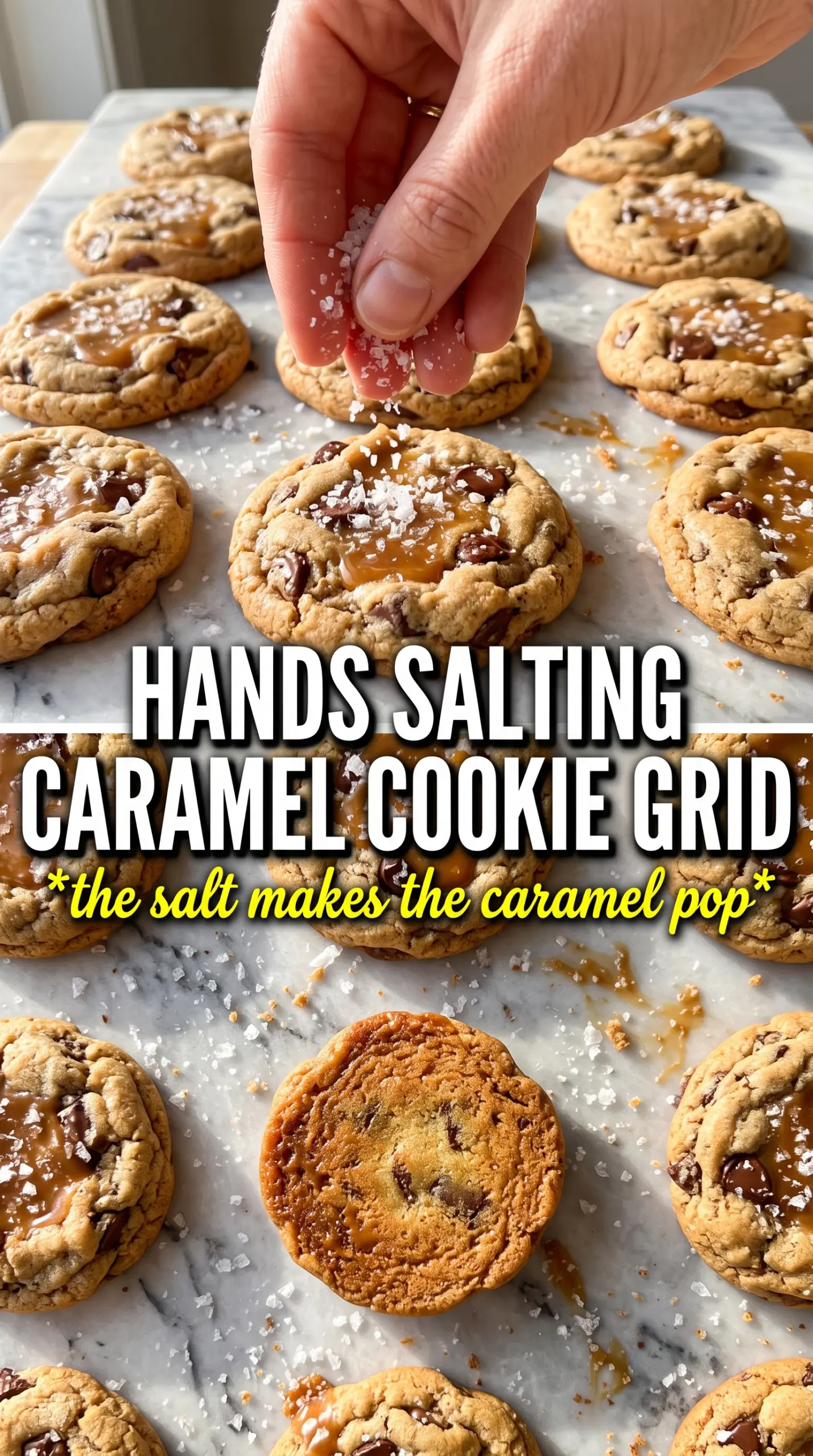
- Flaky sea salt — Add it after baking, not before. If it goes on too early, it dissolves into the caramel and loses the sharp finish that makes these cookies taste complete.
Mixing, Scooping, and Baking Without Losing the Caramel
Cream the Butter Until It Turns Pale
Beat the butter with both sugars until the mixture looks fluffy and lighter in color. That step gives the cookies structure and helps them bake with those soft, rounded centers instead of a flat spread. If you stop too early, the dough stays dense and the texture turns heavy. Add the eggs one at a time so the mixture stays smooth instead of looking curdled.
Fold in the Caramel Gently
Once the flour mixture goes in, switch to a light hand. Overmixing at this point tightens the dough and toughens the cookies, and it can also smudge the caramel into streaks instead of keeping it in little bits. Fold just until the flour disappears, then add the chocolate chips and caramel bits. The dough should look thick but scoopable.
Bake for Color at the Edges, Not a Dry Center
Portion the dough into 2-tablespoon rounds and give them space on the pan. Bake until the edges are golden and the centers still look slightly soft and puffy. If you wait until the tops look fully set in the oven, they’ll finish too hard once they cool. Press a few extra chips or caramel pieces on top right after baking, then finish with flaky salt and let them sit on the pan for five minutes before moving them.
Freeze the Dough, Not the Finished Cookies
Shape the dough into portions and freeze them on a tray, then move the frozen dough balls to a bag. That gives you fresh-baked cookies with gooey caramel whenever you want them, and it avoids the stale texture that can happen after freezing fully baked cookies.
Make Them Salted Chocolate Chip Cookies Without the Caramel
Leave out the caramel bits and add an extra 1/2 cup chocolate chips. You’ll get a classic chocolate chip cookie with a deeper brown-sugar flavor and the same soft center from the cornstarch, just without the sticky caramel pockets.
Gluten-Free Version That Still Stays Tender
Use a cup-for-cup gluten-free flour blend in place of the all-purpose flour. The cookies will be a touch more delicate, but the cornstarch still helps keep the centers soft. Let the dough rest for 15 minutes before scooping so the flour hydrates properly.
Salted Caramel Cookies With Dairy-Free Swaps
Use a plant-based butter that’s meant for baking and choose dairy-free chocolate chips. The texture will still work, but the flavor won’t be quite as rich, so don’t skip the vanilla or the flaky salt.
Storage and Reheating
- Refrigerator: Store in an airtight container for 4 to 5 days. The caramel will firm up a little, but the cookies stay soft if they’re sealed well.
- Freezer: Freeze baked cookies for up to 2 months, or freeze portioned dough balls for fresh baking later. If freezing dough, add the flaky salt after baking, not before.
- Reheating: Warm baked cookies in a 300F oven for 3 to 5 minutes or microwave one cookie for 8 to 10 seconds. Don’t overheat them or the caramel turns hard instead of soft.
Questions I Get Asked About This Recipe

Salted Caramel Chocolate Chip Cookies
Ingredients
Equipment
Method
- Preheat the oven to 375F and line baking sheets with parchment for easy release and even browning.
- Whisk all-purpose flour, baking soda, cornstarch, and salt together until the mixture looks evenly combined with no streaks.
- Beat the softened unsalted butter, brown sugar, and granulated sugar until very light and fluffy, then the mixture should look paler in color and thicker in texture.
- Add the eggs one at a time and beat after each addition until fully incorporated, then mix in the vanilla extract until smooth.
- Fold the flour mixture into the wet ingredients until no dry flour remains and the dough looks cohesive.
- Fold in the semi-sweet chocolate chips and soft caramel bits (or chopped soft caramels) so they are evenly distributed throughout the dough.
- Scoop the dough into 2-tablespoon rounds and place them on the prepared baking sheets with spacing between cookies.
- Bake at 375F for 10-12 minutes until the edges are golden while the centers still look slightly underdone.
- Immediately press extra semi-sweet chocolate chips and caramel onto the tops if desired so they adhere before the cookies set.
- Sprinkle generously with flaky sea salt, then cool on the pan for 5 minutes so the cookies finish setting and hold their shape.