Salted caramel toffee cookies bake up with crisp edges, chewy centers, and those little pockets of melted caramel that make people hover by the pan for “just one more.” The toffee bits give every bite a buttery crunch, while the flaky sea salt keeps the sweetness from tipping over. These are the kind of cookies that disappear fast because they taste like a bakery treat, but they still come together with straightforward pantry ingredients.
The trick is balancing texture. Softened butter and a full creaming step give the cookies lift, while brown sugar keeps the centers tender. The caramel pieces melt into the dough as they bake, then get pressed onto the tops right after they come out of the oven so you get those glossy caramel spots instead of losing them to the baking sheet. A light hand with the flour also matters here; too much flour and the cookies bake up cakey instead of chewy.
Below, I’ve laid out the small details that make these cookies work, plus a few swaps and storage notes if you want to bake them ahead or adapt them for what you have on hand.
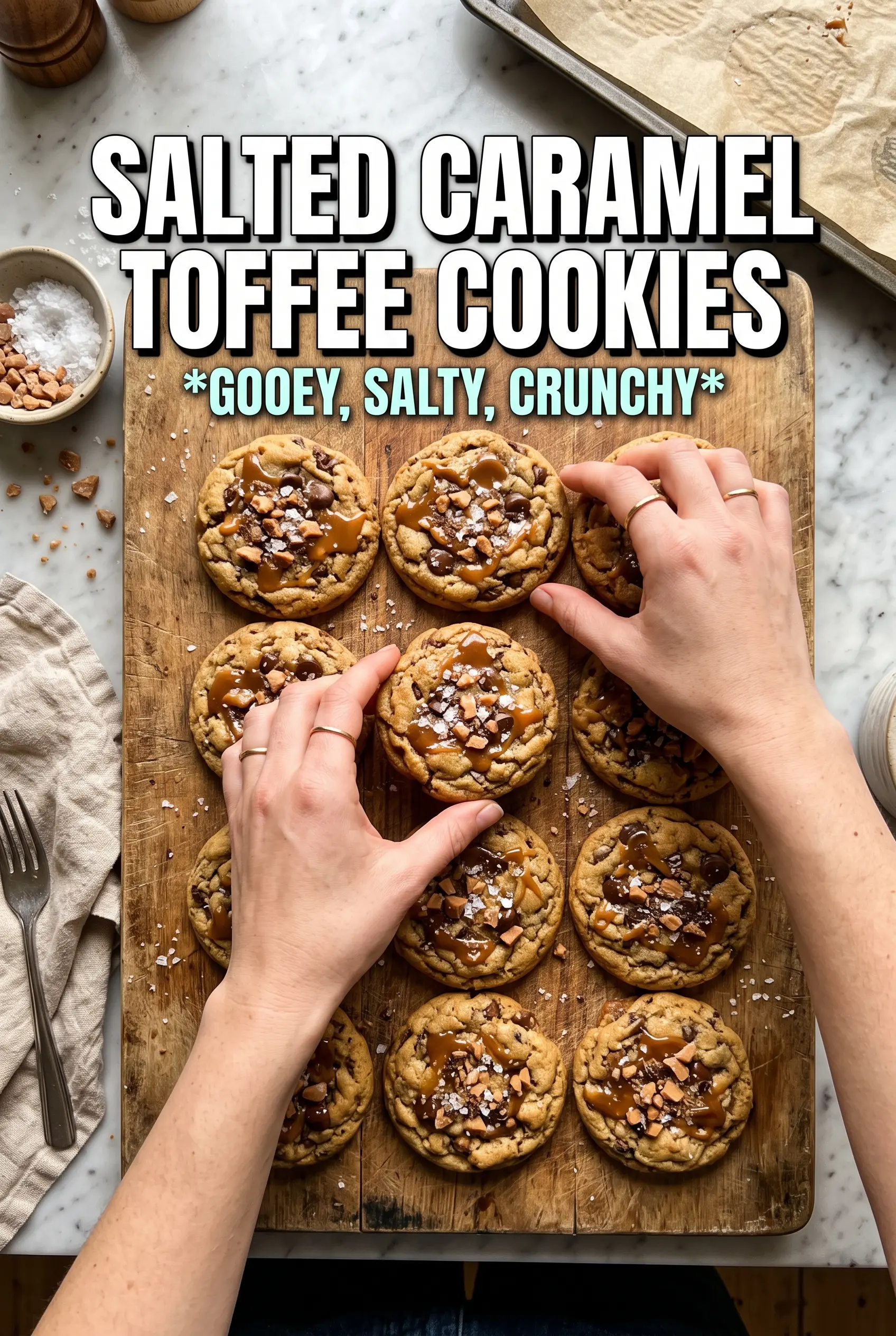
The edges got perfectly set while the centers stayed chewy, and pressing the extra caramel on top right out of the oven made them look like they came from a bakery.
Save these salted caramel toffee cookies for the nights when you want chewy centers, buttery toffee crunch, and a salty caramel finish.
The Secret to Chewy Centers Without Losing the Caramel
The biggest mistake with cookies like this is baking them until they look fully set in the oven. By then, the caramel has had too much time to melt out and the centers can dry out before the edges catch up. Pull these when the edges are golden and the centers still look slightly underdone in the middle; they finish setting on the pan, which is where the chewy texture comes from.
Another thing that matters here is the candy itself. Soft caramel pieces behave differently from hard caramels, and you want the soft kind so they melt into little puddles instead of turning into brittle shards. If your kitchen is warm and the dough feels loose, chill the scooped cookies for 10 to 15 minutes before baking. That keeps the caramel from spreading too fast and helps the cookies hold a thicker shape.
- Flour — The measured amount keeps the dough sturdy enough to hold the caramel. Too much flour and the cookies turn bready; too little and the centers collapse.
- Brown sugar — This is what gives the cookies that soft, bendy middle and a deeper caramel note. Light or dark brown sugar both work, but dark brown sugar will make the caramel flavor a little richer.
- Toffee bits — These bring crunch and a buttery finish that doesn’t bake away. The Heath-style bits are ideal because they hold their texture better than chopped soft candy.
- Caramel pieces or chips — Use the soft version here if you can find it. They melt into glossy pockets, while hard caramels can seize up or leave chewy-to-stale chunks behind.
What Each Ingredient Is Actually Doing in This Dough
Butter should be softened, not melted. Soft butter traps air when you cream it with the sugars, and that gives you a lighter cookie with better spread control. Melted butter makes the dough greasy and encourages flatter cookies with less structure.
Vanilla and caramel extract build the base flavor before the add-ins go in. The caramel extract is optional, but if you have it, it nudges the whole cookie toward a deeper toffee-caramel finish without making them taste fake or overly sweet. Use a good vanilla extract here; it rounds out the sweetness and keeps the caramel from tasting one-note.
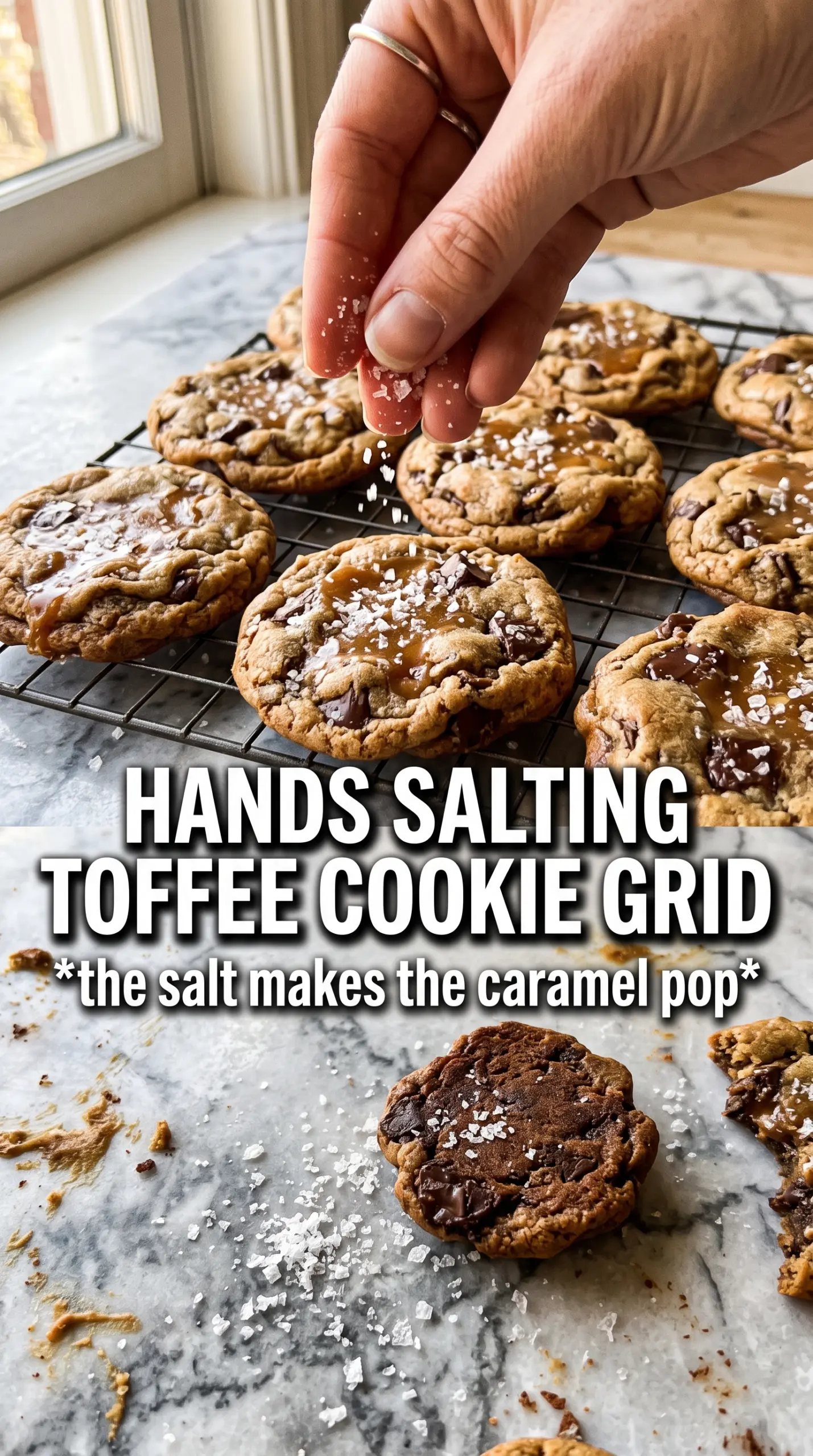
Flaky sea salt goes on at the end, not in the dough. You want little bursts of salt on top where they can hit the caramel first, because that contrast is what makes each bite pop. Fine salt inside the dough handles seasoning; the flaky salt is there for texture and finish.
All-purpose flour is the right choice for this cookie. A higher-protein flour would make them tougher, and cake flour would make them too delicate to support the caramel pieces.
Building the Dough So the Cookies Hold Their Shape
Creaming the Butter and Sugars
Beat the softened butter, granulated sugar, and brown sugar until the mixture looks lighter in color and a little fluffy. That should take a couple of minutes, and it’s where the cookie gets its structure, so don’t rush past it. If the butter is too cold, the mixture stays dense and the cookies bake up heavy; if it’s too soft, the dough can spread too much. You want it pliable enough to press with a spoon but not glossy or greasy.
Adding the Eggs and Flavoring
Mix in the eggs one at a time, then add the vanilla and caramel extract. The dough should look smooth and slightly thick after each egg disappears. If it looks curdled, the butter was probably too cold or the eggs were too cold, but it usually comes together once the flour goes in. Scrape the bowl well so the flavoring is distributed evenly; pockets of extract can taste sharp.
Folding in the Mix-Ins
Add the flour mixture first, then fold in the toffee bits and caramel pieces just until combined. Overmixing here builds gluten and tightens the cookie, which takes away that tender bite. The dough will be thick and studded, and that’s exactly what you want. If the caramel pieces start sticking to your hands, dust them lightly with flour before folding them in.
Baking to the Right Doneness
Scoop 2-tablespoon portions onto parchment-lined baking sheets, giving them room to spread. Bake until the edges are golden and the centers still look soft and slightly underbaked. As soon as they come out, press a few extra toffee bits and caramel pieces onto the tops, then finish with flaky sea salt. That last step gives the cookies their bakery-style look and keeps the add-ins visible instead of buried in the dough.
Make Them Extra Salty-Sweet
Add a slightly heavier pinch of flaky sea salt right after baking if you want a sharper contrast against the caramel. This works especially well if your caramel pieces are on the sweeter side, because the salt reins them in without changing the texture of the cookie.
Gluten-Free Version
Use a cup-for-cup gluten-free flour blend that includes xanthan gum. The cookies will still be chewy, but they may spread a little less and stay softer in the center. Let the dough rest for 15 minutes before scooping so the flour can hydrate and the texture evens out.
Dairy-Free Swap
Use a plant-based butter stick, not a tub spread, and choose dairy-free caramel candies or caramel chips. The flavor will be a little less rich, but the cookies still bake up with good edges and a soft middle as long as the butter substitute is firm enough to cream.
Storage and Reheating
- Refrigerator: Store in an airtight container for up to 5 days. The caramel will firm up a bit, but the cookies stay chewy.
- Freezer: Freeze baked cookies for up to 2 months, or freeze scooped dough balls and bake from frozen with 1 to 2 extra minutes.
- Reheating: Warm a cookie in the microwave for 8 to 10 seconds, just until the caramel softens. Don’t overheat it or the caramel will go from gooey to hard and sticky.
Questions I Get Asked About This Recipe
Salted Caramel Toffee Cookies
Ingredients
Equipment
Method
- Preheat the oven to 375°F and line baking sheets with parchment so the cookies release easily.
- Whisk all-purpose flour, baking soda, and salt in a bowl until evenly combined.
- Beat the softened unsalted butter with granulated sugar and packed brown sugar until light and fluffy.
- Add eggs, vanilla extract, and caramel extract (if using), then beat until the dough looks smooth.
- Fold the flour mixture into the wet ingredients just until no dry streaks remain.
- Fold in toffee bits and soft caramel pieces or caramel chips so they’re evenly distributed.
- Scoop dough into 2-tablespoon rounds and space them on the lined baking sheets.
- Bake for 10–12 minutes at 375°F until the edges turn golden.
- Immediately press extra toffee bits and caramel pieces on top while the cookies are hot and still set.
- Sprinkle generously with flaky sea salt, then cool on the pan for 5 minutes before transferring.