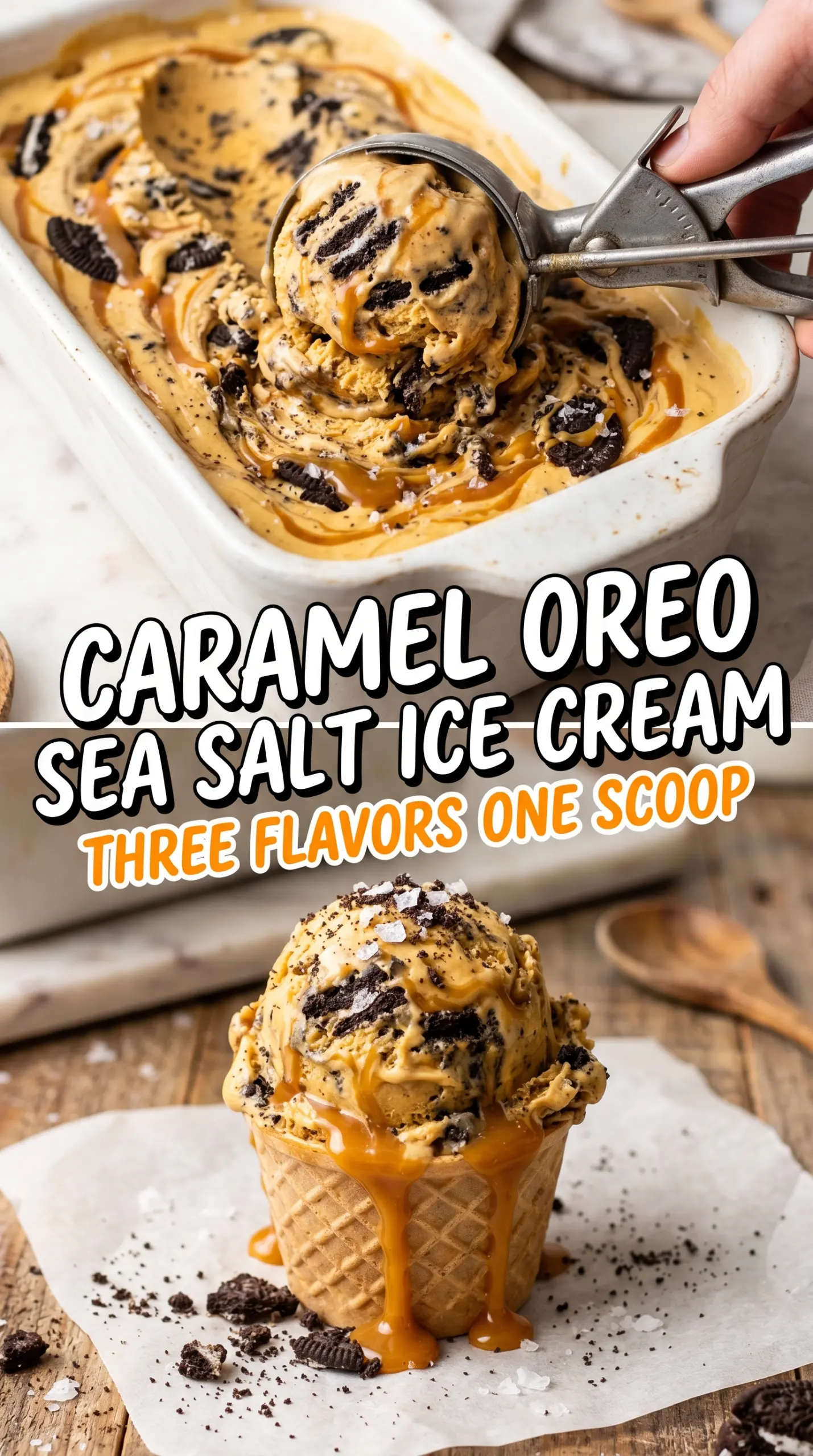
Glossy swirls of salted caramel, big Oreo chunks, and a cream base that scoops cleanly straight from the freezer make this ice cream the kind of dessert people keep going back to for “just one more spoonful.” The salt keeps the caramel from turning flat, and the cookies stay crunchy enough to give each bite some contrast instead of disappearing into the cream.
The texture depends on two things done right: whipping the cream to stiff peaks and folding the base together gently enough that it stays airy. That lightness matters because this is a no-churn ice cream, so the whipped cream is doing the work an ice cream machine would normally handle. The caramel goes into the condensed milk mixture first, where it dissolves smoothly and flavors the whole base without making streaks of sticky sauce that freeze hard.
Below, I’ve included the small details that make the difference between a dense frozen block and a scoopable dessert, plus a few smart ways to vary the mix-ins without losing that salty-sweet balance.
The caramel stayed silky and the Oreos kept a little crunch even after freezing overnight. I served it after dinner and everyone kept asking where I bought it.
Save this no-churn sea salt caramel Oreo ice cream for the night you want salty caramel ribbons and cookie crunch without pulling out the ice cream maker.
Why the Whipped Cream Has to Stay Light for Scoopable Ice Cream
No-churn ice cream only works when the base holds enough air to stay soft after freezing. If the cream is only whipped to soft peaks, the mixture turns heavy and icy because it doesn’t have enough structure to cushion the condensed milk and caramel. If you overwhip past stiff peaks into a dry, grainy foam, the folding stage gets rough and the finished ice cream can feel fluffy in the wrong way instead of smooth.
The other place people go wrong is stirring too aggressively once the condensed milk goes in. You want the base blended, not knocked flat. That’s why gentle folding matters more here than in a baked dessert. The Oreos should be added at the end so they keep some texture and don’t tint the whole mixture gray.
- Whipped cream — Heavy cream gives this ice cream its body and that soft, scoopable texture. Lower-fat cream won’t whip the same way, and it won’t freeze with the same richness.
- Sweetened condensed milk — This keeps the ice cream sweet and prevents it from freezing rock-hard. There isn’t a true substitute that behaves exactly the same, so this is the ingredient to keep as written.
- Caramel sauce — Use a spoonable sauce, not a thin ice cream topping that runs like syrup. Thicker caramel blends into the base better and creates those richer ribbons instead of icy pockets.
- Oreo cookies — Roughly crushed cookies are better than fine crumbs because you want actual bites of chocolate cookie throughout the pan. Crushing them too small makes the ice cream muddy and the texture less interesting.
What Each Ingredient Is Actually Doing in This Ice Cream
- Base ingredient (cream, milk, or custard) — This provides the foundation and richness. Quality matters.
- Sweetener (sugar, honey, or condensed milk) — This sweetens and prevents ice crystals. The ratio is critical.
- Flavor element (vanilla, fruit, chocolate, coffee, or other) — This defines the ice cream personality. Use quality ingredients.
- Egg yolks (if making custard base) — These create richness and silky texture. Optional but elevates ice cream.
- Churning (if using ice cream maker) — This incorporates air and prevents ice crystals. Critical for smooth texture.
- Freezing temperature and time — Proper freezing prevents rock-hard texture. Store at 0°F or below.
- Mix-ins (chocolate, cookies, fruit, or swirls) — These add texture and prevent one-dimensional flavor. Add near end of churning.
- Serving temperature (slightly soft, not rock hard) — This provides creamy mouthfeel. Remove from freezer 5 minutes before serving.
How to Layer the Base So the Caramel and Cookies Stay Distinct
Whipping the Cream to the Right Peak
Beat the heavy cream until it holds stiff peaks and the whisk leaves firm trails that don’t slump back into the bowl. Stop there. If you keep going, the cream starts to look dry and can turn grainy, which makes folding harder and the finished ice cream less smooth. Use a chilled bowl if you have one; it helps the cream whip faster and with better volume.
Bringing the Flavor Base Together
Whisk the sweetened condensed milk, caramel sauce, vanilla, and sea salt until the mixture looks glossy and even. The salt should disappear into the caramel base, not sit in little specks at the bottom. If your caramel sauce is very thick, warm it for a few seconds so it blends without forcing you to overmix the cream later.
Folding Without Deflating
Add the caramel mixture to the whipped cream in two or three additions, then fold with a spatula using broad strokes from the bottom of the bowl. Stop as soon as no white streaks remain. A few faint swirls are fine; they actually help the final texture. Once the cream is knocked flat, you can’t bring that air back.
Building the Pan in Layers
Spread a layer of the ice cream base into the loaf pan, scatter on some crushed Oreos, and drizzle a little extra caramel over top. Repeat, then finish with the remaining cookies and a final drizzle. Layering keeps the cookies from sinking and gives you pockets of crunch instead of one dense cookie layer at the bottom.
How to Adapt the Mix-Ins Without Losing the Salty-Sweet Balance
Dairy-Free Version
Use coconut cream in place of the heavy cream and a dairy-free sweetened condensed milk if you can find one. The flavor will pick up a subtle coconut note, and the texture will be a touch softer, but it still freezes well and keeps that rich no-churn feel.
Extra Chocolate, Less Caramel
Swap part of the caramel drizzle for chopped chocolate or mini chocolate chips if you want a deeper cookie-and-cream feel. The ice cream will taste less buttery and more like an Oreo sundae, which is a good direction if you want a stronger chocolate edge.
Gluten-Free Cookie Swap
Use gluten-free chocolate sandwich cookies in the same amount and crush them the same way. The only difference you’ll notice is a slightly softer cookie texture after freezing, so keep some larger pieces in the mix for better bite.
Storage and Reheating
- Refrigerator: Not recommended. This ice cream needs the freezer to hold its structure, and it will melt quickly if left in the fridge.
- Freezer: Freeze in a loaf pan covered tightly with plastic wrap or a lid for up to 2 weeks. After that, the cookies start to soften and the texture gets a little too firm.
- Reheating: Let it sit at room temperature for 5 to 10 minutes before scooping. If it feels rock hard, the issue is usually overfreezing or a very cold freezer, so give it a short rest instead of microwaving it.
Answers to the Questions Worth Asking
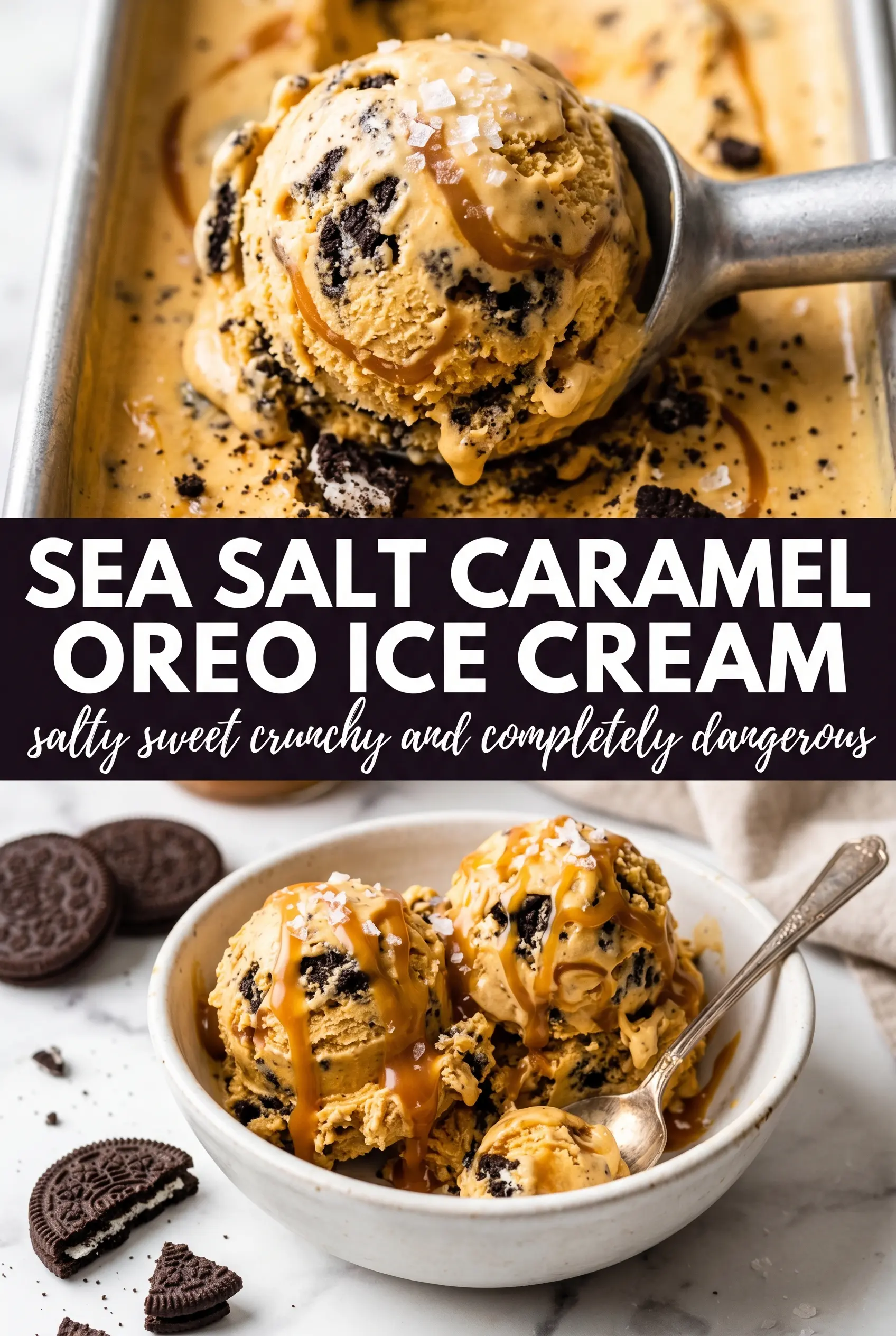
Sea Salt Caramel Oreo Ice Cream
Ingredients
Equipment
Method
- Whip heavy cream until stiff peaks form, 2-4 minutes with a hand mixer. The mixture should hold tall ridges when you lift the beaters.
- Whisk sweetened condensed milk, 1/4 cup caramel sauce, vanilla extract, and sea salt until smooth, about 1-2 minutes. The caramel should be fully blended with no visible streaks.
- Fold the condensed milk mixture gently into the whipped cream until just combined, 1-2 minutes. Stop as soon as no white streaks remain.
- Fold in half the crushed Oreo cookies until evenly distributed, about 30-45 seconds. Keep some small cookie bits for crunch.
- Layer the ice cream into a 9x5 loaf pan, 1-2 inches at a time. Add half the remaining Oreos and drizzle caramel between layers as you build.
- Finish with a drizzle of caramel and flaky sea salt on top, then tap the pan lightly to settle. The surface should look glossy with visible caramel ribbons.
- Freeze at least 6 hours or overnight until firm. The ice cream should slice cleanly with no soft center.