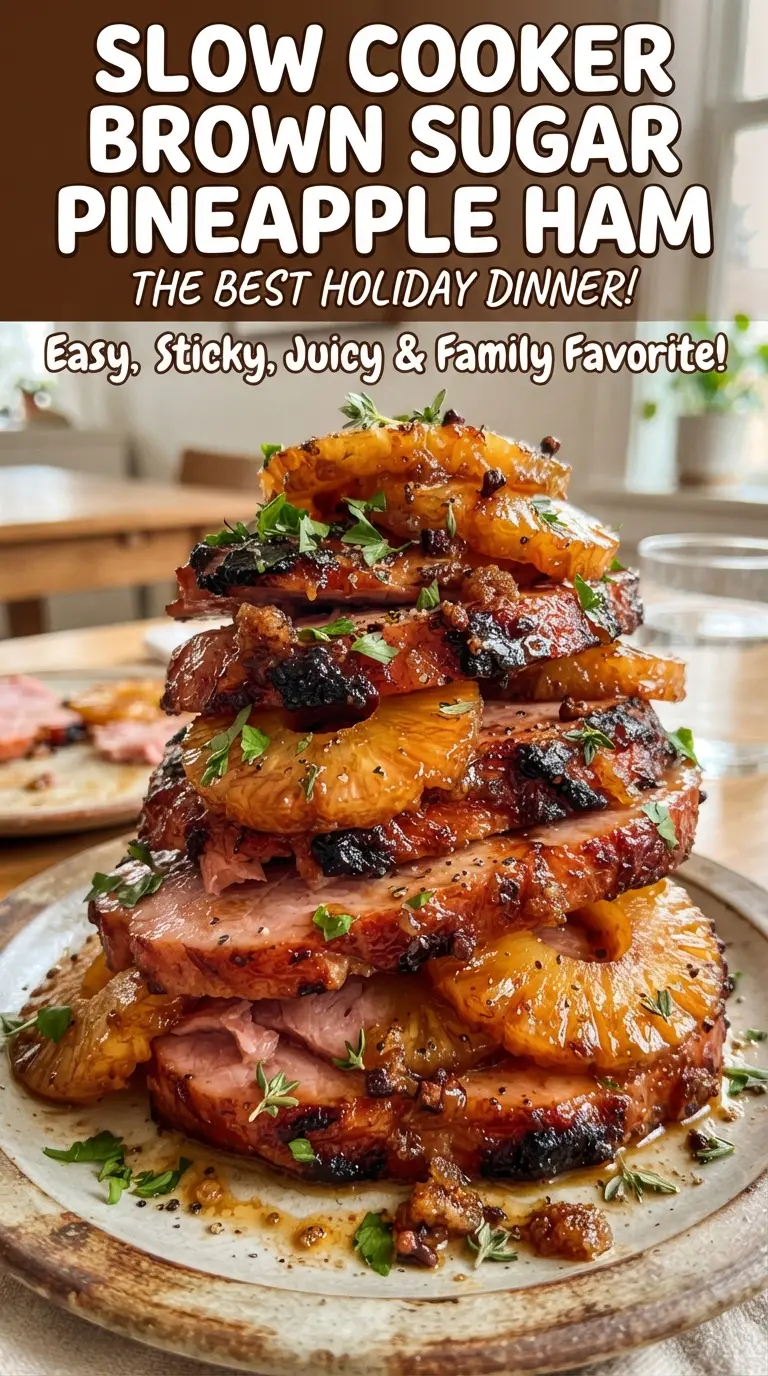
Slow cooker brown sugar pineapple ham comes out glossy, tender, and full of that sweet-savory glaze that clings to every slice. The ham stays juicy because the slow cooker warms it gently instead of blasting it dry, and the pineapple, honey, and Dijon build a sauce that tastes much richer than the ingredient list looks on paper. It’s the kind of main dish that takes almost no hands-on work but still looks like you spent all afternoon on it.
The trick here is starting with a fully cooked spiral-sliced ham and keeping the heat low enough to warm it through without turning the edges stringy. Reserved pineapple juice loosens the brown sugar into a glaze that coats instead of hardening, while the mustard keeps the sweetness in check. A little clove and cinnamon are enough to make the whole dish smell warm and classic without pushing it into dessert territory.
Below, I’ll show you how to keep the slices from drying out, how to get the glaze between every cut, and what to do if your slow cooker lid sits a little too low for a full-size ham.
The glaze soaked right into the slices and the ham stayed moist all the way through. I spooned the juices over the top at the end like you said, and it came out sticky, glossy, and not at all dry.
Save this slow cooker brown sugar pineapple ham for a glossy holiday-style main dish with sticky glaze and juicy spiral slices.
The Part That Keeps Spiral Ham from Drying Out
Spiral-sliced ham dries out fast when it’s heated too hard or too long, because every cut exposes more surface area. The slow cooker fixes that problem by holding steady low heat and trapping steam under the lid, but only if you stop cooking as soon as the center reaches 140°F. Anything beyond that starts to pull moisture out of the slices instead of keeping it locked in.
Another place people go wrong is pouring all the glaze on top and hoping it runs down on its own. It won’t. Working part of the glaze between the slices gives you flavor all the way through, not just on the outside, and the pineapple rings on top help keep the surface glossy while it cooks.
- Spiral-sliced ham — This is the right cut because it already has easy serving slices and soaks up glaze between layers. A bone-in ham gives better flavor and stays juicier than boneless here.
- Reserved pineapple juice — This thins the brown sugar into a pourable glaze without watering it down the way plain water would. If your can is packed in heavy syrup, drain it well and use the juice carefully so the glaze doesn’t turn cloying.
- Dijon mustard — It cuts the sweetness and keeps the glaze from tasting flat. Yellow mustard works in a pinch, but Dijon gives the cleanest, most balanced finish.
- Ground cloves and cinnamon — These should stay subtle. Too much clove takes over fast, so measure carefully; the goal is warmth, not a spice cake aroma.
What Each Ingredient Is Actually Doing in This Recipe
- Primary ingredient (the star) — Quality matters most. Choose the best you can find.
- Cooking medium (oil, butter, or broth) — This carries flavors and prevents dryness.
- Seasonings (salt, pepper, spices, herbs) — Layer flavors so nothing overpowers. Build depth gradually.
- Aromatics (garlic, onion, herbs) — Cook with fat to bloom flavors. Become the foundation.
- Supporting ingredients — Complement the main ingredient without overpowering it.
- Sauce or liquid (if applicable) — Brings flavors together. Balance richness with acid.
- Acid (lemon, vinegar, wine, or other) — Brightens and prevents flat-tasting results.
- Final finish (garnish, glaze, or sauce) — Prevents one-dimensional taste and adds visual appeal.
How to Layer the Glaze So It Clings Instead of Sliding Off
First, set the ham flat-side down so it sits steady and the cut sides can catch the glaze. If the lid won’t close, trim a little from the ends or angle the ham in the cooker; forcing the lid open lets heat escape and slows the whole process. Mix the glaze until the brown sugar dissolves as much as it can before it hits the ham, because dry sugar won’t coat evenly.
Getting the Glaze Between the Slices
Pour half the glaze over the ham, then gently separate a few slices with a spoon and let the glaze run in. Don’t dump it all over the top at once or most of it ends up in the bottom of the slow cooker. The slices should look lacquered and damp, not buried.
Building the Pineapple Top
Arrange the pineapple rings over the ham and secure them with toothpicks if they slide. A cherry in the center of each ring is mostly for presentation, but it also keeps the top looking polished while the ham cooks. The fruit should sit snugly on the surface so it warms through and perfumes the glaze.
Cooking Until Heated Through, Not Overdone
Cover and cook on LOW until the thickest part reaches 140°F. That’s the point where the ham is hot and ready without becoming tough. If you cook it past that, the edges start to go from silky to dry, especially on the thinner spiral slices.
Finishing With the Pan Juices
Spoon the juices from the slow cooker over the ham just before serving, then drizzle on the remaining glaze. Those juices carry the pineapple, honey, and mustard that have settled during cooking, and they turn the outside from sticky to glossy. Serve it right away while the slices are still supple and the glaze is warm.
What to Change When You Need a Different Finish
Make it less sweet
Cut the brown sugar to 3/4 cup and keep the Dijon at the full amount. The ham will still taste glazed, but the mustard and pineapple will stand out more and the finish won’t lean as candy-sweet.
Dairy-free and gluten-free as written
This recipe already fits both diets as long as your Dijon is labeled gluten-free. That’s one reason this dish works well for a crowd — it doesn’t need special swaps to land on the table safely.
No spiral ham on hand
A boneless fully cooked ham will work, but it won’t catch the glaze between the slices as well and it tends to feel a little firmer when carved. If you use one, baste it a few extra times with the slow cooker juices during the last hour.
Storage and Reheating
- Refrigerator: Store leftovers tightly covered for up to 4 days. The slices hold their texture well, and the glaze gets even deeper after a night in the fridge.
- Freezer: Freeze sliced ham with a little of the cooking juices in airtight containers for up to 2 months. The texture stays best if you freeze it in smaller portions instead of one big chunk.
- Reheating: Warm slices covered in a baking dish at 300°F with a spoonful of juices or a splash of pineapple juice. High heat dries the edges fast, so go low and stop as soon as the ham is hot.
Answers to the Questions Worth Asking
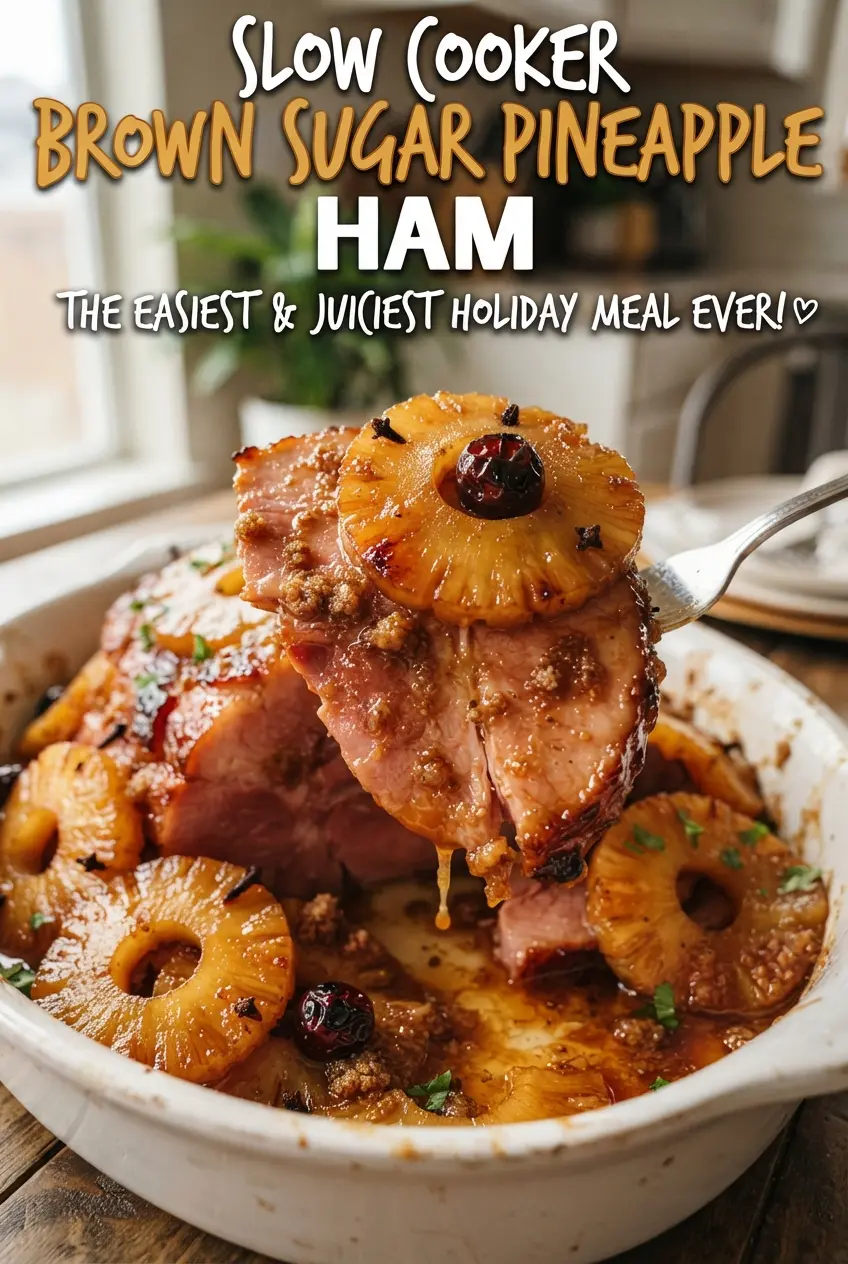
Slow Cooker Brown Sugar Pineapple Ham
Ingredients
Equipment
Method
- Place the ham flat-side down in a large slow cooker, trimming if needed so the lid closes fully.
- Whisk together 1/2 cup reserved pineapple juice, brown sugar, honey, Dijon mustard, ground cloves, and ground cinnamon until smooth.
- Pour half of the glaze over the ham, working it between the slices so it coats the cut surfaces.
- Arrange pineapple rings over the ham and secure each ring with a toothpick, adding a cherry in each center.
- Cover and cook on LOW for 4-5 hours until the ham is heated through and reaches 140°F.
- Spoon the juices from the slow cooker over the ham, then drizzle with the remaining glaze before serving.