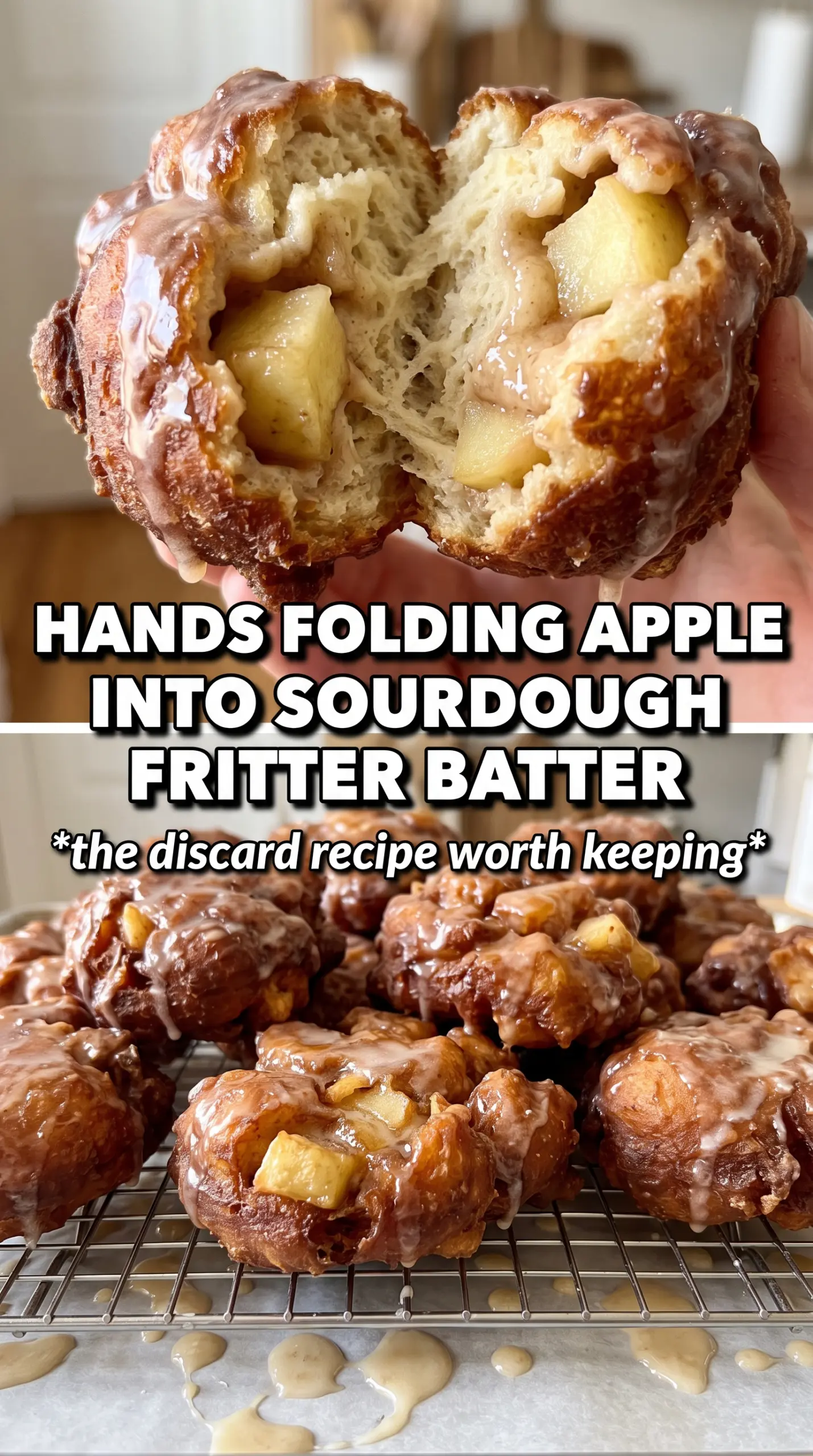
Golden, craggy sourdough apple fritters come out with a crisp shell, a tender middle, and pockets of soft apple in every bite. The sourdough gives the batter a subtle tang that keeps the fritters from tasting heavy, and the apples stay bright and juicy instead of disappearing into the dough.
This version leans on a thick batter and a hot fry, which is what gives you those irregular, bakery-style edges. Active starter or discard both work, but the starter needs enough strength to blend smoothly with the eggs and milk. The baking powder adds extra lift, so the fritters puff instead of turning dense.
Below, you’ll find the little details that matter most: how thick the batter should look, why the oil temperature is non-negotiable, and when to dust or glaze so the topping actually sticks.
The fritters came out crisp on the outside and fluffy inside, and the apple pieces stayed tender without making the batter soggy. I used the glaze and it set up just enough that they weren’t messy to eat.
Save these sourdough apple fritters for the morning you want crisp edges, soft apple centers, and a quick glaze finish.
The Batter Has to Stay Thick for a Crisp Fritter
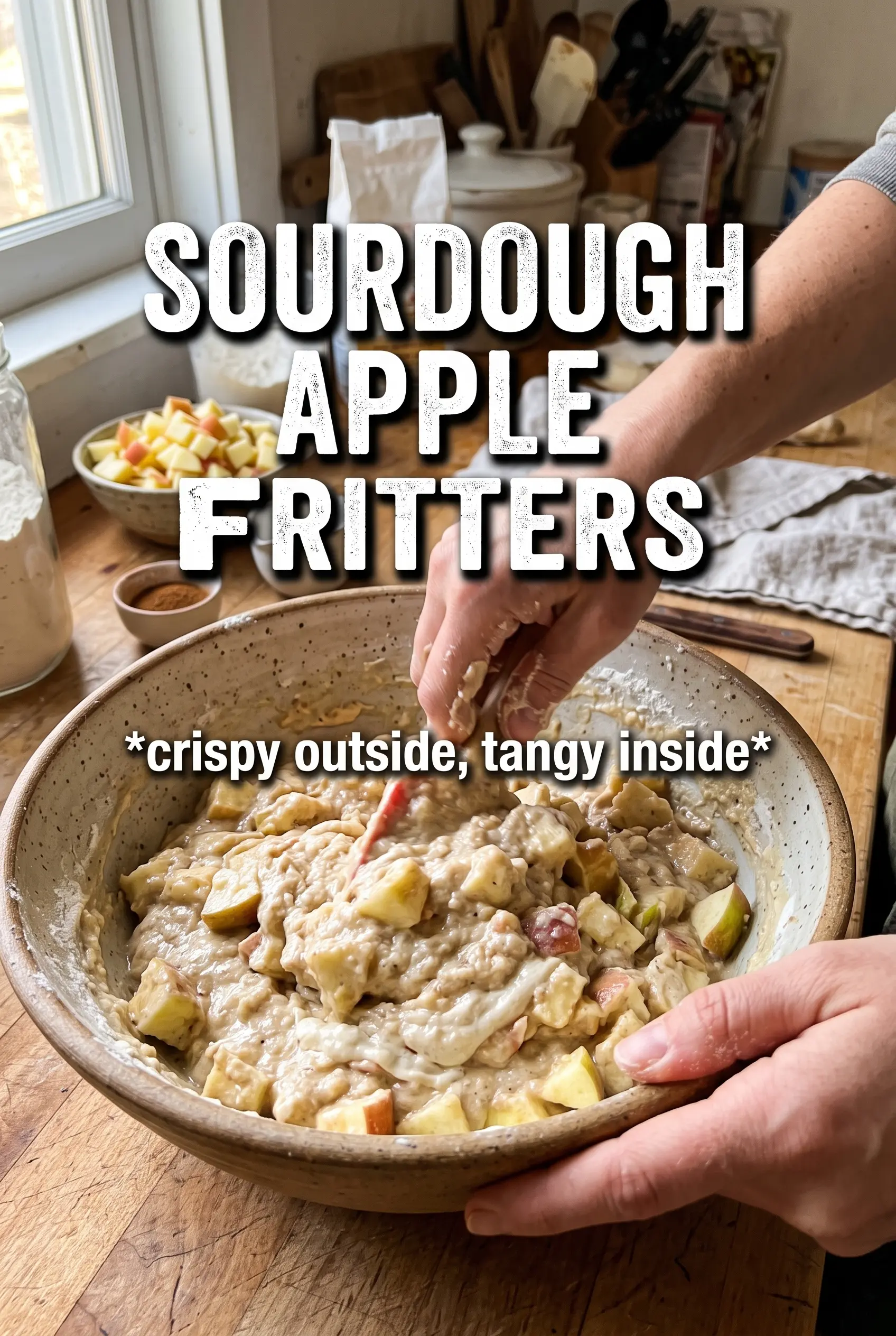
Fritter batter is supposed to look messy. If it pours like pancake batter, the apple pieces sink, the edges spread too far, and you get soft discs instead of rough, crisp fritters. The thickness here matters because it traps air and holds the diced apples in place while the outside browns.
The other trap is overmixing. Once the flour goes in, stir only until you no longer see dry streaks. A few small lumps are fine, and they disappear once the batter hits the hot oil. If you beat it smooth, the fritters turn tougher and lose that light, cakey interior.
- Sourdough starter — This brings tang and structure. Active starter gives the lightest lift, but discard works too because the baking powder handles the rise. If your starter is extra thick, loosen it with a tablespoon of milk so it blends cleanly.
- Apples — Dice them finely so they soften in the short fry time. Big chunks can stay crunchy in the wrong way and make the fritters fall apart. Use a firm apple like Granny Smith, Honeycrisp, or Fuji.
- Baking powder — This is what saves the fritters from heaviness. Don’t skip it, even if your starter is active. Sourdough alone won’t give you the same puff in a quick fry.
- Cinnamon and nutmeg — These don’t just season the fritters; they make the apple taste fuller and warmer. Freshly ground nutmeg is stronger, so use the measured amount and stop there.
What Each Ingredient Is Actually Doing in This Recipe
- Primary ingredient (the star) — Quality matters most. Choose the best you can find.
- Cooking medium (oil, butter, or broth) — This carries flavors and prevents dryness.
- Seasonings (salt, pepper, spices, herbs) — Layer flavors so nothing overpowers. Build depth gradually.
- Aromatics (garlic, onion, herbs) — Cook with fat to bloom flavors. Become the foundation.
- Supporting ingredients — Complement the main ingredient without overpowering it.
- Sauce or liquid (if applicable) — Brings flavors together. Balance richness with acid.
- Acid (lemon, vinegar, wine, or other) — Brightens and prevents flat-tasting results.
- Final finish (garnish, glaze, or sauce) — Prevents one-dimensional taste and adds visual appeal.
Getting the Oil Hot Enough Without Burning the First Batch
Mix the Wet Base First
Whisk the sourdough starter, eggs, milk, and sugar until the mixture looks smooth and a little foamy. That first blend needs to be even so the eggs don’t streak through the batter later. If the starter has been in the fridge, let it sit out long enough to take the chill off or it may clump when mixed.
Fold in the Dry Ingredients Gently
Add the flour, cinnamon, nutmeg, salt, and baking powder, then stir just until combined. The batter should look thick enough to hold its shape on a spoon, almost like a scoopable muffin batter. If it seems loose, let it rest for 5 minutes before adding more flour; often the flour hydrates and thickens on its own.
Drop Into Oil at 350F
Heat about 2 inches of oil in a heavy pot and watch for steady bubbles around the batter when it goes in. If the oil is too cool, the fritters soak it up and turn greasy. If it’s too hot, the outside browns before the center cooks. A thermometer takes the guesswork out of it, and keeping the heat steady between batches matters just as much as the first reading.
Finish With Sugar While They’re Hot
Drain the fritters briefly on paper towels, then dust with powdered sugar while they’re still warm. That’s when it clings best. If you want glaze, whisk it thin enough to drizzle, not so thick that it sits on top like frosting. A thicker glaze hides the crunch, and that crisp edge is the whole point.
How to Change These Fritters for What You Have on Hand
Make Them Dairy-Free
Swap the milk for unsweetened almond milk, oat milk, or soy milk. The fritters still brown nicely, though oat milk gives the closest body to whole milk. Keep the batter thickness the same; don’t add extra liquid just because the plant milk looks thinner.
Use the Apples You Already Bought
Tart apples give the cleanest contrast, but sweeter apples work fine if that’s what you’ve got. Just keep the dice small so the fruit softens before the batter is done. Very juicy apples may loosen the batter a bit, so fry a test fritter first and adjust with a spoonful of flour if needed.
Turn the Glaze Into a Cinnamon Finish
If you want less sweetness, skip the glaze and dust with powdered sugar mixed with a pinch of cinnamon. That keeps the outside dry and crisp longer. The glaze is the better choice if you want bakery-style shine, but it softens the crust faster.
Storage and Reheating
- Refrigerator: Store leftovers in an airtight container for up to 3 days. They’ll lose some crispness, but the flavor holds up well.
- Freezer: Freeze the fritters after they cool completely, in a single layer, then transfer to a bag. They freeze well for about 2 months.
- Reheating: Reheat in a 350F oven or air fryer until warmed through and the edges crisp back up. Don’t microwave them first; that turns the outside soft and rubbery before the center warms.
Answers to the Questions Worth Asking
Sourdough Apple Fritters
Ingredients
Equipment
Method
- Whisk the sourdough starter, eggs, milk, and sugar together until smooth.
- Stir in the flour, cinnamon, nutmeg, salt, and baking powder until just combined; stop as soon as no dry streaks remain.
- Fold in the finely diced apples; the batter should be thick and studded with fruit.
- Heat 2 inches of vegetable oil to 350F in a heavy pot.
- Drop heaping tablespoons of batter into the hot oil, leaving space between fritters so the oil stays at temperature.
- Fry for 2-3 minutes per side, turning once, until each fritter is deeply golden with crisp edges.
- Drain the fritters on paper towels, and dust with powdered sugar while hot.
- Repeat with remaining batter in batches, avoiding crowding the pot.
- For a glaze, whisk powdered sugar with cider until smooth, then drizzle over the hot fritters.