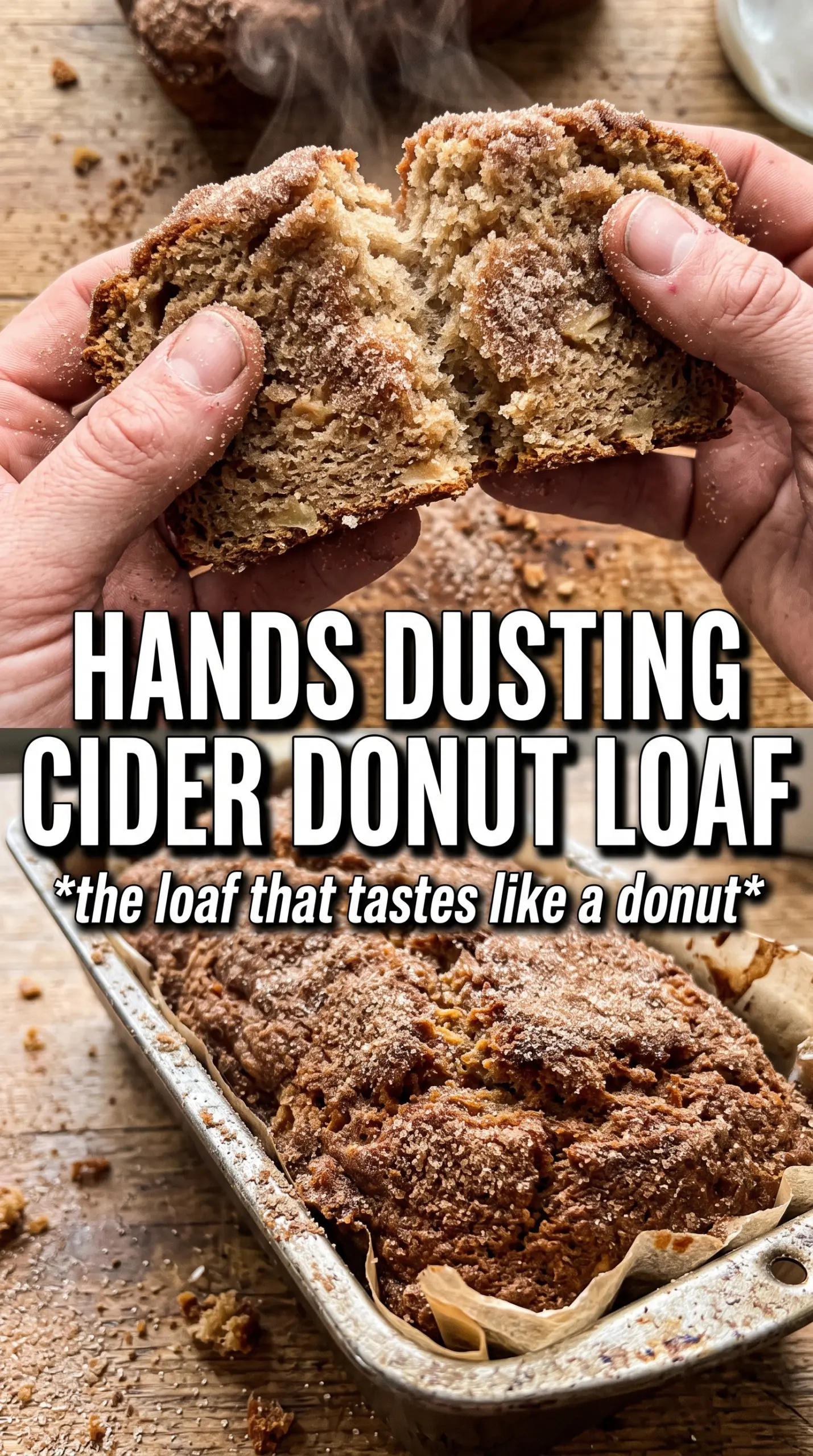
Spiced Apple Cider Donut Loaf brings all the best parts of an old-fashioned cider donut into a soft, sliceable loaf pan version. The crumb stays tender and moist, the crust bakes up deep golden, and that butter-and-cinnamon-sugar finish gives every slice the same crackly edge you’d expect from a fresh donut shop treat. It cuts cleanly, smells incredible, and somehow disappears fast whether you serve it warm for breakfast or later with coffee.
What makes this version work is the reduced cider. Cooking it down concentrates the apple flavor instead of watering down the batter, and the sour cream keeps the loaf rich without making it heavy. The spice blend leans warm and balanced — cinnamon leads, but nutmeg, allspice, and cardamom give it that unmistakable donut-shop depth. The coating goes on while the loaf is still warm, which is the trick that helps the butter cling and the sugar set into a proper crust.
Below, I’ll show you why the cider reduction matters, what each ingredient is doing, and how to keep the loaf tender instead of dense. There’s also a storage note for keeping the sugar coating from turning sticky the next day.
The cider flavor came through beautifully, and the cinnamon-sugar crust stayed crisp on the outside even after the loaf cooled. I brushed it while it was still warm like you said, and the coating set up perfectly.
Save this Spiced Apple Cider Donut Loaf for the kind of cinnamon-sugar crust that stays crisp, buttery, and bakery-style.
The Cider Reduction That Keeps the Loaf from Tasting Flat
Most apple cider baked goods promise big flavor and then taste oddly muted once they’re out of the oven. That usually happens because the cider goes in at full strength, which adds liquid but not much intensity. Reducing the cider first pulls the water out and leaves you with a smaller amount of concentrated apple flavor that can stand up to the spices and the sugar coating.
That step also helps the batter bake up with a better crumb. Too much liquid from the cider can make a loaf taste bready or underseasoned, even when the texture looks right. Reduce it until you have 1/4 cup, then let it cool before mixing it in so you don’t scramble the eggs or thin the batter too much.
- Reduced apple cider — This is where the apple flavor comes from. Apple juice won’t taste the same; it’s flatter and sweeter, so the finished loaf loses that cider-donut edge.
- Sour cream — It gives the loaf tenderness and a slight tang that keeps the sweetness in check. Plain Greek yogurt works in a pinch, but use full-fat yogurt and expect a slightly tighter crumb.
- Cardamom — It’s subtle, but it makes the spice blend taste more like a bakery donut than a basic quick bread. Don’t skip it if you want that extra warm finish.
- Brown sugar — It adds depth and a softer sweetness than white sugar alone. Packed light or dark brown sugar both work; dark brown sugar gives a little more molasses note.
What Each Ingredient Is Actually Doing in This Recipe
- Primary ingredient (the star) — Quality matters most. Choose the best you can find.
- Cooking medium (oil, butter, or broth) — This carries flavors and prevents dryness.
- Seasonings (salt, pepper, spices, herbs) — Layer flavors so nothing overpowers. Build depth gradually.
- Aromatics (garlic, onion, herbs) — Cook with fat to bloom flavors. Become the foundation.
- Supporting ingredients — Complement the main ingredient without overpowering it.
- Sauce or liquid (if applicable) — Brings flavors together. Balance richness with acid.
- Acid (lemon, vinegar, wine, or other) — Brightens and prevents flat-tasting results.
- Final finish (garnish, glaze, or sauce) — Prevents one-dimensional taste and adds visual appeal.
Building the Batter Without Toughening the Crumb
Whisk the dry ingredients separately so the spices and leaveners are evenly distributed. If they clump, you’ll get pockets of baking powder or a random bite that tastes heavy with cinnamon. On the wet side, whisk until the sugars dissolve and the mixture looks smooth before adding the flour.
The biggest mistake here is overmixing once the flour goes in. Stop as soon as you don’t see dry streaks. A few small lumps are fine. Overworking the batter develops gluten and turns a tender loaf into something tighter and drier than it should be.
Mixing the Dry Ingredients
Combine the flour, baking powder, baking soda, salt, and spices in one bowl and whisk until the color looks even. You want every bite to carry the same warm spice, not one corner of the loaf doing all the work. If your cinnamon looks darker in one spot, keep whisking. This is the easiest place to fix an uneven batter before it starts.
Whisking the Wet Base
Stir the oil, sugars, eggs, vanilla, cooled reduced cider, and sour cream until the mixture turns glossy and smooth. It should look thick but pourable, with no streaks of egg white left behind. If the cider is still warm, wait a few more minutes. Warm liquid can loosen the batter too much and make the loaf bake unevenly through the center.
Finishing the Batter Gently
Fold the dry mixture into the wet mixture just until combined. The batter should look thick and spoonable, not silky. Stop stirring the second the flour disappears, then scrape the bowl once and get it into the pan. If you keep going, the loaf can bake up with tunnels and a tough top instead of a soft crumb.
Make It Gluten-Free
Use a good 1:1 gluten-free flour blend that already contains xanthan gum. The loaf will be a little more delicate, but the cider, sour cream, and sugar coating still keep it moist and flavorful. Let it cool in the pan for about 10 minutes before turning it out so it has time to set.
Swap the Dairy
Replace the sour cream with full-fat plain coconut yogurt or another thick dairy-free yogurt. The loaf will still stay tender, though the tang will be a little softer. Use a neutral oil and keep the cinnamon-sugar topping the same.
Turn It into Mini Loaves or Muffins
Divide the batter between smaller pans or muffin tins and start checking earlier. The flavor stays the same, but the edges cook faster, so the cinnamon-sugar coating clings even more like a true donut finish. Watch the center closely; smaller sizes go from done to dry fast.
Storage and Reheating
- Refrigerator: Store for up to 4 days. The sugar coating softens a little in the fridge, but the loaf stays moist.
- Freezer: Freeze slices tightly wrapped for up to 2 months. The coating won’t stay crisp, so freeze the uncoated loaf if you want the best texture later, then butter and sugar it after thawing.
- Reheating: Warm slices in a 300°F oven for 8 to 10 minutes or in short bursts in the microwave. Don’t blast it on high heat; that melts the coating and dries the crumb before the center is warm.
Answers to the Questions Worth Asking
Spiced Apple Cider Donut Loaf
Ingredients
Equipment
Method
- Reduce the apple cider by half over medium heat, stirring occasionally, then cool completely before using.
- Preheat the oven to 350F, then grease a 9x5 loaf pan.
- Whisk together the flour, baking powder, baking soda, cinnamon, nutmeg, allspice, cardamom, and salt until evenly combined.
- Whisk the vegetable oil, both sugars, eggs, vanilla extract, reduced apple cider, and sour cream until smooth.
- Fold the dry mixture into the wet mixture until just combined, leaving no visible dry streaks.
- Bake for 60-65 minutes at 350F, until a toothpick comes out clean (visual cue: deep golden edges and domed top).
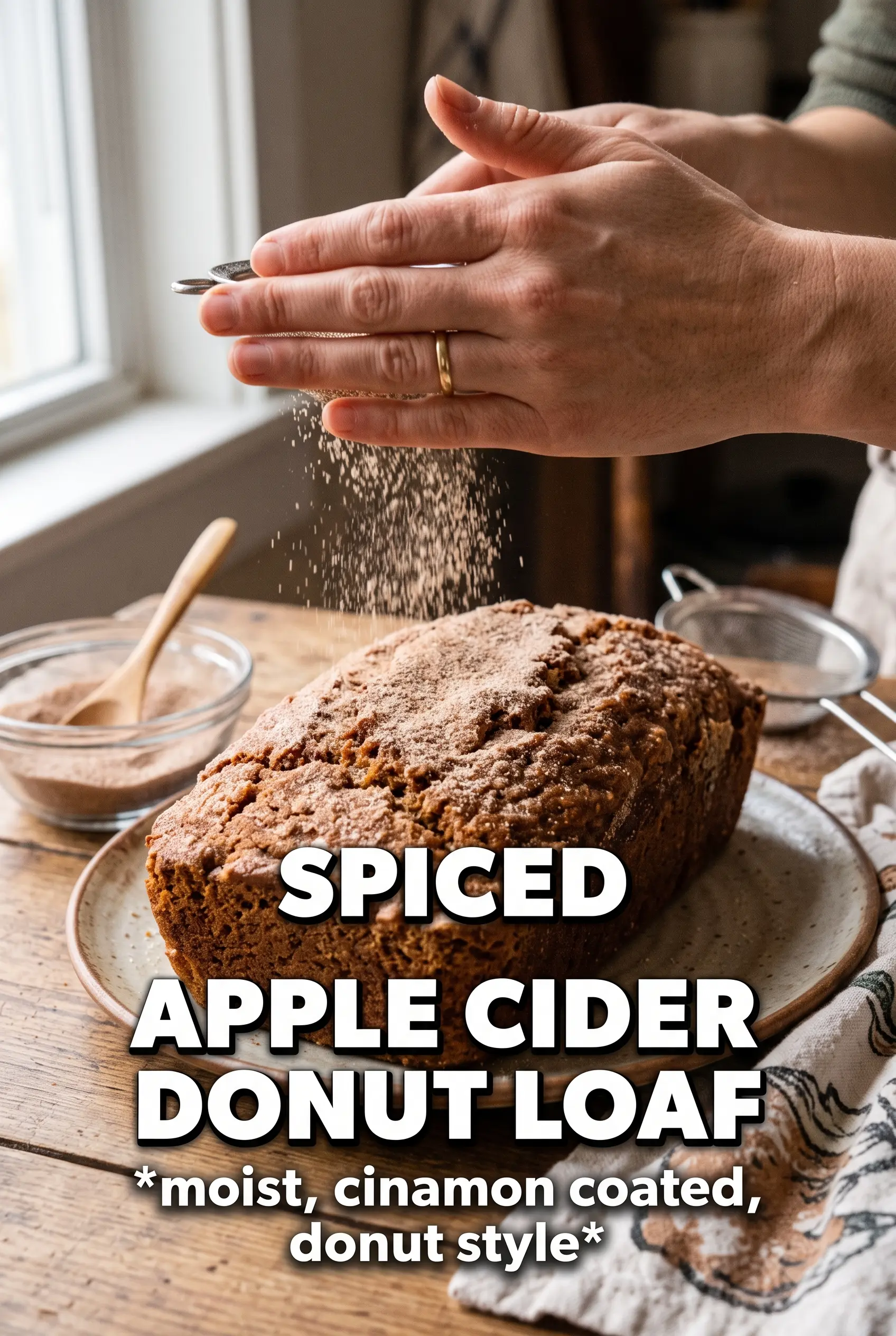
- Remove the loaf from the pan while warm, then brush all sides generously with melted butter.
- Roll the warm loaf or sprinkle it immediately in cinnamon sugar to coat completely, so the coating adheres.