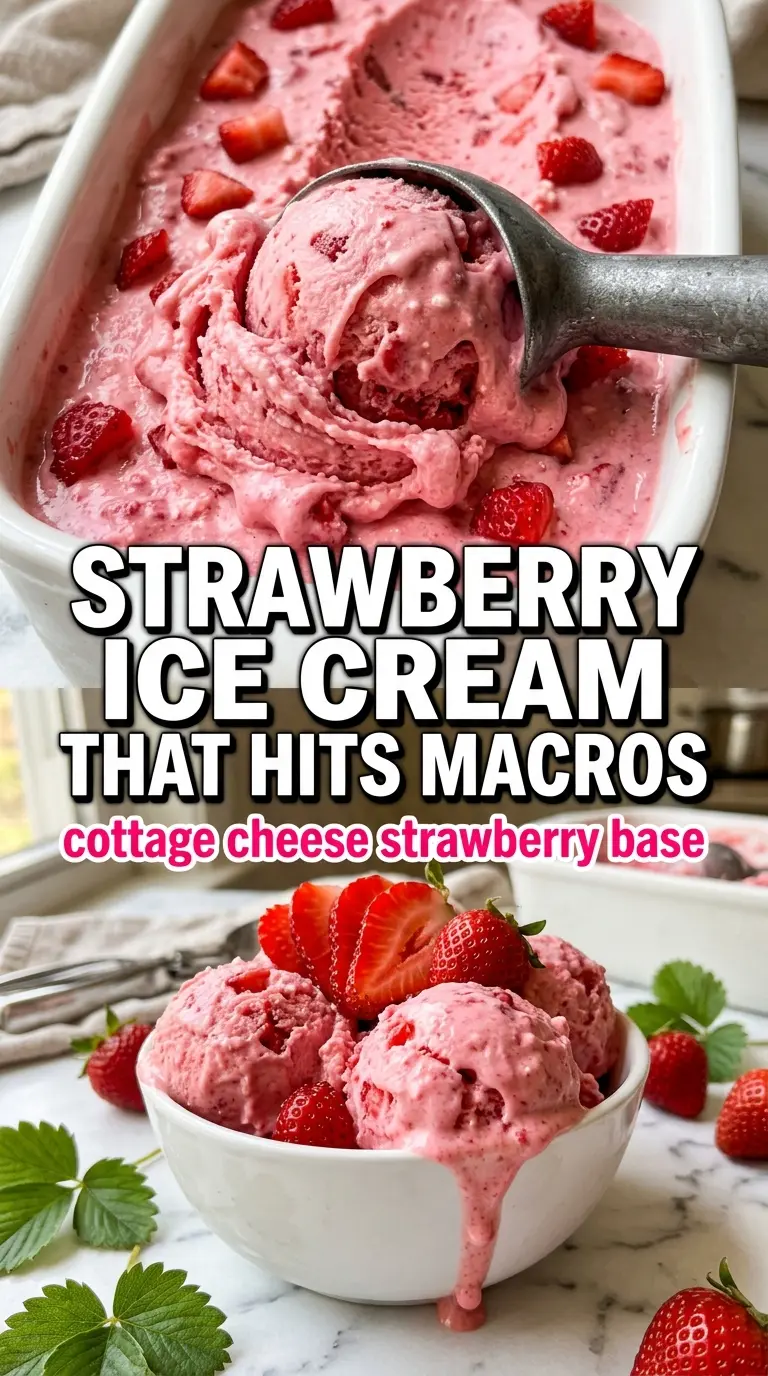
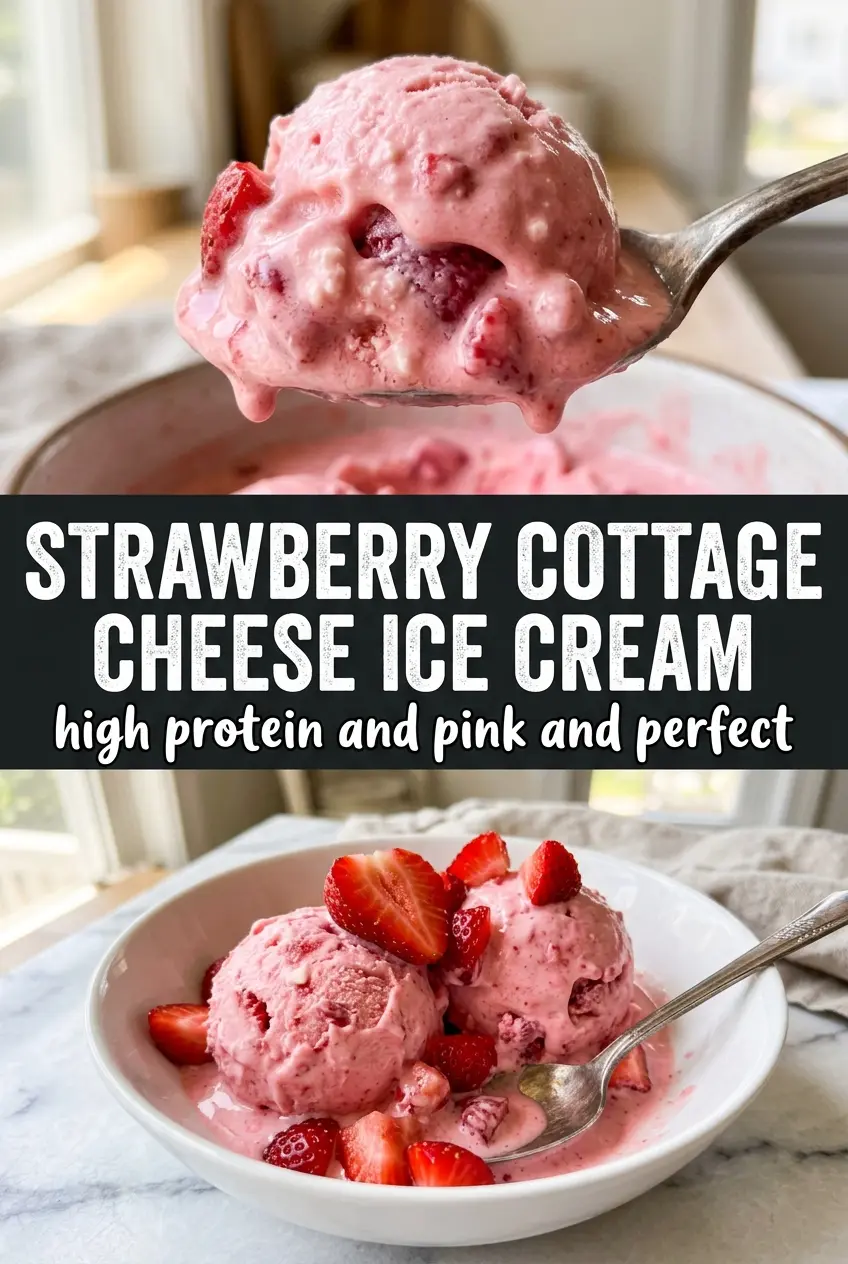
Strawberry cottage cheese ice cream turns into one of those desserts people keep coming back to because it eats like a treat, not a compromise. The texture lands somewhere between soft-serve and no-churn ice cream: creamy, cold, and scoopable, with a bright strawberry flavor that stays front and center instead of getting buried under dairy.
The trick is blending long enough that the cottage cheese disappears completely. Once it’s fully smooth, you get a base that freezes up cleanly without the icy crunch that can happen in fruit-and-dairy desserts. Honey or maple syrup helps the mixture stay softer in the freezer, and a little lemon juice keeps the strawberry flavor tasting fresh instead of flat.
Below, you’ll find the small details that make this work, from the best way to blend it smooth to the exact freeze-and-rest timing that gives you the easiest scoop.
I was skeptical about cottage cheese ice cream, but the blender made it completely smooth and the strawberry flavor came through beautifully. After 5 minutes on the counter it scooped like actual ice cream, not a frozen block.
This strawberry cottage cheese ice cream stays creamy, pink, and scoopable — pin it for the nights when you want a high-protein dessert without the churn.
The Reason It Turns Creamy Instead of Icy
Cottage cheese has a built-in advantage here: it brings body and protein without needing eggs, custard, or an ice cream machine. The part that matters is texture. If the base still has little curds when it goes into the freezer, those bits set up hard and the whole dessert turns gritty. Blend until the mixture looks like strawberry milkshake batter, with no visible specks from the cheese.
Sweetener matters more than people expect. Honey and maple syrup both do more than sweeten; they help keep the mixture softer after freezing, which is why this scoops better than a base made with straight granulated sugar. The lemon juice isn’t there to make it tart. It wakes up the strawberries and keeps the flavor from tasting dull after 4 hours in the freezer.
- Full-fat cottage cheese — This gives the best creamy texture. Low-fat will work, but the ice cream freezes firmer and tastes a little leaner.
- Strawberries — Fresh berries give the cleanest flavor, but thawed frozen strawberries work well when they’re blended thoroughly. If they’re very watery after thawing, don’t drain them completely; that juice carries flavor.
- Honey or maple syrup — Either one softens the freeze and rounds out the berry flavor. Honey tastes a little richer; maple brings a deeper note. Granulated sugar can work, but the finished texture won’t stay as creamy.
- Lemon juice — A small amount sharpens the strawberry flavor. Leave it out and the dessert can taste heavier and less vivid.
What Each Ingredient Is Actually Doing in This Ice Cream
- Base ingredient (cream, milk, or custard) — This provides the foundation and richness. Quality matters.
- Sweetener (sugar, honey, or condensed milk) — This sweetens and prevents ice crystals. The ratio is critical.
- Flavor element (vanilla, fruit, chocolate, coffee, or other) — This defines the ice cream personality. Use quality ingredients.
- Egg yolks (if making custard base) — These create richness and silky texture. Optional but elevates ice cream.
- Churning (if using ice cream maker) — This incorporates air and prevents ice crystals. Critical for smooth texture.
- Freezing temperature and time — Proper freezing prevents rock-hard texture. Store at 0°F or below.
- Mix-ins (chocolate, cookies, fruit, or swirls) — These add texture and prevent one-dimensional flavor. Add near end of churning.
- Serving temperature (slightly soft, not rock hard) — This provides creamy mouthfeel. Remove from freezer 5 minutes before serving.
How to Blend, Freeze, and Scoop It Without Losing the Creamy Texture
Getting the Base Completely Smooth
Add everything to the blender at once and let it run long enough for the mixture to turn silky and bright pink. Stop and scrape down the sides if you see any white streaks. The base should look uniform before it ever touches the freezer, because freezing only magnifies any texture problems. If it still tastes a little flat, adjust sweetness now; once it’s frozen, the flavor reads less sweet.
Freezing It in the Right Container
Pour the mixture into a freezer-safe container with a lid. A shallow container freezes more evenly than a deep one, which helps the whole batch set without a slushy middle. Press a piece of parchment or plastic wrap directly on the surface if you want to reduce ice crystals, especially if the container has a lot of empty space. Four hours is the sweet spot for a scoopable texture here.
Letting It Loosen Before Scooping
Set the container at room temperature for about 5 minutes before serving. That short rest makes the difference between clean scoops and a spoon fight. If it’s frozen solid after a longer chill, don’t microwave it; the edges melt before the center softens. A brief rest gives you creamy scoops and keeps the texture intact.
Finishing With Fresh Strawberries
Top with sliced fresh strawberries right before serving. They add a fresh bite and keep the dessert from feeling one-note. If you want a little extra richness, a thin drizzle of honey over the top works well, but keep it light so the ice cream stays the star.
Ways to Change It Without Breaking the Texture
Dairy-Free Version With Coconut Yogurt
Use thick, unsweetened coconut yogurt in place of the cottage cheese. You’ll lose the high-protein boost and gain a more pronounced coconut note, but the texture still freezes into a soft scoop if the yogurt is thick enough. Choose a brand with minimal wateriness or the result will turn icy.
Lower-Sugar Strawberry Ice Cream
Cut the honey or maple syrup back to 2 tablespoons and use very ripe strawberries. The mixture will freeze firmer, so expect to let it sit a little longer before scooping. If you go much lower on sweetener, the texture gets icier and the strawberry flavor tastes less round.
Strawberry-Blueberry Blend
Swap out up to half the strawberries for blueberries. The color turns a deeper pink-purple and the flavor gets a little more jammy. Keep the lemon juice, since blueberries soften the bright strawberry edge and need the lift.
Storage and Reheating
- Refrigerator: This isn’t a fridge dessert; it will melt fast and lose its ice cream texture.
- Freezer: Store covered for up to 2 weeks. It freezes harder after the first day, so expect to rest it longer before scooping.
- Reheating: Don’t reheat it. Let it sit at room temperature until the edges soften, then scoop from the outside in for the best texture.
Answers to the Questions Worth Asking
Strawberry Cottage Cheese Ice Cream
Ingredients
Equipment
Method
- If using frozen strawberries, thaw slightly until they’re no longer rock solid, about 10-15 minutes. If using fresh, hull and halve the strawberries so they blend evenly.
- Add full-fat cottage cheese, strawberries, honey or maple syrup, vanilla extract, lemon juice, and salt to a stand mixer, then blend until completely smooth. Blend until the mixture turns vibrant pink with no lumps, stopping once or twice to scrape down the sides if needed.
- Taste the blended mixture and adjust sweetness by adding a little more honey or maple syrup if you want it sweeter. The texture should be smooth and pourable.
- Pour the mixture into a freezer-safe container, cover, and freeze for 4 hours. It should firm up into a scoopable ice cream.
- Let the ice cream sit at room temperature for 5 minutes before scooping for the creamiest texture. Top with fresh strawberries and serve.