Strawberry gelato lands with a clean, concentrated berry flavor and a texture that feels denser and silkier than standard ice cream. It scoops with a little resistance, then melts into something bright and creamy instead of heavy or icy. When the strawberries are ripe, the color turns a vivid pink-red without any help from food coloring, and the finished gelato tastes like the fruit itself, not just sweet cream with strawberry in it.
The trick is building enough body before the strawberry puree goes in. Egg yolks and a little cornstarch give the base a custard-like thickness, but not so much richness that it turns into frozen custard. I also like straining the berries after blending. That extra minute removes the seeds and gives the gelato that smooth, polished finish you notice right away on the spoon.
Below, I’ve included the little details that matter here: how to keep the custard from scrambling, what to look for when it’s thick enough, and the best way to churn it for that true gelato texture.
The gelato churned up thick and smooth, and the strawberry flavor stayed bright instead of tasting cooked. I loved that it scooped cleanly after an hour in the freezer.
Like this gelato? Save it for the nights when you want a dense, bright strawberry dessert with real Italian-style texture.
The Step That Keeps Strawberry Gelato Bright Instead of Flat
Most strawberry gelato loses its edge because the berries get buried under too much dairy or cooked too long. Here, the strawberry puree goes in after the custard base has already thickened, which keeps the fruit flavor vivid instead of muted. The lemon juice helps the berries taste sharper and more alive, especially if your strawberries are sweet but not especially fragrant.
The other piece that matters is consistency. The base should coat a spoon like loose pudding before you take it off the heat. If it stays thin, the gelato freezes harder and can turn a little icy around the edges. If it gets too thick, the eggs start to scramble, so stay with the pan and keep the heat moderate.
What Each Ingredient Is Doing in This Gelato
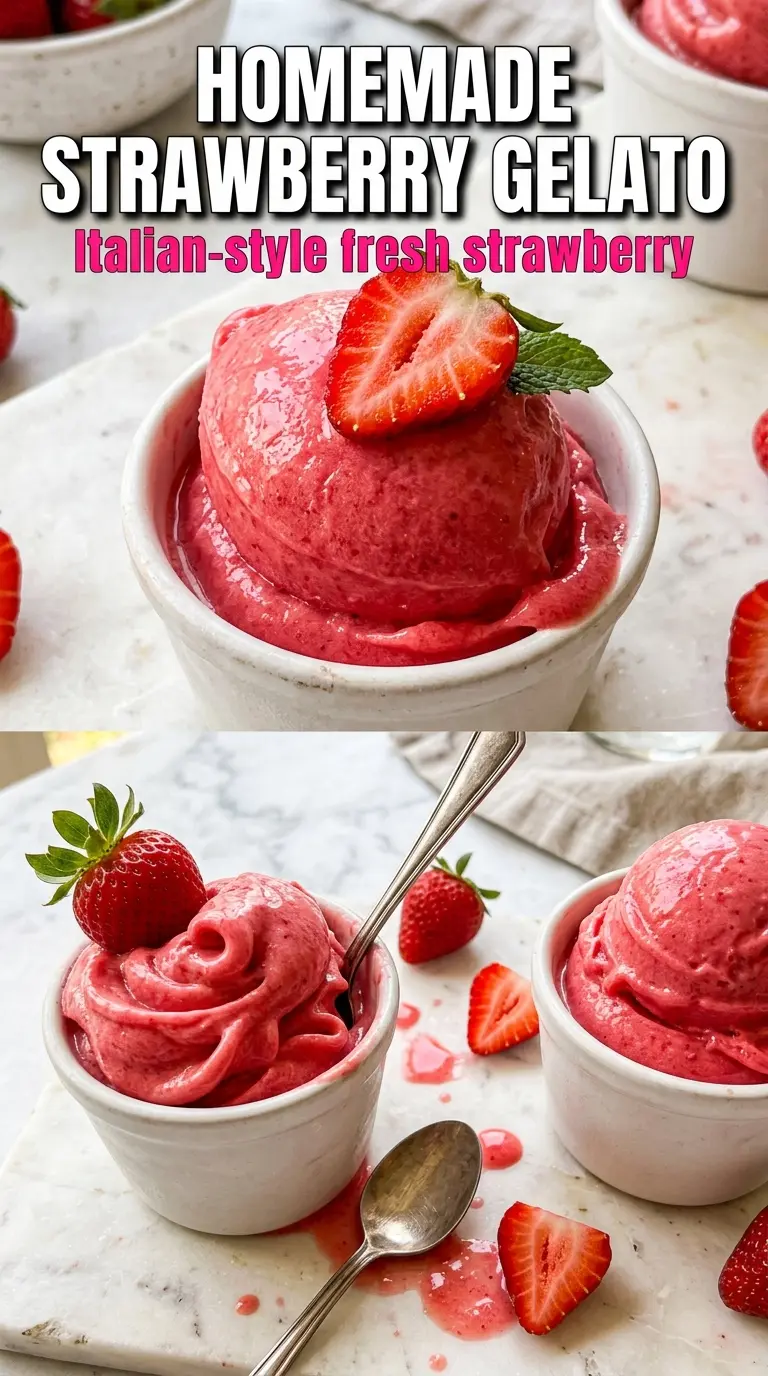
- Fresh strawberries — These carry the flavor, color, and aroma. Ripe berries matter here because there isn’t much else to hide behind. If yours are pale or bland, the gelato will taste muted no matter what else you do.
- Sugar — It sweetens the puree and the custard, but it also helps keep the frozen texture softer. Don’t cut it too hard or the gelato will freeze dense in a bad way, not the dense, creamy way you want.
- Lemon juice — A small amount wakes up the strawberries and keeps the flavor from tasting dull. It’s not there to make the gelato sour. It just gives the berries a cleaner finish.
- Whole milk and heavy cream — This is the base that gives the gelato its body. Whole milk keeps it from feeling heavy, while the cream rounds out the texture. Using lower-fat milk here makes the final result less smooth.
- Egg yolks and cornstarch — Together, they build thickness fast and help the base churn into that dense, spoonable gelato texture. The cornstarch is important because it stabilizes the mixture without adding more egg flavor. If you skip it, the finished gelato tends to freeze harder.
- Vanilla extract — Just enough to soften the edges of the dairy and make the strawberry taste fuller. It should stay in the background. Too much vanilla will pull attention away from the fruit.
Getting the Custard Thick Enough Without Scrambling the Eggs
Blending the Strawberry Base
Blend the hulled strawberries with part of the sugar and the lemon juice until completely smooth, then strain out the seeds. The puree should look glossy and fairly loose. If the berries are warm or overripe, don’t worry about the texture at this stage; the strain catches the rough bits that would otherwise show up in the finished gelato.
Heating the Dairy and Tempering the Yolks
Warm the milk and cream until steaming, not boiling. In a separate bowl, whisk the yolks, remaining sugar, and cornstarch until smooth and pale. Stream the hot dairy into the yolk mixture slowly while whisking the whole time; that gradual addition keeps the eggs from curdling. If you dump it in all at once, you’ll get sweet scrambled eggs, and there’s no fixing that.
Cooking the Base to the Right Thickness
Return everything to the saucepan and stir constantly over medium heat until the mixture thickens enough to coat the back of a spoon like pudding, about 5 minutes. Don’t chase a rolling boil. The moment the mixture starts to cling and leave a clean line when you drag a finger through it, pull it off the heat. That’s the point where the cornstarch and yolks have done their job.
Finishing and Churning
Stir in the strawberry puree and vanilla after the pan comes off the heat, then cool the base quickly over an ice bath before refrigerating it. A fully chilled base churns faster and freezes with a finer texture. When it’s ready, churn on the lowest setting your machine offers for the densest result, then serve it soft or freeze it briefly for a firmer scoop.
How to Adapt This for Different Diets and Textures
Dairy-Free Strawberry Gelato
Swap the milk and cream for full-fat coconut milk plus a little unsweetened oat milk, and expect a softer coconut note in the background. The texture will still be creamy, but it won’t taste as neutral as the original. Keep the custard-style thickening step so the gelato still freezes with body.
Egg-Free Version
If you skip the yolks, add a little more cornstarch and cook the base until it’s clearly thickened before chilling. You’ll lose some of the custardy richness, but the strawberry flavor will come through even more sharply. This version freezes a bit firmer, so let it sit at room temperature for a few minutes before scooping.
Extra-Smooth Gelato
For an especially polished texture, strain the strawberry puree twice and churn the chilled base until it looks almost like soft-serve. That little extra step removes every bit of seed and gives you a cleaner finish. It’s the version I make when I want the gelato to look as good as it tastes.
Storage and Reheating
- Refrigerator: Store the base before churning for up to 2 days if needed, but keep it tightly covered so it doesn’t pick up other flavors. Once churned, the gelato belongs in the freezer.
- Freezer: The finished gelato keeps well for about 2 weeks in a shallow container with parchment pressed directly on the surface. After that, it can get a little more icy.
- Reheating: Let frozen gelato sit at room temperature for 5 to 10 minutes before scooping. Don’t microwave it or you’ll melt the edges before the center softens.
Answers to the Questions Worth Asking
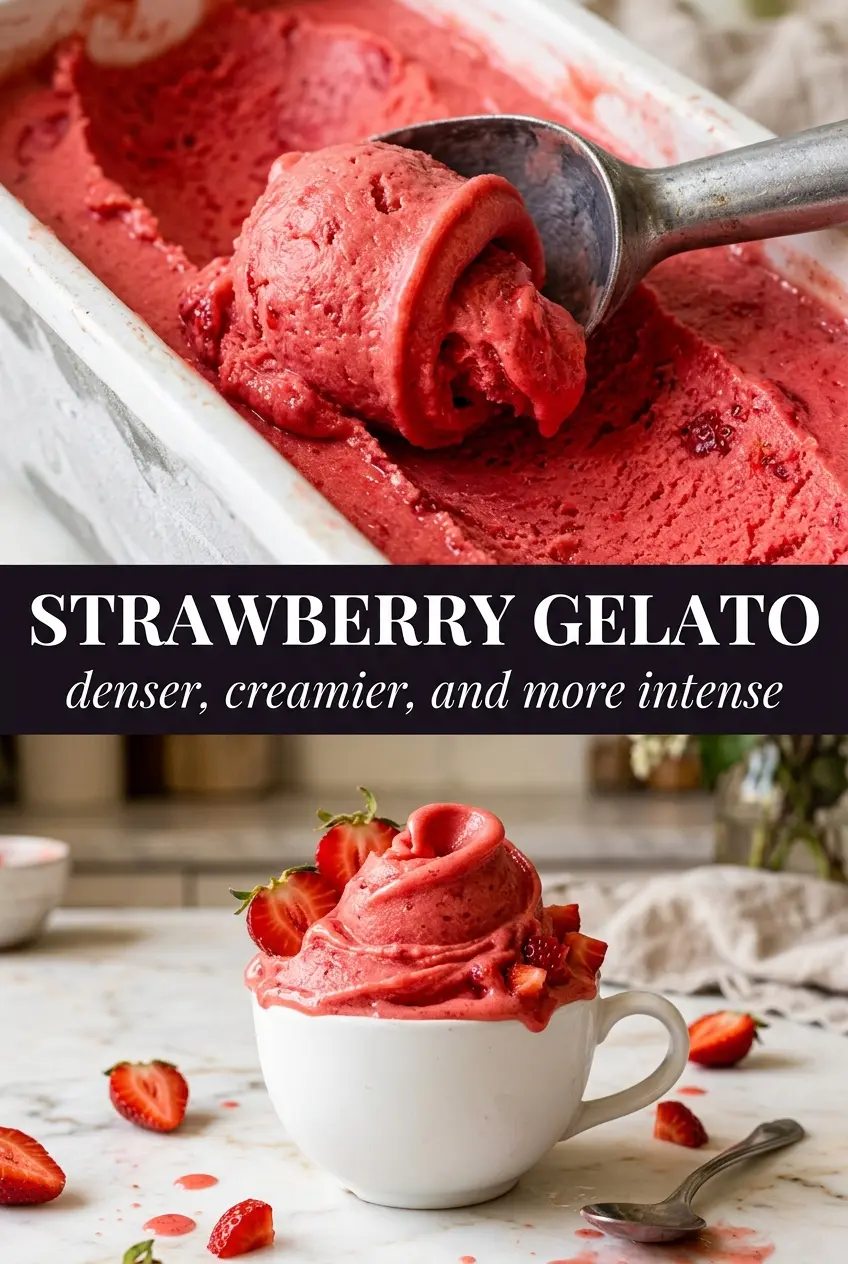
Strawberry Gelato
Ingredients
Equipment
Method
- Blend the hulled strawberries with 1/4 cup sugar and the lemon juice until smooth, then strain to remove seeds and set aside.
- Set the strained strawberry puree aside so it’s ready to fold into the custard later.
- In a saucepan, heat the whole milk and heavy cream together until steaming.
- In a bowl, whisk the egg yolks, remaining 1/2 cup sugar, and cornstarch until smooth.
- Slowly whisk the hot milk mixture into the yolk mixture to temper it, then return everything to the saucepan.
- Cook over medium heat, stirring constantly, until thickened like a pudding—about 5 minutes.
- Remove from the heat and stir in the strawberry puree and vanilla extract.
- Cool the mixture completely over an ice bath, then refrigerate at least 4 hours.
- Churn in an ice cream maker on the lowest setting for a dense, gelato-style texture.
- Serve soft immediately, or freeze 1–2 hours to firm up before serving.