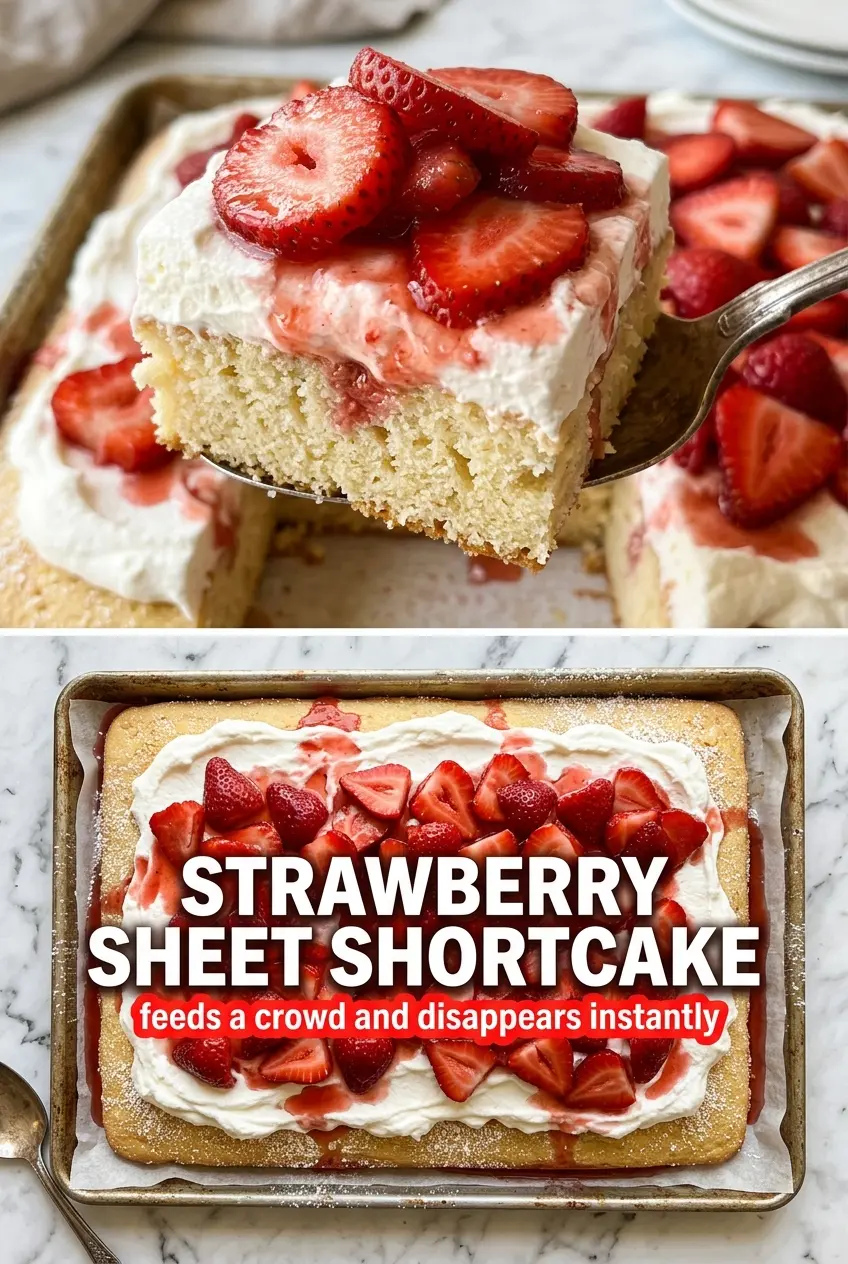
Strawberry sheet shortcake lands somewhere between a tender vanilla snack cake and a classic shortcake, which is exactly why it disappears fast at parties. The cake stays soft under a pile of glossy strawberries, and the whipped cream keeps every bite light instead of heavy. It slices neatly for a crowd, but it still tastes like something you built with care.
The part that makes this version work is the sour cream in the batter. It adds moisture and a little tang, which keeps the cake from eating like plain boxed vanilla cake under all that fruit. The strawberries also need time to sit with sugar so they turn juicy without turning mushy. That little rest gives you the syrupy top layer people go back for with a spoon.
Below, you’ll find the one detail that keeps the cake from turning dense, why the strawberries need to macerate instead of getting dumped on dry, and a few smart swaps if you want to serve this at a picnic, make it dairy-free, or stretch it ahead for a gathering.
The cake stayed unbelievably soft even after chilling, and the strawberries made their own syrupy layer instead of soaking the whole thing through. I served it after dinner and everyone kept going back for just one more square.
Save this strawberry sheet shortcake for the kind of dessert that serves a crowd and still feels light, creamy, and fresh.
The Bake Time That Keeps the Crumb Tender
This cake is at its best when it’s just set and still soft in the center. Overbaking dries it out fast, and once the strawberries and cream go on top, that dryness shows up right away. Pull it when a toothpick comes out clean or with a few moist crumbs, not when the top looks deeply browned.
The other place people get into trouble is rushing the cooling time. Warm cake melts whipped cream, and melted cream slides under the berries instead of sitting in a fluffy layer. Give the cake time to cool completely on its own, even if that means waiting an extra hour before assembling.
- Softened butter — It needs to be cool enough to hold air when you cream it with sugar. If it’s greasy or half-melted, the batter won’t trap enough air and the cake bakes up tighter.
- Sour cream — This is what keeps the crumb plush and moist. Plain Greek yogurt can stand in, but it’s a little tangier and slightly thicker, so the batter may need a gentler mix.
- Fresh strawberries — Fresh berries matter here because they hold their shape while still giving off juice. Frozen strawberries turn watery and soft in a way that muddies the top of the cake.
- Heavy cream — Don’t swap in light cream or half-and-half. They won’t whip into stable peaks, and the topping will slump before the cake is served.
What Each Part Is Doing Before the Cake Ever Hits the Oven
The flour, baking powder, and eggs build the structure, but the sour cream is what keeps that structure from turning dry and cakey. Creaming the butter and sugar first matters because that’s where the lift starts. If you rush that step, the cake can still bake through, but it won’t have the same soft, airy texture.
The strawberry filling does two jobs at once: it sweetens the fruit and gives you the glossy juices that make the top look finished. The whipped cream brings the whole dessert together, but it should be stiff enough to hold its shape under the berries. Stop whipping as soon as it forms firm peaks; overwhipped cream turns grainy and starts to look dull instead of billowy.
Building the Layers So Nothing Sinks or Slumps
Creaming the Base
Beat the softened butter and sugar until the mixture turns pale and fluffy. That change in color and texture matters because it means air has been worked into the batter, which helps the cake rise without feeling heavy. If the butter is too cold, the sugar will just smear through it; if it’s too warm, the mixture goes slick and dense.
Adding the Eggs and Vanilla
Beat in the eggs one at a time, then add the vanilla. The batter may look slightly curdled after the first egg, and that’s normal; it comes back together once the dry ingredients go in. If the eggs are dumped in all at once, the batter can split and the final crumb may bake unevenly.
Finishing the Batter
Alternate the flour mixture with the sour cream, beginning and ending with flour. That pattern keeps the batter stable and helps prevent overmixing, which is how you end up with a tough cake. Stop mixing as soon as the last streak of flour disappears. The batter should look thick and smooth, not stretchy.
Whipping and Assembling
Beat the cream, powdered sugar, and vanilla until stiff peaks form, then spread it over the cooled cake. Spoon the strawberries and their juices on top instead of dumping them in one spot so every slice gets fruit. Chill the assembled cake until serving time so the layers settle together and slice cleanly.
Lemon Strawberry Shortcake
Add 1 tablespoon lemon zest to the batter and a small squeeze of lemon juice to the strawberries. The cake tastes brighter and less sweet, which works well if your berries are especially ripe. The lemon also sharpens the whipped cream without making it taste sour.
Dairy-Free Version
Use plant-based butter, a thick dairy-free yogurt in place of sour cream, and coconut whipping cream for the topping. The cake stays tender, but the flavor shifts a little richer and more coconut-forward. Beat the topping only until it holds shape, since many dairy-free creams go grainy if overwhipped.
Make It Ahead for a Party
Bake the cake and macerate the strawberries up to a day ahead, then whip the cream and assemble a few hours before serving. If you assemble too early, the berries will soften the cream and the top will lose its height. This version holds up best when the layers are combined close to serving time.
Storing Leftovers
- Refrigerator: Store covered for up to 3 days. The cake will soften under the berries, but it still tastes great chilled.
- Freezer: Freeze the plain cake layer only, wrapped tightly, for up to 2 months. The whipped cream and strawberries don’t freeze well once assembled.
- Reheating: No reheating needed. Let refrigerated slices sit at room temperature for 10 to 15 minutes so the cake loses its chill and the cream tastes less firm.
Answers to the Questions Worth Asking
Strawberry Sheet Shortcake
Ingredients
Equipment
Method
- Preheat the oven to 350°F. Grease a 9x13 baking dish and set it aside.
- Whisk together all-purpose flour, baking powder, and salt until evenly combined. Use a light, even mixing motion so the baking powder distributes.
- Cream together butter, softened and sugar until light and fluffy. You should see the mixture turn paler and look airy.
- Beat in eggs and vanilla extract until the batter looks smooth and uniform. Mix just until no streaks remain.
- Alternately add the flour mixture and sour cream to the batter, beginning and ending with flour. Stop mixing as soon as the batter is combined to keep the crumb tender.
- Pour the batter into the greased 9x13 baking dish and spread into an even layer. Tap the pan lightly to settle the batter.
- Bake for 18-22 minutes at 350°F until a toothpick comes out clean. Look for lightly golden edges and a center that springs back.
- Cool completely before topping. Set the pan on a rack until it reaches room temperature.
- Toss fresh strawberries, sliced with sugar to coat evenly. The berries should look glossy and evenly sugar-dusted.
- Let the strawberries sit for at least 30 minutes at room temperature to release juices. Afterward, you should see a syrupy liquid pooling at the bottom.
- Beat heavy whipping cream, powdered sugar, and vanilla extract until stiff peaks form. Stop when peaks stand straight and the cream holds its shape.
- Top the cooled cake with the whipped cream, spreading it to the edges. Use a smooth layer so the strawberry juices don’t soak unevenly.
- Arrange the macerated strawberries and their juices over top. Let the juices drizzle for a glossy finish.
- Garnish with Fresh strawberries for garnish. Place whole berries on top for visible pops of red.
- Chill until ready to serve. The topping should look set, with strawberries slightly thickened over the cream.