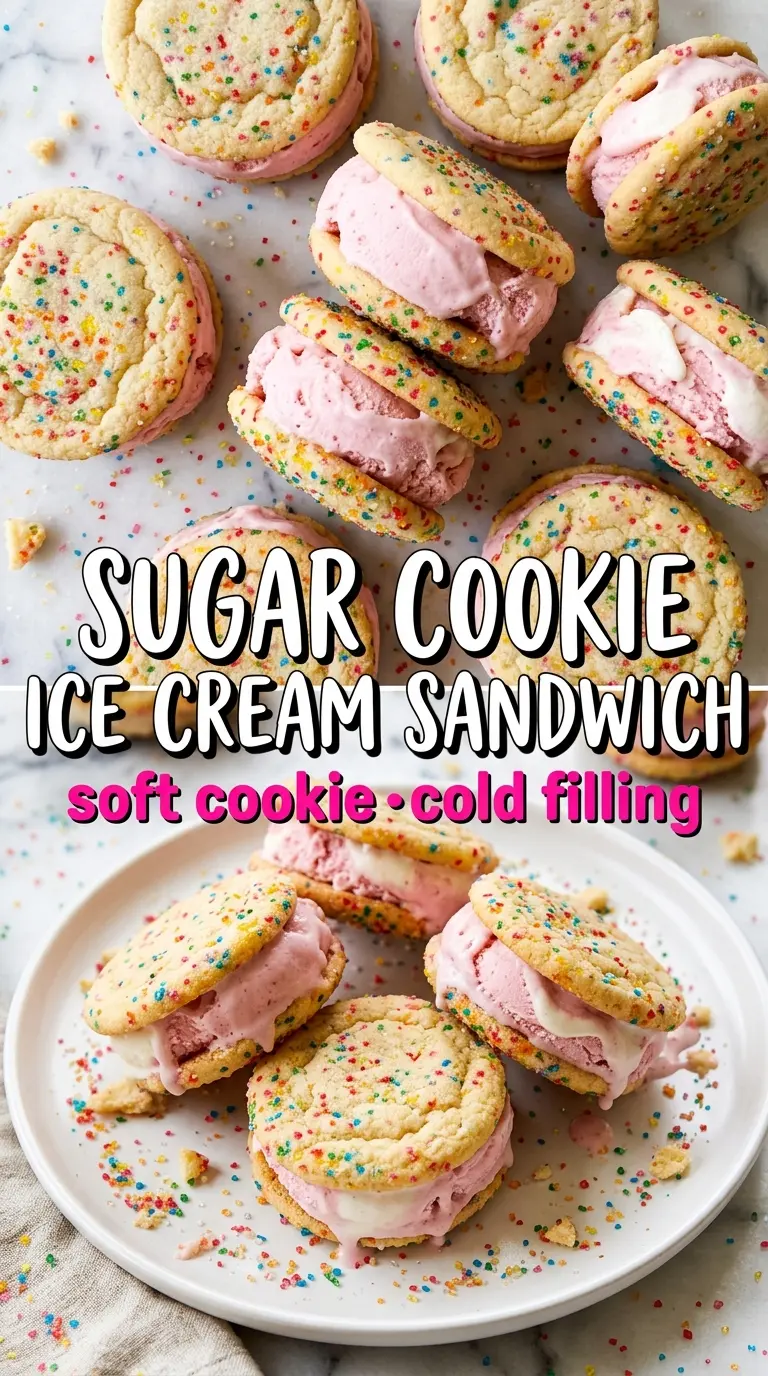
Soft sugar cookies and cold ice cream belong together in the same bite, and these sandwich cookies nail the contrast. The cookies bake up thick and tender with crisp edges, then freeze just enough to hold their shape without turning hard or brittle. You get that bakery-style look with the kind of texture that still gives when you bite in, even straight from the freezer.
The trick is keeping the cookies soft in the center and not overbaking them. A little almond extract gives the dough that classic sugar-cookie bakery flavor, while the rainbow sprinkles on the edges add color and a bit of crunch without fighting the ice cream. Once the sandwiches are assembled, a short freeze firms everything up and makes them easy to serve cleanly.
Below, you’ll find the detail that matters most: how to bake the cookies so they stay tender after freezing, plus the best way to handle the ice cream so the sandwiches don’t slide apart before they set.
I baked the cookies just until the edges turned light gold, and they stayed soft even after freezing. The ice cream didn’t squish out the sides once I rolled the edges in sprinkles and let them set for an hour.
Save these sugar cookie ice cream sandwiches for the days when you want a soft bakery-style cookie and a clean, creamy frozen center.
The Reason These Sandwiches Stay Soft Instead of Hardening Like Bricks
Ice cream sandwiches fail when the cookie turns into a dry, snappy shell after freezing. These don’t, because the dough is built like a soft sugar cookie from the start: plenty of butter, enough sugar for tenderness, and just enough flour to hold the shape without making the cookies tough. The other big difference is baking them only until the edges barely color. The centers should still look a touch pale when they come out of the oven.
That underbaked-looking center is the whole point. Once the cookies cool and then freeze around the ice cream, they settle into a chewy, tender bite instead of a brittle one. If you bake until they look fully done in the oven, they’ll taste dry once frozen. That small window is what keeps the texture pleasant after a full hour in the freezer.
- Butter — softened butter creams with the sugar to trap air, which gives the cookies their soft, puffed texture. Cold butter won’t whip properly, and melted butter makes the dough spread too much.
- Almond extract — just half a teaspoon gives that classic bakery-cookie note. It’s subtle, but it makes the cookies taste like an actual ice cream shop sandwich instead of plain sugar cookies.
- Rainbow sprinkles — these are for the edges, so use the sturdier jimmies-style sprinkles, not nonpareils. Tiny round sprinkles can bleed color into the ice cream and get crunchy in a way that feels gritty.
What Each Ingredient Is Doing in the Cookie and the Freeze
- All-purpose flour — this gives the cookies structure without making them cakey. Measure it lightly; too much flour makes the rounds dry and thick in the wrong way.
- Baking powder and baking soda — together they give a little lift and help the cookies bake up thick instead of dense. Don’t swap one for the other here unless you want a different texture.
- Granulated sugar — it sweetens, but it also helps the cookies spread just enough and stay tender after freezing. Brown sugar would make them softer and more caramel-like, which changes the whole feel of the sandwich.
- Ice cream — any flavor works, but slightly softened ice cream is what makes assembly possible. If it’s rock hard, the cookies crack; if it’s soupy, the sandwiches slide apart before they set.
Building the Cookies and Sandwiching Them Before the Melt Starts
Creaming the Base
Beat the butter and sugar until the mixture turns pale and fluffy. That step matters because it gives the cookies the light, tender crumb you want once they’re frozen. Add the eggs one at a time, then mix in the vanilla and almond extracts. If the mixture looks curdled for a moment, keep going; it comes back together when the flour goes in.
Forming Even Rounds
Stir in the dry ingredients just until the dough comes together. Stop as soon as you stop seeing streaks of flour. Scoop large portions, about 3 tablespoons each, then flatten them before baking so they finish as neat sandwich rounds instead of domes. If the dough is sticky, chill it briefly rather than adding more flour, which would make the cookies dry.
Baking for a Soft Center
Bake until the edges are just turning golden and the centers still look soft and slightly underdone. Pull them early rather than waiting for full color; the residual heat finishes the middle as they cool on the pan. Let them cool completely before filling them, or the ice cream will melt fast and soak into the cookies instead of setting between them.
Filling and Freezing
Work with softened but still scoopable ice cream. Spread or scoop it onto the flat side of one cookie, top with a second cookie, and press just enough to bring the filling to the edges without forcing it out. Roll the exposed edges in rainbow sprinkles, then freeze at least an hour. If you skip the freeze, the sandwiches taste fine for about five minutes and then start to slump.
How to Change the Flavor Without Losing the Texture
Chocolate chip cookie version
Swap the sugar cookie dough for a soft chocolate chip cookie base if you want a deeper, toastier sandwich. Keep the cookies thick and slightly underbaked so they stay bendy after freezing, and use vanilla or mint ice cream to balance the richer flavor.
Gluten-free adaptation
Use a cup-for-cup gluten-free flour blend that includes xanthan gum. The cookies may spread a little less and bake up more delicate, so cool them fully on the pan before moving them. The flavor still works, but the texture is a touch more tender and less chewy than the original.
Dairy-free version
Use a plant-based butter that bakes well and a dairy-free ice cream with a firmer scoop. The cookies will still be soft, but the flavor is a little less rich, so a vanilla-heavy or coconut-based ice cream helps the sandwich taste complete.
Different ice cream flavors
Strawberry, chocolate, cookies and cream, or mint chip all work well here. Choose a flavor that freezes firmly and doesn’t melt into a thin puddle when softened, because very loose ice cream makes assembly messy and the finished sandwiches look slumped.
Storage and Reheating
- Refrigerator: Not recommended. The cookies get too soft and the ice cream melts.
- Freezer: Store wrapped individually or in a sealed container for up to 2 weeks. After that, the cookies can start to pick up freezer flavor.
- Reheating: No reheating needed. Let the sandwiches sit at room temperature for 3 to 5 minutes before eating so the cookies soften slightly and the ice cream isn’t rock hard.
Questions I Get Asked About This Recipe

Sugar Cookie Ice Cream Sandwiches
Ingredients
Equipment
Method
- Preheat oven to 350F. Whisk all-purpose flour, baking powder, baking soda, and salt until evenly combined.
- Beat unsalted butter and granulated sugar until fluffy. Add eggs, vanilla extract, and almond extract and mix until smooth.
- Stir the flour mixture into the butter mixture until a soft dough forms. Stop as soon as no dry flour remains.
- Scoop dough into large rounds (3 tablespoons) and press flat on a lined sheet pan. Space them evenly so they bake into pillow-thick rounds.
- Bake at 350F for 10-12 minutes, until edges are just golden but centers are still soft. Cool completely before assembling.
- Sandwich softened ice cream between two cookies. Roll the exposed ice cream edges in rainbow sprinkles for a crisp, colorful rim.
- Freeze at least 1 hour before serving. Arrange on a tray so the sandwiches set firmly without sticking.