Sun-dried tomato pasta salad brings a briny, creamy, herb-flecked bite that holds up beautifully on the table. The pasta stays tender without turning mushy, the feta gives each forkful a salty snap, and the spinach softens just enough in the vinaigrette to feel integrated instead of raw. It’s the kind of side dish that disappears fast because it tastes like it took more effort than it did.
What makes this version work is balance. The oil from the sun-dried tomatoes adds depth, but the salad still needs the sharp lift from red wine vinegar so it doesn’t taste heavy. Rinsing the pasta under cold water stops the cooking and keeps the dressing from getting absorbed the second it hits the bowl. Chilling time matters here, too, because the flavors need that hour to settle into each other.
Below, I’ve included the little details that keep the feta from getting crushed, how to adjust the seasoning after chilling, and a few smart swaps if you need to work with what’s already in the pantry.
The dressing soaked in after an hour in the fridge, and the pasta stayed separate instead of clumping. The feta and sun-dried tomatoes were the best part in every bite.
Love the briny feta and sun-dried tomato combo? Save this pasta salad for the next picnic, potluck, or make-ahead lunch.
The Trick to Keeping the Pasta Salad Bright Instead of Heavy
The biggest mistake with pasta salad like this is letting it eat like a bowl of dressed noodles. Sun-dried tomatoes and feta both carry plenty of intensity, so the dressing has to stay sharp enough to cut through the richness. Red wine vinegar gives the right bite here, and the oregano and basil keep the whole bowl tasting Mediterranean instead of flat.
Cold-rinsing the pasta changes the texture in a good way for this dish. It stops the starch from tightening up and turning the salad gluey, and it keeps the feta from melting into the warm pasta. If the salad seems dry after chilling, that usually means the pasta was still warm when the dressing went on or it sat too long before being tossed again. A fresh drizzle of olive oil and another splash of vinegar usually fixes it fast.
What Each Ingredient Is Actually Doing in This Bowl
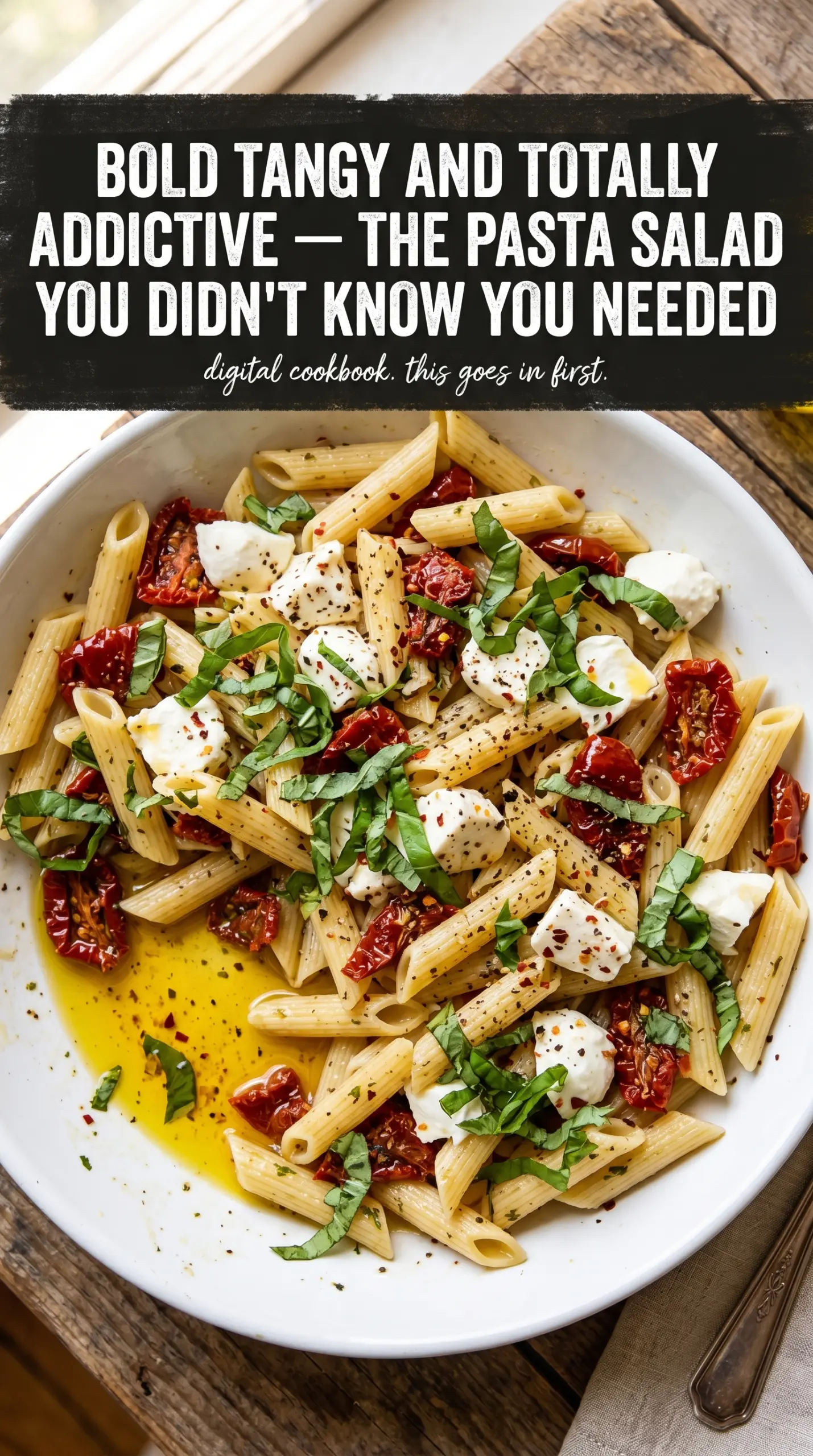
- Rotini or penne pasta — The shape matters because you want ridges and curves that catch the vinaigrette and bits of feta. Rotini grabs the most dressing, while penne gives a slightly cleaner bite. Either one works; just cook it to al dente so it stays pleasant after chilling.
- Sun-dried tomatoes in oil — These bring concentrated tomato flavor and a little built-in richness from the oil they’re packed in. Drain them before chopping, but don’t worry about getting every trace of oil off; a little helps the dressing taste deeper. If yours are very dry, soak them in warm water for 10 minutes and pat them dry before using.
- Feta cheese — Feta gives the salad its salty, creamy backbone. A block you crumble yourself holds its texture better than pre-crumbled feta, which can be a little dry and dusty. If you need to swap it, goat cheese works, but it will make the salad softer and tangier.
- Fresh spinach — Spinach softens in the vinaigrette without going limp the way sturdier greens would. Chop it so it distributes through the pasta instead of clumping in big leaves. Baby spinach is the easiest choice, but regular spinach works if you remove the thick stems.
- Kalamata olives — They add the salty, briny note that keeps every bite lively. Slice them so you get flavor in the bowl instead of whole pockets of olive. If you don’t like Kalamatas, use another good black olive, but the flavor will be milder and less winey.
- Olive oil, red wine vinegar, garlic, oregano, and basil — This is the dressing’s whole job: richness, acid, and herb flavor in balance. Use a decent olive oil here because the dressing is uncooked and you’ll taste it clearly. Fresh garlic is worth it; jarred garlic can taste harsh in a cold dressing and doesn’t mellow the same way.
How to Build the Salad So the Feta Stays in Pieces
Cooking the Pasta Right
Boil the pasta in well-salted water until just al dente, then drain it and rinse under cold water right away. That rinse stops the carryover heat and removes the surface starch that makes pasta salad sticky. If the pasta is even a little overcooked, it’ll go soft once the dressing sits on it, so pull it a minute early if your package directions lean long.
Whisking the Dressing
Whisk the olive oil, vinegar, garlic, oregano, basil, salt, and pepper until it looks unified and glossy. The garlic should be finely minced so it disperses instead of landing in sharp little bites. If the dressing tastes too aggressive on its own, that’s okay; the pasta and feta will soften it after chilling.
Bringing the Bowl Together
Add the pasta, tomatoes, spinach, olives, and feta to a large bowl, then pour the dressing over the top. Toss gently with a big spoon or clean hands so the feta stays chunky and the spinach doesn’t bruise into dark ribbons. The salad will look a little loose at first, but it tightens up as it chills and the pasta absorbs some of the vinaigrette.
Letting It Chill and Finish
Give the salad at least an hour in the fridge before serving. That resting time is where the flavor settles and the texture makes sense. Taste again right before serving, because cold pasta dulls salt and acid; a small extra pinch of salt or splash of vinegar often wakes the whole bowl back up.
How to Adapt This for Different Tables and Diets
Make It Gluten-Free
Use a sturdy gluten-free pasta shape that holds its edges after chilling, and cook it just until tender. Gluten-free pasta can turn gummy if it sits in hot water too long, so drain it the moment it’s done and rinse promptly. The salad still tastes balanced, but the texture is best the day it’s made.
Make It Dairy-Free
Skip the feta and add a handful of chopped marinated artichokes or extra olives for more salt and chew. You lose the creamy, tangy pops from the cheese, so the salad needs a little more seasoning and maybe an extra tablespoon of vinegar. It still works well, especially if you’re after a brighter, more olive-oil-forward bowl.
Turn It Into a Fuller Main Dish
Add chickpeas, grilled chicken, or chopped salami if you want this to eat like lunch instead of a side. Chickpeas keep it vegetarian and make the bowl heartier without changing the flavor much. If you add meat, toss it in after the salad has chilled so it stays firm and doesn’t soak up all the dressing.
Storage and Reheating
- Refrigerator: Keep covered for up to 4 days. The spinach will soften and the pasta will absorb more dressing over time, which is normal.
- Freezer: Don’t freeze this one. The feta turns crumbly in a bad way and the pasta loses its texture after thawing.
- Reheating: This salad is meant to be served cold or at cool room temperature. If it has been in the fridge, let it sit out for 15 to 20 minutes and toss with a small splash of olive oil or vinegar if it tastes tight.
Answers to the Questions Worth Asking
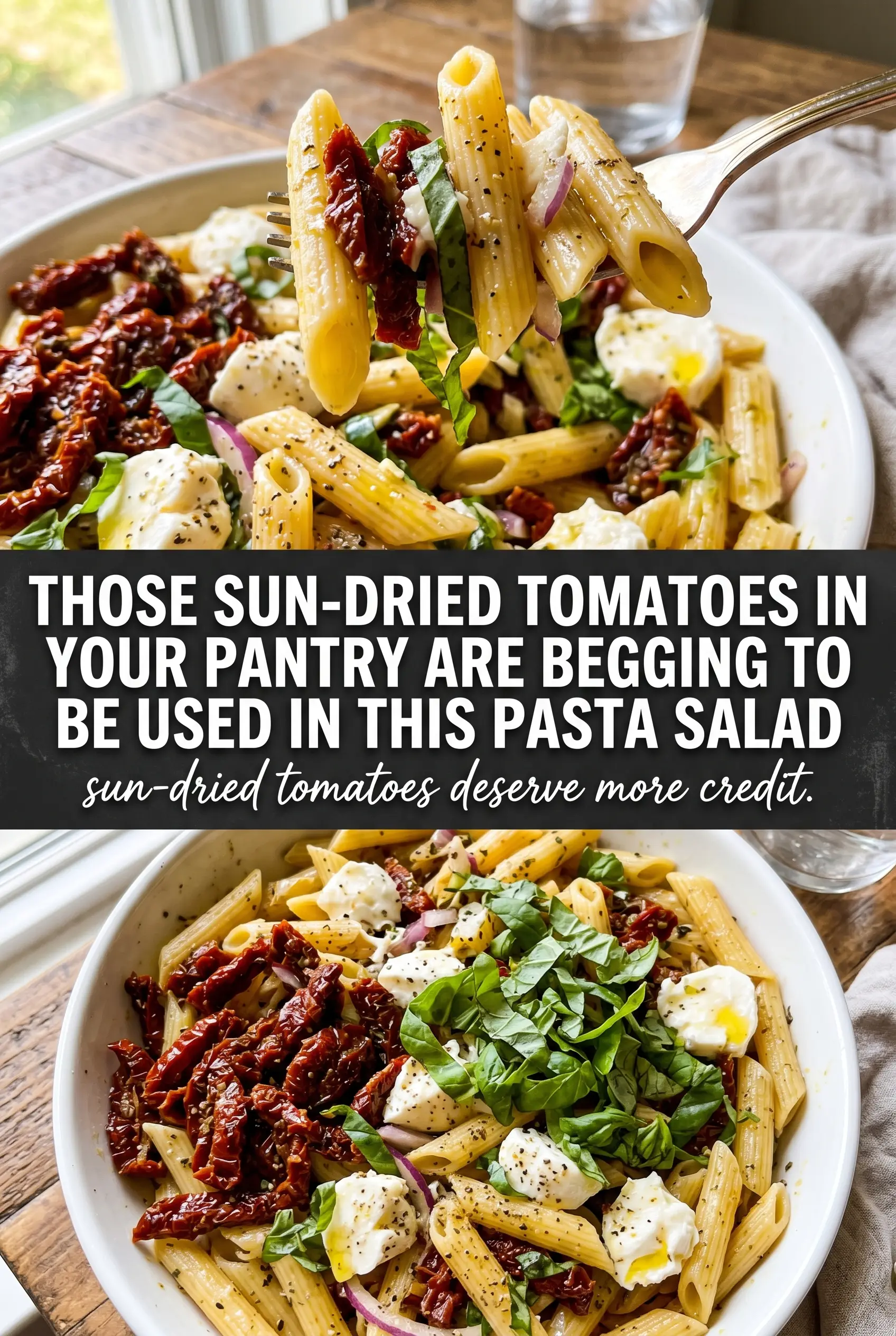
Sun-Dried Tomato Pasta Salad
Ingredients
Method
- Cook the rotini or penne pasta according to package directions until al dente. Drain and rinse under cold water until fully cool, using a clear visual of no steam or warmth.
- Whisk together olive oil, red wine vinegar, minced garlic, dried oregano, dried basil, salt, and pepper until the mixture looks uniform and glossy. Keep whisking for about 30 seconds so the garlic disperses evenly.
- Combine the cooled pasta with chopped sun-dried tomatoes, crumbled feta, chopped spinach, and sliced Kalamata olives in a large bowl. Gently fold so the feta stays in soft, visible crumbles.
- Pour the herb vinaigrette over the salad and toss gently just until evenly coated. Stop when you can no longer see dry pasta, but avoid aggressive stirring that breaks up the feta too much.
- Refrigerate the pasta salad for at least 1 hour before serving. You should see the dressing thicken slightly and cling to pasta and spinach.
- Right before serving, toss again and adjust seasoning with more salt and pepper if needed. Taste and look for balanced flavor, with feta still visible and spinach bright green.