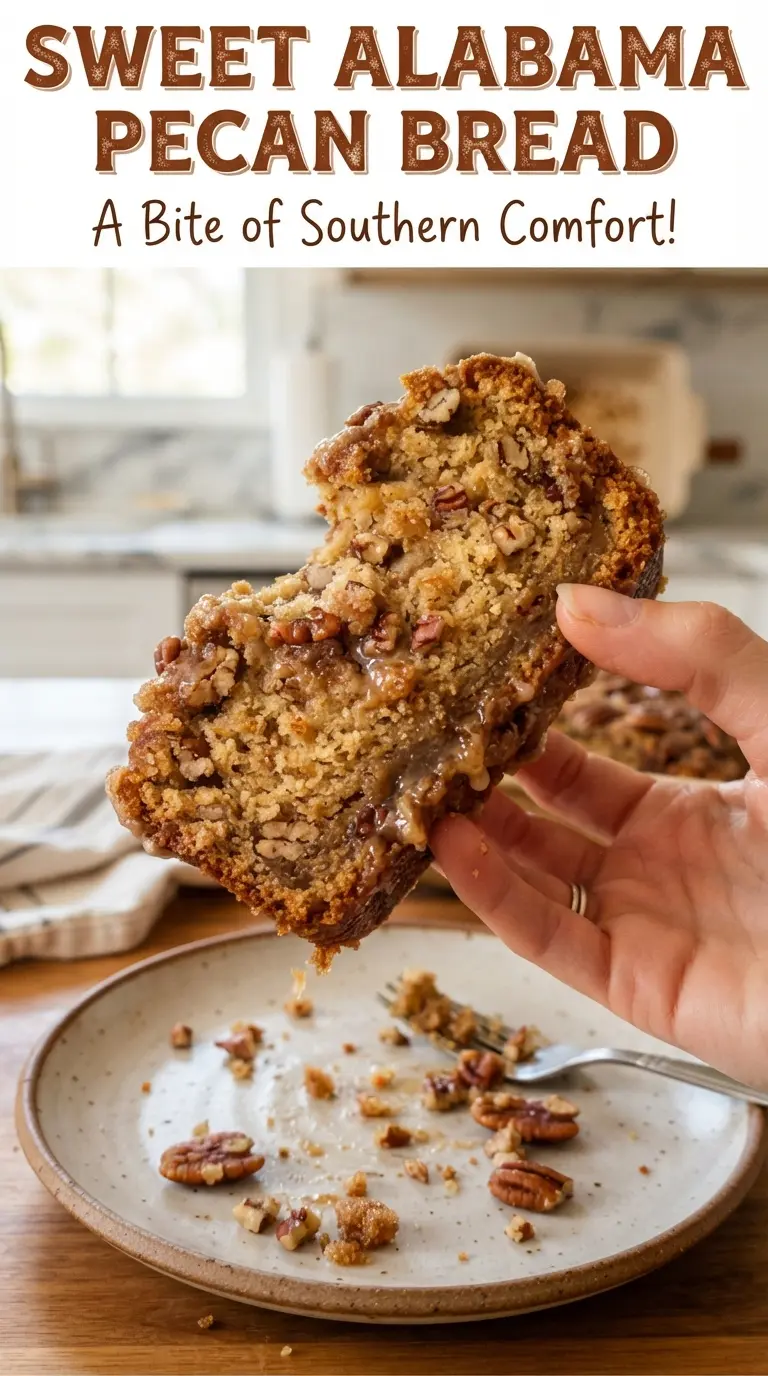
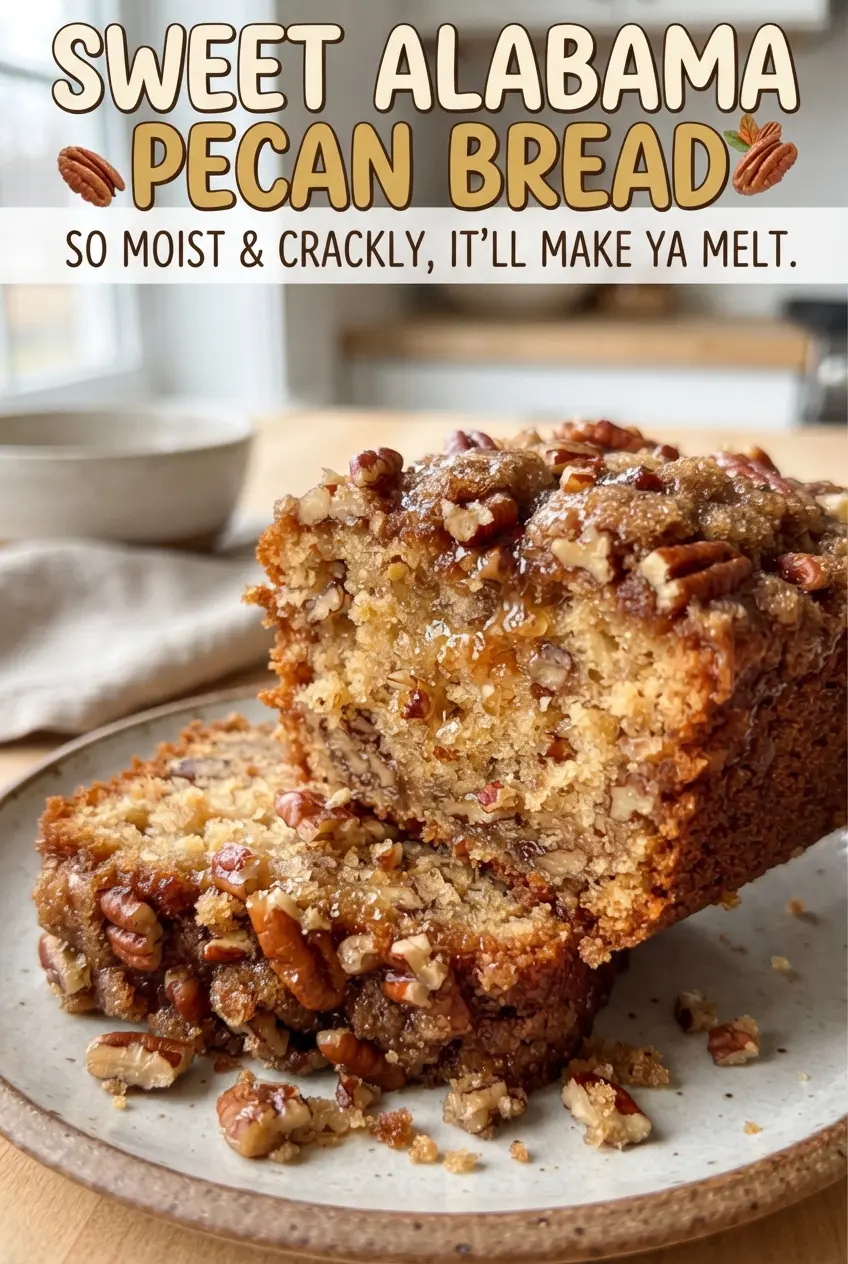
Sweet Alabama pecan bread bakes up with a crackly brown sugar top, a tender buttery crumb, and toasted pecans in every slice. It lands somewhere between coffee cake and quick bread, which is exactly why it disappears so fast off the counter. The loaf stays moist for days, and the top develops a caramelized crust that gives each slice a little crunch before you hit the soft center.
What makes this version work is the balance between butter, buttermilk, and brown sugar. The buttermilk keeps the crumb plush and light even with all those nuts, while the brown sugar brings depth without making the loaf heavy. Toasting the pecans first matters too — it wakes up their flavor and keeps them from tasting flat once they’re baked into the batter.
Below, I’ve included the small details that keep the loaf from turning dense, plus a few ways to adapt it if you need to swap the dairy or stretch what you have on hand.
The top baked up crisp and caramelized, and the crumb stayed moist all the way to day three. I loved that the toasted pecans still had a little crunch instead of getting lost in the loaf.
Save Sweet Alabama Pecan Bread for the days when you want a tender Southern-style loaf with a crackly pecan top.
The Part That Keeps This Loaf From Turning Heavy
Quick breads like this one go wrong when the batter gets overmixed after the flour goes in. Once the flour is hydrated, gluten starts building fast, and that’s what turns a tender loaf into something tight and tough. Here, the batter should look a little rough when it goes into the pan. That’s the right look.
The other place people lose texture is in the bake. If the oven runs hot or the loaf stays in too long, the sugars on top can scorch before the center sets. The sweet spot is a deep golden loaf with a crackly top and a tester that comes out clean or with just a few moist crumbs, not wet batter.
- Butter — Softened butter gives the loaf its rich base and helps trap air when beaten with the brown sugar. Cold butter won’t cream properly, and melted butter changes the structure enough to make the bread denser.
- Buttermilk — This is what keeps the crumb soft and gives the baking soda something to react with. Plain milk will work in a pinch, but the bread loses some tenderness and tang.
- Toasted pecans — Toasting matters because it deepens the nut flavor and keeps the pecans from tasting flat. If you skip this step, the loaf still works, but it won’t have the same warmth.
- Brown sugar — This does double duty in the batter and on top. Packed brown sugar keeps the loaf moist and gives that caramel note; the sprinkle on top bakes into a crisp, crackly lid.
Building the Batter Without Beating the Life Out of It
- Flour — All-purpose flour gives the loaf enough structure to hold the pecans without turning cake-like. Spoon it into the measuring cup and level it off so you don’t accidentally pack in too much.
- Baking powder and baking soda — The two leaveners work together to lift the loaf and keep the crumb from feeling heavy. If your baking soda is old, the bread can bake up flat and dull.
- Cinnamon — This doesn’t make the loaf taste spiced in an obvious way. It rounds out the brown sugar and pecans so the flavor tastes warmer and more complete.
- Vanilla — Use the real stuff if you have it. It smooths out the sweetness and makes the buttery base taste fuller.
Creaming the Base
Beat the softened butter and brown sugar until the mixture looks fluffy and a shade lighter. That step gives the loaf some lift before the flour even goes in. Add the eggs one at a time so the batter stays smooth instead of looking curdled. If the mixture looks split at this stage, the eggs were too cold; let them sit a few minutes before starting.
Adding the Dry Ingredients and Buttermilk
Alternate the flour mixture with the buttermilk, mixing only until the streaks disappear. This is the part that decides whether the loaf stays tender or turns rubbery. Stop as soon as the batter comes together. A few small flour streaks are better than overworking it.
Folding in the Pecans and Finishing the Top
Fold in most of the chopped pecans by hand so they stay whole and evenly distributed. Scrape the batter into the prepared pan, then scatter the remaining pecans and brown sugar over the top. That topping bakes into a crisp layer, but only if the pecans are spread out instead of clumped in one corner.
Baking Until the Center Sets
Bake until the loaf is deep golden and a toothpick in the center comes out clean. If the top browns too quickly, lay a loose piece of foil over it for the last 10 to 15 minutes. Let the bread cool in the pan for 15 minutes before lifting it out; if you try to slice it hot, the crumb will tear and the nuts will fall away.
Maple Pecan Topping
Brush the warm loaf with a little maple syrup or drizzle it over individual slices instead of using caramel. It adds a softer sweetness and a sticky finish, but it won’t give you the same crackly top as the brown sugar crust.
Walnut Swap
Walnuts can stand in for pecans if that’s what you have. The flavor turns a little more bitter and earthy, and the loaf loses some of the buttery sweetness pecans bring, but the texture still works well.
Gluten-Free Version
A good 1:1 gluten-free baking blend can work here, but don’t expect the exact same crumb. Mix only until combined and let the loaf cool fully before slicing, since gluten-free quick breads can seem gummy while warm.
Storage and Reheating
- Refrigerator: Store wrapped or in an airtight container for up to 5 days. The crust softens a bit in the fridge, but the crumb stays moist.
- Freezer: This loaf freezes well. Wrap the whole loaf or individual slices tightly, then freeze for up to 2 months. Thaw at room temperature before warming.
- Reheating: Warm slices in a toaster oven or a low oven until just heated through. Microwaving works, but too long will make the crumb rubbery and the pecan topping soft.
Answers to the Questions Worth Asking
Sweet Alabama Pecan Bread
Ingredients
Equipment
Method
- Preheat oven to 350F, then grease and line a 9x5-inch loaf pan. Make sure the pan is coated so the loaf releases cleanly.
- Whisk all-purpose flour, baking powder, baking soda, salt, and ground cinnamon in a bowl. Whisk until the spices are evenly distributed.
- Beat butter and brown sugar until fluffy, then beat in large eggs one at a time and vanilla extract. Stop and scrape the bowl as needed for an even batter.
- Add the dry mixture alternately with buttermilk, mixing just until combined. Mix only until no dry streaks remain to keep the crumb tender.
- Fold in 1 cup pecans until evenly dispersed, then pour the batter into the loaf pan. Smooth the top so it bakes evenly.
- Top the loaf with the remaining pecans and brown sugar for topping. The surface should look thickly sprinkled for a crackly finish.
- Bake for 55-60 minutes at 350F until a toothpick comes out clean. Look for a deep golden top and set edges.
- Cool for 15 minutes in the pan before slicing. This resting step helps the loaf hold its shape for clean cuts.