Deep chocolate layers stay soft and plush in this cake, with the sweet potato giving the crumb a damp, tender feel without tasting overtly earthy. The frosting leans glossy and rich, and the whole cake slices cleanly after a good chill, which is exactly what you want when you’re stacking a dessert this substantial.
The sweet potato puree does more than add moisture. It helps the cake bake up with a fine, even crumb and keeps the cocoa from reading dry or dusty. Buttermilk brings the batter into balance, while the hot ganache base turns into a fluffy frosting once it cools enough to hold its shape. If you’ve ever had a chocolate layer cake that baked up dense in the center or collapsed under frosting, this version is built to avoid both problems.
Below you’ll find the one mixing detail that keeps the crumb light, plus the best way to get the ganache to the right spreading texture before you frost the cake.
The cake came out incredibly moist and the chocolate flavor was deep without being too sweet. I loved how the sweet potato kept the layers tender, and the ganache set up perfectly for frosting.
Love a rich, tender chocolate layer cake with a silky ganache finish? Save this Sweet Potato Chocolate Cake for the next time you want a dessert that slices beautifully.
The Sweet Potato Is What Keeps the Crumb from Going Dry
Chocolate cakes can turn heavy fast when the batter has too much bulk and not enough lift. Sweet potato puree changes that balance in a good way. It brings moisture and body without thinning the batter too much, so the cake bakes up plush instead of gummy.
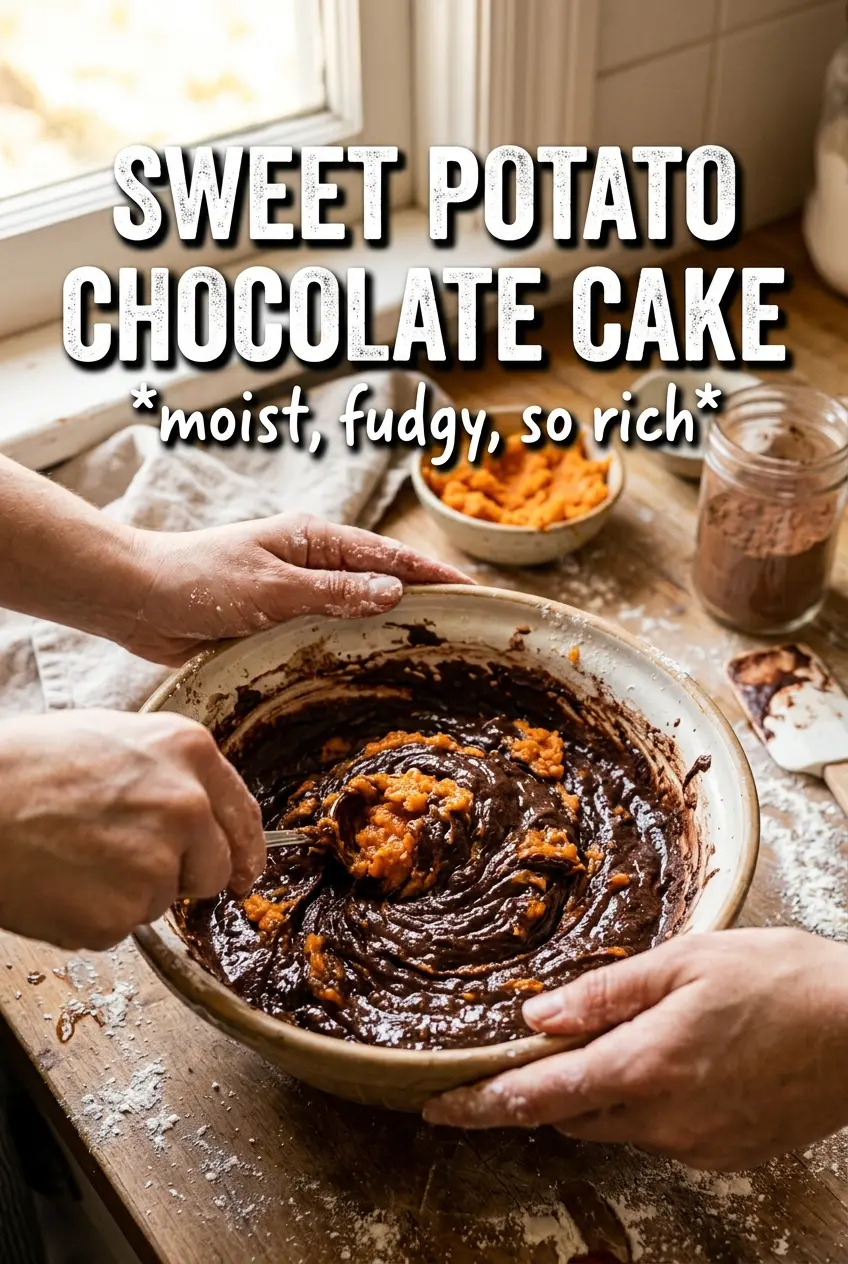
The other thing that matters here is how you mix it. Once the dry ingredients go in, stop as soon as the streaks disappear. Overmixing develops the flour and cocoa at the same time, and that’s when a cake like this can turn tight instead of tender. The batter should look thick, smooth, and a little glossy before it goes into the pans.
- Sweet potato puree — Use smooth puree, not chunky mashed sweet potato. Extra fibers or strings can make the crumb uneven. Canned puree works if it’s plain sweet potato with nothing added.
- Buttermilk — This adds acidity that helps the baking soda do its job and keeps the chocolate flavor from tasting flat. If you don’t have it, mix whole milk with a little lemon juice or vinegar and let it sit for 5 minutes.
- Cocoa powder — Use a good unsweetened cocoa. This is one place where quality matters because cocoa drives the flavor of the cake itself, not just the frosting.
- Butter — Softened butter gives the batter structure and richness. Don’t melt it; melted butter changes the texture and the cake won’t hold the same fine crumb.
Building the Batter Before the Cake Sets Up Too Fast
Creaming the Butter and Sugar
Beat the butter and sugar until the mixture looks pale and fluffy, not just combined. That step traps air, which gives the cake some lift before the leaveners even start working. If the butter is too cold, the mixture will stay greasy and dense, so let it soften until it gives slightly when pressed.
Adding the Wet Ingredients
Beat in the eggs one at a time, then add the sweet potato puree, buttermilk, and vanilla. The batter may look a little broken or curdled at this point, and that’s normal. It comes back together once the dry ingredients go in. What you don’t want is cold ingredients straight from the fridge, because they make the butter seize and the batter lose its smooth texture.
Folding in the Dry Ingredients
Add the flour, cocoa, baking powder, baking soda, cinnamon, and salt, then mix just until no dry pockets remain. The batter should be thick enough to mound briefly before settling. Stop mixing the moment it looks uniform. That’s the line between a tender chocolate cake and one that bakes up tough around the edges.
Baking and Cooling Without Rushing It
Divide the batter evenly between two greased 9-inch pans and bake until the tops spring back lightly and a toothpick comes out with a few moist crumbs, about 35 to 40 minutes. Let the cakes cool in the pans for a short time, then turn them out and cool completely on a rack. If you frost them warm, the ganache will slide and the layers may tear.
Make It Gluten-Free With a 1:1 Flour Blend
Swap the all-purpose flour for a reliable 1:1 gluten-free baking blend. The cake will still stay moist thanks to the sweet potato, but it may bake up a touch more delicate, so let it cool fully before moving or frosting the layers.
Dairy-Free Version
Use plant-based butter, dairy-free chocolate chips, and canned coconut cream in place of the heavy cream. The frosting will taste a little softer and less dairy-rich, but it still spreads well once chilled to the right texture.
Turning It into Cupcakes
The same batter works for cupcakes if you portion it into lined muffin tins and shorten the bake time. Start checking around 18 to 20 minutes. You lose the dramatic layer-cake look, but you gain easier serving and faster cooling.
Storage and Reheating
- Refrigerator: Store covered for up to 5 days. The frosting stays stable, and the cake often tastes even more chocolatey on day two.
- Freezer: Freeze unfrosted layers tightly wrapped for up to 2 months. Thaw them in the refrigerator before frosting so condensation doesn’t make the surface slippery.
- Reheating: Let slices sit at room temperature for about 20 minutes before serving. Cold cake tastes firmer and the ganache can feel dull; room temperature brings back the soft crumb and creamy frosting.
Questions I Get Asked About This Recipe
Sweet Potato Chocolate Cake
Ingredients
Equipment
Method
- Preheat the oven to 350F and grease two 9-inch round pans.
- Beat butter and sugar until smooth.
- Add eggs, sweet potato puree, buttermilk, and vanilla, and beat until the batter is well combined.
- Fold in the flour mixture (flour, cocoa powder, baking powder, baking soda, cinnamon, and salt) until no dry streaks remain.
- Divide the batter between the two pans.
- Bake for 35-40 minutes, until the centers spring back when lightly touched.
- Cool the cakes completely.
- Heat the heavy cream until steaming, then pour it over the dark chocolate chips and unsalted butter.
- Rest for 2 minutes, then stir until the ganache is smooth.
- Cool the ganache until spreadable.
- Beat the cooled ganache with powdered sugar and vanilla until fluffy.
- Frost between the layers and all over the cake.