Pasta salad gets a lot more interesting when it brings taco night along with it. This version lands in that sweet spot between creamy, crunchy, and hearty: tender pasta, seasoned ground beef, cool ranch-salsa dressing, and the kind of toppings that keep every bite changing as you eat. It’s the sort of dish that disappears fast at potlucks because it eats like a full meal, not a side that’s politely waiting around.
The trick is balancing the warm, seasoned beef with the cold components at the right time. If the meat goes into the bowl hot, it melts the cheese and softens the vegetables before the salad has a chance to chill properly. The dressing also matters more than it looks. Ranch gives you the creamy base, while salsa adds the tang and spice that keeps the whole bowl from tasting flat.
Below, I’ll show you how to keep the pasta from going mushy, how to build in enough seasoning without making the salad heavy, and which toppings to hold back until the very end so the texture stays right.
The ranch and salsa dressing coated everything evenly, and the pasta still had a good bite after chilling. I added the tortilla chips right before serving and they stayed crunchy, which made the whole salad taste fresh instead of soggy.
Save this taco pasta salad for the potluck nights when you want creamy ranch dressing, taco-seasoned beef, and crunchy chips in one bowl.
The Reason This Salad Stays Creamy Instead of Turning Heavy
Taco pasta salad can get weighed down fast if the dressing is too thick or the beef is too hot when it hits the bowl. This version stays bright because the ranch is loosened with salsa, which gives you enough coating power without turning the pasta into a paste. The pasta also gets rinsed cold after cooking, which stops the carryover heat and keeps the cheese from turning oily before chilling.
The other thing that matters is seasoning the beef properly and letting it cool. Taco seasoning does the heavy lifting, but the salad needs the meat to be chilled or at least fully cool so it doesn’t wilt the lettuce and soften the tomatoes too early. If your pasta salad has ever tasted dull after a few hours in the fridge, the problem was usually underseasoned meat or dressing that never got into every crevice of the pasta.
- Short pasta like shells or rotini — Both shapes hold onto the dressing and little bits of beef better than long noodles. Shells trap the creamy sauce inside; rotini clings to the seasoning.
- Ranch dressing — This is the creamy base that keeps the salad from tasting dry. Bottled ranch is fine here because it’s built to coat cold pasta evenly.
- Salsa — Salsa gives the dressing acidity, salt, and a little heat. Chunky salsa adds more texture; smooth salsa blends more cleanly.
- Crushed tortilla chips — Add them at the very end. They’re there for crunch, and once they sit in the dressing, they lose the one thing that makes them worth keeping.
What Each Ingredient Is Doing in the Bowl
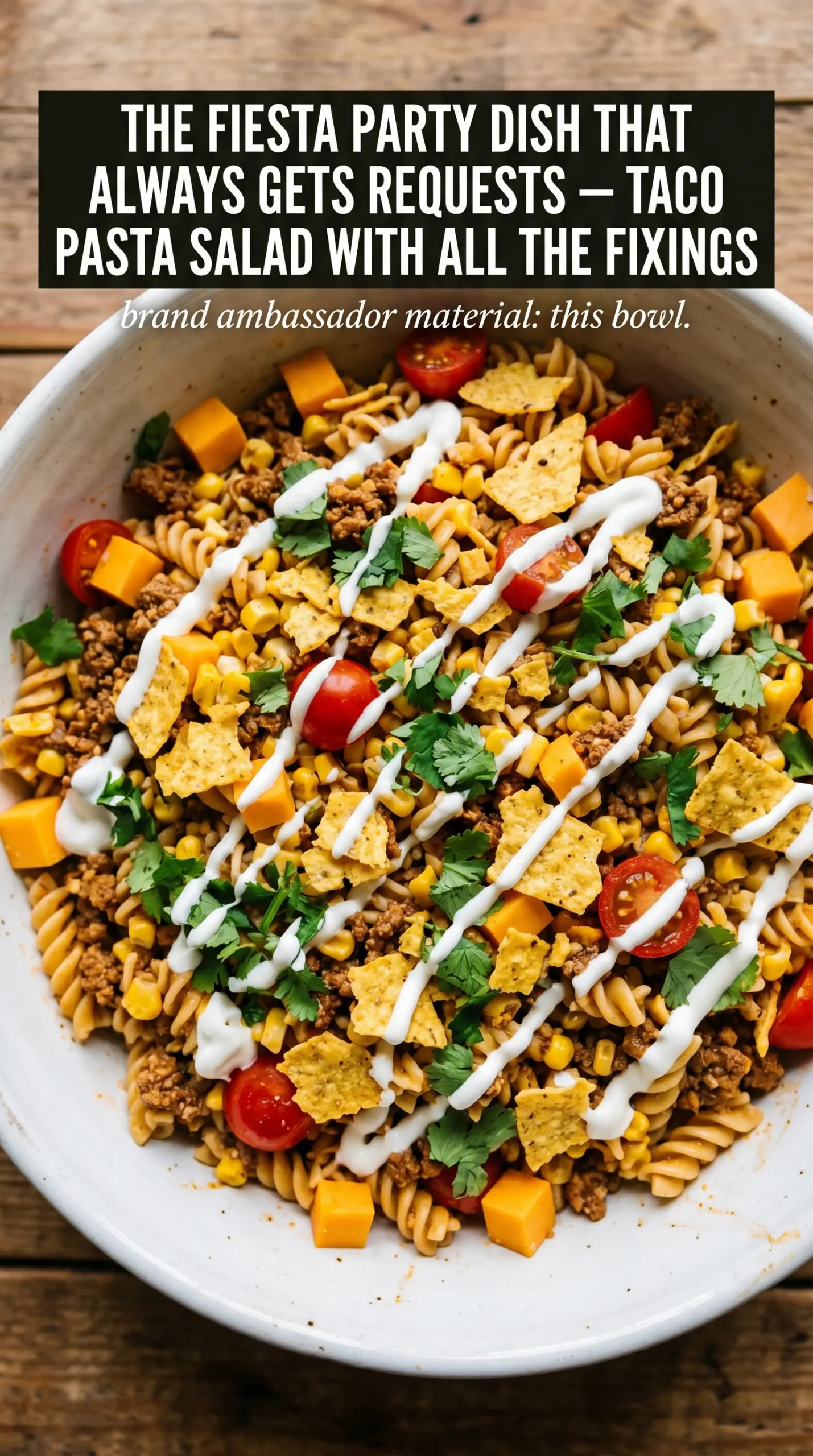
- Pasta shells or rotini — Choose a shape with ridges, curves, or pockets. Smooth pasta doesn’t grab enough dressing, and the salad will taste less seasoned even if everything else is right.
- Ground beef — This gives the salad its taco-night backbone. An 85/15 or 90/10 blend works well; if it’s much fattier, drain it well so the dressing doesn’t get greasy.
- Taco seasoning — This is where the flavor base comes from, so don’t under-season the meat. If you use homemade seasoning, include enough salt, cumin, chili powder, and garlic powder to mimic a full packet.
- Cheddar cheese — Sharp cheddar is best because it stands up to the ranch and salsa. Mild cheddar disappears more easily, especially after chilling.
- Cherry tomatoes, corn, and red onion — These bring freshness, sweetness, and bite. Fresh corn is great, frozen corn works well too, and the onion should be diced small so it blends instead of overpowering each forkful.
- Ranch dressing and salsa — This combination makes the salad creamy without making it bland. If your salsa is very watery, drain off a little excess liquid so the dressing doesn’t thin out too much.
How to Keep the Pasta, Beef, and Toppings in the Right Order
Cooking the Pasta for a Salad, Not a Casserole
Cook the pasta until just al dente, then drain it and rinse it under cold water until it stops steaming. That rinse matters because hot pasta keeps softening in the bowl, and mushy pasta is the fastest way to ruin this salad. Shake off as much water as you can so the dressing clings instead of slipping off into the bottom of the bowl.
Seasoning and Cooling the Beef
Brown the beef until there’s no pink left and the edges have a little color, then add the taco seasoning with the amount of liquid the packet calls for. If the pan looks greasy, drain it before the seasoning finishes reducing. Spread the beef out on a plate or tray to cool quickly; if it goes into the salad hot, the cheese will get slick and the vegetables lose their snap.
Mixing the Dressing Before Anything Else
Stir the ranch and salsa together until the mixture looks smooth and evenly colored. If you see streaks, keep mixing a little longer so you don’t end up with pockets of plain ranch in one bite and sharp salsa in another. Toss the pasta, beef, cheese, tomatoes, corn, and onion with the dressing while everything is cool, then chill the salad for at least two hours so the seasoning settles into the pasta.
Saving the Crunch for the Finish
Hold back the tortilla chips, lettuce, sour cream, and cilantro until just before serving. Chips go soft in the fridge, lettuce wilts, and sour cream can thin the salad if it sits too long. Add those toppings at the table and the whole dish tastes fresher, especially if you’re serving it after a long chill.
Three Ways to Make This Work for a Different Crowd
Swap in ground turkey for a lighter salad
Ground turkey works well if you season it generously and don’t overcook it. It’s leaner than beef, so the salad will taste a little less rich, but the ranch-salsa dressing fills in the gap nicely. Add a small drizzle of olive oil while browning if your turkey is extra lean.
Make it gluten-free without losing the structure
Use your favorite gluten-free pasta shape that can hold up in the fridge, since delicate shapes can break down after chilling. Check that your taco seasoning and ranch dressing are certified gluten-free, because those are the sneaky places gluten often shows up.
Turn it into a vegetarian taco pasta salad
Skip the beef and add black beans or pinto beans for body and protein. The salad will be a little softer and less savory than the original, so lean harder on the taco seasoning and a good sharp cheddar to keep it satisfying.
Storage and Reheating
- Refrigerator: Store covered for up to 3 days. The pasta will soften a little and the chips should always be added fresh, not mixed in ahead of time.
- Freezer: Don’t freeze this salad. The pasta turns soggy, the dairy-based dressing separates, and the vegetables lose their texture after thawing.
- Reheating: This salad is meant to be served cold, so don’t reheat the finished dish. If you want it less chilled, let it sit at room temperature for 15 to 20 minutes before serving instead of warming it.
Questions I Get Asked About This Recipe
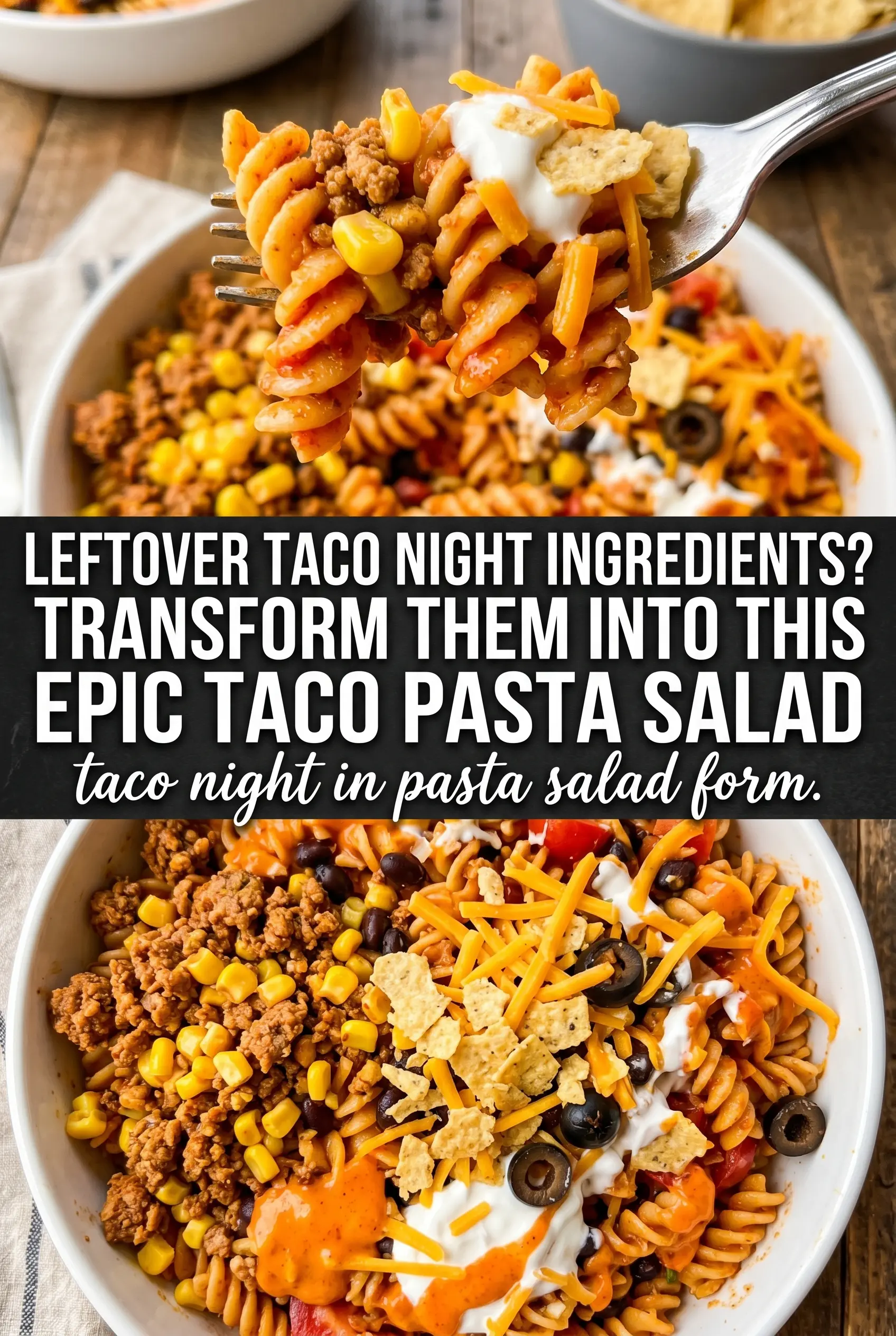
Taco Pasta Salad
Ingredients
Equipment
Method
- Cook the pasta shells or rotini according to package directions, then drain and rinse with cold water to stop the cooking.
- Brown the ground beef in a skillet until cooked through, then stir in the taco seasoning according to package directions and cool the meat completely.
- Mix the ranch dressing with the salsa until smooth and evenly combined.
- Combine pasta shells or rotini, ground beef, cheddar cheese, cherry tomatoes, corn kernels, and red onion in a large bowl.
- Pour the ranch-salsa dressing over the salad and toss to coat so everything is lightly creamy.
- Refrigerate the salad for at least 2 hours.
- Top the chilled salad with crushed tortilla chips, then add lettuce, sour cream, and cilantro right before serving.