Plump cheese tortellini wrapped in a silky carbonara sauce is the kind of dinner that disappears fast and still feels a little special. The pasta brings its own rich, cheesy filling, so the sauce doesn’t need to work as hard to feel complete. Crisp pancetta, plenty of black pepper, and a shower of parmesan turn it into a bowl that tastes bold, creamy, and balanced instead of heavy.
The key here is timing. The eggs and parmesan go onto the pasta off the heat, which keeps the sauce glossy instead of scrambled. Tortellini also changes the game because the filling helps the dish hold onto the sauce in every bite, and the hot pasta water loosens everything into that classic carbonara texture. A little nutmeg rounds out the cheese without making itself obvious.
Below you’ll find the exact moment to add the egg mixture, how much pasta water actually helps, and a few smart swaps if you’re working with bacon instead of pancetta.
The egg-and-parmesan sauce turned silky the second I tossed it with the hot tortellini, and the pancetta stayed crisp instead of getting lost. My husband kept picking black pepper out of the bowl because he wanted more of that bite.
Save this tortellini carbonara for the nights when you want a creamy pasta dinner with crispy pancetta and no separate sauce pan.
The Step That Keeps Carbonara Creamy Instead of Scrambled
Carbonara fails when the eggs hit heat that’s too aggressive. With tortellini, that risk goes up because the pasta arrives hot and the filling holds heat longer than plain noodles. The fix is simple: pull the pan off the burner before the egg mixture goes in, then toss fast enough that the residual heat thickens the sauce instead of setting the eggs in clumps. If the pan is still over flame, the sauce goes grainy before you can save it.
Another detail that matters here is the amount of starchy pasta water. Tortellini doesn’t release quite as much starch as a long noodle, so the sauce can look tight at first. Add the water a splash at a time and keep tossing until the sauce turns glossy and slips around the pasta instead of sitting in a thick coating. That sheen tells you the emulsion formed.
What Each Ingredient Is Actually Doing in This Bowl
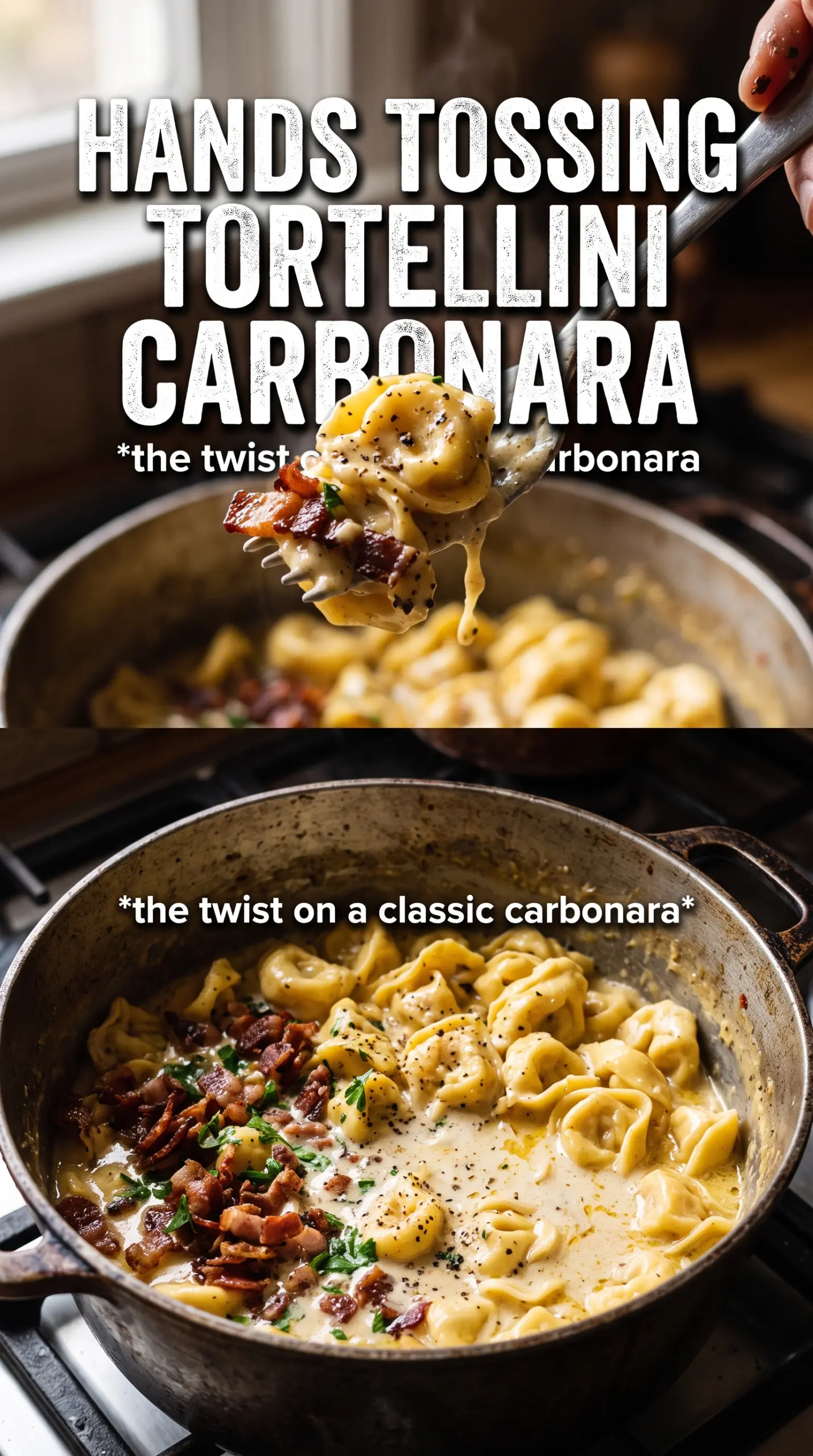
- Refrigerated cheese tortellini — This is the heart of the dish, and the cheese filling gives the sauce more depth than plain pasta would. Fresh refrigerated tortellini holds its shape well and cooks fast, which matters because the carbonara sauce comes together in the final minutes.
- Pancetta or thick-cut bacon — Pancetta gives a cleaner, saltier pork flavor and less smoky competition with the parmesan. Bacon works fine if that’s what you have, but use thick-cut so it stays crisp enough to contrast the sauce instead of dissolving into it.
- Egg yolks plus one whole egg — The yolks bring richness and body, while the whole egg keeps the sauce from feeling overly dense. If you use all yolks, the sauce gets heavier; if you use too much white, it can turn loose and a little foamy.
- Finely grated parmesan — Finely grated cheese melts smoothly and helps the sauce cling. Pre-grated parmesan often has anti-caking agents that can make the sauce a little gritty, so grate it yourself if you can.
- Pasta water — This is the thing that turns the egg-and-cheese mixture into sauce. You need it hot and starchy, not plain water from the tap, because that starch helps bind everything into a silky coating.
- Black pepper and nutmeg — Pepper is not just garnish here; it gives carbonara its edge. Nutmeg stays quiet in the background but keeps the cheese and egg from tasting flat.
Building the Sauce Before the Pasta Cools Down
Crisping the Pancetta
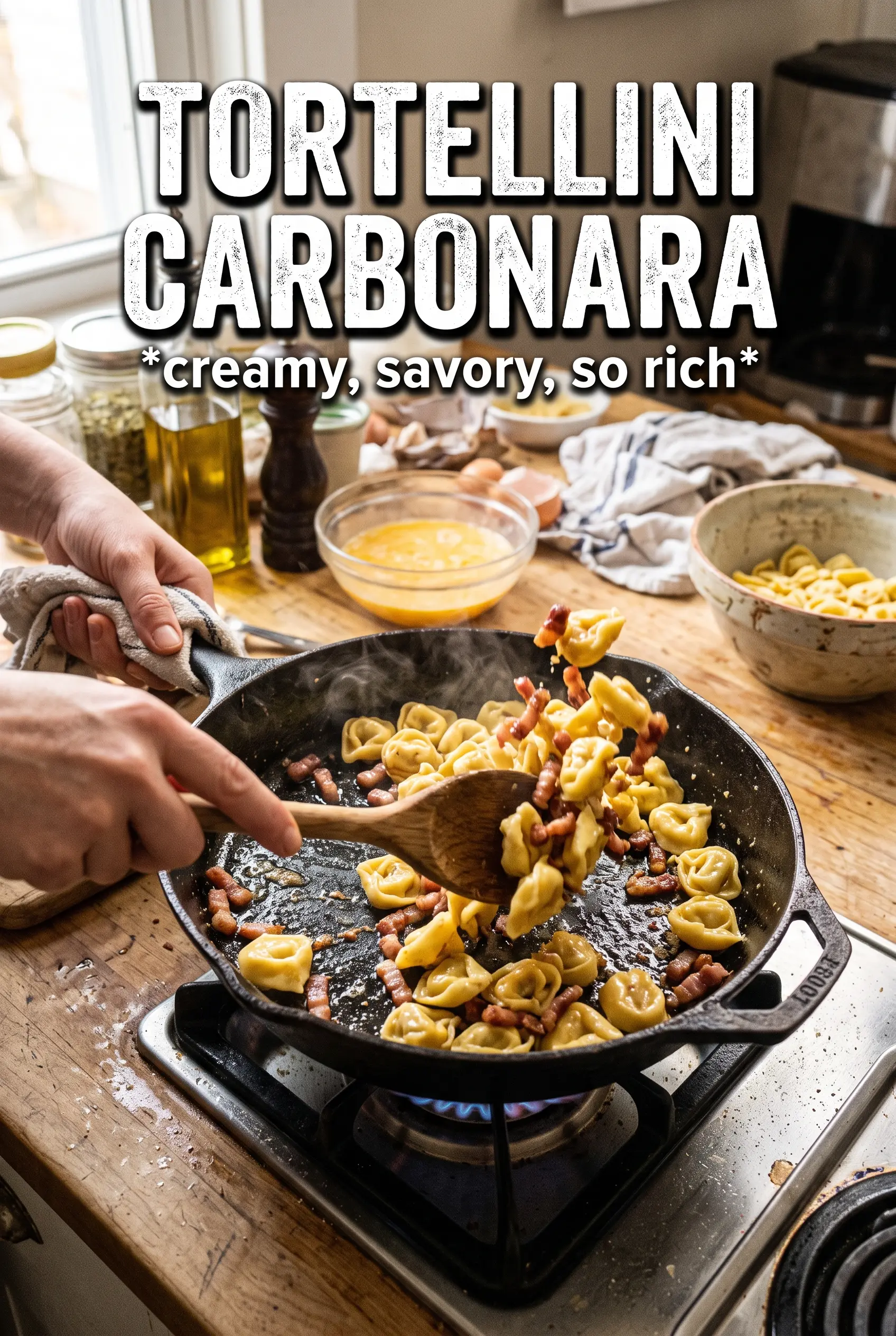
Cook the pancetta over medium heat until the fat renders and the pieces turn deeply golden at the edges. You want crisp, not leathery, because the pancetta has to stand up to the soft tortellini. When the garlic goes in, stir it for about a minute and stop before it browns. Burned garlic turns bitter fast and will throw off the whole pan.
Whisking the Carbonara Base
Combine the egg yolks, whole egg, parmesan, nutmeg, and a generous amount of black pepper in a bowl before the pasta is ready. The mixture should look thick and shaggy, almost like a loose paste, not smooth and pourable yet. That texture helps the cheese distribute evenly so it doesn’t clump when it hits the hot tortellini. If your parmesan is coarse, whisk longer or it will melt unevenly.
Working Off the Heat
Drain the tortellini and add it straight to the pancetta pan while it’s still steaming hot. Take the pan off the burner first, then pour in the egg mixture and toss immediately. The movement matters because it spreads the heat through the sauce instead of letting one spot set too quickly. If the sauce looks tight, add pasta water a spoonful at a time until it turns silky and coats the pasta in a thin, glossy layer.
The Final Seasoning
Taste before you add salt, because pancetta and parmesan already bring plenty. After the sauce is smooth, the only thing it should need is a little more black pepper and maybe a small pinch of salt if the pasta water was especially bland. Finish with parsley for freshness and another dusting of parmesan while the bowl is still warm.
How to Adjust Tortellini Carbonara Without Losing the Creamy Finish
Make It with Bacon Instead of Pancetta
Use the same amount of thick-cut bacon and cook it until the fat is rendered and the edges are crisp. Bacon brings a smokier, sweeter flavor than pancetta, which changes the balance a little, so hold back on extra salt until the end.
Gluten-Free Version
Use a gluten-free refrigerated tortellini that holds up to boiling, and don’t overcook it or the pasta will tear when you toss it with the sauce. The carbonara itself is naturally gluten-free, so the only thing you need to watch is the tortellini brand.
Lighter But Still Creamy
Use one fewer yolk and add an extra splash of pasta water to keep the sauce loose. The result won’t be as rich, but it still tastes cohesive and creamy instead of eggy.
Storage and Reheating
- Refrigerator: Store leftovers in an airtight container for up to 3 days. The sauce will tighten as it chills, and the tortellini will soak up some of the moisture.
- Freezer: I don’t recommend freezing this dish. Egg-based sauces and filled pasta both get mealy after thawing.
- Reheating: Warm it slowly in a skillet over low heat with a splash of water or milk, stirring often. High heat is the fastest way to turn the sauce grainy and overcook the pasta.
Answers to the Questions Worth Asking
Tortellini Carbonara
Ingredients
Equipment
Method
- Bring well-salted water to a boil in a Dutch oven, then cook the refrigerated cheese tortellini until tender, about 7–10 minutes. Reserve 1 cup of pasta cooking water and set the tortellini aside.
- In a cast iron skillet over medium heat, cook the diced pancetta until crispy, about 6–8 minutes. Add the minced garlic and cook 1 minute, then remove the pan from the heat.
- In a bowl, whisk the 4 egg yolks, 1 whole egg, finely grated parmesan, nutmeg, and generous black pepper until smooth and uniform.
- Add the hot tortellini to the pancetta pan off the heat, then quickly pour in the egg mixture. Toss vigorously immediately to coat.
- Add reserved pasta water a splash at a time while tossing until silky and creamy, 30–60 seconds. Season with salt to taste, then top with fresh parsley and extra parmesan plus more black pepper.