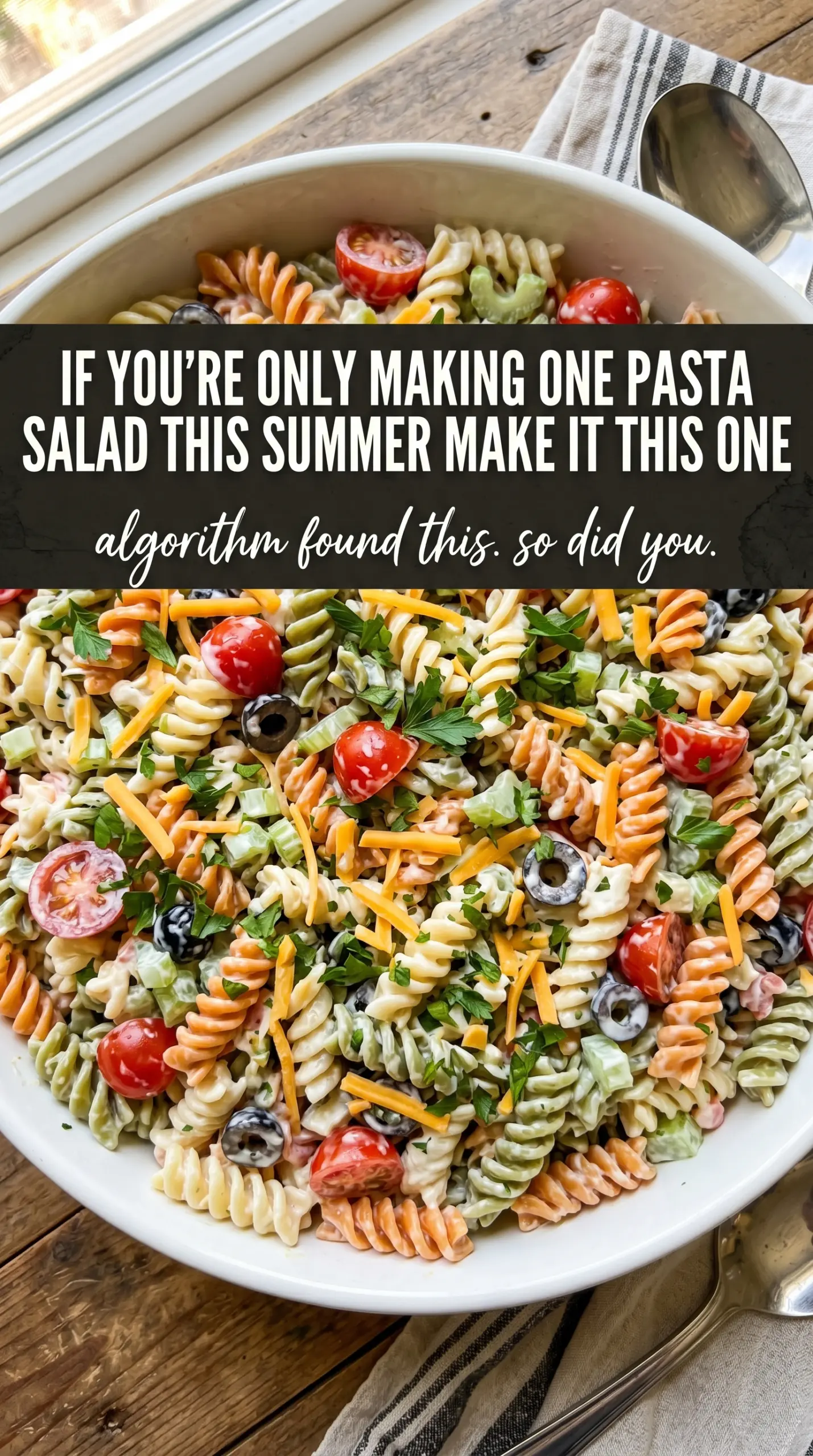
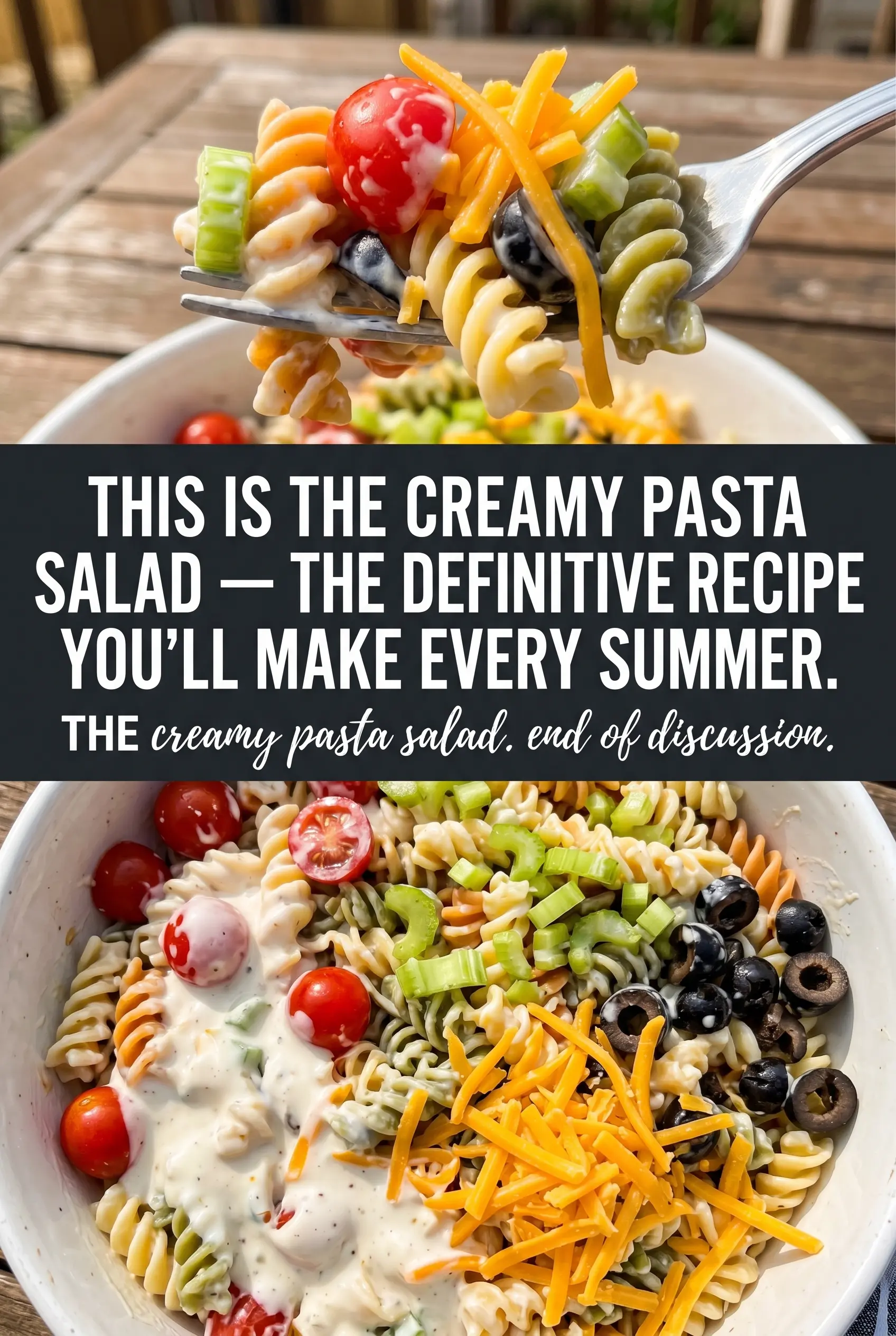
Cold, creamy pasta salad only works when the dressing clings to every curve of the noodle without turning heavy or watery. This version stays bright, balanced, and spoonable even after hours in the fridge, which is why it earns a spot at potlucks, cookouts, and make-ahead lunches. The ham, cheddar, peas, and crunchy vegetables give it the kind of mix that keeps every bite interesting.
The difference here is in the dressing. Mayo brings body, sour cream adds tang, and a little milk loosens everything just enough so it coats the pasta instead of sitting in a thick blob at the bottom of the bowl. Vinegar and Dijon keep the whole thing from tasting flat, and the chill time lets the pasta absorb the dressing instead of just wearing it on the outside.
Below, I’ll show you the one step that keeps creamy pasta salad from getting dry in the fridge, plus a few smart swaps if you want to adjust the mix-ins for what you have on hand.
The dressing coated everything beautifully, and after chilling it for a few hours the pasta had soaked up the flavor without getting mushy. I added a little extra milk before serving and it was perfect.
Like this creamy pasta salad? Save it to Pinterest for your next potluck, picnic, or make-ahead side dish.
The Dressing Needs to Be Looser Than You Think
Most creamy pasta salads fail after a few hours because the dressing starts off too thick. Pasta keeps drinking moisture as it chills, so a dressing that seems perfect right after mixing can turn pasty by the time it hits the table. This version starts a little looser on purpose, which gives the macaroni room to absorb flavor without drying out the whole bowl.
The other mistake is skipping the acid. Mayo and sour cream need help to taste fresh against ham and cheddar, and the vinegar plus Dijon cut through the richness so the salad tastes balanced instead of heavy. If your pasta salad has ever gone bland in the fridge, that’s usually the problem.
- Elbow macaroni — The little curves grab dressing better than straight pasta. Cook it just to al dente, then rinse it cold so it stops cooking and stays separate in the bowl.
- Mayonnaise and sour cream — Mayo gives the body, sour cream gives the tang. You can swap in all mayo in a pinch, but the salad will taste flatter and heavier.
- Milk — This is what keeps the dressing from setting up like frosting after chilling. Add it gradually; too much and the salad turns thin instead of creamy.
- Ham and cheddar — These make the salad eat like a full side instead of just pasta in dressing. Use good cheddar if you can; pre-shredded cheese is fine in a pinch, but cubed cheese gives a better bite.
- Peas, celery, bell pepper, and red onion — They bring crunch, sweetness, and color. Thaw the peas first and dice the onion finely so nothing tastes sharp or icy.
What Each Ingredient Is Actually Doing in a Looser Dressing
- Oil as the main component — Oil keeps the dressing thin and allows it to coat everything evenly without clumping. Use more oil than you think you need.
- Vinegar or lemon juice — The acid cuts through the oil and prevents the dressing from feeling greasy. It should be sharp enough that the oil feels bright instead of slick.
- Minimal mayo or none at all — Heavy mayo makes the dressing thick and gloppy. A thin dressing coats better and lets the vegetables and pasta shine.
- Water or light broth (optional) — A splash of liquid thins the dressing and helps it distribute. This prevents you from using too much oil to make the dressing looser.
- Fresh herbs — These add flavor without adding body. Tender herbs especially work well in thin dressings where they stay visible and bright.
- Garlic and shallot — Raw aromatics give the dressing character. They become mellow as they sit in the acid, so raw garlic doesn’t overwhelm.
- Salt and pepper to taste — Season boldly since the thin dressing needs strong seasoning to taste like anything. The liquid carries the seasoning throughout.
- Optional: Dijon mustard — Just a small amount helps emulsify the oil and acid, making a looser dressing feel more cohesive.
The Chill Time That Turns It Into Pasta Salad
Cooking the Pasta
Boil the macaroni until it’s just tender with a little bite left in the center. If it goes soft in the pot, it’ll go mushy in the fridge. Drain it well, then rinse under cold water until it’s no longer warm so the dressing doesn’t slide off and separate.
Whisking the Dressing
Stir the mayonnaise, sour cream, milk, vinegar, sugar, mustard, salt, and pepper until the mixture looks smooth and glossy. The dressing should pour easily but still coat the back of a spoon. If it seems stiff, add a tablespoon more milk instead of dumping in a big splash at once.
Combining and Chilling
Fold the pasta, ham, cheese, peas, celery, bell pepper, and onion together first, then pour the dressing over everything. Toss until every piece is coated, scraping the bottom of the bowl so nothing gets left behind. Cover and chill for at least 3 hours; overnight is even better because the flavors settle in and the texture evens out.
Serving It Cold Without Letting It Dry Out
Stir the salad before serving because the dressing always settles a little as it chills. If it looks tight or dry, add a splash of milk and fold it in gently. That last adjustment brings back the creamy texture without making the salad soupy.
How to Adjust the Bowl Without Losing the Creamy Texture
Make it bacon-and-cheddar heavy
Swap the ham for cooked bacon or use half of each. Bacon adds a smoky edge, but it also loses its crunch after chilling, so keep some pieces for the final garnish if texture matters to you.
Skip the meat for a vegetarian version
Leave out the ham and add extra peas, chopped cucumber, or diced cherry tomatoes right before serving. The salad still works because the dressing is carrying the flavor, but it’ll taste a little lighter and less savory.
Make it gluten-free
Use a sturdy gluten-free elbow pasta and cook it just to tender. Gluten-free pasta can get soft faster, so chill it as soon as it’s cool and don’t let it sit warm in the dressing for long.
Storage and Reheating
- Refrigerator: Store covered for up to 4 days. The pasta will keep soaking up dressing, so expect it to thicken a bit each day.
- Freezer: I don’t recommend freezing this one. The dairy dressing separates and the vegetables lose their crunch once thawed.
- Reheating: This salad is meant to be served cold. If it stiffens in the fridge, stir in a splash of milk and let it sit at room temperature for 10 to 15 minutes before serving.
Answers to the Questions Worth Asking
Ultra-Creamy Pasta Salad with Ham, Cheddar, and Tangy Dressing
Ingredients
Equipment
Method
- Bring water to a boil, then cook elbow macaroni according to package directions until tender. Drain and immediately rinse under cold water to stop the cooking and keep the pasta from clumping.
- Whisk mayonnaise, sour cream, milk, vinegar, sugar, Dijon mustard, salt, and pepper in a bowl until smooth and thick. Stop whisking once the dressing looks uniform with no streaks.
- In a large bowl, combine the cooked macaroni, diced ham, cubed cheddar, thawed peas, diced celery, diced red bell pepper, and finely diced red onion. Fold until the add-ins are evenly distributed.
- Pour the dressing over the pasta salad and toss until everything is evenly coated with a creamy sheen. Scrape the bottom and sides once during tossing so no dry pasta remains.
- Cover and refrigerate for at least 3 hours or overnight to let the flavors meld and the texture thicken. Chill until cold and scoopable, then rest at least 3 hours total before serving.
- Stir the pasta salad before serving, then add a splash of milk only if the dressing looks too thick. Look for a glossy, creamy coating on the pasta as your visual cue.