Vegetarian taco soup lands in that sweet spot between weeknight-easy and bowl-emptying good. It has a brothy, tomato-rich base that still eats like a full meal, with three kinds of beans for heft, sweet corn for pops of texture, and just enough spice to keep every spoonful interesting. The best part is how the flavors settle into each other as it simmers; by the time it hits the table, it tastes like it cooked all afternoon even though it comes together fast.
What makes this version work is the layering. The onion and bell pepper go in first so they soften and sweeten before the garlic and spices hit the pan. That quick bloom wakes up the taco seasoning, cumin, chili powder, and smoked paprika, which keeps the soup from tasting flat or canned. Fire-roasted tomatoes also matter here because they bring a deeper, slightly smoky edge that balances the beans and broth.
Below, I’ve added the small details that keep the soup from turning bland or muddy, plus a few variations for making it dairy-free, thicker, or even more filling.
The soup thickened up just enough after simmering, and the lime at the end made the whole pot taste brighter. My husband went back for a second bowl before I’d even gotten mine topped with avocado.
Love how hearty and colorful this vegetarian taco soup is? Save it to Pinterest for an easy bean-packed dinner with avocado, lime, and tortilla chips on top.
The Secret to Keeping Vegetarian Taco Soup Bold Instead of Blah
The biggest trap with meatless taco soup is leaning on the beans and tomatoes alone and calling it done. That gives you volume, not depth. This soup needs the onion, bell pepper, taco seasoning, cumin, chili powder, and smoked paprika to be cooked together for a minute before the broth goes in, because dry spices bloom in hot oil and taste rounder after that short sizzle.
The other thing that matters is using a mix of beans and tomatoes instead of one big can of something. Black beans bring creaminess, pinto beans soften into the broth, and kidney beans hold their shape. Fire-roasted tomatoes add a little charred backbone, while Rotel gives the soup its built-in seasoning and gentle heat.
- Don’t skip the spice bloom. If the seasoning goes straight into broth, it tastes thinner and more one-note. Let it fry briefly with the vegetables so the oil carries the flavor through the whole pot.
- Use fire-roasted tomatoes if you can. They give the soup a darker, richer base than plain diced tomatoes. If you only have standard diced tomatoes, the soup still works, but it tastes a little brighter and less smoky.
- Rinse the beans, but drain the tomatoes. Rinsed beans keep the broth from turning muddy and overly salty. The tomato juices, on the other hand, belong in the pot.
What Each Can Is Actually Doing Here
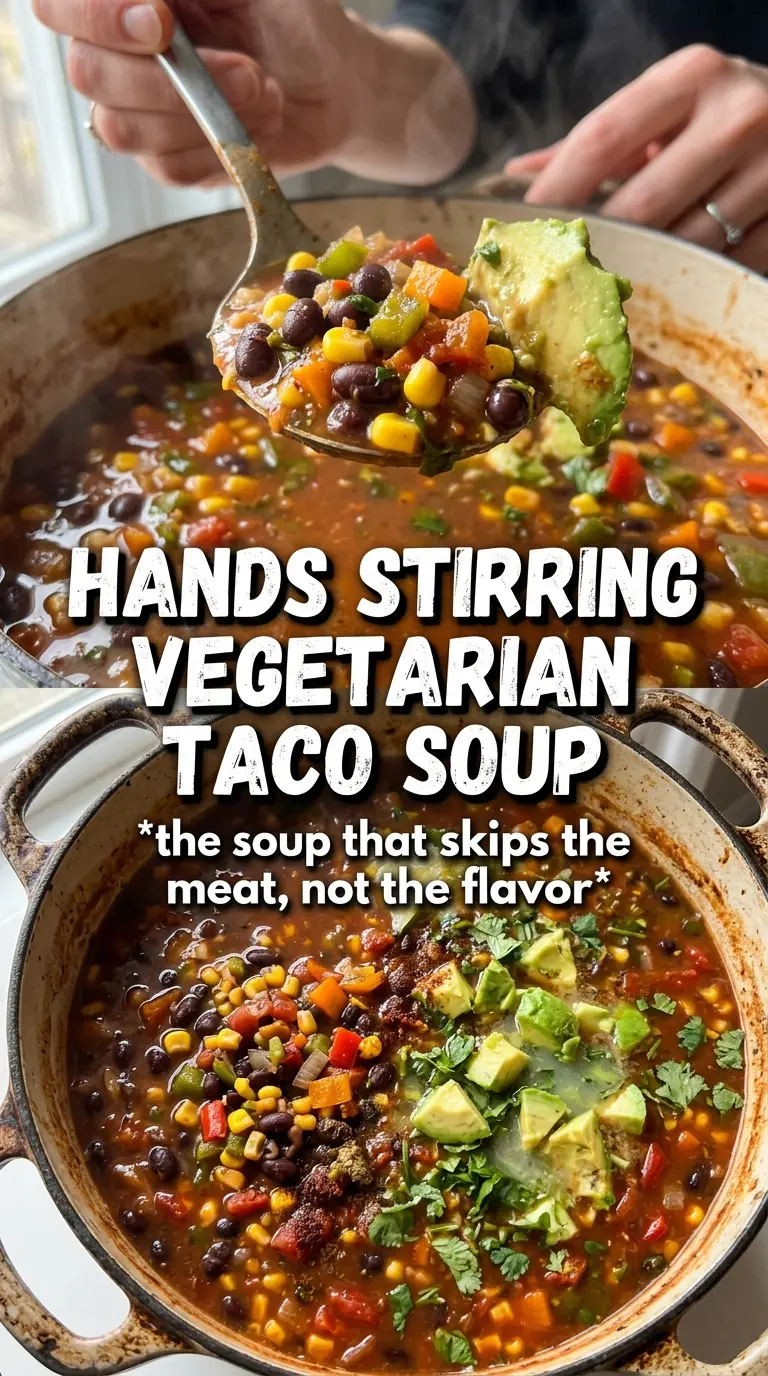
The canned ingredients are doing the heavy lifting, so quality matters more than you might think. You don’t need fancy beans, but you do want tomatoes with enough flavor to stand up to the broth. Rotel brings seasoning and a little heat in one can, while the fire-roasted tomatoes deepen the soup so it doesn’t taste like spiced vegetable juice.
- Black, pinto, and kidney beans — Using all three gives the soup better texture than one bean alone. If you’re short on one type, swap in another bean you have, but keep at least two varieties so the soup still feels layered.
- Vegetable broth — This is the liquid that ties everything together. Use a broth you’d actually drink, because a weak broth makes the whole pot taste flat.
- Bell pepper and onion — These need a quick sauté before anything else. That step softens their raw edge and gives the soup a sweeter base that canned ingredients can’t create on their own.
- Taco seasoning plus cumin, chili powder, and smoked paprika — The packet gives you convenience, but the extra spices make the flavor taste homemade instead of one-dimensional. Smoked paprika is especially useful here because it adds a subtle roasted note without making the soup hot.
Building the Pot in the Right Order
Softening the vegetables first
Heat the olive oil in a large pot, then cook the onion and bell pepper until they look glossy and the onion turns translucent at the edges. You’re not trying to brown them hard; you’re pulling sweetness out of them. If they stay crunchy, that raw edge will hang around in the finished soup. The pot should smell mellow and savory before you add the garlic.
Waking up the spices
Add the garlic and cook it for about a minute, just until it stops smelling sharp. Then stir in the taco seasoning, cumin, chili powder, and smoked paprika so the spices coat the vegetables and hit the hot oil. That quick contact is what gives the soup depth. If you add the broth first, the spices float instead of blooming.
Letting the soup simmer into itself
Pour in the beans, corn, tomatoes, and broth, then bring everything to a boil before lowering it to a steady simmer. Fifteen to twenty minutes is enough for the flavors to meld and the broth to pick up body from the tomatoes and beans. If you simmer too hard, the beans break down too much and the broth turns muddy instead of clear and hearty.
Finishing with the toppings that matter
Salt and pepper at the end, after the soup has simmered, because canned ingredients vary a lot in saltiness. Then top each bowl with avocado, cilantro, lime, sour cream, and crushed tortilla chips. The lime is not just garnish; it sharpens the tomato flavor and makes the whole bowl taste fresher.
How to Adapt This Soup Without Losing What Makes It Good
Make it dairy-free and still creamy
Skip the sour cream or use vegan sour cream on top. Avocado gives the same cooling contrast without changing the broth, and a little extra lime keeps the bowl bright even without dairy.
Make it thicker and more chili-like
Mash a few spoonfuls of beans against the side of the pot before serving, or simmer it uncovered for a few extra minutes. That gives the broth a thicker, cozier texture without changing the ingredient list.
Add more protein without changing the flavor
Stir in an extra can of beans or some crumbled cooked tofu near the end. The soup already has enough seasoning to carry more bulk, but add the tofu late so it doesn’t overcook and turn spongy.
Make it gluten-free
The soup itself is naturally gluten-free as long as your taco seasoning and broth are certified gluten-free. Use corn tortilla chips for topping, and check the label on any vegan sour cream if you’re serving someone sensitive.
Storage and Reheating
- Refrigerator: Store for up to 4 days. The beans absorb broth as it sits, so it thickens a bit in the fridge.
- Freezer: Freezes well for up to 3 months. Cool it completely first, then freeze in portions so it thaws evenly.
- Reheating: Warm it gently on the stovetop over medium-low heat, adding a splash of broth or water if needed. Don’t boil it hard, or the beans can split and the tomatoes can lose their fresh edge.
Questions I Get Asked About This Recipe
Vegetarian Taco Soup
Ingredients
Equipment
Method
- Heat 1 tablespoon olive oil in a large pot over medium heat, then sauté onion and bell pepper for 4-5 minutes until softened.
- Add garlic and cook for 1 minute, stirring, until fragrant—do not let it brown.
- Stir in taco seasoning, cumin, chili powder, and smoked paprika and cook for 30 seconds to bloom the spices.
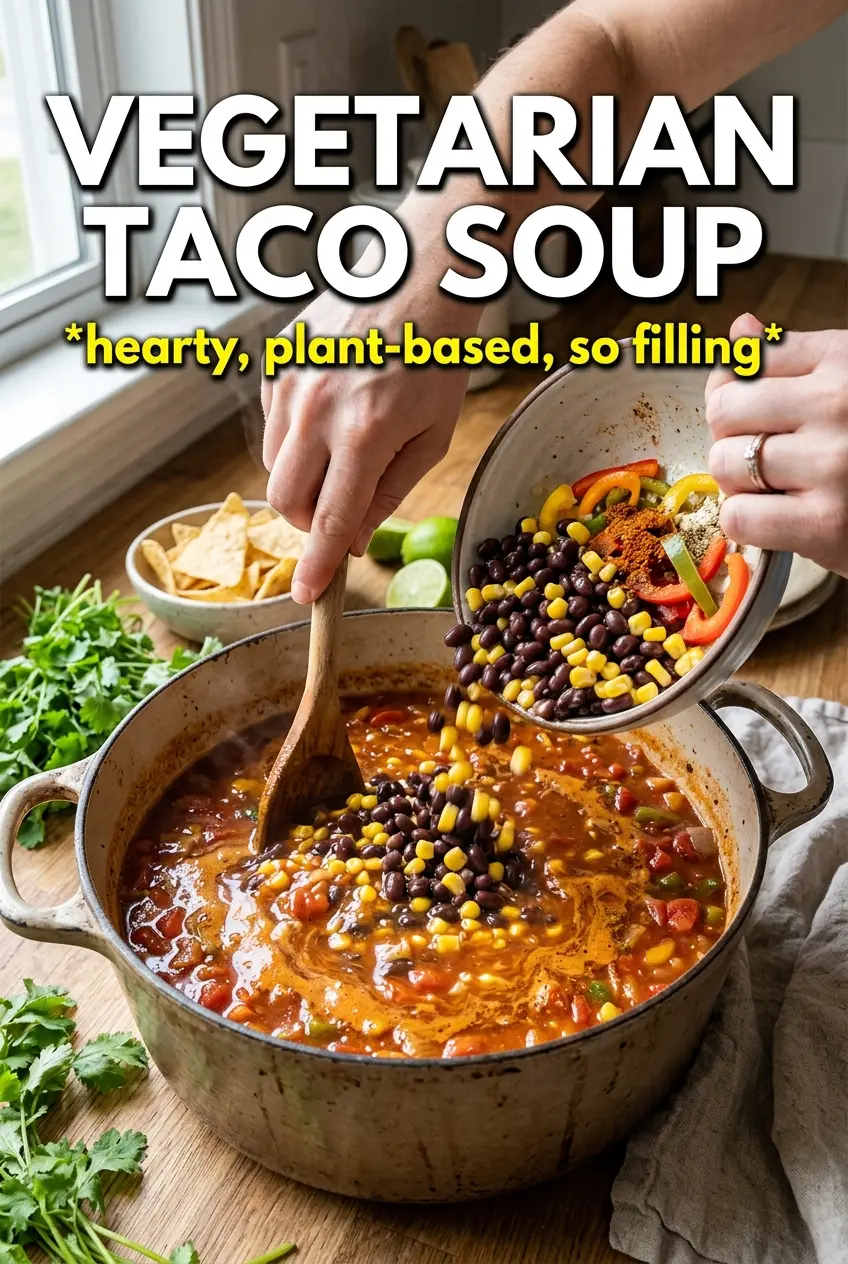
- Add black beans, pinto beans, kidney beans, corn, Rotel tomatoes, diced tomatoes, fire-roasted tomatoes, and vegetable broth, then bring the mixture to a boil.
- Reduce to a simmer and cook for 15-20 minutes until the flavors meld and the broth tastes well seasoned.
- Season with salt and pepper to taste, then serve hot with avocado, cilantro, lime wedges, sour cream (or vegan sour cream), and tortilla chips on top.