Warm German potato salad lands on the table with tender potatoes, crisp bacon, and a tangy dressing that sinks into every slice instead of sitting on top. It’s the kind of side dish that disappears fast because it tastes bright and savory at the same time, with just enough sweetness to round out the vinegar.
The trick is timing. The potatoes need to be warm when the dressing goes on, and the bacon drippings do more than add flavor — they carry the onions, vinegar, mustard, and broth into a dressing that clings instead of pooling at the bottom of the bowl. Red potatoes hold their shape better than starchy varieties, so you get slices that stay intact after tossing.
Below you’ll find the small details that matter here, from the best potato texture to the point where the dressing is hot enough to absorb but not so aggressive that it breaks the potatoes apart. I’ve also included a few smart swaps and the storage note I actually rely on when I make this ahead.
The potatoes soaked up the warm bacon-vinegar dressing perfectly, and the onions softened just enough without turning mushy. I served it warm and there wasn’t a spoonful left.
Save this warm German potato salad for the bacon-vinegar dressing and tender red potatoes that hold their shape.
The Part That Keeps the Potatoes from Turning Heavy
The biggest mistake with warm potato salad is letting the potatoes cool down before the dressing goes on. Once that happens, they stop absorbing flavor and the vinaigrette just coats the outside. Warm potatoes act like a sponge, especially when they’ve been drained well and still hold a little surface heat.
The other thing that matters is the dressing temperature. It should be hot enough to dissolve the sugar and loosen the mustard, but not boiling hard once it hits the bowl. A gentle simmer is enough. If it boils aggressively after the vinegar goes in, the onions can turn harsh and the bacon drippings can separate instead of blending into a glossy dressing.
What the Bacon, Vinegar, and Mustard Are Each Doing Here
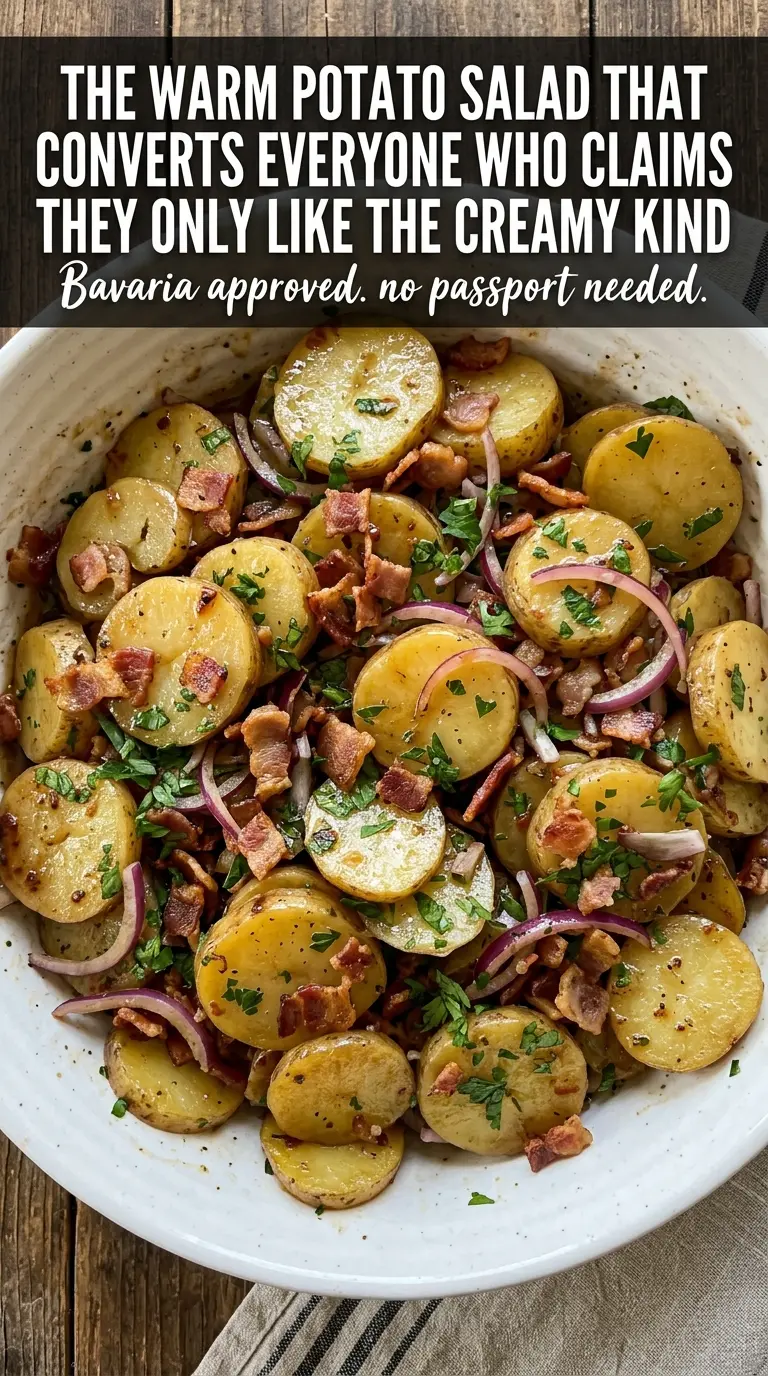
- Red potatoes — These hold their shape better than russets, which means the slices stay intact after tossing. Waxy potatoes are the right call for a salad that gets stirred while warm.
- Bacon drippings — This is the base of the dressing, and it gives the salad its deep savory edge. If you skim too much fat away, the dressing gets thin and the final salad tastes flatter.
- Apple cider vinegar — This gives the salad its sharp, clean tang. White vinegar works in a pinch, but cider vinegar has a rounder bite that fits the bacon better.
- Dijon mustard — It helps the dressing emulsify and keeps the vinegar from tasting one-note. You don’t need much, but leaving it out makes the dressing feel less complete.
- Chicken broth — This loosens the dressing just enough so it can soak into the potatoes instead of clinging in oily streaks. Vegetable broth works if that’s what you have, but the finished flavor will be a little less savory.
- Fresh parsley — Add it at the end so it stays bright and green. Dried parsley won’t give the same fresh finish.
Building the Dressing While the Potatoes Are Still Hot
Cooking the Potatoes
Boil the sliced potatoes until a fork slides in without resistance, but stop before they start falling apart. Thin slices cook fast, so keep an eye on them after about 12 minutes. If they’re overcooked, they’ll break when you toss them with the dressing and the whole salad turns mashed at the edges.
Rendering the Bacon and Softening the Onion
Cook the bacon until crisp, then drain it and save three tablespoons of the drippings. That amount is enough for flavor without making the salad greasy. Sauté the onion until soft and translucent; if it browns too hard, the vinegar will pull out a bitter note that doesn’t belong here.
Finishing the Hot Dressing
Stir in the vinegar, sugar, mustard, and broth, then bring the mixture to a simmer. You’re looking for a dressing that smells sharp and savory but tastes balanced, not aggressively sweet or sour. Pull it off the heat once the sugar dissolves and the liquid looks unified. That’s the point where it’s ready to sink into the potatoes.
Tossing and Serving
Pour the hot dressing over the warm potatoes and toss gently with the bacon and parsley. Use a wide spoon or spatula and fold instead of stirring hard. The potatoes should look glossy and evenly coated, with a little dressing left clinging in the bowl. Serve it warm, while the bacon still has some texture and the dressing hasn’t settled.
How to Adapt This Without Losing What Makes It Work
Make It Gluten-Free
This recipe is naturally close to gluten-free, but check the chicken broth and Dijon to confirm both are certified gluten-free. The texture and flavor stay the same, so this is one of the easiest swaps to make without changing the dish.
Use Vegetable Broth for a Pork-Free Version
Swap the chicken broth for vegetable broth and skip the bacon, then add a spoonful of olive oil plus a pinch of smoked paprika to replace some of the savory depth. The salad will be lighter and less smoky, but it still keeps the warm-vinegar character that makes it recognizable.
Dial Back the Sweetness
Cut the sugar to 1 tablespoon if you like a sharper dressing. The vinegar will come forward more, and the result tastes a little closer to a deli-style warm potato salad. Don’t remove the sugar entirely unless your vinegar is very mild, or the dressing can taste too harsh.
Storage and Reheating
- Refrigerator: Store leftovers in an airtight container for up to 4 days. The potatoes will firm up as they chill, and the dressing will soak in more overnight.
- Freezer: I don’t recommend freezing this salad. Potatoes turn grainy after thawing, and the warm vinaigrette loses the texture that makes it work.
- Reheating: Warm it gently in a skillet over low heat or in the microwave at medium power in short bursts. If it looks dry, stir in a splash of broth or water; high heat is what makes the potatoes split and the dressing taste sharp.
Answers to the Questions Worth Asking
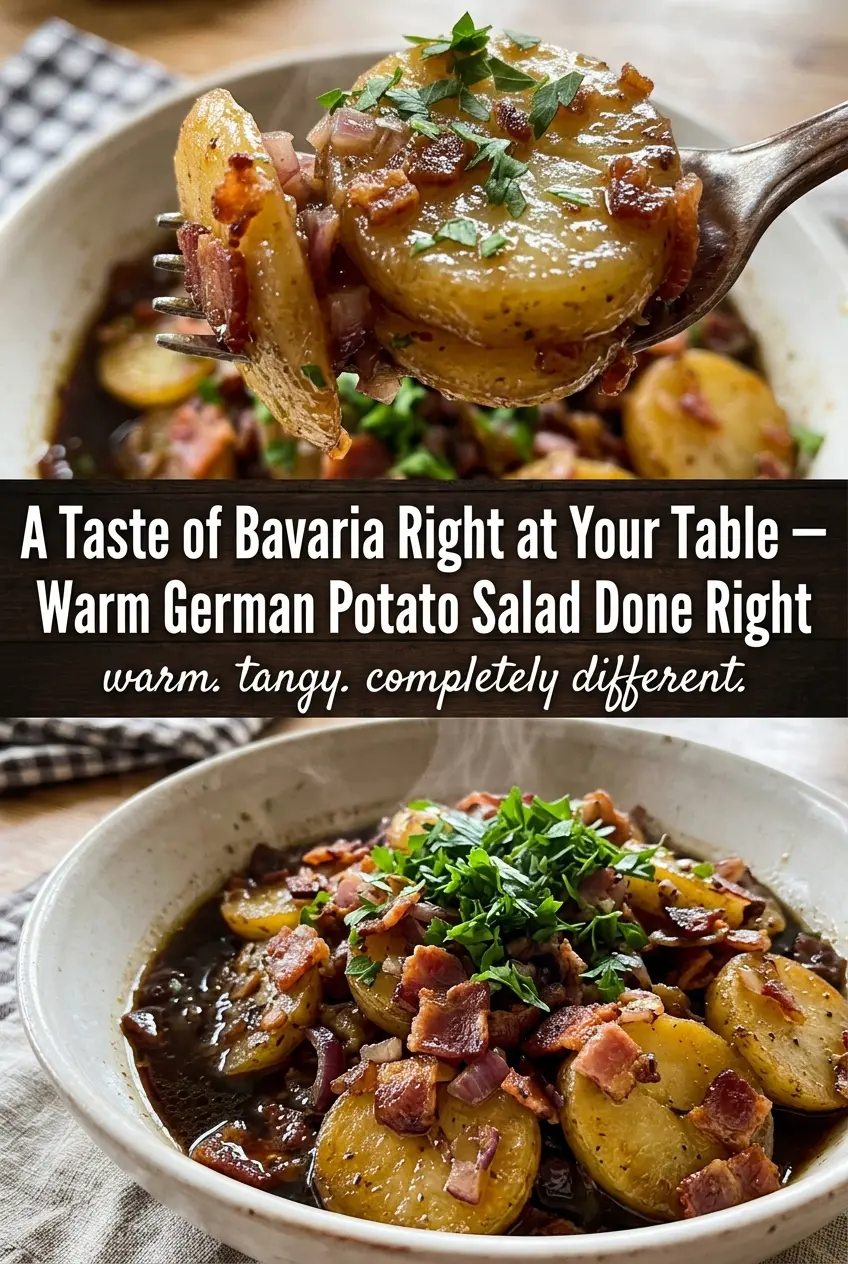
Warm German Potato Salad
Ingredients
Equipment
Method
- Bring a pot of water to a boil and add the sliced red potatoes, cooking until tender, about 15 minutes. Visual cue: the slices should pierce easily with a fork.
- Drain the potatoes and keep them warm while you cook the bacon and dressing. Visual cue: steam should still rise from the drained potatoes.
- Cook the bacon in a skillet over medium heat until crispy, about 10 minutes, then drain and crumble, and set aside. Visual cue: bacon pieces should be browned with a crisp edge.
- Reserve 3 tablespoons of bacon drippings in the skillet. Visual cue: you should have a thin, shimmering layer of fat.
- Sauté the diced onion in the reserved bacon drippings until soft, about 5 minutes. Visual cue: onion pieces should turn translucent and glossy.
- Add the apple cider vinegar, sugar, Dijon mustard, and chicken broth to the skillet, then bring to a simmer. Visual cue: small bubbles should form around the edges and the sauce should look slightly thickened.
- Pour the hot dressing over the warm potatoes. Visual cue: the potatoes should start looking glossy and coated right away.
- Add the crumbled bacon and chopped fresh parsley, then toss gently to combine. Visual cue: parsley should be evenly scattered without breaking the potato slices.
- Serve the German potato salad warm. Visual cue: bacon-vinegar dressing should look shiny at the bottom of the bowl.