Warm potatoes, wilted spinach, and crisp bacon tucked into a sharp vinaigrette make this salad land somewhere between comfort food and a bright side dish that cuts through rich mains. It eats like something that was meant to be served straight from the pan, with the potatoes holding their shape and the spinach just collapsing enough to catch every bit of dressing.
The trick is timing. The potatoes need to stay warm so they can drink in the bacon vinaigrette, and the dressing has to go over the spinach while it’s still hot enough to soften the leaves without turning them slick or soggy. Red potatoes are the right choice here because they stay intact after boiling, and Dijon gives the dressing body so it clings instead of pooling at the bottom of the bowl.
Below, I’m walking through the small details that keep this from turning heavy or bland, plus a few variations for making it fit what you’ve got in the fridge.
The potatoes soaked up the bacon dressing without falling apart, and the spinach wilted just enough to stay silky instead of mushy. I served it warm with grilled chicken and there wasn’t a bite left.
Save this warm spinach potato salad with bacon vinaigrette for the nights when you want a side dish that hits smoky, tangy, and comforting all at once.
The Part Most Potato Salads Get Wrong
The mistake with warm potato salads is treating the dressing like it can wait. It can’t. The potatoes need to meet the vinaigrette while they’re still hot, and the spinach needs that same heat to relax just enough. If the potatoes cool too far, the dressing slides off instead of soaking in, and if the spinach sits under the hot potatoes too long before the dressing goes on, it turns limp in a heavy way instead of soft and glossy.
This version also depends on balance. Bacon drippings bring smoke and salt, but the vinegar and Dijon keep the dish from eating flat. The sugar isn’t there to make it sweet; it rounds out the sharp edges so the dressing tastes layered instead of harsh. That’s what lets the whole salad work as a side dish instead of a breakfast hash in disguise.
- Red potatoes — These hold their shape after boiling and still feel creamy at the center. Waxy potatoes are the right choice; russets will break down too much and turn the bowl starchy.
- Bacon drippings — This is the backbone of the dressing. Strain off excess if there’s an especially heavy amount, but don’t replace all of it with oil or you’ll lose the smoky depth that makes the salad taste like itself.
- Dijon mustard — Dijon helps the vinaigrette emulsify, which means it clings to the potatoes instead of separating in the bowl. Yellow mustard won’t give the same sharpness or body.
- Red wine vinegar — The clean acidity wakes up the potatoes and cuts the bacon. If you need a substitute, use apple cider vinegar in the same amount; it’s a little softer but still does the job.
What Each Ingredient Is Actually Doing Right in This Salad
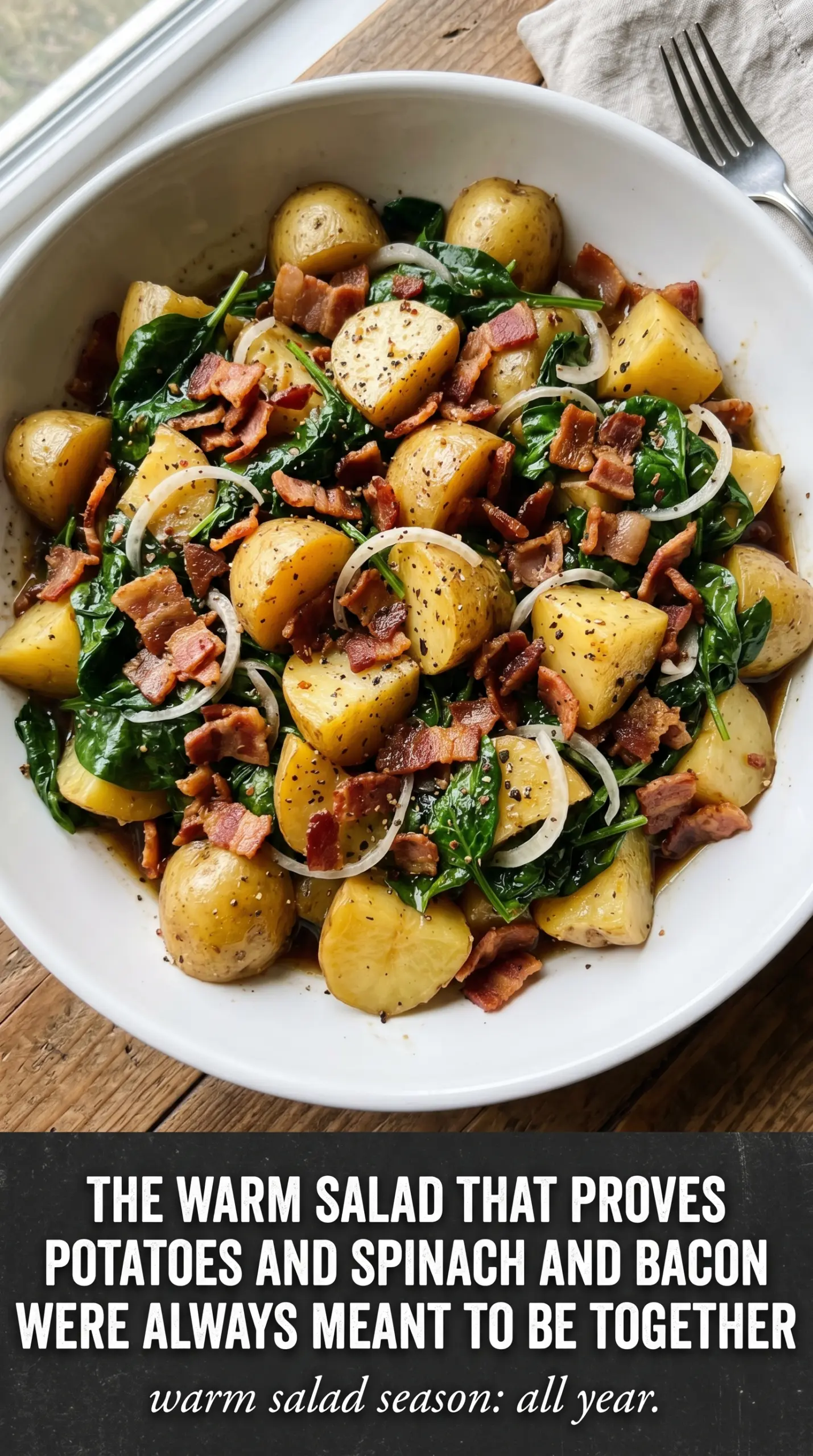
- Waxy potatoes cooked just until tender — This is where most potato salads go wrong. Starting with the right potato variety and not overcooking is 80% of the work.
- Ice bath immediately after cooking — Cooling the potatoes stops the cooking and sets the structure. Delayed cooling lets them continue to soften.
- Dressing added when potatoes are completely cool — Cool potatoes absorb dressing evenly without falling apart. Warm potatoes become mushy.
- Mayonnaise that’s good quality — The mayo is the foundation, so use one you like. Full-fat mayo from a good brand makes a difference in the final texture.
- Acid to brighten the mayo — Vinegar or lemon juice prevents the salad from tasting flat or heavy. This small addition makes the whole salad taste better.
- Fresh ingredients (eggs, vegetables, herbs) — Stale ingredients make the whole salad taste tired. Everything should taste fresh and high-quality.
- Gentle folding to combine — The only time the potatoes might break is during mixing. Fold slowly and stop as soon as everything is coated.
- Chilling time before serving — At least 2 hours lets the flavors settle and the dressing thicken. This step makes a real difference in the final taste and texture.
Building the Bacon Vinaigrette Before the Potatoes Cool Down
Cooking the Potatoes to Tender, Not Fragile
Boil the potato slices until a knife slides in without resistance, but stop before they start flaking at the edges. You want them fully cooked and still able to hold their shape when tossed. Drain them well and keep them warm; wet potatoes thin the dressing and make the salad taste washed out.
Rendering the Bacon and Sweating the Onion
Cook the bacon until crisp, then move it out of the pan and leave just enough drippings behind to coat the onion. The onion should soften and turn translucent, not brown aggressively, because you want sweetness and savoriness, not a fried-onion flavor. If the pan looks dry, the bacon was lean; add a small spoonful of oil so the onion doesn’t scorch.
Finishing the Dressing in the Pan
Stir in the vinegar, Dijon, sugar, salt, and pepper while the onion is still hot. The pan will hiss and smell sharp for a second, then the dressing should settle into a glossy, slightly thickened sauce. Bring it just to a simmer. If it boils hard, the vinegar gets harsh and the mustard can separate instead of blending.
Tossing While Everything Is Hot
Put the spinach in a large bowl, add the warm potatoes, then pour the hot vinaigrette over the top right away. Toss gently until the spinach just starts to wilt and the potatoes are coated. Crumble the bacon over the finished salad and serve immediately, because this dish is at its best in the narrow window when the leaves are soft but still bright.
How to Adapt It Without Losing the Warm, Tangy Finish
Make it vegetarian
Skip the bacon and cook the onion in olive oil with a pinch of smoked paprika. You’ll lose the rendered drippings, but you’ll keep the warm, sharp dressing and a little smoky depth. The salad still works because the potatoes and vinegar are doing most of the structural work.
Use baby potatoes for a softer bite
Baby red or Yukon gold potatoes can stand in for sliced reds if that’s what you have. Cut them into bite-size pieces so they catch the dressing, and keep an eye on the boil because smaller pieces go from tender to mushy fast. The texture ends up a little more rustic and less layered, but still excellent.
Make it dairy-free and gluten-free without changing anything
This recipe already fits both, as long as your Dijon is labeled gluten-free. That’s one of the nice parts of a vinaigrette-based salad: the texture comes from the potatoes and bacon, not from cream or flour, so there’s nothing to work around.
Storage and Reheating
- Refrigerator: Store leftovers for up to 3 days. The spinach will soften more as it sits, so the salad loses its fresh wilted texture.
- Freezer: This doesn’t freeze well. The potatoes turn grainy and the spinach collapses completely once thawed.
- Reheating: Warm leftovers gently in a skillet over low heat or serve them at room temperature. Don’t microwave until steaming hot, or the spinach will go dull and the potatoes can turn mealy.
Questions I Get Asked About This Recipe
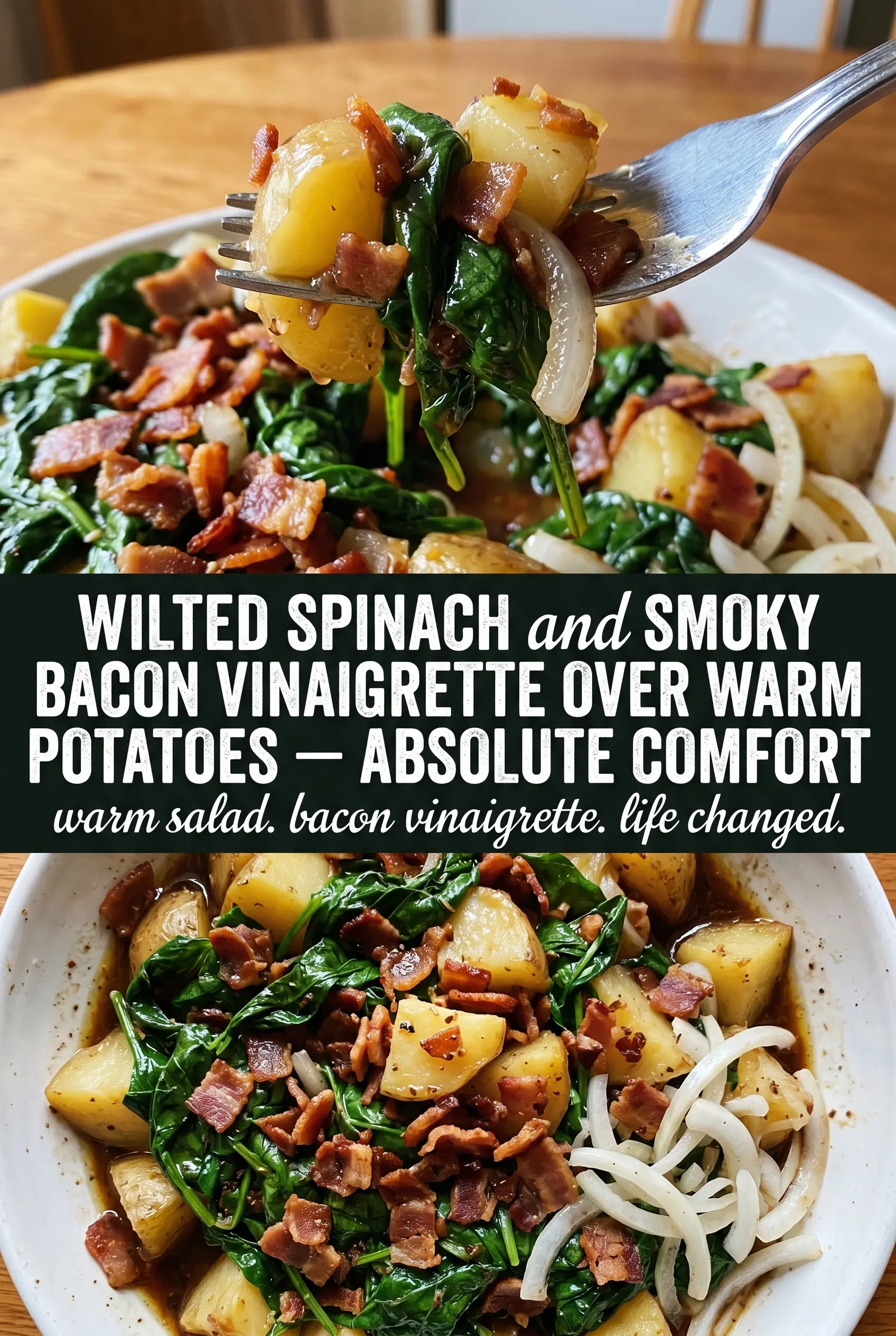
Warm Spinach Potato Salad with Bacon Vinaigrette
Ingredients
Equipment
Method
- Bring a pot of water to a boil and cook the sliced red potatoes until tender, 8-12 minutes. Drain the potatoes and keep them warm.
- Cook the bacon in a Dutch oven until crispy, 6-10 minutes, then reserve the drippings. Keep the bacon aside for topping.
- Sauté the diced onion in the reserved bacon drippings until softened, 3-5 minutes, stirring often.
- Add the red wine vinegar, Dijon mustard, sugar, salt, and pepper to the onion and bring the mixture to a simmer, 2-3 minutes. Keep the dressing hot for pouring.
- Place the fresh spinach in a large bowl. Add the warm potatoes on top.
- Pour the hot bacon vinaigrette over the spinach and potatoes and toss immediately to wilt the spinach, 1-2 minutes.
- Crumble the crispy bacon over the top. Serve immediately while warm.