Watermelon sangria lands with that perfect first sip: light, juicy, and cold enough to wake up a table full of people before the ice has even started to melt. The watermelon doesn’t just add sweetness here. It gives the whole pitcher a clean, ripe fruit note that tastes fresh instead of heavy, which is exactly what keeps this from turning into a sugary wine punch.
The trick is building the flavor in layers. Blending part of the watermelon into juice gives the wine a real melon backbone, while the remaining cubes stay intact for a little bite in the glass. A dry rosé or white wine keeps the base crisp, and the mint and citrus cut through the sweetness so every pour still tastes bright after it’s been sitting in the fridge.
Below, I’ll walk you through the one step that makes the sangria taste fuller without making it cloudy or watery, plus a few smart swaps if you want to adjust the strength, sweetness, or alcohol content.
The watermelon flavor came through without making it mushy, and after two hours in the fridge the sangria tasted even better. The mint and citrus kept it from getting too sweet, which was exactly what I wanted.
Keep this watermelon sangria chilled and fizzy for your next patio pitcher night.
The Step That Keeps Watermelon Sangria Fresh Instead of Watery
The biggest mistake with sangria is treating it like a dump-and-stir drink and hoping the fruit will do all the work. Watermelon breaks down fast, and if you blend every cube into the pitcher you end up with a cloudy, over-soft drink that tastes flat by the second glass. Saving half the watermelon in cube form gives you a cleaner texture and a better-looking pitcher, while the strained juice gives you the flavor payoff without all the pulp.
Chilling matters just as much as the ingredients. Two hours gives the wine time to pick up the melon, citrus, and mint notes, but it’s still short enough that the fruit stays lively. Add the sparkling water only at the end. If it goes in early, you lose the lift and the sangria drinks dull and tired.
What Each Ingredient Is Actually Doing in the Pitcher
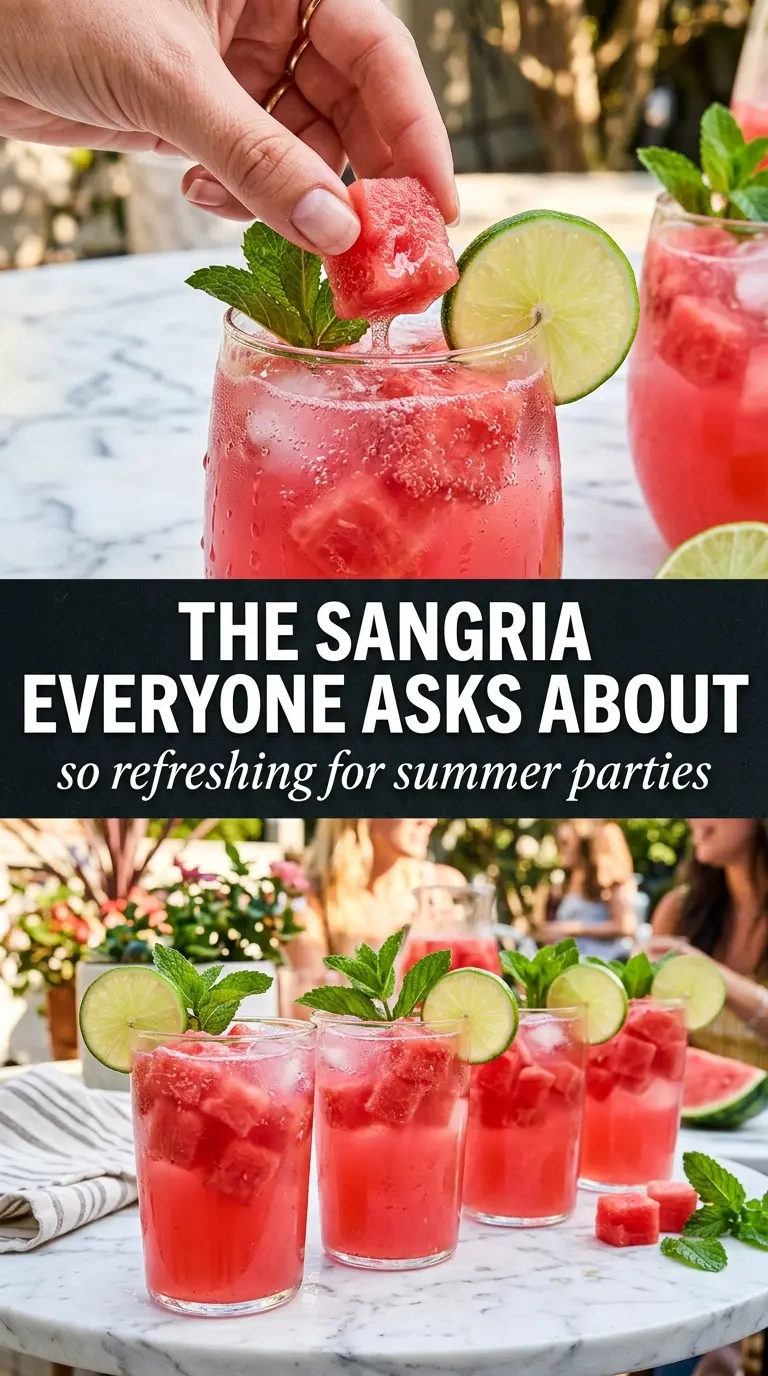
- Fresh watermelon — This is the whole point of the drink, so use ripe watermelon with deep red flesh and a sweet smell at the cut face. The blended portion gives you concentrated flavor; the cubes keep the sangria textured and pretty. If your melon tastes bland on its own, the finished drink will taste thin no matter how much wine you add.
- Dry rosé or white wine — Dry wine keeps the sangria crisp and prevents it from drinking like juice. Rosé gives you that pretty blush color and a little berry note, while a dry white stays lighter and sharper. Don’t use sweet wine here unless you want the final drink to lean syrupy.
- Vodka and triple sec — Vodka adds strength without changing the flavor much, and triple sec brings a soft orange note that plays nicely with watermelon and citrus. Watermelon vodka can boost the melon flavor, but plain vodka works just as well. If you want a lower-key pitcher, cut the vodka back a little and keep the triple sec for balance.
- Honey or simple syrup — This rounds out the edges if the melon or wine tastes a little sharp. Start with the smaller amount if your watermelon is ripe, since you can always stir in more after chilling. Honey adds a gentle floral note; simple syrup disappears into the drink more cleanly.
- Lime and lemon — These keep the pitcher from going soft and one-note. Lime brings brightness and lemon adds a little snap, especially once the sangria has chilled for a while. Slice them thin so they release flavor without turning bitter.
- Sparkling water — This is the finishing lift. Club soda keeps the drink clean and dry, while sparkling water can add a slightly softer edge depending on the brand. Add it only right before serving so the sangria keeps its sparkle.
- Fresh mint — Mint is a garnish, but it also changes the smell of the drink as soon as it hits the glass. A gentle slap between your hands before garnishing wakes it up and makes the whole pitcher smell fresher.
Building the Pitcher Without Killing the Sparkle
Turning the Watermelon into Juice
Blend half of the watermelon cubes until completely smooth, then strain the puree through a fine mesh sieve. Press gently with a spoon to get the juice through, but don’t force every bit of pulp through or you’ll cloud the sangria and muddy the texture. You’re aiming for about 1 cup of clean juice, not a thick puree.
Mixing the Base
Stir the watermelon juice, wine, vodka, triple sec, and honey together in a large pitcher until the honey disappears. If the honey clings to the bottom, warm it briefly in a spoonful of hot water or use simple syrup instead. The mixture should look evenly tinted and smell like melon and citrus before any fruit goes in.
Adding Fruit and Chilling
Drop in the remaining watermelon cubes, sliced lime, and sliced lemon. Cover the pitcher and refrigerate it for at least 2 hours so the wine can absorb the fruit flavor and the citrus can soften a little. Don’t add ice to the pitcher during this stage or the sangria will water down before it ever reaches the glass.
Finishing Right Before Serving
Pour in the sparkling water right before serving and stir once or twice, just enough to combine. Taste the sangria at this point and adjust with a little more honey if the fruit is tart. Pour it over ice and finish each glass with mint so the first sip stays cold and bright.
How to Change the Pitcher Without Losing the Balance
Make it lighter and lower in alcohol
Use more sparkling water and a little less vodka, then keep the wine at one bottle so the flavor still tastes like sangria instead of flavored soda. The drink will be softer and more refreshing, but it won’t have quite the same depth, so chill the watermelon thoroughly before mixing.
Make it sweeter for a dessert-style pitcher
Add the full amount of honey or simple syrup and use a fruitier rosé. This pushes the sangria toward a softer, more juicy finish, which works well if your watermelon isn’t peak-ripe. Don’t overdo the sweetener unless you’re serving it over lots of ice, since cold mutes sweetness fast.
Make it nonalcoholic
Swap the wine for white grape juice or chilled white tea and leave out the vodka and triple sec. You’ll still get the watermelon-citrus balance, but the drink will taste more like a sparkling fruit punch than sangria. Add a splash of orange juice if you want the missing liqueur note back.
Make it gluten-free and dairy-free
This recipe already fits both naturally as long as your vodka and triple sec are labeled gluten-free, which most standard brands are, but it’s worth checking if you’re serving someone sensitive. No dairy is involved, so nothing else needs changing. The flavor stays exactly the same.
Storage and Reheating
- Refrigerator: Store the mixed sangria without sparkling water for up to 2 days. After that, the fruit starts to soften and the flavor gets a little muddy.
- Freezer: Don’t freeze the finished sangria. The wine and carbonation won’t recover well, and the fruit turns unpleasant once thawed.
- Reheating: No reheating needed. If you’ve stored the base ahead, add sparkling water and ice only when you’re ready to serve so the drink stays bright and fizzy.
Answers to the Questions Worth Asking
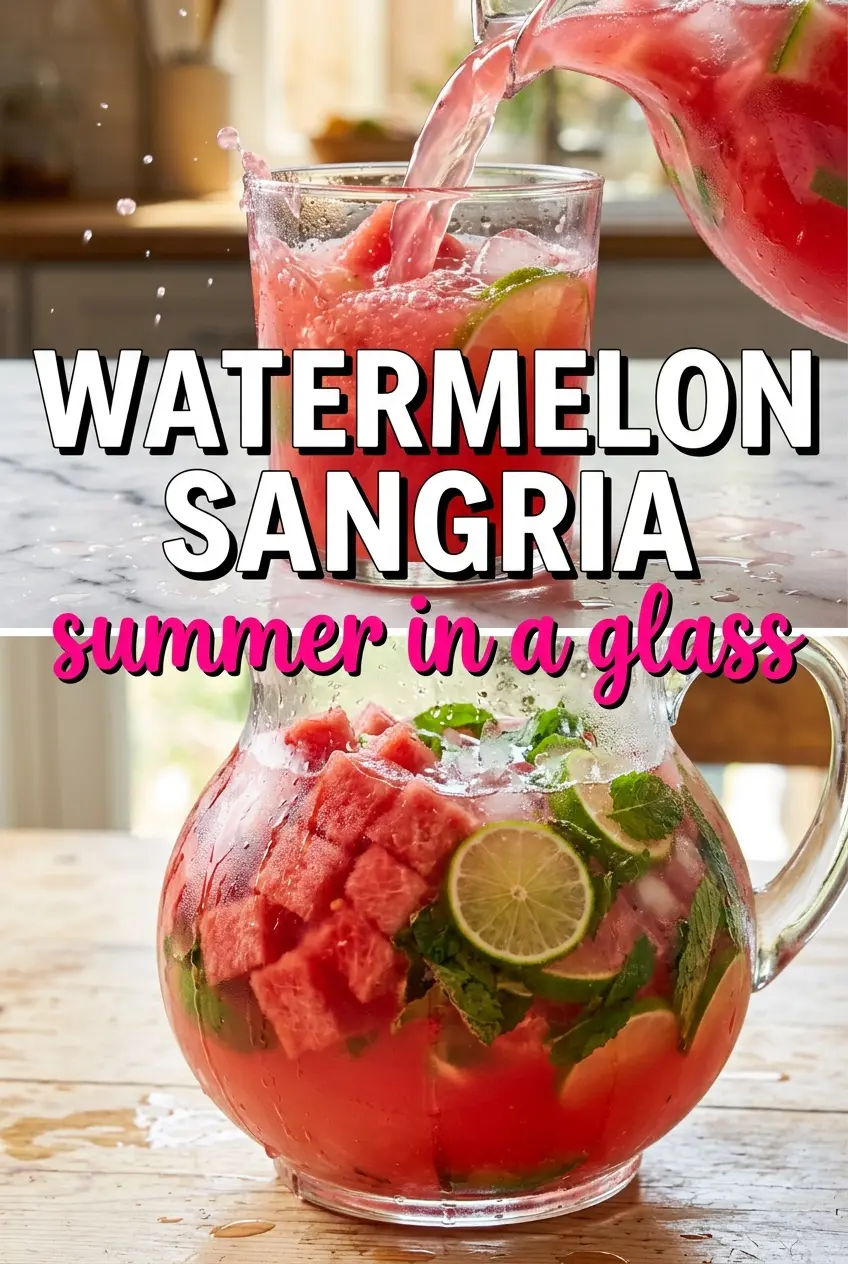
Watermelon Sangria
Ingredients
Equipment
Method
- Blend 2 cups of watermelon cubes until smooth, then strain through a fine mesh sieve to get 1 cup of fresh watermelon juice. This should look like bright, seedless juice with no large pulp chunks.
- Combine watermelon juice, rosé wine, vodka, triple sec, and honey in a large pitcher and stir to combine. The liquid should turn rose-tinted and fully dissolve the honey.
- Add remaining watermelon cubes, lime slices, and lemon slices to the pitcher. Distribute fruit so cubes and citrus are visible throughout.
- Cover and refrigerate for at least 2 hours to chill and allow flavors to meld. Keep it cold so the watermelon cubes stay crisp and the drink stays lightly pink.
- Right before serving, top with sparkling water, stir gently, and pour into ice-filled glasses garnished with fresh mint. The surface should show tiny bubbles and the mint should look fresh and aromatic.