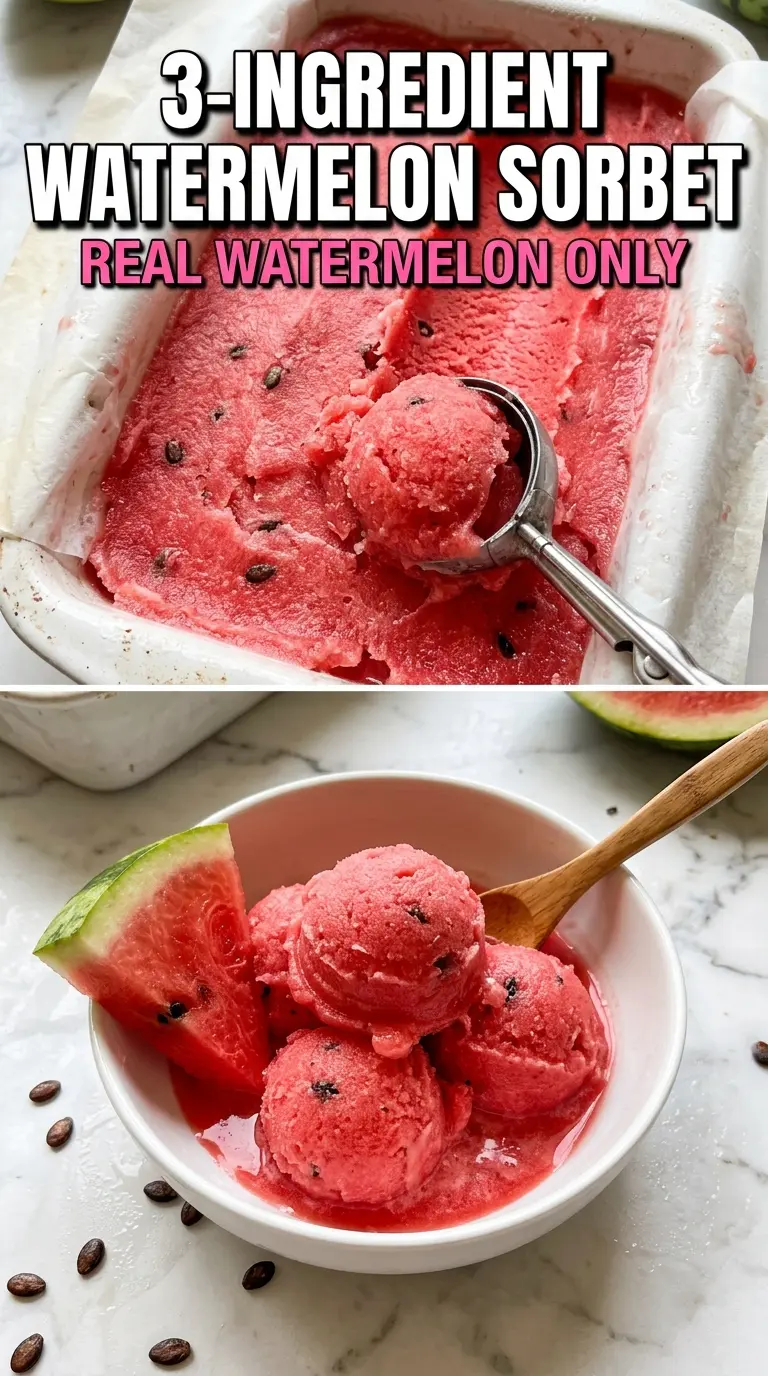
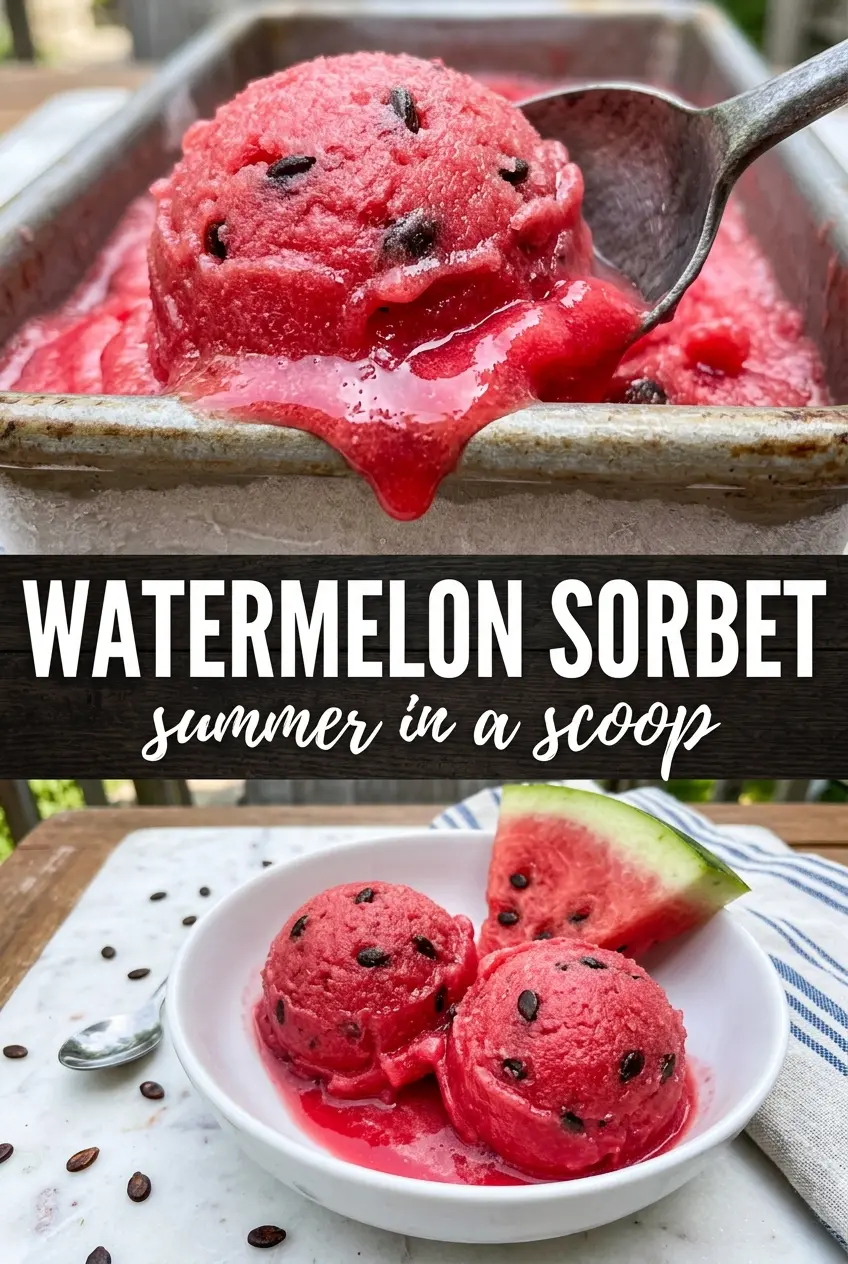
Jewel-red watermelon sorbet is the kind of dessert that tastes like pure fruit, not a frozen compromise. It comes out bright, cold, and clean on the tongue, with a smooth scoop that melts into a light, refreshing finish instead of turning icy or flat. The best part is how little it asks of you: just ripe watermelon, a little sugar, lime, and enough freezing time to let the fruit set up properly.
The trick is balancing water content and flavor. Watermelon brings plenty of natural juice, but it also needs help becoming a scoopable sorbet rather than a slushy pile of crystals. Sugar keeps the texture softer, lime sharpens the flavor so it tastes vivid instead of dull, and a pinch of salt pulls the fruit forward. Blend it long enough that the mixture turns completely smooth, then taste before freezing again, because watermelon can vary a lot in sweetness.
Below, I’ve included the small details that matter most: how to avoid an icy texture, when to stop freezing for a softer spoonable result, and a few easy ways to adjust the flavor if your melon is extra sweet or a little bland.
I was surprised how creamy this got after just a couple minutes in the blender. The lime kept it from tasting flat, and after the extra freeze time it scooped like a real sorbet instead of a snow cone.
Love how this watermelon sorbet turns straight-up frozen fruit into a bright, scoopable dessert? Save it to Pinterest for the next time you want something icy, fruity, and fast to blend.
The Texture Problem With Watermelon Sorbet
Watermelon sorbet fails when the fruit is blended without enough support for its high water content. Frozen watermelon alone can taste clean, but it often freezes into a brittle, icy mass once it sits. Sugar changes that. It doesn’t just sweeten; it lowers the freezing point enough to keep the sorbet softer and easier to scoop after it chills again.
The other trap is stopping the blend too early. You want the mixture to move from crumbly and chunky to glossy and fluid, with no visible frozen bits clinging to the sides. If your blender stalls, pause and scrape down the bowl, then keep going. That extra minute or two is what turns frozen fruit into sorbet instead of a rough slush.
- Frozen watermelon — Cube it before freezing so the blender can catch it evenly. Big chunks take longer and can leave you with icy pieces at the bottom.
- Sugar — Start with the amount listed, then taste. Very ripe watermelon may need less; pale or underripe melon usually needs a little more to taste alive.
- Lime juice and zest — Juice gives the sorbet brightness, while zest adds a stronger citrus aroma without watering anything down. That extra lift matters in a fruit with a mild flavor.
- Salt — Just a pinch, but it keeps the sorbet from tasting one-note. Leave it out and the melon can seem flatter than it really is.
What Each Ingredient Is Actually Doing in This Ice Cream
- Base ingredient (cream, milk, or custard) — This provides the foundation and richness. Quality matters.
- Sweetener (sugar, honey, or condensed milk) — This sweetens and prevents ice crystals. The ratio is critical.
- Flavor element (vanilla, fruit, chocolate, coffee, or other) — This defines the ice cream personality. Use quality ingredients.
- Egg yolks (if making custard base) — These create richness and silky texture. Optional but elevates ice cream.
- Churning (if using ice cream maker) — This incorporates air and prevents ice crystals. Critical for smooth texture.
- Freezing temperature and time — Proper freezing prevents rock-hard texture. Store at 0°F or below.
- Mix-ins (chocolate, cookies, fruit, or swirls) — These add texture and prevent one-dimensional flavor. Add near end of churning.
- Serving temperature (slightly soft, not rock hard) — This provides creamy mouthfeel. Remove from freezer 5 minutes before serving.
Getting the Frozen Fruit to Turn Smooth Instead of Grainy
Freezing the Watermelon Properly
Spread the watermelon cubes in a single layer on a baking sheet so they freeze individually instead of clumping into one block. If they freeze together, your blender has to work too hard and you end up with uneven texture. Four hours is the minimum, but solid, fully frozen cubes blend more cleanly than half-frozen ones. Transfer them to a freezer bag once they’re hard so they don’t pick up freezer smells.
Blending Until It Looks Creamy
Add the frozen melon, sugar, lime juice, lime zest, and salt to the blender and let it run until the mixture looks smooth and pale red with no icy flecks. At first it may look dry and stubborn, but it loosens as the fruit breaks down. If the blender is struggling, stop and push the fruit toward the blades rather than adding liquid, which can make the sorbet too soft and icy later.
Setting the Final Scoop
Serve it right away for a soft, almost gelato-like texture, or pack it into a container and freeze it for another hour or two if you want cleaner scoops. Press parchment or plastic wrap directly on the surface before freezing to slow ice crystals on top. If it firms up too much, let it sit on the counter for 5 to 10 minutes before scooping. That short rest brings it back without melting the edges into a puddle.
How to Adjust Watermelon Sorbet for Your Kitchen
Honey or agave instead of granulated sugar
Use 2 to 3 tablespoons honey or agave in place of the sugar if you want a softer, more rounded sweetness. Honey adds a floral note, while agave stays neutral. Both can make the sorbet a little easier to scoop straight from the freezer.
Make it fully vegan and fruit-forward
This recipe is already dairy-free and vegan as written, which is part of why it works so well. If you want a more intense fruit flavor, cut the sugar slightly and use the ripest watermelon you can find. The sorbet will taste brighter, though it may freeze a touch firmer.
Swap lime for lemon
Lemon works if that’s what you have, but it tastes sharper and less tropical than lime. Use the same amount and taste carefully, because lemon can push the sorbet toward tart if your melon isn’t very sweet. Lime keeps the watermelon tasting fuller and more aromatic.
Storage and Reheating
- Refrigerator: Not recommended. Sorbet melts fast and turns watery in the fridge.
- Freezer: Store in an airtight container for up to 2 weeks. The texture is best in the first few days, before larger ice crystals start to form.
- Reheating: No reheating needed. Let frozen sorbet sit at room temperature for 5 to 10 minutes before scooping so it softens without melting around the edges.
Questions I Get Asked About This Recipe
Watermelon Sorbet
Ingredients
Equipment
Method
- Spread the cubed seedless watermelon in a single layer on a baking sheet and freeze for at least 4 hours until solid, so the pieces do not stick together.
- Add the frozen seedless watermelon, granulated sugar, fresh lime juice, lime zest, and salt to a blender and blend on high speed until completely smooth, about 1–2 minutes, stopping once to scrape down if needed.
- Taste the mixture and adjust sweetness or tartness by blending briefly again after any changes.
- Serve immediately as a soft sorbet for a spoonable texture, or transfer to a container and freeze 1–2 more hours for a firmer scoop.
- Scoop the watermelon sorbet into bowls and garnish with fresh mint right before serving.