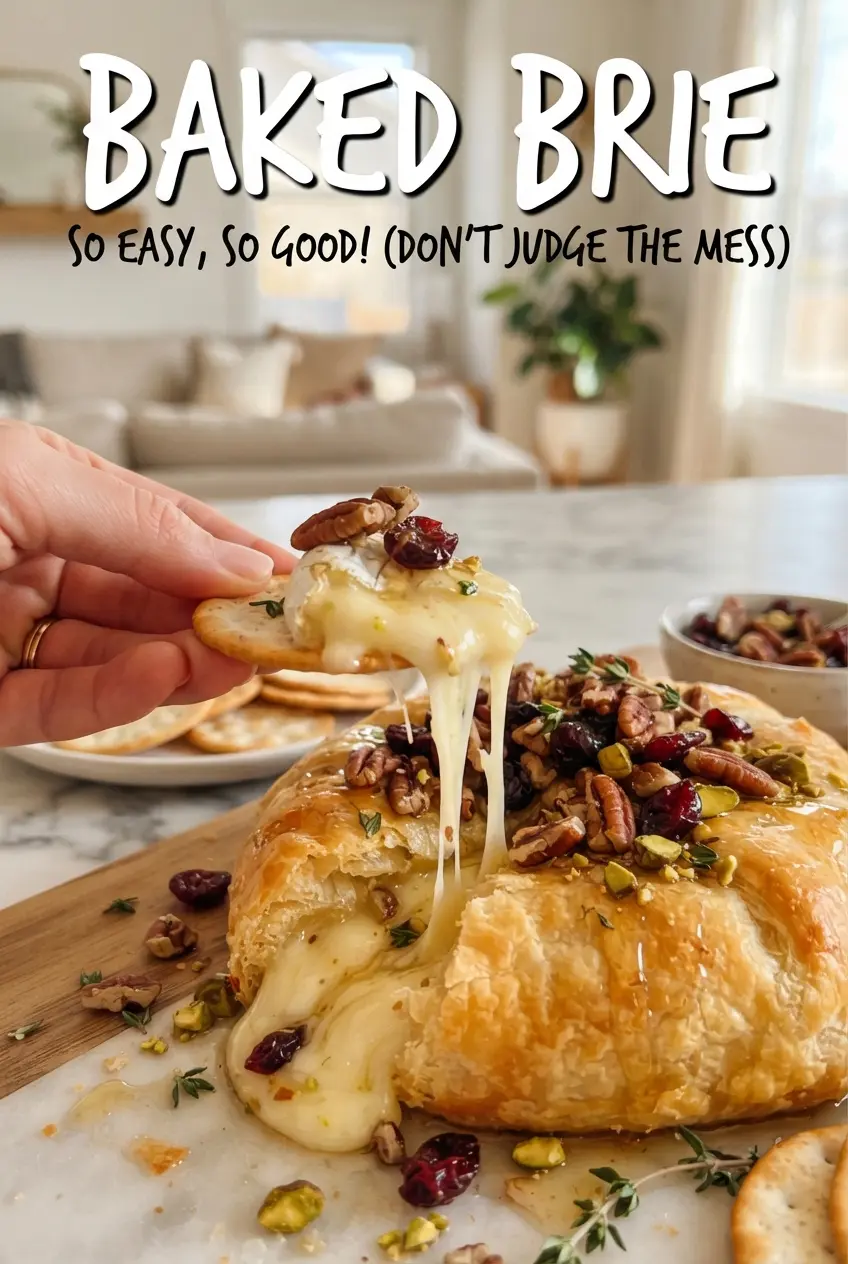
Golden, flaky puff pastry wrapped around warm brie is the kind of appetizer people hover over before it even hits the table. The shell bakes up crisp and bronzed while the center turns molten, with sweet jam and toasted pecans cutting through the richness in just the right way. When you slice into it, the cheese spills out in the best possible way.
This version works because the brie is sealed inside pastry instead of baked bare. That keeps the cheese from leaking too early and gives the whole thing a crisp, bakery-style finish. The egg wash is worth the extra bowl because it gives the crust that deep color and glossy surface, and the short rest after baking keeps the filling from running off the cutting board the second you cut it.
Below, I’ve included the small details that make this appetizer behave — how to keep the pastry from splitting, when the cheese is actually ready, and the easiest swaps if you want to change the jam or nuts without throwing off the texture.
The pastry turned deep golden and the brie stayed perfectly contained until we cut into it. I used fig jam, and the whole thing disappeared before dinner even started.
Save this baked brie with puff pastry for the next time you want a crisp, molten appetizer with jam and rosemary.
The Trick to Keeping Brie from Bursting Out of the Pastry
The most common failure with baked brie is cutting into it too soon or sealing the pastry loosely enough that the cheese leaks before the crust is ready. Brie needs a solid pastry shell and a short rest after baking. That rest is what lets the cheese thicken from lava to spoonable instead of pouring straight onto the platter.
The other thing that matters is seam placement. If the folded edges sit on top, they’re more likely to split as the pastry expands. Turn the wrapped brie seam-side down before it goes into the oven, and the weight of the wheel helps hold everything together while the pastry bakes into a tight, golden parcel.
- Puff pastry — Thawed pastry gives you layers that separate and crisp instead of baking up dense. If it’s still icy in the center, it tears when you wrap the brie and bakes unevenly.
- Brie — A standard 8-ounce wheel is the right size for one sheet of pastry. A larger wheel needs more pastry or you’ll end up with thin spots that split.
- Jam — Raspberry and fig both work because they stay thick enough to sit on the cheese instead of flooding the pastry. Loose, watery preserves can make the bottom soggy.
- Egg wash — This gives the pastry its color and helps seal exposed edges. Skip it and you’ll get a paler crust that can look dry before the cheese is actually done.
What Each Ingredient Is Actually Doing in This Recipe

- Primary ingredient (the star) — Quality matters most. Choose the best you can find.
- Cooking medium (oil, butter, or broth) — This carries flavors and prevents dryness.
- Seasonings (salt, pepper, spices, herbs) — Layer flavors so nothing overpowers. Build depth gradually.
- Aromatics (garlic, onion, herbs) — Cook with fat to bloom flavors. Become the foundation.
- Supporting ingredients — Complement the main ingredient without overpowering it.
- Sauce or liquid (if applicable) — Brings flavors together. Balance richness with acid.
- Acid (lemon, vinegar, wine, or other) — Brightens and prevents flat-tasting results.
- Final finish (garnish, glaze, or sauce) — Prevents one-dimensional taste and adds visual appeal.
What Happens in the Oven, and Why the Order Matters
Wrapping the Wheel
Roll the pastry just enough to smooth out the folds, then set the brie in the center and spoon the jam directly over the top. The nuts and brown sugar stay on the jam, not on the pastry, so they don’t tear the dough as you wrap. Pull the pastry up in loose folds, then press the seams together where they meet. If a corner feels thick and bulky, trim the excess before sealing so the packet bakes evenly.
Sealing and Brushing
Flip the bundle seam-side down onto the parchment-lined baking sheet before brushing on the egg wash. That one move keeps the seam from opening in the oven and gives you a cleaner bottom once it’s baked. Brush the top and sides, but don’t flood the pastry; too much egg wash can pool and create dark spots instead of an even shine. The goal is a thin glossy coating, not a wet crust.
Baking Until the Pastry Is Deep Gold
Bake at 400°F until the pastry is deeply browned, not just lightly golden. Pale pastry usually means the butter hasn’t fully cooked out yet, and the crust will taste doughy. Around the 22-minute mark, check for a crisp shell that feels firm when gently tapped and a pastry top that’s fully colored. If the top browns before the sides, rotate the pan once near the end of baking.
Resting Before the First Cut
Let the brie rest for 10 minutes before serving. That short pause is the difference between a dramatic cheese pull and a puddle on the board. The filling will still be soft, but it’ll hold together enough for clean slices and dipping. Add the rosemary after resting so it stays bright and aromatic instead of drying out in the oven.
How to Adapt This Baked Brie Without Losing the Gooey Center
Swap the Jam for a More Savory Finish
Use fig jam for a deeper, less tart result, or try a thin layer of onion jam if you want something more savory. Keep the amount modest either way; too much filling can leak out and soften the pastry.
Make It Nut-Free
Leave out the pecans and add a little extra brown sugar on top of the jam for a caramel note. You lose the crunchy contrast, but the pastry still bakes up crisp and the filling stays balanced.
Gluten-Free Version
Use a gluten-free puff pastry that bakes in a similar size sheet. The texture won’t puff quite as high as classic pastry, but the cheese and jam still melt into the same rich center.
Make-Ahead for Easy Entertaining
Assemble the wrapped brie up to a day ahead, cover it tightly, and keep it refrigerated until baking. Brush on the egg wash right before it goes into the oven so the pastry doesn’t get sticky or dull.
Storage and Reheating
- Refrigerator: Store leftovers covered for up to 3 days. The pastry softens in the fridge, but it still reheats well.
- Freezer: Freeze before baking if you want to get ahead; wrap tightly and freeze for up to 1 month. Bake from partially thawed until the crust is deep golden and the center is hot.
- Reheating: Warm in a 325°F oven until the pastry crisps back up and the cheese loosens. The microwave will turn the crust soggy and make the filling separate.
Questions I Get Asked About This Recipe
Baked Brie in Puff Pastry
Ingredients
Equipment
Method
- Preheat the oven to 400°F and line a sheet pan with parchment for easy release.
- Roll the puff pastry slightly and place the brie in the center.
- Spread the jam over the brie, then sprinkle with pecans and brown sugar.
- Fold the pastry up over the brie, trim excess, and press the seams to seal.
- Flip the pastry seam-side down onto the baking sheet and brush with egg wash.
- Bake at 400°F for 22-25 minutes until deep golden brown.
- Rest 10 minutes so the cheese sets slightly, then garnish with fresh rosemary.
- Serve with crackers and apple slices for dipping.