Baked feta roast potatoes hit that sweet spot between crisp, creamy, salty, and bright. The potatoes turn deeply golden at the edges, the feta softens into a tangy sauce, and the tomatoes collapse just enough to give the whole dish a juicy, roasted finish. It’s the kind of side that quietly takes over the plate and then gets requested again the next week.
What makes this version work is the order of the roast. The feta sits in the center of the dish while the potatoes, tomatoes, and garlic roast around it, so the cheese warms and softens without disappearing into the pan. A good drizzle of olive oil and a hot oven give the potatoes the structure they need, while lemon at the end keeps the whole dish from tasting heavy. The herbs matter too: oregano brings that classic Mediterranean backbone, and the fresh thyme and basil give the final toss a fresh edge.
Below, I’ve included the few details that make the biggest difference, plus a couple of smart variations if you want to change the flavor without losing the texture that makes this dish so good.
The potatoes got crisp at the edges, and the feta melted just enough to coat everything without turning greasy. The lemon at the end made the whole pan taste fresh instead of heavy.
Love the salty feta and crispy potato edges? Save these baked feta roast potatoes for the next time you want an easy side with big roasted flavor.
The Trick to Crisp Potatoes Around Soft Feta
The biggest mistake with baked feta roast potatoes is crowding the pan and expecting the potatoes to roast instead of steam. You need enough space for the cut sides of the potatoes to hit the hot dish and brown properly. If the pan is jammed full, the potatoes will still cook through, but they won’t develop those crisp, caramelized edges that make the dish worth making.
The feta also needs a little protection. It should soften and pick up color at the edges, not melt completely into the pan before the potatoes are done. That’s why the block goes in whole and stays in the center. The potatoes and tomatoes roast around it, building their own texture first, then everything gets tossed together at the end.
- Use a wide baking dish so the potatoes have room to roast in a single layer.
- Cut the potatoes evenly so they finish at the same time.
- Leave the feta block intact until the very end so it stays creamy instead of dissolving too early.
- Roast until the potatoes are deeply golden on the cut sides, not just tender.
What Each Ingredient Is Actually Doing in This Dish

- Baby potatoes — These hold their shape well and roast into crisp-edged halves with a creamy center. Waxy potatoes work best here; very starchy potatoes can break down faster and turn fluffier than you want. If you only have Yukon Golds, they’ll work, but cut them into even bite-size pieces.
- Block feta — Use a solid block, not pre-crumbled feta. Crumbles dry out before they soften, while a block turns creamy and can be broken through the potatoes at the end. A sheep’s milk feta gives the most tang and richness, but cow’s milk feta still works.
- Cherry tomatoes — These burst into little pockets of sweetness and moisture as they roast. They help form the light sauce that coats the potatoes once everything is tossed together. Larger tomatoes can be used, but they should be cut down so they don’t water the dish down.
- Olive oil — This carries the seasoning and helps the potatoes brown. Don’t skimp here; dry potatoes won’t crisp well. A good everyday olive oil is fine, but if yours has a peppery finish, it will show up in the final dish.
- Lemon zest and juice — The juice wakes everything up after roasting, and the zest adds a brighter aroma than juice alone. Add both at the end so the lemon stays fresh and doesn’t cook flat in the oven.
Roasting the Pan So the Potatoes Brown and the Feta Softens
Building the Pan
Start with the feta block in the center of the baking dish and scatter the potatoes, tomatoes, and smashed garlic around it. The potatoes should land cut-side down where possible, because that contact with the hot pan is what gives you the best browning. Drizzle everything with olive oil and season it before it goes into the oven so the salt can start pulling out moisture early. If the potatoes sit in a puddle of oil, your pan is too small.
Roasting to Color
Roast at 400F until the potatoes are tender all the way through and the undersides are deep golden. You’re looking for more than softness; the edges should look lacquered and bronzed. If the potatoes are tender but pale, give them a few more minutes. Feta should be soft and slightly golden on top, not dry or blistered all over.
The Final Toss
As soon as the pan comes out, squeeze the lemon juice over everything and add the zest and fresh herbs. Then break the feta into the potatoes and toss just enough to coat the surfaces without turning the whole pan into paste. The feta will melt into the hot potatoes as you mix, which is the point, but it should still leave visible pockets of creamy cheese. Taste at the end and add a pinch more salt only if the feta needs it.
Add Calamata olives for a saltier finish
A handful of pitted olives turns this into a stronger, brinier side with more Mediterranean punch. Add them for the last 10 minutes so they warm through without drying out. The result is saltier and more assertive, so hold back on extra salt until after you taste the finished dish.
Make it dairy-free with seasoned potatoes only
Skip the feta and add an extra drizzle of olive oil plus a little more lemon zest at the end. You’ll lose the creamy, salty contrast, so finish with a spoonful of chopped herbs and a pinch of flaky salt to keep the dish lively. It won’t taste like the original, but it still roasts into a bright, satisfying side.
Use sweet potatoes for a softer, sweeter version
Sweet potatoes roast faster and soften more quickly, so cut them a little larger and start checking early. Their sweetness plays well with feta, but they won’t crisp the same way regular potatoes do. Expect a softer, more caramelized dish with less edge and more mash-like tenderness in the center.
Storage and Reheating
- Refrigerator: Store leftovers in an airtight container for up to 3 days. The potatoes will soften as they sit, but the flavor holds up well.
- Freezer: Freezing isn’t ideal here. The feta changes texture after thawing and the potatoes turn mealy, so this is best made fresh.
- Reheating: Reheat in a 375F oven until warmed through and the edges wake back up, about 10 to 15 minutes. The microwave will warm it, but it also makes the potatoes soft and the feta greasy, which is the main mistake to avoid.
Answers to the Questions Worth Asking
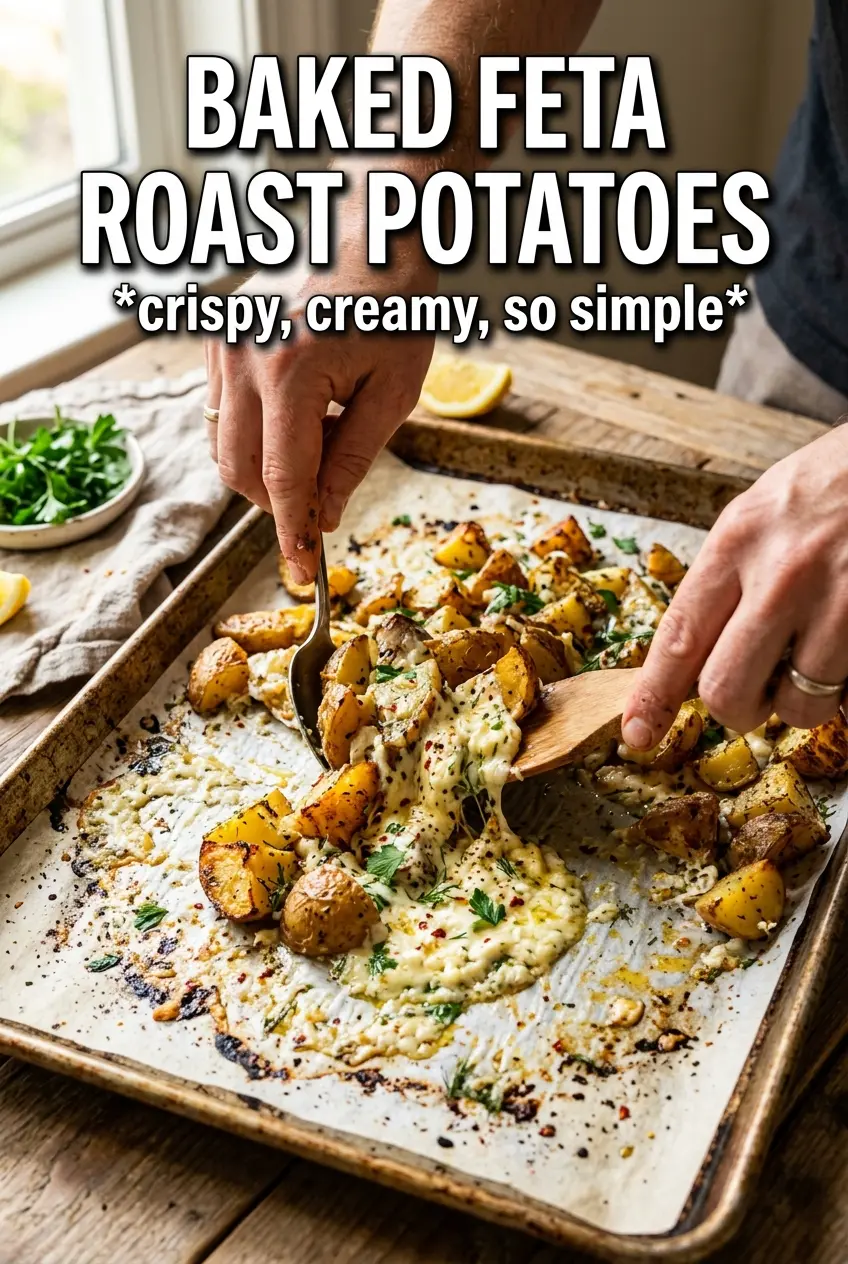
Baked Feta Roast Potatoes
Ingredients
Equipment
Method
- Preheat the oven to 400F and place the feta block in the center of a baking dish.
- Arrange the halved baby potatoes, cherry tomatoes, and smashed garlic around the feta.
- Drizzle everything with olive oil, then sprinkle oregano, thyme, red pepper flakes, salt, and pepper evenly over the pan.
- Roast for 40-45 minutes until the potatoes are golden and tender, and the feta is softened and golden.
- Squeeze lemon juice over the roasted potatoes, then scatter lemon zest and fresh basil or parsley.
- Break the feta into the potatoes and toss everything together until coated.