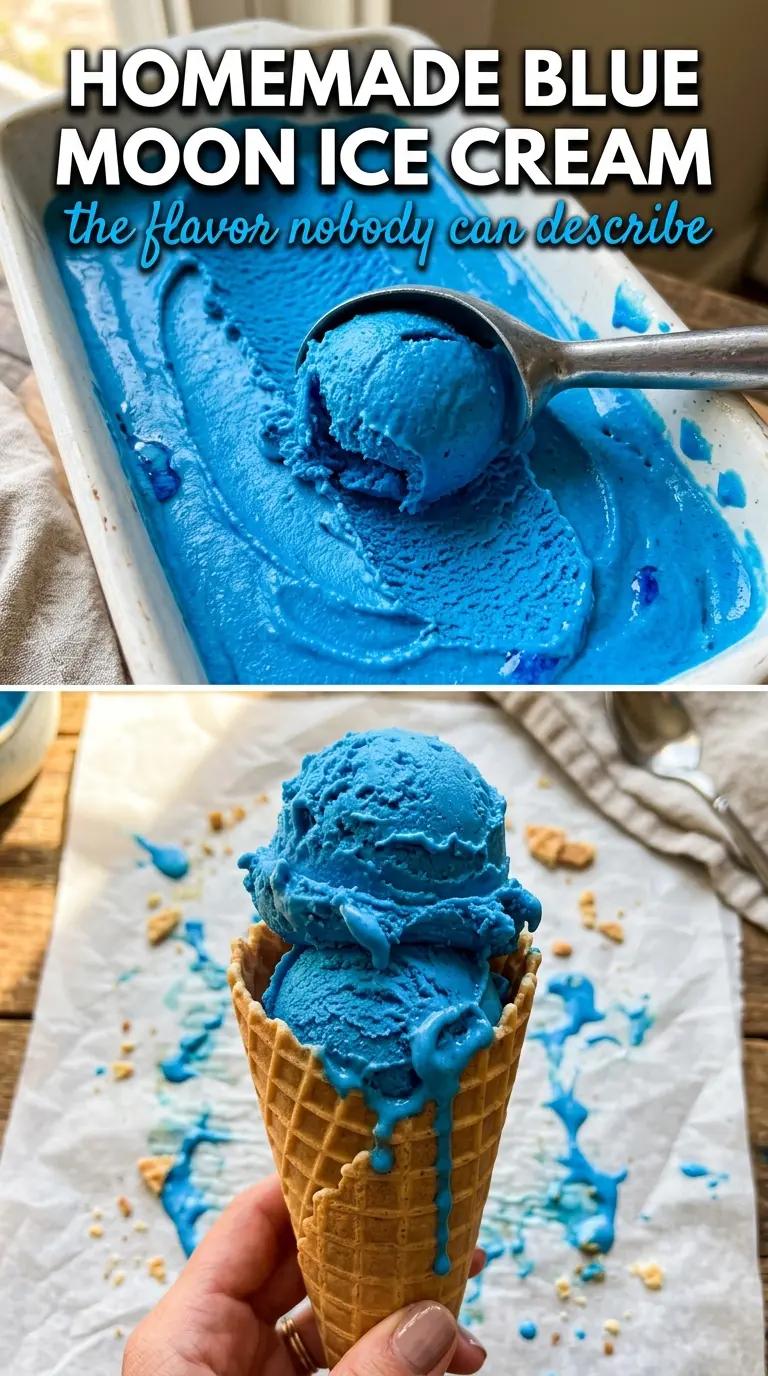
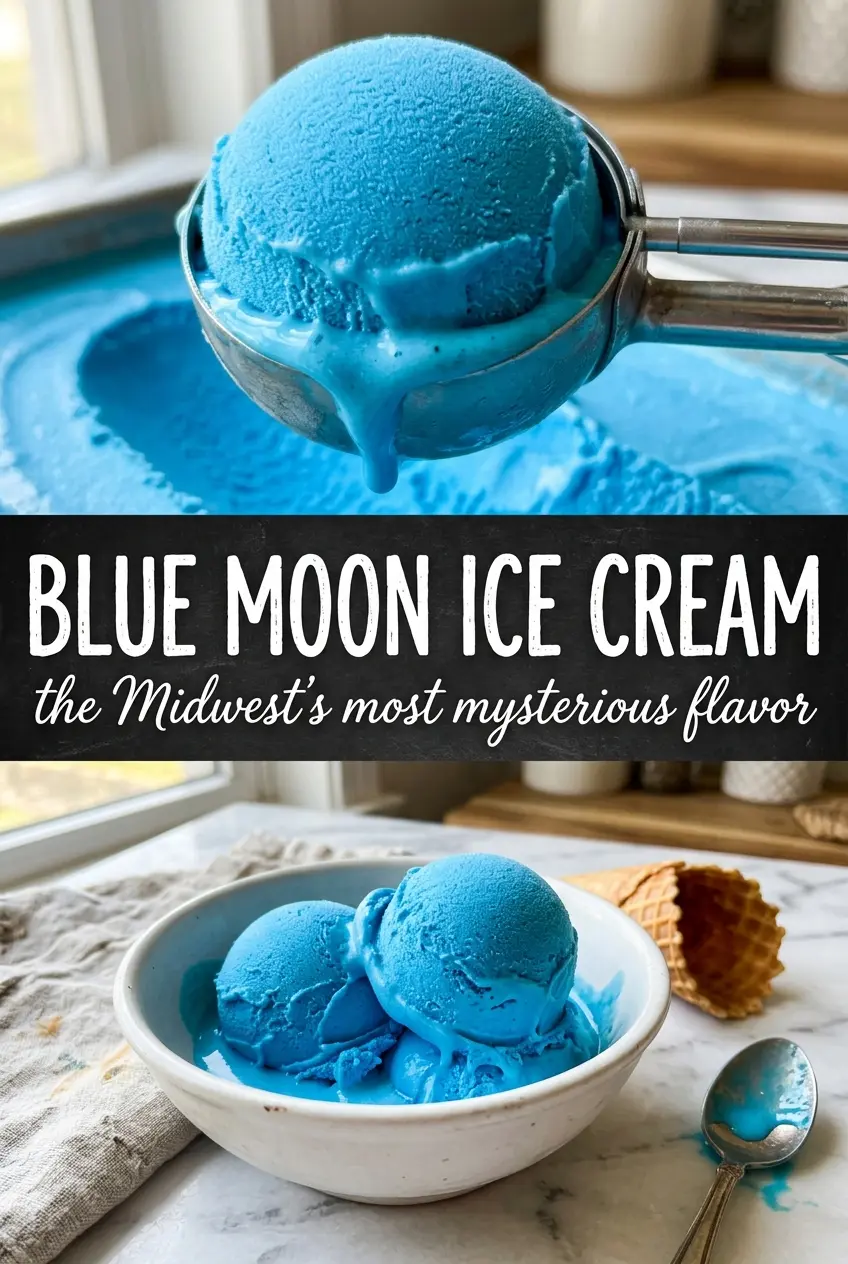
Electric blue Blue Moon ice cream has a way of turning an ordinary bowl into something people talk about long after dessert is gone. The texture should be rich and scoopable, with that soft, custardy body that comes from egg yolks and cream, but the flavor is what makes it memorable: almond, vanilla, a little citrus, and that faint fruity note that tastes nostalgic even when you can’t quite pin it down.
This version leans into the classic Midwest style by building the base like real custard instead of relying on shortcuts. The eggs give it body, the extracts give it that mysterious Blue Moon personality, and the food coloring goes in at the end so you can control the shade without dulling the mix. Heating the dairy gently and cooking the custard just to 175°F keeps the texture smooth instead of eggy.
Below, I’ve included the little details that matter here: how to keep the custard from curdling, how to choose between raspberry extract and blue raspberry flavoring, and what to do if you want a deeper blue without making the flavor muddy.
The custard came out silky and the blue color was spot on. I used raspberry extract and lemon like you suggested, and it tasted exactly like the Blue Moon ice cream I remember from childhood.
Save this Blue Moon ice cream for the nights when you want that electric blue scoop with almond-vanilla nostalgia and a smooth custard base.
The Custard Temperature That Keeps Blue Moon Ice Cream Smooth
The biggest mistake with custard-based ice cream is rushing the heat. If the dairy goes onto the yolks too quickly, the eggs can scramble; if the custard cooks too hot, it turns grainy and tastes a little flat. 175°F is the sweet spot here. The base is thick enough to coat a spoon, but it still pours smoothly once strained.
Straining matters more than people think. Even a tiny bit of cooked egg can hide in the mix and show up later as a speckled, slightly lumpy texture in the finished ice cream. Cooling the custard before it goes into the fridge also helps the flavor settle, especially once the extracts are stirred in.
What Each Flavor Extract Is Actually Doing Here
- Heavy cream — This gives the ice cream its lush body and keeps the finished scoop from freezing into an icy block. Don’t swap in half-and-half if you want the classic texture; it won’t freeze with the same richness.
- Whole milk — The milk lightens the base just enough so it doesn’t eat like frozen custard. Lower-fat milk works in a pinch, but the ice cream will feel leaner and less creamy.
- Egg yolks — Yolks are what make this a custard-style ice cream instead of a simple Philadelphia-style base. They thicken the mixture and help it stay scoopable after a long freeze.
- Almond extract — This is one of the signature notes in Blue Moon flavor, and it’s not something you can fake with vanilla alone. Use a light hand; too much and the ice cream turns marzipan-heavy.
- Raspberry extract or blue raspberry flavoring — Either one adds that elusive fruity note people remember in Blue Moon ice cream. Raspberry extract tastes a little more old-fashioned and rounded, while blue raspberry flavoring pushes the color-and-candy side of the profile.
- Lemon extract — This is the piece that wakes everything up. It doesn’t make the ice cream taste lemony; it sharpens the other flavors so the base doesn’t read as just sweet cream.
- Blue food coloring — Add it drop by drop at the end so you can stop at that electric Midwest-blue shade before the base looks muddy. Gel coloring gives the strongest color with the least liquid, which helps keep the flavor balanced.
Building the Blue Moon Base Without Curdling the Yolks
Warming the Dairy First
Heat the cream and milk until steaming, not boiling. You want small wisps of steam and just a little movement around the edges, because a full boil can make the custard harder to control when it hits the yolks. Whisk the sugar into the egg yolks until the mixture lightens slightly; that helps cushion the eggs before the hot dairy goes in.
Tempering the Eggs
Pour the hot dairy in slowly while whisking constantly. The first few additions matter most, because they bring the eggs up to temperature without shocking them. If you dump it all in at once, you’re not making custard anymore — you’re making sweet scrambled eggs.
Cooking to the Right Thickness
Return the mixture to the saucepan and cook over medium-low heat, stirring all the way across the bottom and corners of the pan. It should thicken enough to coat the back of a spoon, and 175°F is the point where it’s set up enough for ice cream without crossing into grainy territory. Pull it off the heat the second it reaches temperature, then strain it right away.
Finishing the Flavor and Color
Stir in the almond, vanilla, raspberry, and lemon extracts after the custard has been strained. That keeps the most delicate flavor notes from cooking off. Add the blue coloring a few drops at a time and stir well before judging the shade; the color often deepens a little once the base chills.
Make It More Candy-Sweet
Use blue raspberry flavoring instead of raspberry extract if you want a brighter, more candy-shop version of Blue Moon ice cream. The flavor gets punchier and a little more nostalgic in the freezer, but it loses some of the soft almond-citrus balance that makes the classic version feel old-school.
Make It Dairy-Free
Use full-fat canned coconut milk in place of the cream and whole milk, then strain the custard carefully and chill it well before churning. The texture will still be creamy, but the coconut note will come through a little, so the almond and lemon become even more important for keeping the flavor in Blue Moon territory.
Keep the Color Natural Looking
If you want a softer pastel blue instead of a bright electric scoop, stop adding color once the base looks pale sky blue. The flavor doesn’t change, but the finished ice cream reads more homemade and less neon.
Storage and Reheating
- Refrigerator: The churned base should be eaten within 1 week for the best texture. After a few days, it can pick up tiny ice crystals, especially if the container is opened often.
- Freezer: It freezes well for about 2 weeks in an airtight container with parchment pressed on the surface. Past that, the texture gets harder and the color can look a little duller.
- Reheating: There’s no reheating here, but if the ice cream gets too hard, let it sit at room temperature for 5 to 10 minutes before scooping. Don’t microwave it; that melts the edges and leaves the center icy.
Answers to the Questions Worth Asking
Blue Moon Ice Cream
Ingredients
Equipment
Method
- Heat the heavy cream and whole milk in a saucepan just until steaming, then keep the surface at a gentle steam. Visual cue: small bubbles form around the edges and the mixture looks glossy, not boiling.
- In a bowl, whisk the egg yolks with the granulated sugar, then slowly whisk the hot cream mixture into the yolks. Visual cue: the mixture turns lighter and smooths out with no streaks.
- Return everything to the saucepan and cook to 175°F, stirring constantly so it thickens slightly. Visual cue: it coats the back of a spoon and holds a line when you drag a finger through.
- Strain the custard and cool slightly before proceeding. Visual cue: it becomes silky and lump-free after straining.
- Stir in the almond extract, vanilla extract, raspberry extract (or blue raspberry flavoring), and lemon extract until fully incorporated. Visual cue: the custard aroma turns distinctly sweet and fruity-floral.
- Add blue food coloring a few drops at a time, stirring between additions until the electric blue is achieved. Visual cue: the custard turns vivid and opaque rather than pale.
- Cool completely, then refrigerate for 4 hours. Visual cue: the surface chills and the mixture thickens to a pourable cold custard.
- Churn the chilled custard in an ice cream maker until thickened to soft-serve consistency. Visual cue: the texture looks airy and you can see ribbons that hold briefly.
- Transfer to a freezer-safe container and freeze until firm. Visual cue: scoops hold shape with minimal melting at the edges.