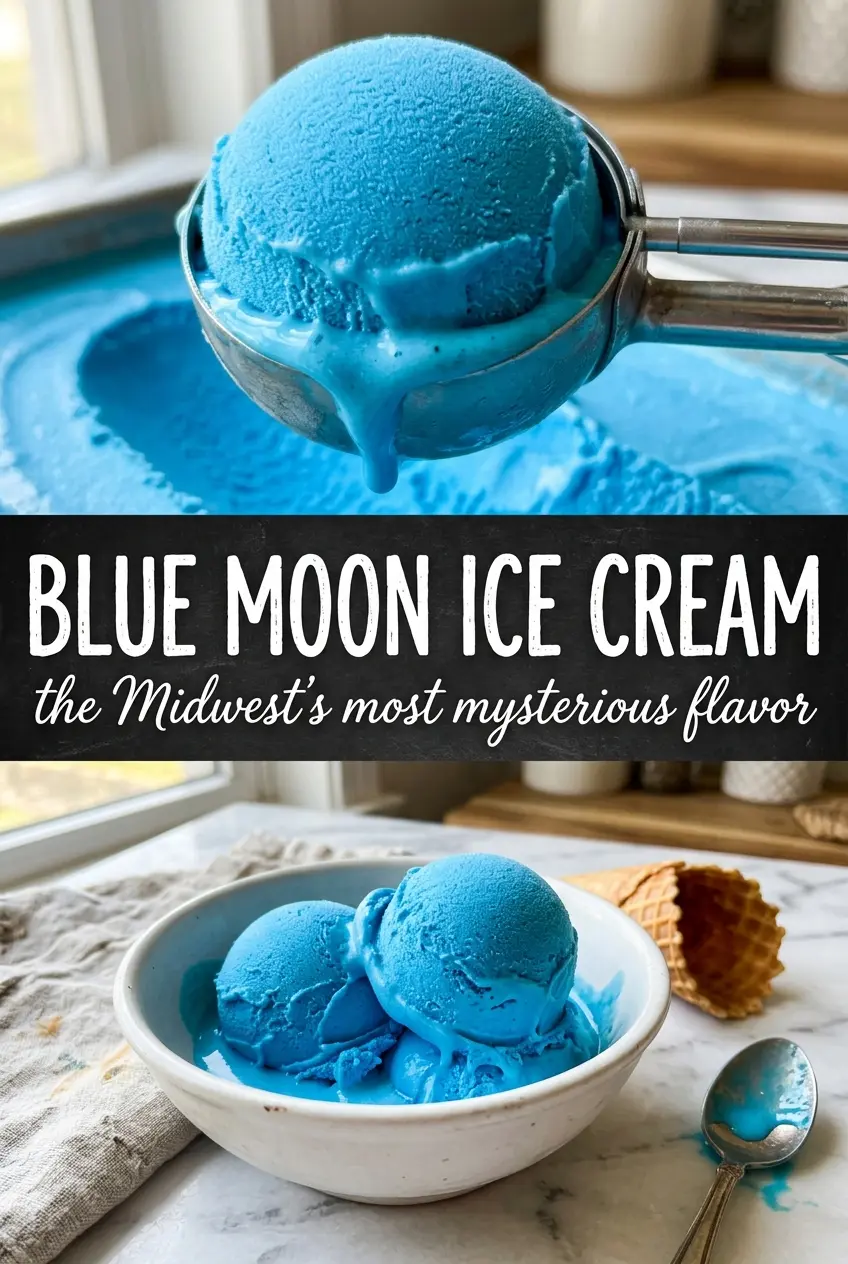
Ingredients
Equipment
Method
Make the custard
- Heat the heavy cream and whole milk in a saucepan just until steaming, then keep the surface at a gentle steam. Visual cue: small bubbles form around the edges and the mixture looks glossy, not boiling.
- In a bowl, whisk the egg yolks with the granulated sugar, then slowly whisk the hot cream mixture into the yolks. Visual cue: the mixture turns lighter and smooths out with no streaks.
- Return everything to the saucepan and cook to 175°F, stirring constantly so it thickens slightly. Visual cue: it coats the back of a spoon and holds a line when you drag a finger through.
- Strain the custard and cool slightly before proceeding. Visual cue: it becomes silky and lump-free after straining.
Flavor and color
- Stir in the almond extract, vanilla extract, raspberry extract (or blue raspberry flavoring), and lemon extract until fully incorporated. Visual cue: the custard aroma turns distinctly sweet and fruity-floral.
- Add blue food coloring a few drops at a time, stirring between additions until the electric blue is achieved. Visual cue: the custard turns vivid and opaque rather than pale.
- Cool completely, then refrigerate for 4 hours. Visual cue: the surface chills and the mixture thickens to a pourable cold custard.
Churn and freeze
- Churn the chilled custard in an ice cream maker until thickened to soft-serve consistency. Visual cue: the texture looks airy and you can see ribbons that hold briefly.
- Transfer to a freezer-safe container and freeze until firm. Visual cue: scoops hold shape with minimal melting at the edges.
Notes
Pro tip: Cook the custard only to 175°F—too hot can cause graininess even after straining. Chill storage: keep covered in the refrigerator only if needed to bridge timing (up to 24 hours), but it’s best frozen. Freezing: yes—store up to 2 months; thaw in the fridge 10–15 minutes for easier scooping. Dietary swap: for a lower-fat version, use half-and-half instead of heavy cream, noting the texture will be slightly softer.