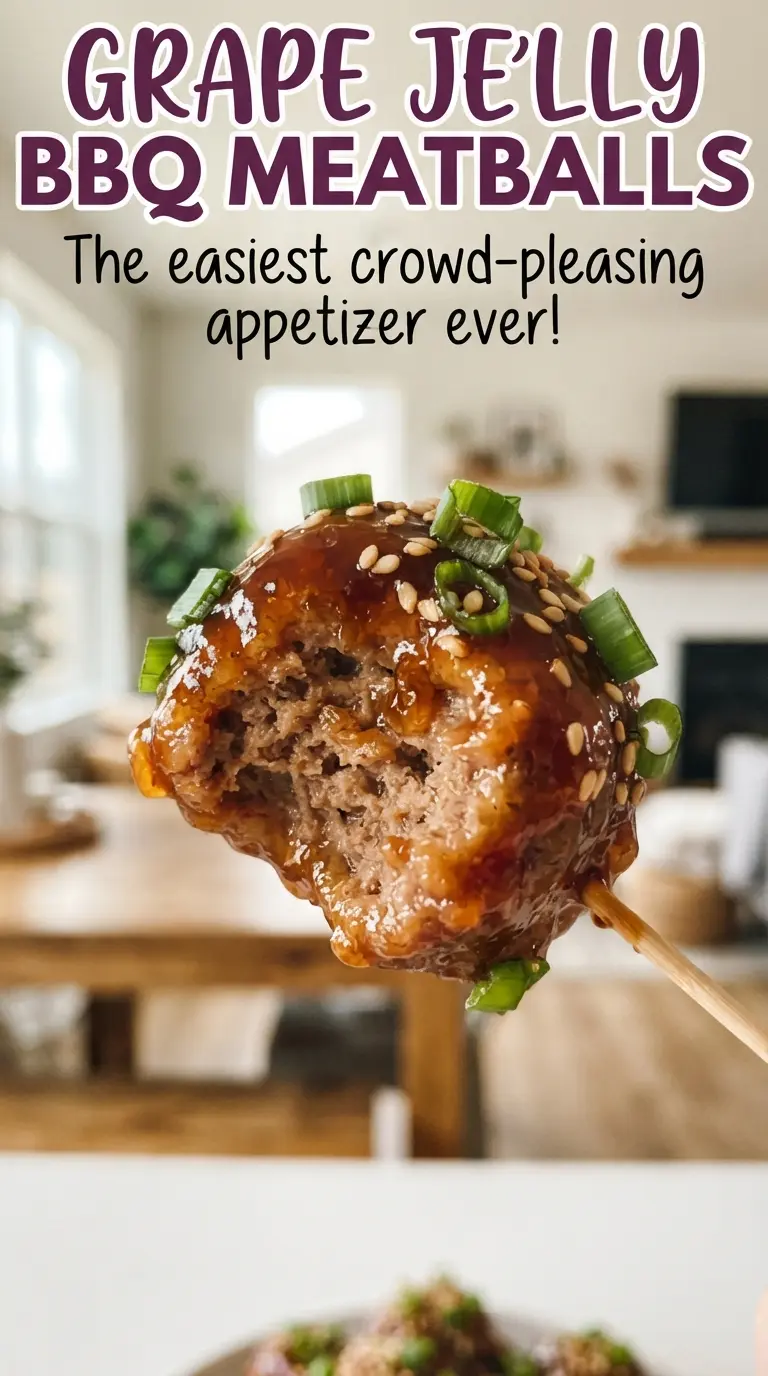
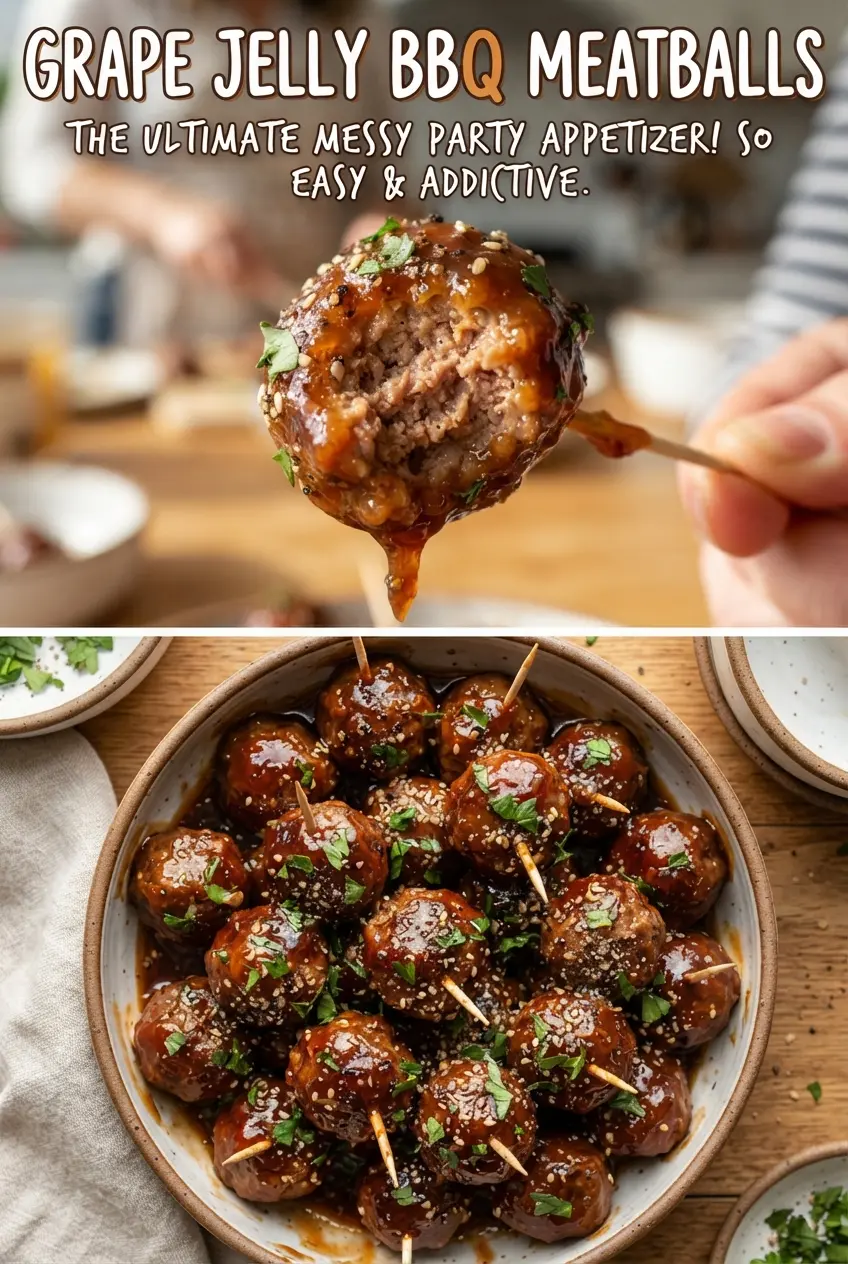
Grape jelly BBQ meatballs turn into that glossy, sticky appetizer everyone circles back to once they taste the first one. The sauce clings in a thick lacquer, the meatballs stay tender and juicy, and the sweet-savory balance hits the kind of crowd-pleasing note that disappears fast from a party tray. They’re the kind of set-it-and-forget-it recipe that looks like you fussed, even though the slow cooker does almost all of the work.
The key here is starting with fully cooked frozen meatballs, which hold their shape and keep the whole dish simple. The grape jelly melts into the barbecue sauce and gives it body, while the Worcestershire sauce keeps the sweetness from tasting flat. Garlic powder adds just enough depth without turning the sauce into something heavy. Stirring once halfway through keeps the meatballs coated evenly and helps the sauce thicken instead of separating at the edges.
Below you’ll find the little details that matter, including how to keep the sauce glossy on warm, what to swap if you want a tangier version, and the one reheating move that keeps the meatballs from drying out.
The sauce turned glossy and thick in the slow cooker, and the meatballs stayed tender all the way through. I served them with toothpicks at a game night and the whole batch was gone before halftime.
These grape jelly BBQ meatballs turn glossy, sticky, and party-ready in the slow cooker — save them for the next game day spread or easy appetizer night.
The Sauce Isn’t Just for Flavor — It’s What Keeps These Meatballs Tender
The biggest mistake with grape jelly meatballs is rushing the heat. If the slow cooker runs too hot, the sugar in the jelly can tighten up and make the sauce look split or syrupy instead of glossy. Low heat gives the jelly time to melt into the barbecue sauce and marry with the Worcestershire, which is how you get that lacquered coating people remember.
- Frozen fully cooked meatballs — These save time and hold together in the slow cooker. Fresh uncooked meatballs need a different method, or they can turn soft before the sauce has a chance to thicken.
- BBQ sauce — Use one you already like on its own, because it sets the base flavor. A sweeter sauce makes the whole dish rounder, while a smoky one gives it more backbone.
- Grape jelly — This is what gives the sauce its sticky sheen and familiar sweet finish. Other jellies can work, but they change the flavor fast; apricot is brighter, while currant tastes deeper and a little tarter.
- Worcestershire sauce — It keeps the sweetness from flattening out. Don’t skip it unless you want a softer, one-note sauce.
- Garlic powder — A small amount is enough to keep the sauce from tasting candy-sweet. Fresh garlic isn’t a better swap here because it can taste harsh over a long cook.
Whisking the Sauce So It Stays Glossy All the Way Through
The sauce is the whole trick here, and it needs to be fully combined before the meatballs go in. If you dump everything in at once, the jelly can sit in thick pockets at the bottom and take too long to melt evenly. Whisking first gives you a smooth base that coats every meatball from the start.
The frozen meatballs go in straight from the freezer. Thawing them first isn’t necessary, and it can actually make them break apart more easily during the long cook. Stir once halfway through so the ones on top get coated and the sauce around the edges doesn’t cook down too far before the center is warm.
- Slow cooker — This is the right tool because it holds the sauce at a steady, gentle heat. If yours runs hot, check them at the early end of the cook time so the sauce doesn’t over-reduce.
- Frozen fully cooked meatballs — The best texture comes from meatballs that are already cooked before they go in. They heat through without falling apart, which is why this recipe is so dependable for parties.
- Parsley — This is garnish, but it matters. The fresh green finish cuts through the rich sauce and makes the dish look brighter on the table.
Getting From Frozen to Crowd-Ready Without Drying Out the Meatballs
Building the Sauce Base
Whisk the barbecue sauce, grape jelly, Worcestershire sauce, and garlic powder directly in the slow cooker until no streaks of jelly remain. The mixture should look thick and shiny before anything else goes in. If you see clumps of jelly at this stage, they’ll stay clumped longer than you want and the coating won’t be even.
Coating the Meatballs
Add the frozen meatballs and stir until every one is covered. Don’t worry if they seem crowded at first; they shrink slightly as they heat and the sauce loosens as it warms. The goal is full coverage, because uncovered spots can dry out while the sauce is still coming together.
Slow Cooking to the Right Texture
Cover and cook on LOW for 3 to 4 hours or HIGH for about 2 hours, stirring once halfway through. You’re looking for meatballs that are hot all the way through and sauce that drapes off a spoon in a thick ribbon. If the sauce looks thin near the end, leave the lid off for the last 15 to 20 minutes on WARM so it tightens slightly without overcooking the meatballs.
Serving While the Sauce Stays Sticky
Keep the slow cooker on WARM for serving and pass toothpicks right beside it. A quick sprinkle of parsley gives the glossy sauce some contrast. If the sauce thickens too much on WARM, stir in a spoonful of hot water only if needed, just enough to loosen it back to a spoonable coat.
How to Tweak Grape Jelly BBQ Meatballs Without Losing the Sweet-Savory Balance
Make Them Tangier
Swap in a smoky or vinegar-forward barbecue sauce and add a teaspoon of apple cider vinegar. That sharper edge cuts the sweetness and makes the glaze taste more like classic party barbecue instead of straight-up sweet and sticky.
Use Turkey or Chicken Meatballs
Turkey or chicken meatballs work well if they’re fully cooked and sturdy enough to hold up in the sauce. They’ll taste a little lighter and less rich than beef versions, so a smoky barbecue sauce helps keep the flavor from falling flat.
Gluten-Free Version
Use gluten-free frozen meatballs and check that your barbecue sauce and Worcestershire sauce are certified gluten-free. The method stays the same, and the sauce still turns glossy, but those labels matter because both sauces can hide wheat-based ingredients.
Storage and Reheating
- Refrigerator: Store leftovers in an airtight container for up to 4 days. The sauce will thicken as it chills.
- Freezer: These freeze well for up to 2 months. Cool completely first, then freeze in a sealed container with extra sauce so the meatballs don’t dry out.
- Reheating: Reheat gently on the stove or in the microwave with a splash of water to loosen the sauce. High heat can make the glaze too thick before the meatballs are hot in the center.
Questions I Get Asked About This Recipe
Grape Jelly BBQ Meatballs
Ingredients
Equipment
Method
- Whisk BBQ sauce, grape jelly, Worcestershire sauce, and garlic powder in the slow cooker until smooth and combined, then spread it evenly. The mixture should look uniform with no jelly streaks.
- Add frozen fully cooked meatballs to the slow cooker and stir to coat thoroughly in the sauce. Make sure most meatballs are covered before cooking starts.
- Cover and cook on LOW for 3-4 hours or on HIGH for 2 hours, maintaining a steady simmer. Keep the lid on to hold heat and prevent sauce from reducing too fast.
- Stir once halfway through cooking to recoat the meatballs evenly and help the glaze cling. The sauce should start thickening around the meatballs as you stir.
- Stir again near the end until the sauce is glossy and the meatballs are heated through. Look for a smooth, shiny coating rather than a dull or watery finish.
- Garnish with chopped fresh parsley, then keep the meatballs on WARM for serving. The surface should stay tacky-glossy as it warms.
- Serve with toothpicks so each bite gets a ribbon of sauce. Keep toothpicks handy to minimize dripping as guests lift the meatballs.