Sticky, glossy honey mustard cocktail sausages disappear fast because they hit all the right notes at once: salty, sweet, tangy, and just a little savory from the garlic and soy sauce. The glaze clings to every sausage instead of pooling in the pan, and that’s what makes this version worth keeping around for parties, game day, and last-minute snacking.
The trick is to brown the sausages first so they pick up a little color before the glaze goes in. Then the sauce simmers long enough to tighten into a shiny coating without turning sugary or thin. Whole grain mustard gives you those little bursts of texture, while Dijon smooths everything out and keeps the flavor balanced. A handful of sesame seeds and chives at the end makes the whole skillet look finished, not just thrown together.
Below, I’m breaking down the ingredient choices, the moment when the glaze goes from runny to sticky, and a few easy ways to adapt these sausages for different crowds. If you’ve ever ended up with cocktail sausages sitting in watery sauce, this method fixes that.
The glaze thickened right up in the skillet and coated every sausage instead of sliding off. I got asked for the recipe before the platter was even half gone.
Sticky honey mustard cocktail sausages that brown first, glaze properly, and stay party-ready all the way through
The Trick to a Glaze That Clings Instead of Pooling
Most cocktail sausage recipes fail in the same place: the sauce never reduces enough, so you end up with sausages floating in a sweet, thin liquid. Here, the browning step matters because it creates a little fat and fond in the pan, which gives the glaze something to grab onto. Once the honey and mustards go in, the simmer needs to stay active but not aggressive. Too high, and the sugars tighten too fast and can scorch before the sauce properly coats the sausages.
The other thing worth noticing is how the mustard combination changes the texture of the glaze. Whole grain mustard adds body and those little pops of seed, while Dijon melts into the sauce and keeps it smooth. That mix gives you a coating that looks glossy instead of muddy. If your glaze still seems loose at the end, keep it moving over low heat for another minute or two until it leaves a trail when you stir.
What Each Ingredient Is Actually Doing Here
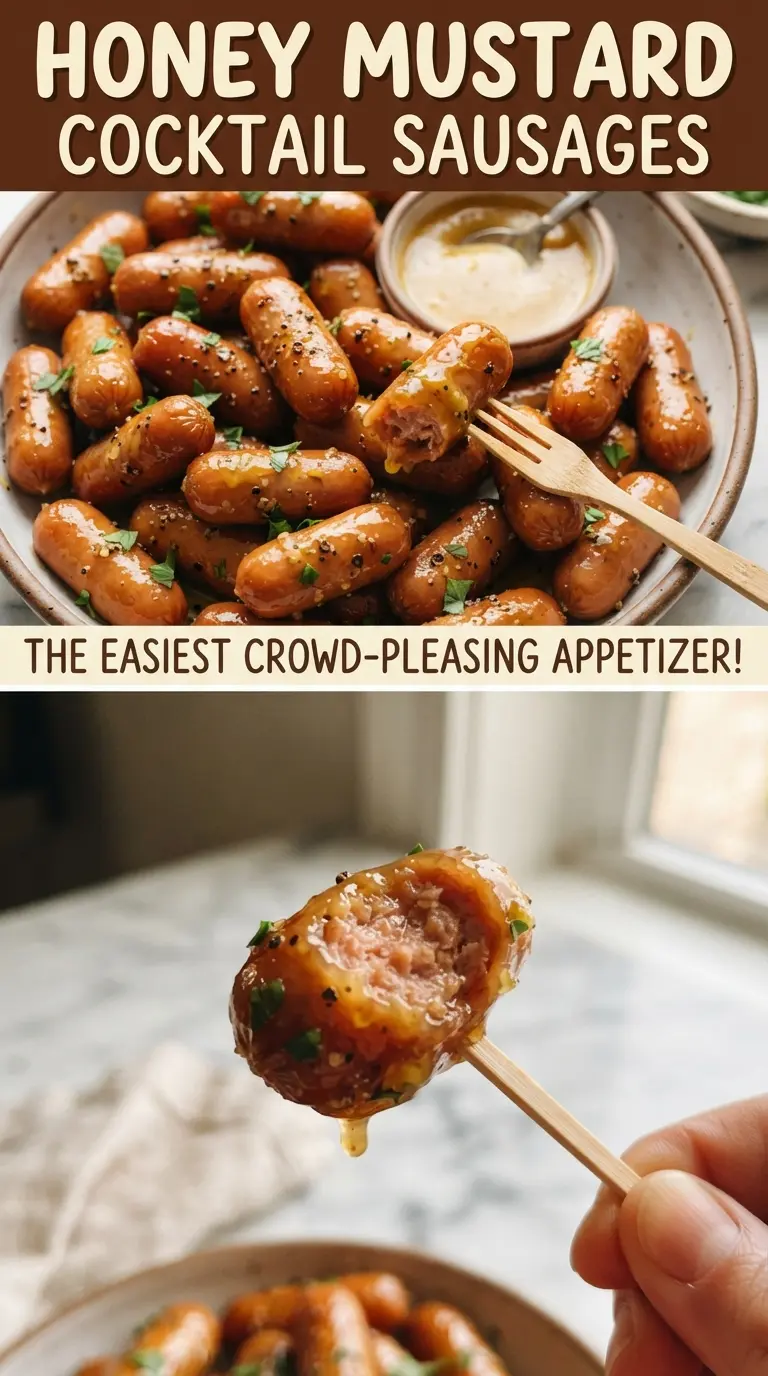
- Cocktail sausages — These bring the salt and meaty base that the glaze needs. Use fully cooked cocktail sausages, not raw ones, because this recipe is built for browning and coating, not long cooking. If all you can find are mini smoked sausages, they work the same way and hold up well in the sauce.
- Honey — This is the sweetness and the sticky shine. It helps the glaze tighten as it simmers, so I wouldn’t swap in maple syrup unless you want a darker, less classic finish with a different kind of sweetness. If your honey is very thick, warm it for a few seconds so it whiskes smoothly into the mustards.
- Whole grain mustard and Dijon — These are doing different jobs on purpose. Whole grain mustard gives texture and a fuller mustard bite, while Dijon smooths the glaze and sharpens the flavor. If you only have Dijon, use it all, but the sauce will be a little sleeker and less rustic.
- Soy sauce — This adds salt and depth, which keeps the glaze from tasting like straight honey and mustard. Low-sodium soy sauce works fine if that’s what’s in the pantry. Tamari is the best gluten-free swap and behaves almost the same.
- Butter and garlic — Butter helps the sausages brown and gives the glaze a softer finish, while garlic adds a savory note that keeps the sauce from reading one-note. Don’t add the garlic too early or it can scorch before the sausages are browned. Thirty seconds in the pan is enough to wake it up.
- Sesame seeds and chives — These are finishing touches, but they matter. Sesame seeds reinforce the nutty side of the glaze, and chives cut through the sweetness with a fresh onion note. Add them right before serving so they stay bright.
Building the Sausages So the Glaze Sets Right
Getting Color on the Sausages First
Melt the butter in a large skillet over medium heat, then add the cocktail sausages in a single layer if you can. Let them sit long enough to take on some browning before you start stirring around constantly. You’re looking for lightly blistered spots and a little golden color, not deep searing. If the pan is crowded, the sausages will steam instead of brown, and the glaze won’t have the same depth.
Waking Up the Garlic
Once the sausages have color, add the minced garlic and stir for about 30 seconds. It should smell fragrant, not harsh. Garlic burns fast in butter, so keep it moving and don’t let it sit alone on the bottom of the skillet. If it turns brown before you add the sauce, it’s better to start over than to carry that bitter edge through the whole dish.
Turning the Sauce Sticky
Whisk the honey, both mustards, and soy sauce together, then pour it over the sausages and simmer, stirring often. The sauce should bubble lazily and start to look thicker as the liquid reduces and the honey tightens up. In the last minute or two, it should coat the back of a spoon and cling to the sausages instead of sliding off. That’s the point where you pull it from the heat and finish with sesame seeds and chives.
How to Adapt These for Different Crowds
Make It Gluten-Free Without Losing the Bite
Use tamari instead of soy sauce and check that your cocktail sausages are gluten-free, since some brands use fillers or seasonings that aren’t. The glaze will taste nearly the same, with the same salty backbone and sticky finish.
A Spicier Party Version
Add a pinch of red pepper flakes or a little hot sauce to the glaze if you want more heat. It won’t change the texture, but it does sharpen the sweetness and gives the sausages a little kick at the end.
Using Lil Smokies or Mini Sausages
Lil smokies work just like classic cocktail sausages, and they’re often easier to find in a big pack. They may need an extra minute or two to brown well because they’re usually a little fattier, but the glaze process stays the same.
Storage and Reheating
- Refrigerator: Store leftovers in an airtight container for up to 4 days. The glaze thickens as it chills, so it’ll look a little set when cold.
- Freezer: These freeze well for up to 2 months. Cool completely first, then freeze in a sealed container or freezer bag; thaw overnight in the refrigerator before reheating.
- Reheating: Warm gently in a skillet over low heat with a splash of water if the glaze seems too tight. The common mistake is blasting them in the microwave, which makes the sauce separate and the sausages split.
Answers to the Questions Worth Asking
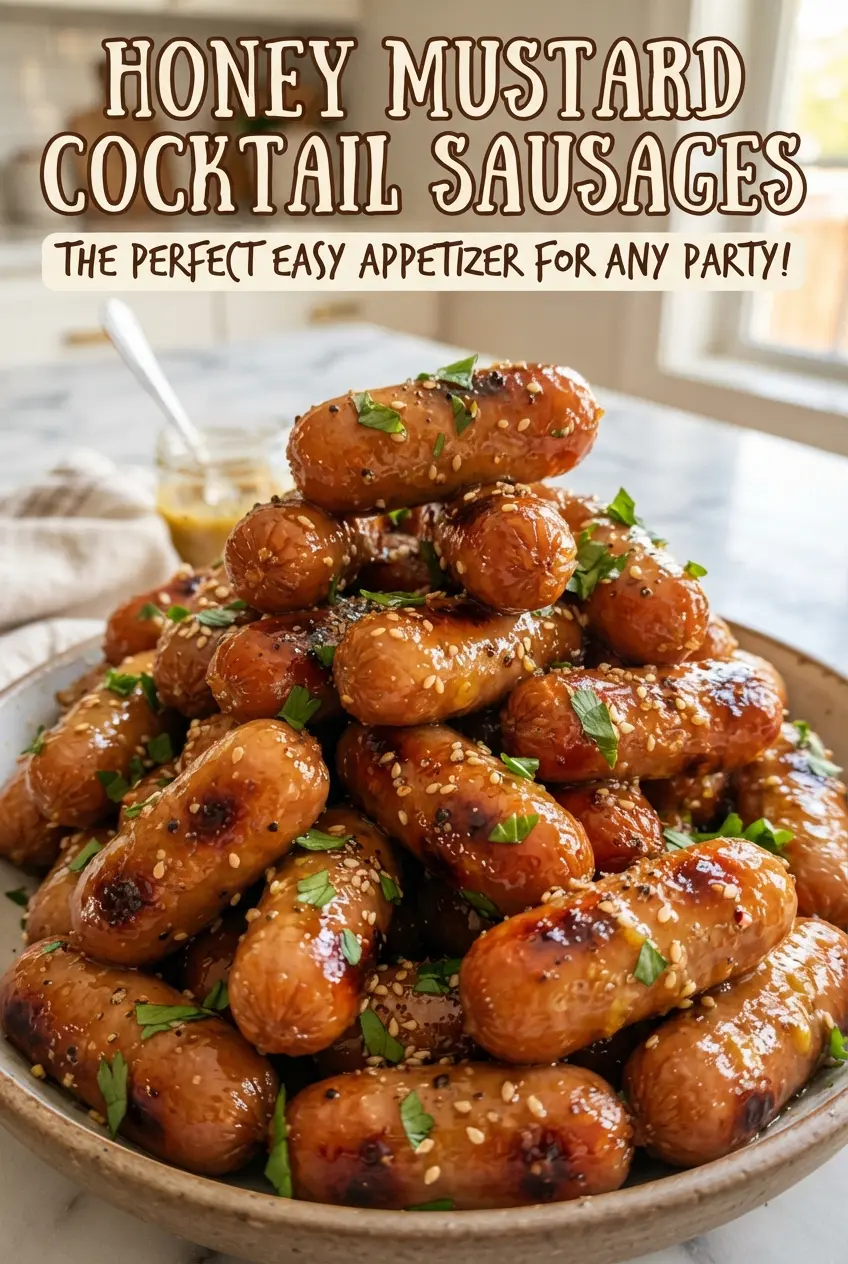
Honey Mustard Cocktail Sausages
Ingredients
Equipment
Method
- Melt the butter in a large skillet over medium heat. Add the sausages and brown for 5-6 minutes, turning as needed, until golden on the outside.
- Add the minced garlic and cook for 30 seconds over medium heat until fragrant. Keep stirring so the garlic doesn’t brown.
- Whisk the honey, whole grain mustard, Dijon mustard, and soy sauce. Pour the mixture over the sausages so they’re coated.
- Simmer the sausages for 8-10 minutes, stirring often, until the glaze is thick and sticky. Lower heat if it bubbles too aggressively.
- Sprinkle the sesame seeds and chopped chives over the sausages. Serve warm with toothpicks.